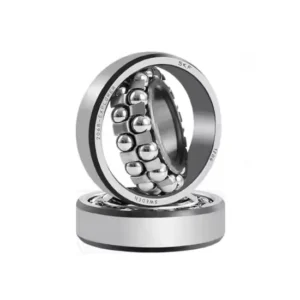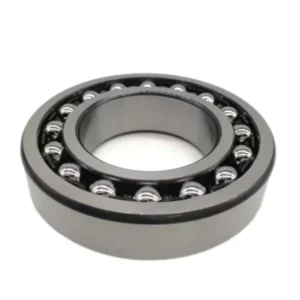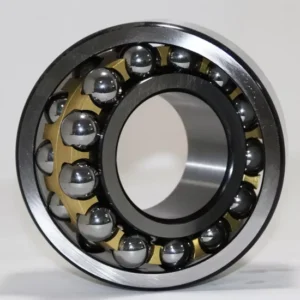
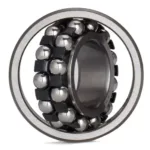
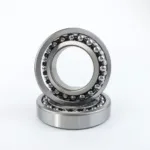
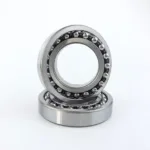
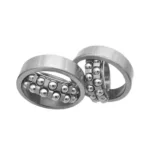
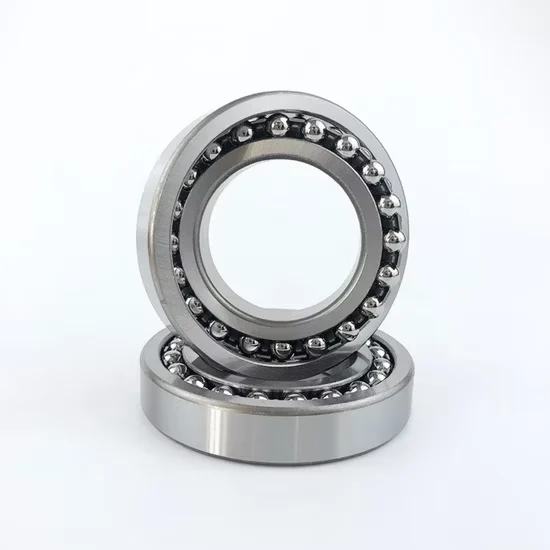
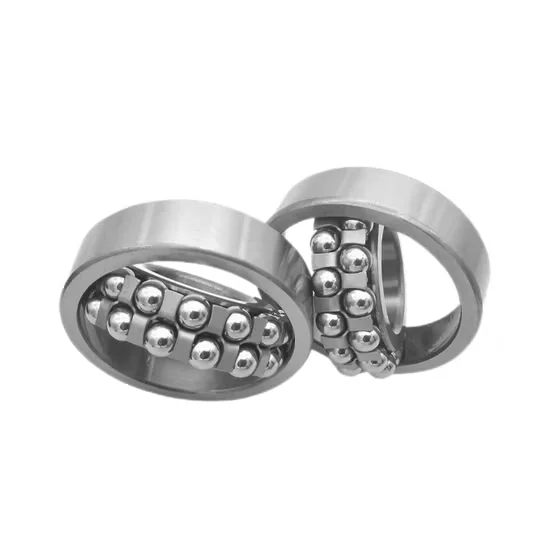
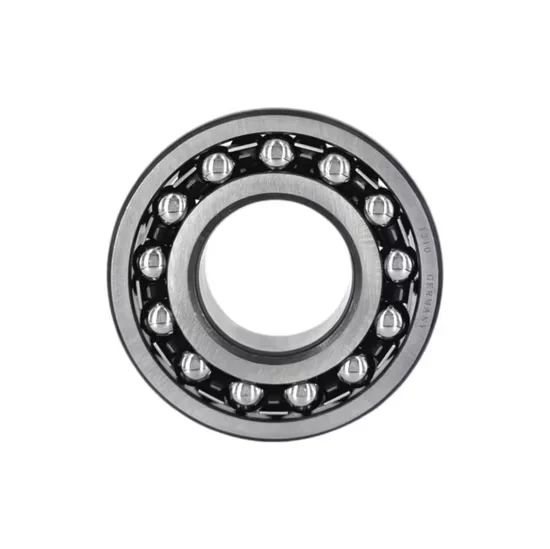
Multi-Brand Sourcing Consolidated — Procure SKF, FAG, NSK, and domestic lines for your 1303 self-aligning ball bearing requirements in a single mixed-brand shipment without juggling multiple vendors.
Technical Specifications
| Parameter | Value |
|---|---|
| Designation | 1303 |
| Bearing Type | Self-Aligning Ball Bearing |
| Bore Diameter (d) | 17 mm |
| Outside Diameter (D) | 47 mm |
| Width (B) | 14 mm |
| Dynamic Load Rating (C) | 12.7 kN |
| Static Load Rating (C₀) | 3.7 kN |
| Number of Rows | Double-Row |
| Material | Chrome Steel Gcr15 / 100cr6 |
| Seal or Shield Type | Open (No suffix) |
| Origin | Shandong, China |
Note: The cross-reference code 11303 is an unverified suffix designation that requires manufacturer catalog confirmation before ordering.
Application Suitability
| Industry | Typical Applications |
|---|---|
| Material Handling | Conveyor pulley shafts and idler rollers |
| Agriculture | Tractor PTO shafts and harvester drivelines |
| Fluid Management | Centrifugal pump shafts and impeller supports |
| General Manufacturing | Textile machinery spinning frames and motor mounts |
Why Open-Type Bearings Seize in Dusty Conveyors
Misaligned shafts and particulate ingress destroy unprotected raceways long before fatigue limits are reached.
Early in my career servicing material handling sites in West Africa, I watched standard open bearings jam solid within days because fine particulate matter bypassed inadequate seals. When axial deflection combines with abrasive contamination, the rolling elements skid rather than roll, generating localized heat that welds the cage to the raceway. Sourcing the correct 1303 self-aligning ball bearing requires matching the sealing arrangement to the actual environmental exposure, not just the dimensional envelope. Procurement teams often focus solely on the basic dynamic load rating, ignoring that an open bearing in a dusty environment will fail rapidly. Proper specification demands a comprehensive view of the housing design and external sealing effectiveness [NEED_CITE: rolling bearing failure mode classification per ISO 15243].
Matching the Double-Row Configuration to Target Operations
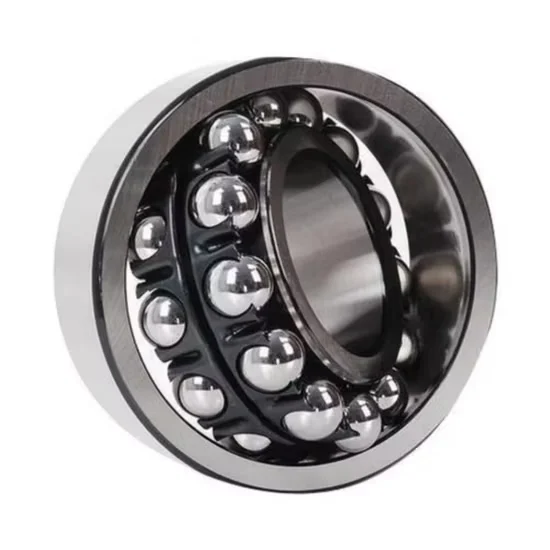
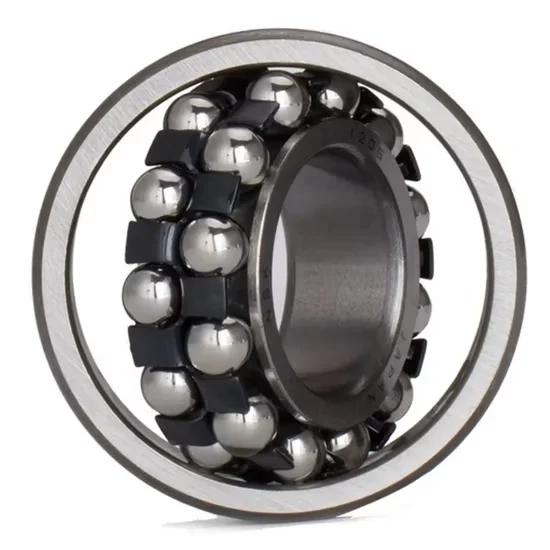
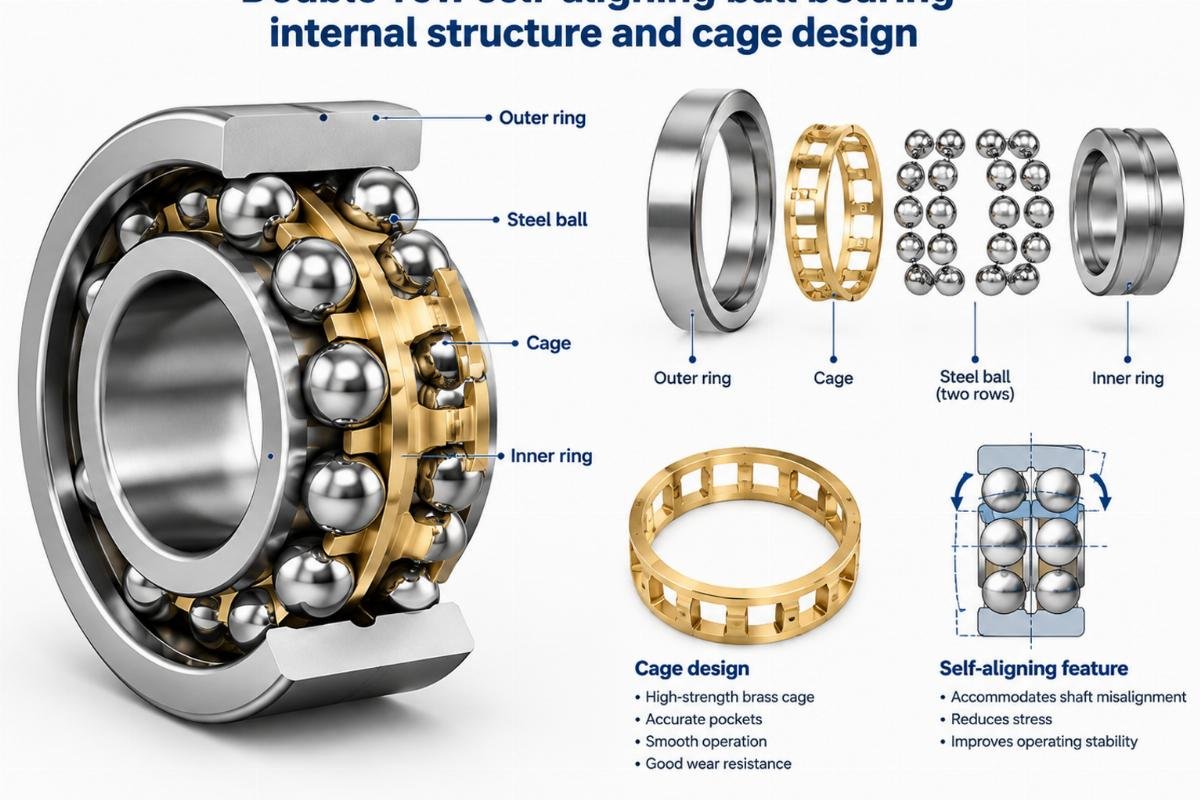
This double-row configuration inherently compensates for minor shaft deflections and housing misalignments typical in agricultural and conveyor applications. By allowing the inner ring to pivot slightly within the spherical outer raceway, the 1303 self-aligning ball bearing prevents edge loading that rapidly degrades standard deep-groove alternatives. In textile machinery and pump assemblies where shafts experience dynamic bending, this flexibility preserves the lubricant film and prevents localized spalling. Our global MRO supply network ensures you receive dimensionally verified units ready for immediate installation in light-to-medium load scenarios, eliminating the downtime associated with waiting for specialized custom orders.
Managing Contamination and Lubrication Challenges
Operating in dusty or humid environments demands careful consideration of external sealing and relubrication intervals. An open-type design relies entirely on the housing’s labyrinth seals or external enclosures to keep abrasive particles away from the Gcr15 rolling elements. If the housing seal fails, fine dust mixes with the grease to form a lapping compound that accelerates wear and increases operating temperatures. Proper grease selection, appropriate fill volumes, and regular purging are critical to flush out contaminants and maintain a protective film between the balls and the raceway. Ignoring these maintenance protocols inevitably leads to cage wear and eventual seizure [NEED_CITE: lubrication failure mechanisms in rolling element bearings].
Decoding the Core Engineering Specifications
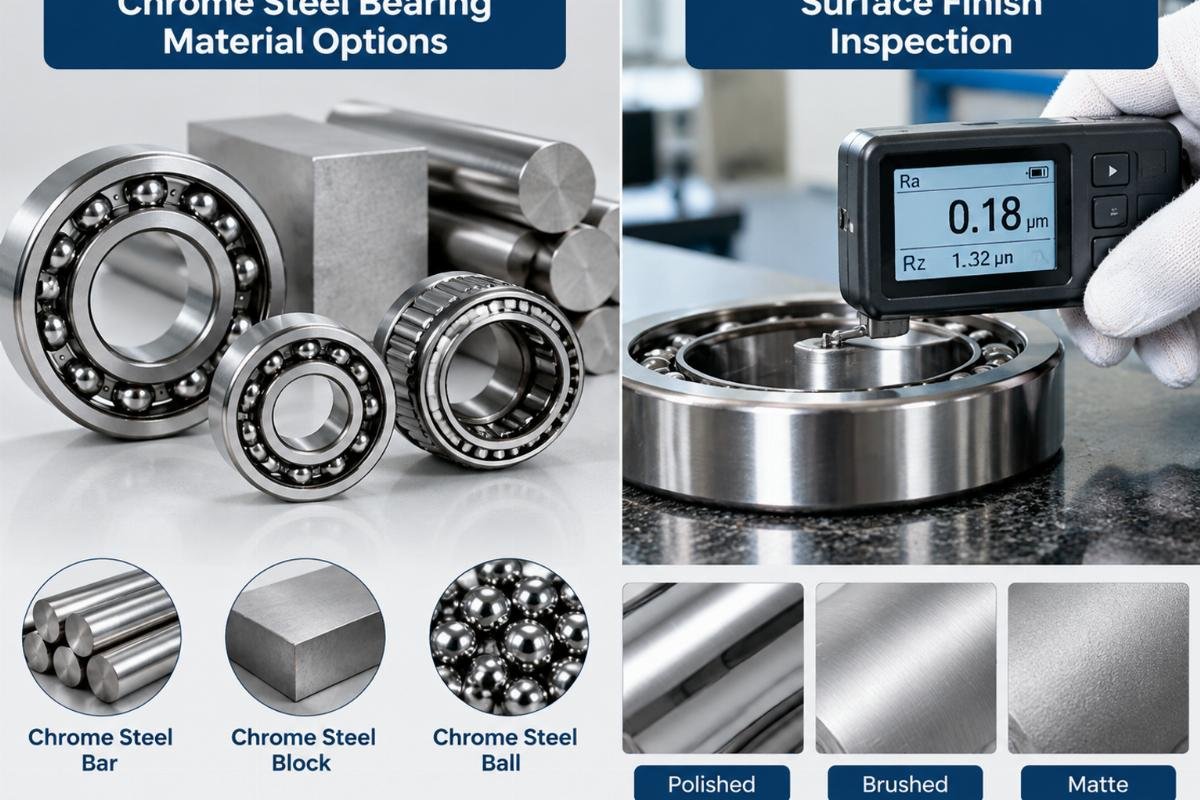
The 17x47x14mm dimensional envelope provides a compact footprint while the double-row ball arrangement distributes radial loads across a wider contact area. The Gcr15 chrome steel construction offers high hardness and wear resistance, ensuring reliable performance under continuous rotational stress. Since this specific identifier lacks a seal or shield suffix, it is designed for applications where the housing provides adequate environmental protection or where frequent relubrication is practiced. The 12.7 kN dynamic load rating makes it suitable for moderate radial loads, while the self-aligning capability accommodates static angular misalignment during assembly. Understanding these core parameters allows engineers to confidently deploy this component in gearboxes and electric motors without risking overload or premature fatigue.
The Hidden Costs of Ignoring Suffix and Seal Details
Specifying an open bearing in an unsealed housing leads to rapid particulate ingestion, resulting in unplanned downtime and catastrophic raceway scoring. Replacing a seized unit often requires cutting the shaft or destroying adjacent components, multiplying the maintenance labor costs far beyond the initial component price. According to industry failure analysis frameworks, contamination remains a primary driver of premature bearing death, voiding warranties and disrupting production schedules. The hidden costs of ignoring suffix details and environmental matching easily overshadow the minor savings of purchasing a cheaper, incorrectly specified replacement part [NEED_CITE: bearing contamination and premature failure analysis per ISO 281].
Why Procurement Engineers Trust Our Supply Chain
We maintain massive spot inventory covering thousands of standard part numbers, ensuring your emergency MRO orders for the 1303 self-aligning ball bearing ship immediately without multi-week delays. Our technical team provides cross-brand equivalent model consultation, verifying that the internal clearance and cage design match your specific OEM requirements. Every shipment includes complete traceability documentation, giving you confidence in the metallurgical integrity of the Gcr15 steel. We consolidate mixed-brand and mixed-size packages into single shipments, simplifying your global logistics and reducing freight overhead. Our after-sales technical support also assists with failure analysis, helping your team identify root causes and optimize future selection.
Documentation & Authenticity
- Certificate of Conformity verifying the Gcr15 material grade and heat treatment batch records.
- Original factory batch traceability records linking the physical unit to the specific production run.
- Dimensional and running accuracy inspection reports confirming the 17x47x14mm tolerances before dispatch.
- Official manufacturer documentation validating the dynamic and static load ratings for this double-row design.
Storage, Handling & Mounting
- Keep the open-type bearing in its original VCI packaging until mounting to prevent humidity-induced corrosion on the Gcr15 raceways.
- Use clean, lint-free gloves during handling to avoid transferring acidic skin oils to the precision-ground 17mm bore.
- Apply the recommended grease fill immediately after unpacking, as the lack of factory seals leaves the double-row cage exposed.
- Verify housing alignment before pressing the 47mm outer ring to preserve the self-aligning clearance and prevent binding.
Engineering Support for Your Next Project
To ensure optimal lifecycle performance, share your specific radial and axial load profiles, operating speeds, and ambient temperature ranges with our technical team. Providing the exact OEM equipment model number allows us to perform a precise cross-reference check and verify the required internal clearance class. We will evaluate your housing sealing effectiveness to determine if an open design is viable or if an alternative sealed configuration is necessary for your environment. Supplying these details enables our staff to calculate the adjusted rating life and recommend the optimal lubrication strategy.
Frequently Asked Questions
Q: What is the difference between the 1303 and the 11303 designation?
A: The standard 1303 refers to an open, double-row self-aligning ball bearing with a cylindrical bore. The 11303 code is an unverified suffix that typically indicates a bearing paired with an adapter sleeve for stepped shafts, but you must confirm this with the specific manufacturer’s catalog before ordering to ensure correct shaft diameter matching.
Q: How does this bearing compensate for shaft misalignment in conveyor systems?
A: The outer ring features a spherical raceway that allows the inner ring and ball cage assembly to pivot slightly. This self-aligning capability absorbs minor installation errors and shaft deflections caused by heavy loads, preventing the edge stresses that cause premature fatigue in rigid deep-groove ball bearings.
Q: What should I check when cross-referencing this model across different brands?
A: When substituting between global brands, verify that the internal clearance class and cage material match your application’s thermal and speed requirements. Even if the 17x47x14mm dimensions are identical, variations in the raceway curvature or ball complement can alter the load distribution and operational noise levels.
Q: How can I verify the Gcr15 material authenticity upon receipt?
A: Request the manufacturer’s material test report and heat treatment certificates included in our documentation package. You can also perform a non-destructive spark test or hardness check on a sample unit to confirm the high-carbon chrome steel meets the required metallurgical standards for bearing applications.
Q: What are the relubrication requirements for this open-type design?
A: Since it lacks integrated seals, the bearing relies on the housing’s sealing system and regular grease purging. You must establish a relubrication schedule based on your operating speed and contamination level to flush out particulate matter and maintain a protective lubricant film across the double-row rolling elements.