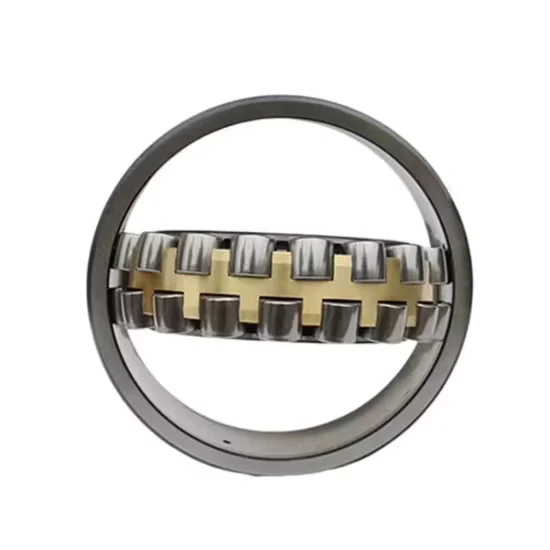
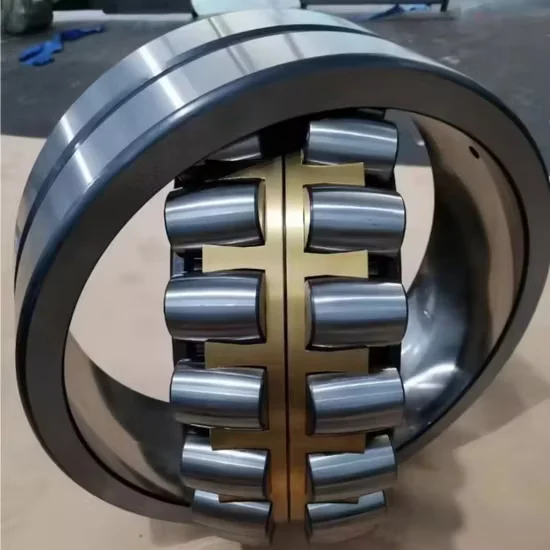
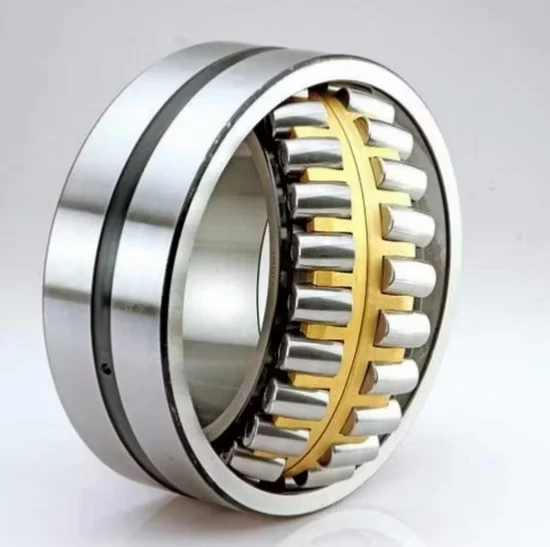
22220 Ek/C3 Self Aligning Double Row Roller Bearings for Heavy Load
22220 Ek/C3 Spherical Roller Bearing features an optimized internal design for enhanced load capacity and a 1:12 tapered bore for flexible mounting. The C3 clearance effectively accommodates thermal expansion during continuous operation in mining and metallurgy equipment. Each order is delivered with a complete documentation package, including chrome steel material certificates and dimensional inspection reports.
Cross-Reference Triad Alignment — verifying the exact match of model, C3 clearance, and tapered bore before dispatch.
Technical Specifications
Parameter
Value
Designation
22220 Ek/C3
Bearing Type
Spherical Roller Bearing
Number of Rows
Double-Row
Material
Chrome Steel Gcr15
Structure
Self-Aligning Roller
Bore Type
Tapered Bore (1:12)
Internal Design
Enhanced (E)
Clearance Class
C3 (Greater than standard)
Origin
Shandong, China
Application Suitability
Industry
Typical Applications
Mining
Crushers and vibrating screens
Metallurgy
Steel mill equipment and rolling stands
Agriculture
Heavy-duty harvesting machinery drives
Why Ignoring the C3 Suffix Destroys the 22220 Ek/C3 spherical roller bearing
Thermal expansion under heavy loads turns standard clearance into a mechanical trap.
When I first transitioned from customs documentation to managing key accounts in the mining sector, a single suffix oversight caused a massive crusher failure. We supplied a batch where the C3 clearance was mistakenly replaced with standard CN. Under the intense heat and heavy radial loads typical of mineral processing, the internal clearance vanished, leading to thermal expansion and complete seizure. This catastrophic unplanned downtime proved that selecting the correct clearance is not just a catalog detail but a critical survival factor for heavy machinery [NEED_CITE: bearing failure modes related to inadequate internal clearance].
Matching the 22220 Ek/C3 spherical roller bearing to Extreme Environments
Operating in mining and metallurgy demands components that withstand severe misalignment and shock loads. The self-aligning roller structure inherently compensates for shaft deflections, protecting the raceways from edge stresses. By sourcing genuine components with full traceability, we ensure that the enhanced internal geometry consistently delivers the required load-carrying capacity for your most demanding applications.
Managing Load, Heat, and Contamination in Mineral Processing
Crushers and vibrating screens subject bearings to intense combined loads and continuous vibration. The tapered bore design allows for precise interference fit adjustments on adapter sleeves, which is crucial for maintaining grip under heavy shock loads. Furthermore, elevated operating temperatures significantly impact lubrication effectiveness and internal clearance. Selecting the appropriate grease and establishing rigorous relubrication intervals prevents contamination ingress and mitigates premature wear [NEED_CITE: lubrication degradation in high-vibration mining equipment].
Decoding the E, k, and C3 Designations
The suffix sequence defines the operational boundaries of this component. The ‘E’ indicates an enhanced internal design with optimized roller profiles, maximizing dynamic load capacity and operational stability. The ‘k’ designates a 1:12 tapered bore, facilitating secure mounting on adapter sleeves or tapered shaft journals while allowing precise radial internal clearance adjustment during installation. Most critically, the ‘C3’ clearance class provides the necessary thermal expansion allowance, preventing the rolling elements from binding when the inner ring reaches elevated temperatures during continuous heavy-duty operation.
The True Cost of the Wrong Choice
Failing to specify the exact suffix combination leads to severe operational consequences. Installing a standard clearance bearing in a high-temperature environment results in preload accumulation, accelerating fatigue and causing catastrophic raceway spalling. Such premature failures not only void equipment warranties but also trigger extensive unplanned downtime. According to established failure analysis frameworks, improper clearance selection remains a primary driver of early mechanical breakdowns in heavy industrial sectors [NEED_CITE: rolling bearing failure mode classification per ISO 15243].
Securing Authentic Components for Critical Infrastructure
Sourcing genuine bearings requires rigorous verification beyond standard commercial transactions. We prioritize cross-referencing the exact model, C3 clearance, and tapered bore specifications to eliminate substitution errors common in emergency maintenance orders. Our inventory maintains massive spot availability of these specific heavy-duty configurations, bypassing typical multi-week lead times. Additionally, we provide technical selection support, ensuring the chosen clearance and internal design perfectly align with your specific crusher or vibrating screen operating parameters. Every shipment includes complete traceability documentation, giving your maintenance team absolute confidence during critical installations.
Documentation & Authenticity
Original manufacturer batch traceability documents verifying the C3 clearance specification.
Material inspection reports confirming Chrome Steel Gcr15 composition and heat treatment.
Dimensional and running accuracy inspection reports validating the 1:12 tapered bore geometry.
Official app QR verification tags attached to each individual packaging unit.
Storage, Handling & Mounting
Keep the tapered bore components in original packaging until mounting to prevent surface corrosion on the precision-machined inner ring.
Use induction heaters specifically calibrated for Chrome Steel Gcr15 when mounting the inner ring onto solid tapered shafts.
Measure the drive-up distance and residual internal clearance meticulously during adapter sleeve installation to preserve the C3 allowance.
Apply clean gloves when handling the exposed rolling elements to prevent moisture-induced micro-pitting before final sealing.
Engineering Review and Selection Support
To ensure optimal performance and accurate life calculations, please share your specific operating parameters, including radial and axial loads, rotational speed, and ambient temperature profiles. Providing the original equipment manufacturer part numbers allows our engineering team to perform precise cross-reference verification. We will evaluate these inputs to confirm that the enhanced internal design and C3 clearance perfectly match your application requirements, ultimately preventing premature failures and securing long-term equipment reliability.
Frequently Asked Questions
Q: What does the Ek/C3 suffix combination indicate for this specific model?
A: The ‘E’ denotes an enhanced internal design for higher load capacity, while ‘k’ specifies a 1:12 tapered bore for adapter sleeve mounting. The ‘C3’ indicates internal radial clearance greater than standard, which is essential to accommodate thermal expansion and prevent seizure in high-temperature, heavy-load environments like crushers and vibrating screens.
Q: How does the tapered bore affect the installation process compared to a cylindrical bore?
A: The 1:12 tapered bore requires mounting on a matching tapered shaft journal or an adapter sleeve. This design allows the installer to precisely control the interference fit and adjust the residual radial internal clearance by measuring the drive-up distance, ensuring optimal operational performance under heavy shock loads.
Q: Why is C3 clearance strictly required over standard CN for metallurgy applications?
A: In metallurgy and mining, continuous heavy loads generate significant friction heat, causing the inner ring to expand more than the outer ring. Standard CN clearance would vanish under these thermal conditions, leading to excessive preload and catastrophic seizure. The C3 clearance provides the necessary thermal expansion allowance to maintain a safe operational gap.
Q: Can this self-aligning roller bearing compensate for severe shaft misalignment?
A: Yes, the self-aligning structure allows the inner ring and roller assembly to pivot relative to the outer ring, accommodating static and dynamic shaft deflections. However, the permissible misalignment angle depends on the specific bearing series and clearance class, which should be verified against the equipment’s structural tolerances.
Q: How do you ensure the correct cross-reference when replacing OEM bearings?
A: We verify the cross-reference by strictly aligning three critical parameters: the base model number, the exact internal clearance class, and the bore type. This triad alignment prevents the common maintenance pitfall of substituting a standard clearance or cylindrical bore variant that would fail under the original design conditions.
Shipping Information
EU Warehouse
3-7 working days (bonded stock)
Direct from China
Shanghai & Ningbo hubs (bulk / FCL)
Markets Served
DE · IT · PL · ES · NL · FR · EU+
Incoterms
DDP / DAP available on request
Minimum Order
Contact us for MOQ details
Documents Included with Every Shipment
EN and ISO Quality Certificates
Batch traceability and manufacturing standard
Material & Heat-Treatment Reports
Full material composition and process records
CE Declaration of Conformity
For bearing units and motion products
RoHS Compliance Declaration
Restriction of hazardous substances
EUR.1 Movement Certificate
Preferential origin for EU customs
Certificate of Origin
Country of manufacture documentation
Correct HS Codes
Pre-classified for smooth customs clearance
Commercial Invoice & Packing List
VAT-compliant intra-EU invoicing
Transparent Landed Cost with Tax Explanation
SKFEU provides full price transparency so EU buyers know exactly what they pay. No hidden duties, no surprise charges at customs.
VAT-Compliant Invoicing
All intra-EU transactions are invoiced with correct VAT treatment. B2B buyers with valid EU VAT numbers receive zero-rated invoices where applicable.
No Unexpected Import Duties
Goods shipped from our EU bonded warehouse arrive as intra-EU movements -- no import duties, no customs delays for EU-based buyers.
EUR.1 & Origin Docs Ready
For shipments direct from China, EUR.1 movement certificates and certificates of origin are prepared in advance to minimise customs clearance time.
DDP Pricing Available
Ask for Delivered Duty Paid quotations -- we absorb all import costs so your landed cost is fixed and predictable from day one.
Need a landed cost breakdown? Contact Sofia at
sofia@skfeu.com
or via WhatsApp for a full DDP quotation including freight, duties and VAT for your country.
Send Inquiry
Request Pricing & Availability
Share your requirements and Sofia will respond within one working day with pricing, lead time and full documentation details.