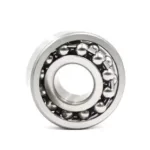
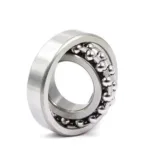
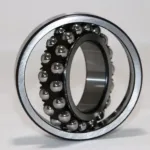
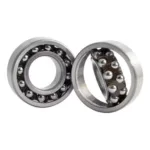
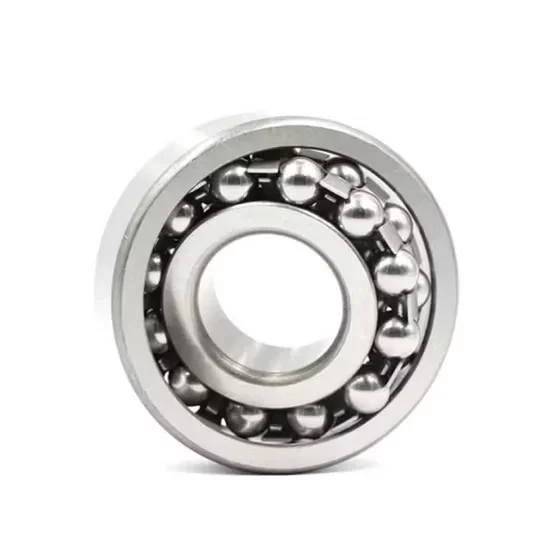
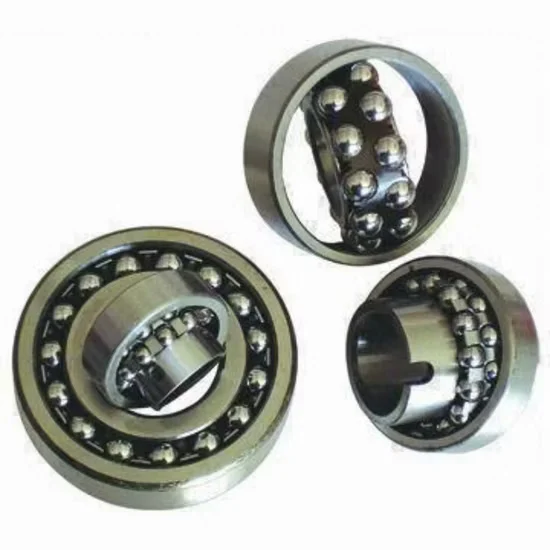
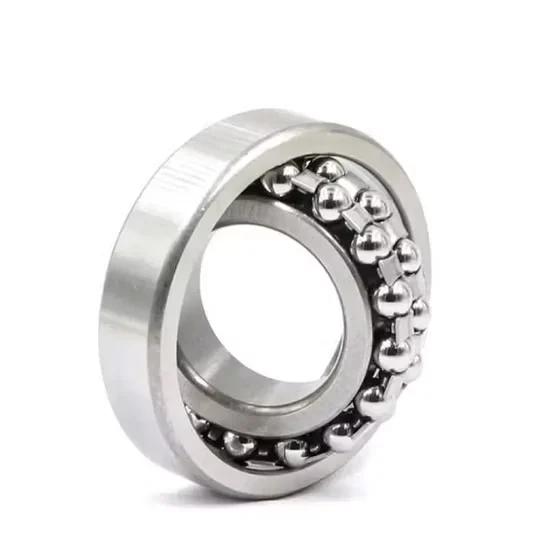
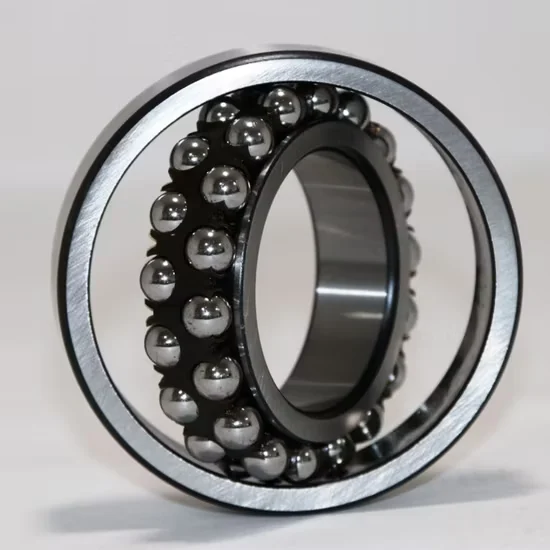
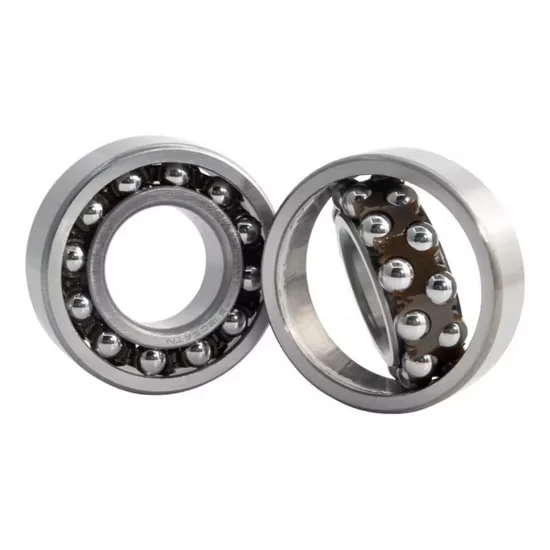
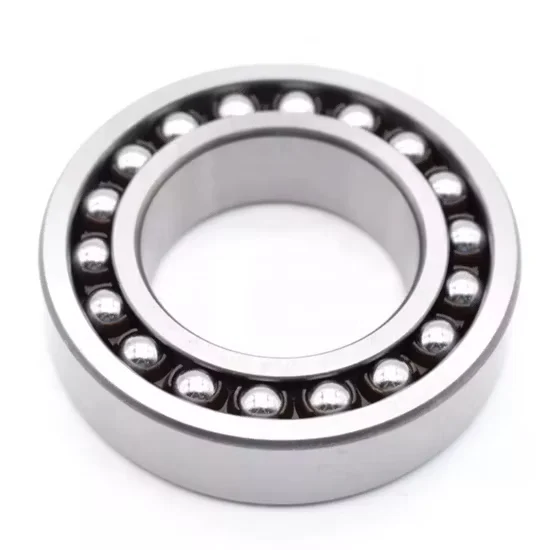
2300 Series Self-Aligning Ball Bearing Customizable Sizes
2300 Series Self-Aligning Ball Bearing for Misaligned Shafts — double row Gcr15 chrome steel construction effectively handles shaft deflection in textile and agricultural machinery applications.
Rated for 12.7 kN dynamic and 3.7 kN static loads to ensure reliable operational performance.
Verify cross reference models align strictly across clearance, cage, and precision parameters before ordering.
Non-standard sizes and specific clearance classes available
Application Suitability
Industry
Typical Applications
Textile Manufacturing
Spinning frame drafting rollers and yarn guide mechanisms
Material Handling
Conveyor belt return idlers and transfer chute pivots
Agricultural Equipment
Harrow disc gang shafts and seeder metering drives
General Manufacturing
Centrifugal pump shaft supports and fan drive assemblies
Why Standard Bearings Fail on Misaligned Shafts Before a Reliable 2300 series self-aligning ball bearing supplier Steps In
Standard rigid bearings bind, overheat, and ultimately fracture the moment shaft deflection exceeds microscopic tolerances during continuous operation.
Early in my career handling Latin American mining accounts, a Chilean client reported catastrophic conveyor stoppages that halted their entire extraction line. They had installed open-type bearings in heavy dust environments without specifying proper contact seals or C3 clearance for thermal expansion. The intense heat buildup caused immediate seizure and shaft scoring. Misalignment and thermal growth demand specialized internal geometries, yet many procurement teams overlook these operational realities when sourcing replacement parts, leading to repeated failures [NEED_CITE: rolling bearing failure mode classification per ISO 15243].
Matching Internal Geometry to Dynamic Shaft Deflection
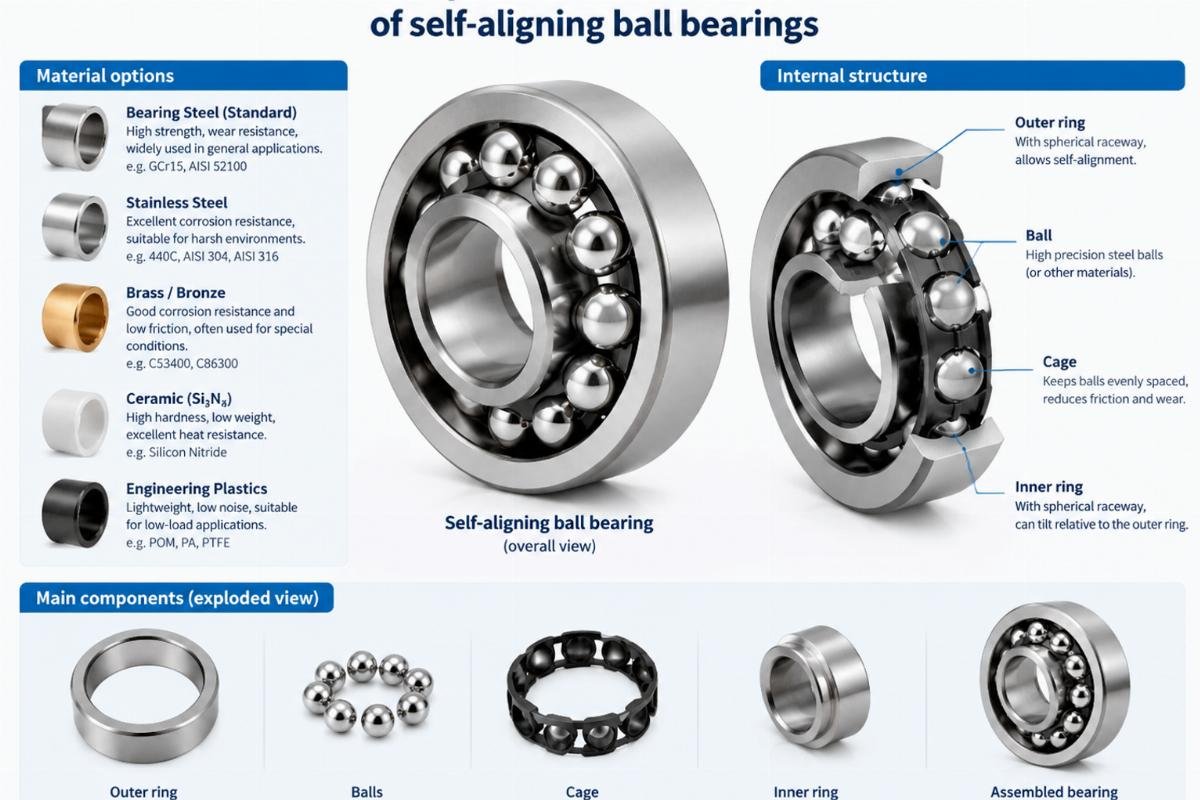
Sourcing the exact dimensions for urgent maintenance requires much more than just matching the outer diameter and basic load ratings. A competent 2300 series self-aligning ball bearing supplier understands that the sphered outer ring raceway is precisely what allows the inner ring and ball assembly to pivot freely within the housing. This specific geometric design actively compensates for initial mounting errors and continuous shaft flexing under heavy radial loads. By preventing the severe edge loading that rapidly destroys standard deep-groove alternatives, this configuration ensures stable operation in demanding agricultural and textile machinery applications.
Operational Challenges and Performance Demands
Conveyor and agricultural shafts constantly endure combined radial loads and sudden shock impacts from uneven material flow or rocky terrain. When operating in high-dust or high-moisture environments, the critical choice between contact rubber seals and non-contact metal shields drastically alters friction heat generation and contamination ingress rates. Furthermore, elevated ambient temperatures near pump housings or industrial ovens dictate the absolute need for increased internal clearance to prevent the rolling elements from binding as the shaft expands thermally. Selecting the correct lubrication interval and specialized grease type is equally vital to prevent premature raceway spalling and cage wear [NEED_CITE: lubrication degradation mechanisms in misaligned bearings].
Material Options and Environmental Compatibility
While standard chrome steel provides excellent fatigue strength for general manufacturing, it requires protective coatings or frequent relubrication when exposed to harsh agricultural chemicals or textile washing fluids. For highly corrosive environments, martensitic stainless steel variants offer substantially higher resistance to oxidation and pitting, though they inherently carry slightly lower dynamic load capacities. In specialized applications involving extreme temperatures or electrical arcing, ceramic rolling elements or hybrid configurations prevent current passage and maintain structural integrity far beyond the thermal limits of standard bearing steel. The final material selection depends entirely on balancing the specific mechanical load requirements against the severity of the environmental exposure.
The Hidden Costs of Incorrect Selection
Installing a rigid bearing in a flexing shaft application inevitably leads to unplanned downtime, excessive vibration, and catastrophic damage to adjacent housing components. When internal clearance is ignored during procurement, normal thermal expansion eliminates the operational gap, causing the bearing to skid rather than roll smoothly. This rapid degradation not only voids manufacturer warranties but also triggers expensive secondary failures in mechanical seals and drive shafts. Proper alignment with ISO 281 life calculation frameworks ensures the selected component can withstand the actual operational stresses rather than just theoretical catalog loads [NEED_CITE: bearing life calculation methodologies per ISO 281].
Securing Traceability and Technical Accuracy
Mixed-brand project consolidation often results in mismatched clearance classes or incorrect seal types if the distributor lacks deep technical oversight. We rigorously verify every cross-reference model against three critical parameters: internal clearance, cage material, and precision class. For dusty conveyor applications, we proactively flag when an open bearing is requested and strongly recommend sealed variants to prevent the exact seizure issues I witnessed in Chile. Our massive spot inventory covers thousands of standard and special part numbers, ensuring urgent MRO requirements are met without ever compromising on material integrity, dimensional accuracy, or comprehensive traceability documentation.
Documentation & Authenticity
Original batch certificates confirming Gcr15 chrome steel metallurgical composition.
Scannable QR codes linking to the manufacturer’s authenticity database.
Dimensional inspection reports verifying sphered outer ring tolerances.
Certificate of Conformity detailing specific double-row arrangement specs.
Material test reports validating hardness and carbon content.
Storage, Handling & Mounting
Retain original humidity-controlled packaging until mounting to protect chrome steel surfaces.
Use induction heaters for cylindrical bore installations to avoid damaging the double-row cage.
Verify C3 clearance feeler gauge measurements after mounting to ensure thermal expansion room.
Apply clean gloves when handling stainless steel variants to prevent carbon steel cross-contamination.
Keep sealed units away from solvents that could degrade the contact rubber lips.
Engineering Support and Inquiry Guidelines
To ensure precise model determination and avoid costly installation errors, please provide the specific equipment model, available mounting space, and detailed operational load data. Sharing environmental factors such as dust concentration, moisture levels, and expected operating temperatures allows our engineering team to recommend the optimal seal type, cage material, and clearance class. This thorough technical review guarantees the selected component perfectly matches your application’s unique misalignment and thermal characteristics, eliminating guesswork from your procurement process.
Frequently Asked Questions
Q: How do I determine the exact designation within the 2300 series based on my equipment parameters?
A: Provide your shaft diameter, housing bore, and operational load data. Our engineering team cross-references these parameters against equipment manuals and application databases to pinpoint the precise bore size, width, and internal clearance required. This ensures the selected double-row component perfectly accommodates your specific misalignment and thermal expansion conditions.
Q: What are the common failure modes for these bearings in misaligned shaft applications?
A: Premature failures typically stem from edge loading, inadequate internal clearance, or contamination ingress. When shafts flex under load, rigid bearings experience severe stress concentrations. Using a self-aligning design mitigates this, but failing to specify the correct seal for dusty environments or ignoring thermal growth will still lead to rapid raceway spalling and eventual seizure.
Q: When should I choose stainless steel or ceramic alternatives over standard chrome steel?
A: Standard chrome steel excels in general manufacturing but degrades quickly when exposed to agricultural chemicals or moisture. Stainless steel variants are necessary for washdown environments or high humidity. Ceramic rolling elements are selected when the application involves electrical arcing, magnetic fields, or temperatures exceeding the thermal limits of standard bearing steel.
Q: What customization options and lead times are available for non-standard sizes?
A: We offer customized internal clearances, specialized cage materials, and non-standard dimensional profiles for unique housing constraints. While standard double-row sizes ship immediately from our spot inventory, bespoke configurations require typical multi-week lead times for manufacturing and quality inspection. We coordinate global shipping consolidation to align with your project schedules.
Shipping Information
EU Warehouse
3-7 working days (bonded stock)
Direct from China
Shanghai & Ningbo hubs (bulk / FCL)
Markets Served
DE · IT · PL · ES · NL · FR · EU+
Incoterms
DDP / DAP available on request
Minimum Order
Contact us for MOQ details
Documents Included with Every Shipment
EN and ISO Quality Certificates
Batch traceability and manufacturing standard
Material & Heat-Treatment Reports
Full material composition and process records
CE Declaration of Conformity
For bearing units and motion products
RoHS Compliance Declaration
Restriction of hazardous substances
EUR.1 Movement Certificate
Preferential origin for EU customs
Certificate of Origin
Country of manufacture documentation
Correct HS Codes
Pre-classified for smooth customs clearance
Commercial Invoice & Packing List
VAT-compliant intra-EU invoicing
Transparent Landed Cost with Tax Explanation
SKFEU provides full price transparency so EU buyers know exactly what they pay. No hidden duties, no surprise charges at customs.
VAT-Compliant Invoicing
All intra-EU transactions are invoiced with correct VAT treatment. B2B buyers with valid EU VAT numbers receive zero-rated invoices where applicable.
No Unexpected Import Duties
Goods shipped from our EU bonded warehouse arrive as intra-EU movements -- no import duties, no customs delays for EU-based buyers.
EUR.1 & Origin Docs Ready
For shipments direct from China, EUR.1 movement certificates and certificates of origin are prepared in advance to minimise customs clearance time.
DDP Pricing Available
Ask for Delivered Duty Paid quotations -- we absorb all import costs so your landed cost is fixed and predictable from day one.
Need a landed cost breakdown? Contact Sofia at
sofia@skfeu.com
or via WhatsApp for a full DDP quotation including freight, duties and VAT for your country.
Send Inquiry
Request Pricing & Availability
Share your requirements and Sofia will respond within one working day with pricing, lead time and full documentation details.