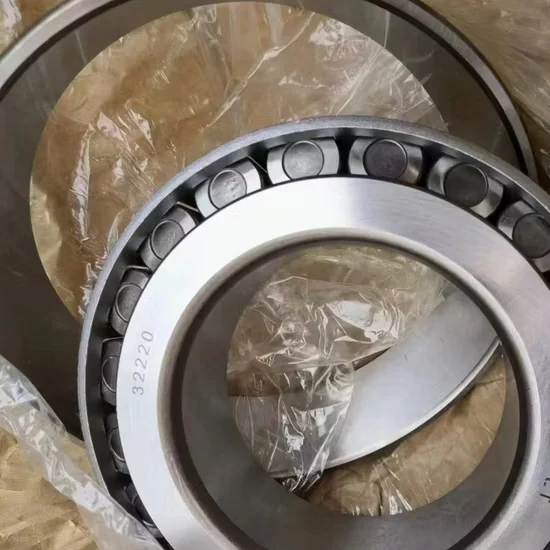
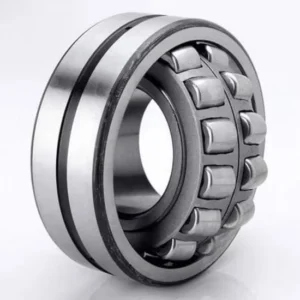
23952cc/W33 Spherical Roller Bearing 260×360×75 mm — Features a W33 outer ring annular groove with lubrication holes for efficient relubrication in harsh environments. The double-row chrome steel GCr15 construction effectively accommodates shaft misalignment and heavy radial loads for demanding mining and metallurgy machinery.
Each order ships with a complete documentation package, including original material certificates and detailed dimensional inspection reports.
Unified Multi-Brand Sourcing — Consolidate your 23952cc/W33 spherical roller bearing orders alongside other premium global and domestic lines in a single shipment without juggling multiple vendors.
Technical Specifications
Parameter
Value
Designation
23952cc/W33
Bearing Type
Spherical Roller Bearing
Bore Diameter (d)
260 mm
Outside Diameter (D)
360 mm
Width (B)
75 mm
Number of Rows
Double-Row
Material
Chrome Steel GCr15
Lubrication Features
Outer ring with annular groove and lubrication holes (W33)
Note: The cc and ca suffixes are unverified and require manufacturer catalog confirmation for exact cage design specifications.
Application Suitability
Industry
Typical Applications
Metallurgy
Continuous casting machine rolls and steel mill conveyors
Mining
Vibrating screens and heavy-duty ore crushers
Paper Manufacturing
Dryer section rolls and press felt guide rollers
Why Cage Design Dictates Survival for the 23952cc/W33 Spherical Roller Bearing in Steel Mills
Mismatched cage types in heavy-load environments lead to catastrophic structural fatigue long before the steel rings yield.
Procurement teams often focus solely on basic dimensions, overlooking critical internal geometry. I once processed customs clearance for a batch destined for a steel plant where the buyer specified only the base number 23952, ignoring the cage distinction. The resulting early fracture in the high-temperature continuous casting zone caused severe unplanned downtime [NEED_CITE: rolling bearing failure mode classification per ISO 15243]. Securing the exact 23952cc/W33 spherical roller bearing configuration ensures the internal components withstand intense radial shocks.
Aligning Internal Geometry with Severe Metallurgical Loads
When specifying a 23952cc/W33 spherical roller bearing for vibrating screens or mill equipment, the double-row self-aligning structure compensates for shaft deflection. Our sourcing network provides cross-brand equivalent model consultation to verify that the selected cage design matches the specific vibration frequency and load profile of your machinery, preventing premature cage disintegration.
Managing Thermal Expansion and Contamination in Heavy Industry
Continuous casting and ore crushing environments subject components to extreme thermal gradients and abrasive dust ingress. The W33 outer ring groove facilitates efficient relubrication, flushing out particulates before they score the raceways. Adequate internal clearance must be maintained to accommodate thermal expansion of the 260 mm bore shaft, while the chrome steel construction provides the necessary fatigue strength to endure combined shock loading. Proper sealing arrangements are equally vital to prevent moisture ingress during washdowns [NEED_CITE: thermal expansion effects on bearing internal clearance].
Decoding the W33 Groove and Cage Configuration
The W33 suffix confirms the presence of an annular groove and lubrication holes on the outer ring, a critical feature for continuous relubrication in dirty environments. While the cc and ca suffixes denote specific cage designs, verifying these via the manufacturer catalog is essential to ensure compatibility with high-vibration applications. The 260x360x75 mm dimensions provide a substantial cross-section for high radial load capacity, and the double-row arrangement inherently tolerates minor misalignment errors during installation.
The Financial Impact of Overlooking Suffix Details
Substituting a standard cage for one designed to handle specific vibration modes inevitably results in catastrophic damage to the housing and shaft. Such unplanned downtime in a mining or metallurgy facility halts entire production lines, voiding equipment warranties and driving massive replacement costs. Adhering to ISO 281 life calculation frameworks requires precise matching of the internal geometry to the actual operating conditions, rather than relying on generic dimensional equivalents. Ignoring these nuances leads to premature failure and compromised structural integrity [NEED_CITE: ISO 281 dynamic load rating calculation methods].
Precision Verification for Mission-Critical Spherical Roller Bearings
We maintain massive spot inventory covering thousands of standard and special part numbers, ensuring rapid dispatch for urgent maintenance requirements. Every 23952cc/W33 spherical roller bearing is supplied with complete traceability documentation to guarantee authenticity. Our technical selection support helps buyers differentiate between subtle cage variations, preventing the exact mismatches I witnessed during my early customs brokerage days. Furthermore, we offer competitive sourcing costs compared to direct official channels while maintaining ISO-compliant quality assurance.
Documentation & Authenticity
Original manufacturer batch traceability reports confirming the exact production run for your 23952cc/W33 units.
Dimensional and running accuracy inspection certificates verifying the 260x360x75 mm tolerances before dispatch.
Material test reports validating the Chrome Steel GCr15 composition and heat treatment quality.
Certificate of Conformity detailing the W33 groove machining specifications and surface finish standards.
Storage, Handling & Mounting
Store the 260 mm bore units horizontally in their original packaging to prevent cage deformation under their own weight.
Utilize induction heating for mounting the 260 mm inner ring, avoiding localized overheating that compromises the GCr15 steel hardness.
Flush the W33 annular groove with clean oil before installation to ensure immediate lubrication upon startup.
Verify the shaft and housing tolerances to maintain the designed internal clearance for the double-row arrangement.
Use dedicated lifting equipment for the heavy 75 mm width units to prevent dropping and damaging the outer ring groove.
Engineering Data Required for Technical Validation
To ensure the selected configuration perfectly matches your application, please provide the specific radial and axial loads, operating speeds, and ambient temperatures. Sharing the OEM equipment model number allows our engineering team to perform a precise cross-reference check and validate the L10 life calculation. If your environment involves extreme contamination or thermal cycling, detail these conditions so we can recommend the optimal internal clearance class.
Frequently Asked Questions
Q: What is the functional difference between the cc and ca cage designs in this bearing series?
A: The cage design significantly influences performance under high vibration and heavy loads. While both configurations secure the rolling elements, they differ in material, guiding mechanisms, and fatigue resistance. Because specific manufacturer definitions vary, we always cross-reference the exact cage type against the official catalog to ensure it matches your equipment’s dynamic profile.
Q: How does the W33 lubrication feature benefit operations in dusty mining environments?
A: The W33 designation indicates an annular groove and lubrication holes on the outer ring. This allows fresh grease to be injected directly into the center of the bearing, forcing out abrasive dust and worn lubricant. This continuous flushing action substantially extends service life and prevents particulate scoring on the raceways.
Q: Can you provide cross-reference equivalents for this specific configuration across premium brands?
A: Yes, our technical team provides comprehensive cross-reference consultation for premium global brands. We can identify equivalent models that match the 260x360x75 mm dimensions, the W33 lubrication groove, and the required internal clearance. This ensures you receive a fully compatible replacement without compromising the original equipment design.
Q: What installation practices are critical for maintaining the self-aligning capability?
A: Proper alignment of the housing and shaft is essential, even though the double-row spherical design tolerates minor deflections. Mounting forces must be applied strictly to the inner ring to prevent damaging the raceways. Additionally, verifying the shaft seating dimensions ensures the correct interference fit, preserving the operational internal clearance.
Shipping Information
EU Warehouse
3-7 working days (bonded stock)
Direct from China
Shanghai & Ningbo hubs (bulk / FCL)
Markets Served
DE · IT · PL · ES · NL · FR · EU+
Incoterms
DDP / DAP available on request
Minimum Order
Contact us for MOQ details
Documents Included with Every Shipment
EN and ISO Quality Certificates
Batch traceability and manufacturing standard
Material & Heat-Treatment Reports
Full material composition and process records
CE Declaration of Conformity
For bearing units and motion products
RoHS Compliance Declaration
Restriction of hazardous substances
EUR.1 Movement Certificate
Preferential origin for EU customs
Certificate of Origin
Country of manufacture documentation
Correct HS Codes
Pre-classified for smooth customs clearance
Commercial Invoice & Packing List
VAT-compliant intra-EU invoicing
Transparent Landed Cost with Tax Explanation
SKFEU provides full price transparency so EU buyers know exactly what they pay. No hidden duties, no surprise charges at customs.
VAT-Compliant Invoicing
All intra-EU transactions are invoiced with correct VAT treatment. B2B buyers with valid EU VAT numbers receive zero-rated invoices where applicable.
No Unexpected Import Duties
Goods shipped from our EU bonded warehouse arrive as intra-EU movements -- no import duties, no customs delays for EU-based buyers.
EUR.1 & Origin Docs Ready
For shipments direct from China, EUR.1 movement certificates and certificates of origin are prepared in advance to minimise customs clearance time.
DDP Pricing Available
Ask for Delivered Duty Paid quotations -- we absorb all import costs so your landed cost is fixed and predictable from day one.
Need a landed cost breakdown? Contact Sofia at
sofia@skfeu.com
or via WhatsApp for a full DDP quotation including freight, duties and VAT for your country.
Send Inquiry
Request Pricing & Availability
Share your requirements and Sofia will respond within one working day with pricing, lead time and full documentation details.