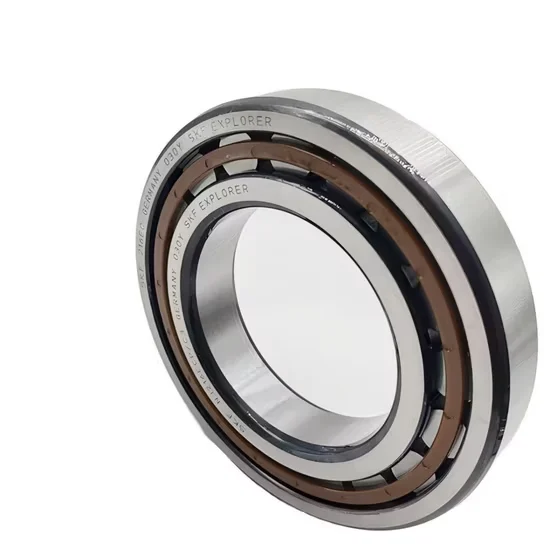
71921cac Angular Contact Ball Bearing Thrust Spindle Rod End Rolamentos
71921cac Angular Contact Ball Bearing P4 P2 — Open seal design requires external lubrication, while Gcr15 bearing steel ensures excellent contact fatigue strength and rigidity for high-speed machine tool spindles and demanding precision equipment applications.
Multiple cage options including brass and nylon adapt effectively to various operational speeds.
Every shipment includes complete original factory batch traceability documentation to guarantee authentic product quality and reliability.
Unified Sourcing Channel — Consolidating mixed-brand spindle bearing orders through a single supply chain eliminates multi-vendor coordination delays.
Technical Specifications
Parameter
Value
Designation
71921cac
Bearing Type
Angular Contact Ball Bearing
Bore Diameter (d)
105 mm
Outside Diameter (D)
145 mm
Width (B)
20 mm
Material
Gcr15 (Suj2) Bearing Steel
Cage Material
Brass (M), Nylon (Tn), or Steel
Seal or Shield Type
Open
Precision Class
P0, P6, P5, P4, P2
Aligning
Non-Aligning
Separable
Unseparated
Origin
Shandong, China
Application Suitability
Industry
Typical Applications
Machine Tool Manufacturing
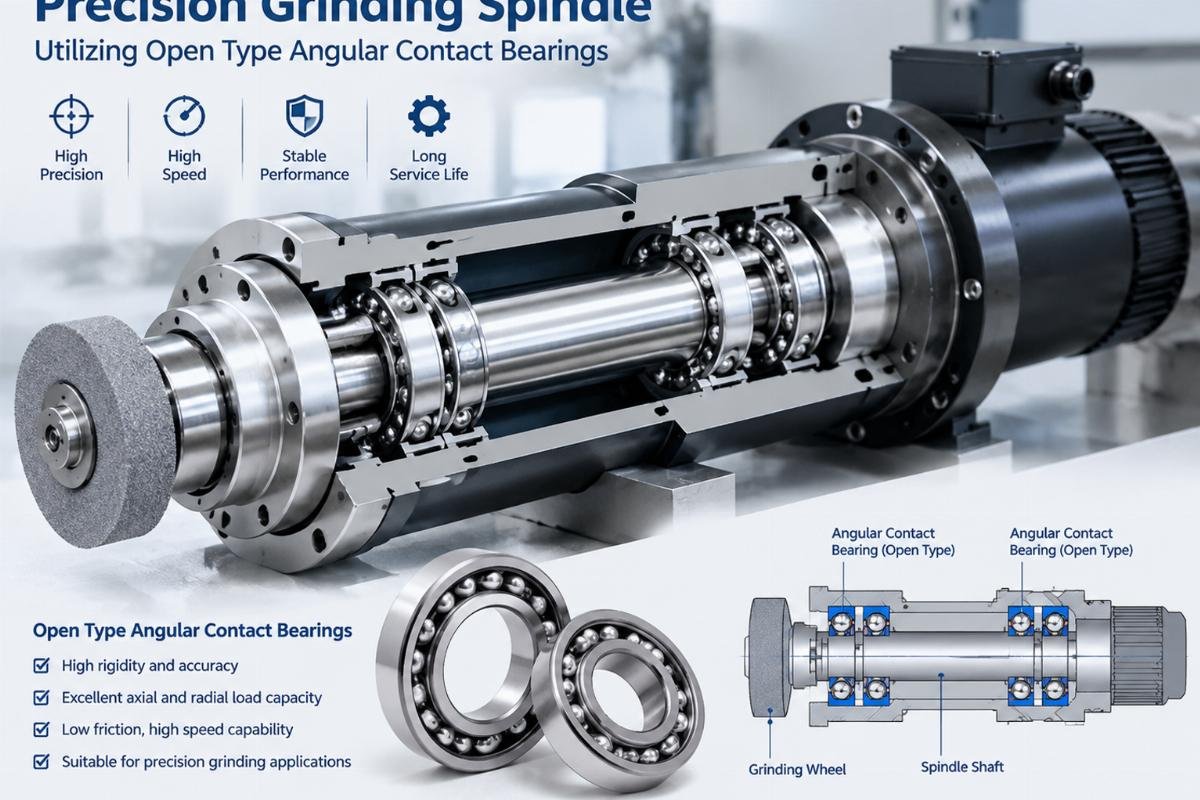
High-speed spindle assemblies and precision grinding heads
Industrial Robotics
Articulation joints requiring high rigidity and rotational accuracy
Fluid Machinery
High-speed pump shafts and compressor rotor supports
Why Spindle Vibration Traces Back to the 71921cac angular contact ball bearing Suffix
Microscopic suffix variations dictate the thermal stability of precision spindle assemblies.
During my years handling after-sales maintenance in Nigeria, I once replaced a wood-processing机床 spindle bearing based purely on experience, overlooking minor suffix discrepancies in the angular contact configuration. Upon startup, the vibration levels exceeded acceptable limits, leading to rapid thermal expansion and complete spindle seizure. That incident forced a strict adherence to OEM engineering drawings. [NEED_CITE: spindle bearing failure modes related to preload mismatch]
Matching Rotational Demands with the 71921cac angular contact ball bearing
When outfitting high-speed spindles, the 71921cac angular contact ball bearing provides the necessary axial rigidity. Our engineering team cross-references the exact cage material and precision class against your machine’s operational envelope, ensuring the selected configuration handles the specific radial and thrust loads without compromising rotational accuracy.
Managing Thermal and Mechanical Stresses in Precision Equipment
Spindle environments subject bearings to intense centrifugal forces and rapid temperature fluctuations. An open seal design facilitates efficient heat dissipation and allows for customized oil-air or oil-jet lubrication, which is critical for high-speed operations. [NEED_CITE: thermal expansion effects on bearing internal clearance] Selecting the appropriate cage material, such as brass for high-vibration damping or engineered nylon for reduced friction, directly influences the operational lifespan under continuous thrust loading.
Decoding Material and Precision Configurations
The Gcr15 bearing steel construction delivers the fundamental contact fatigue strength required for heavy-duty spindle applications. Buyers can specify brass, nylon, or steel cages depending on the speed-to-load ratio of their machinery. Precision ratings spanning from P0 up to P2 allow maintenance teams to match the exact runout tolerances demanded by ultra-precision grinding or milling heads. Furthermore, the non-aligning and unseparated internal geometry ensures maximum structural stiffness when mounted in matched sets.
The Cascading Impact of Preload and Suffix Mismatches
Installing a bearing with an incorrect internal clearance or mismatched contact angle leads to excessive friction and rapid thermal degradation. According to ISO 15243 frameworks, such installation errors frequently manifest as premature smearing or raceway spalling. This unplanned downtime not only halts production but can also cause catastrophic damage to the spindle housing, resulting in expensive secondary repairs and voided equipment warranties. [NEED_CITE: ISO 15243 rolling bearing damage classification]
Securing Authentic Spindle Components Through Verified Channels
Sourcing the 71921cac angular contact ball bearing requires strict attention to suffix accuracy, as minor designation discrepancies alter preload characteristics. We provide complete traceability documentation for every unit, verifying the exact precision class and cage specification against the manufacturer’s original production records. Our technical team performs cross-brand equivalent model consultations, ensuring that replacement bearings perfectly align with the OEM equipment requirements without guesswork.
Documentation & Authenticity
Certificate of Conformity validating the exact P4 or P2 precision grade for spindle applications.
Original batch traceability records linking the specific 71921cac unit to its manufacturing date.
Material test reports confirming Gcr15 steel composition and heat treatment hardness.
Dimensional and running accuracy inspection logs verifying open-type bore and outside diameter tolerances.
Storage, Handling & Mounting
Store the open-type bearings in original packaging to prevent moisture ingress and raceway corrosion before spindle assembly.
Use clean, lint-free gloves when handling the P4/P2 precision components to avoid transferring skin oils to the Gcr15 steel surfaces.
Maintain strict temperature control in the storage area to prevent thermal distortion of the high-precision brass or nylon cages.
Follow manufacturer-specified heating methods for the inner ring to preserve the unseparated internal geometry during mounting.
Engineering Review for Spindle Integration
To ensure optimal spindle performance, please share your equipment’s operational parameters, including maximum rotational speed, anticipated axial and radial loads, and operating temperature range. Providing the original OEM machine model number allows our technical staff to execute a precise cross-reference check, confirming the correct preload and suffix configuration for your specific application.
Frequently Asked Questions
Q: What does the cac suffix indicate on this angular contact bearing?
A: The cac suffix is an unverified designation that requires confirmation against the specific manufacturer’s catalog. It typically relates to internal clearance, contact angle, or cage modifications. We strongly advise providing your OEM equipment details so our engineering team can cross-reference the exact suffix meaning and ensure compatibility with your spindle’s preload requirements.
Q: How do I choose between P4 and P2 precision for my machine tool?
A: P4 precision is generally sufficient for standard high-speed milling and turning spindles, offering excellent rotational accuracy. P2 precision is reserved for ultra-precision grinding heads or coordinate measuring machines where microscopic runout is unacceptable. Share your spindle’s maximum speed and tolerance requirements, and we will recommend the appropriate grade.
Q: Which cage material is best for high-speed spindle applications?
A: Brass cages offer superior vibration damping and durability under heavy loads, making them ideal for heavy-duty machining operations. Nylon cages reduce friction and weight, allowing for higher speed limits and quieter operation in precision grinding. The choice depends on your specific speed-to-load ratio and lubrication method.
Q: Why is an open seal design preferred for these spindle bearings?
A: Open bearings lack integral seals, which minimizes friction and heat generation at high rotational speeds. This design allows the spindle system to utilize customized oil-air or oil-jet lubrication, ensuring adequate cooling and contaminant flushing. It requires a well-sealed spindle housing to prevent external debris from entering the bearing raceway.
Shipping Information
EU Warehouse
3-7 working days (bonded stock)
Direct from China
Shanghai & Ningbo hubs (bulk / FCL)
Markets Served
DE · IT · PL · ES · NL · FR · EU+
Incoterms
DDP / DAP available on request
Minimum Order
Contact us for MOQ details
Documents Included with Every Shipment
EN and ISO Quality Certificates
Batch traceability and manufacturing standard
Material & Heat-Treatment Reports
Full material composition and process records
CE Declaration of Conformity
For bearing units and motion products
RoHS Compliance Declaration
Restriction of hazardous substances
EUR.1 Movement Certificate
Preferential origin for EU customs
Certificate of Origin
Country of manufacture documentation
Correct HS Codes
Pre-classified for smooth customs clearance
Commercial Invoice & Packing List
VAT-compliant intra-EU invoicing
Transparent Landed Cost with Tax Explanation
SKFEU provides full price transparency so EU buyers know exactly what they pay. No hidden duties, no surprise charges at customs.
VAT-Compliant Invoicing
All intra-EU transactions are invoiced with correct VAT treatment. B2B buyers with valid EU VAT numbers receive zero-rated invoices where applicable.
No Unexpected Import Duties
Goods shipped from our EU bonded warehouse arrive as intra-EU movements -- no import duties, no customs delays for EU-based buyers.
EUR.1 & Origin Docs Ready
For shipments direct from China, EUR.1 movement certificates and certificates of origin are prepared in advance to minimise customs clearance time.
DDP Pricing Available
Ask for Delivered Duty Paid quotations -- we absorb all import costs so your landed cost is fixed and predictable from day one.
Need a landed cost breakdown? Contact Sofia at
sofia@skfeu.com
or via WhatsApp for a full DDP quotation including freight, duties and VAT for your country.
Send Inquiry
Request Pricing & Availability
Share your requirements and Sofia will respond within one working day with pricing, lead time and full documentation details.