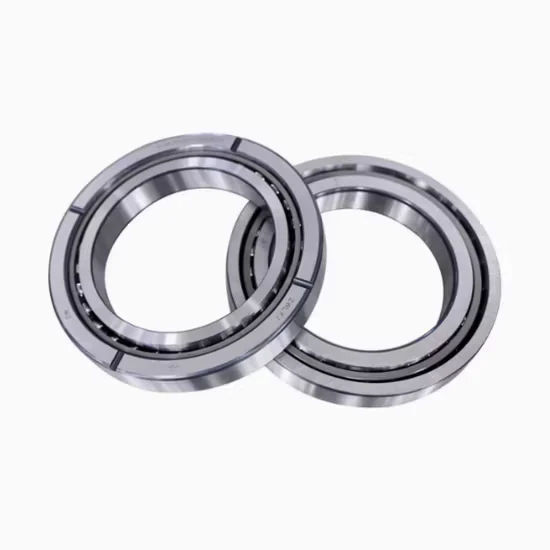
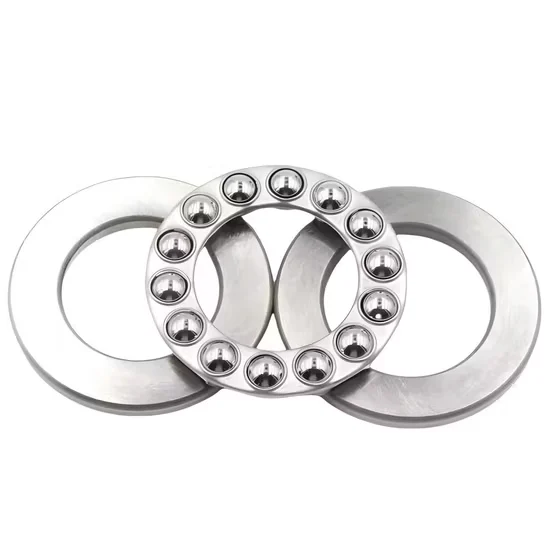
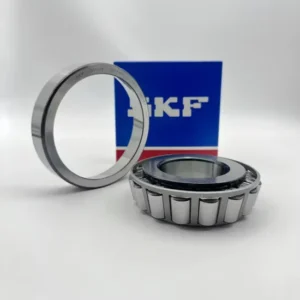
760205tn1 Thrust Angular Contact Ball Bearing 25x52x15 mm for Ball Screws
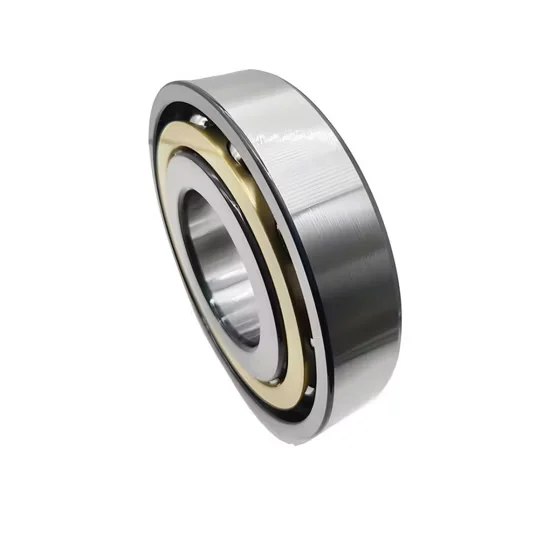
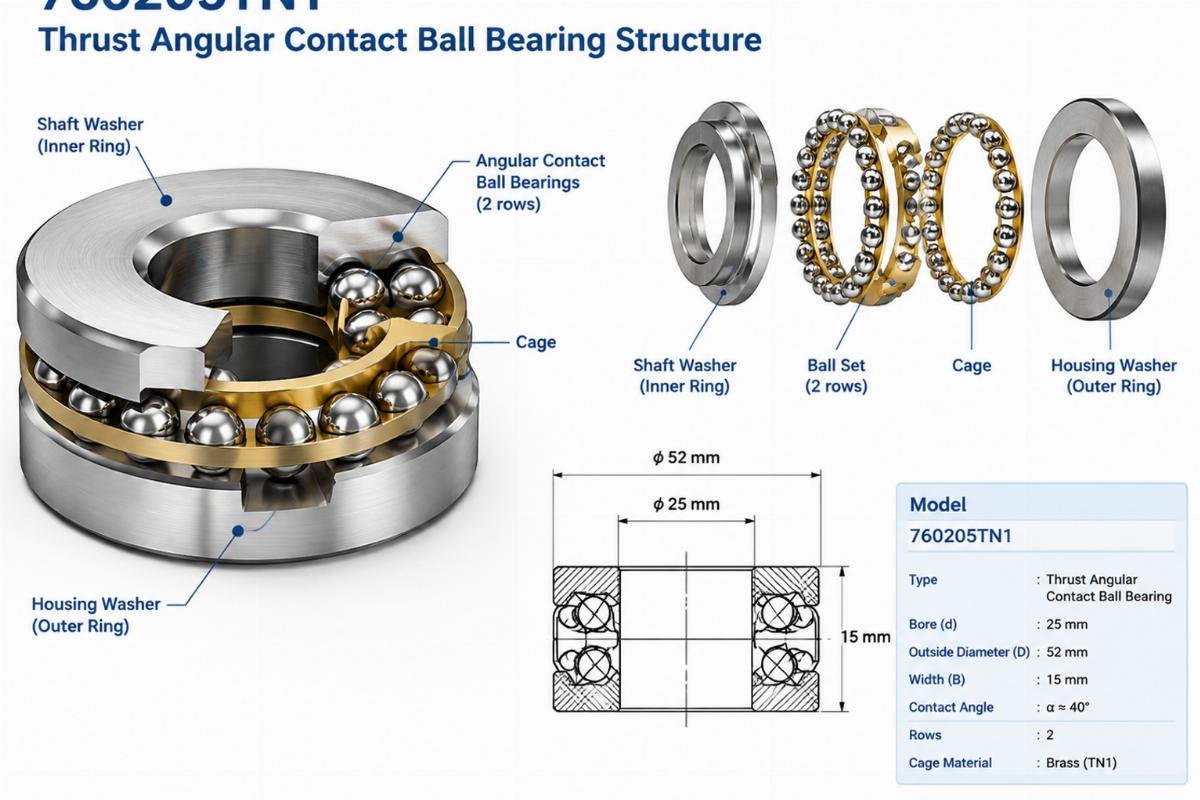
760205tn1 Thrust Angular Contact Ball Bearing 25×52×15 mm P2 — Designed for ball screw support, this open-type bearing requires external lubrication and delivers high axial rigidity. Manufactured from Gcr15 bearing steel, it reliably handles heavy thrust loads in precision machine tool spindles.
Scan the official app QR code on the original packaging to instantly verify product authenticity and traceability.
Traceable Batch Records — Every 760205tn1 unit ships with verifiable manufacturer lot documentation to guarantee material pedigree.
Technical Specifications
Parameter
Value
Designation
760205tn1
Bearing Type
Thrust Angular Contact Ball Bearing
Bore Diameter (d)
25 mm
Outside Diameter (D)
52 mm
Width (T)
15 mm
Material
Gcr15 (Suj2) Bearing Steel
Cage Material
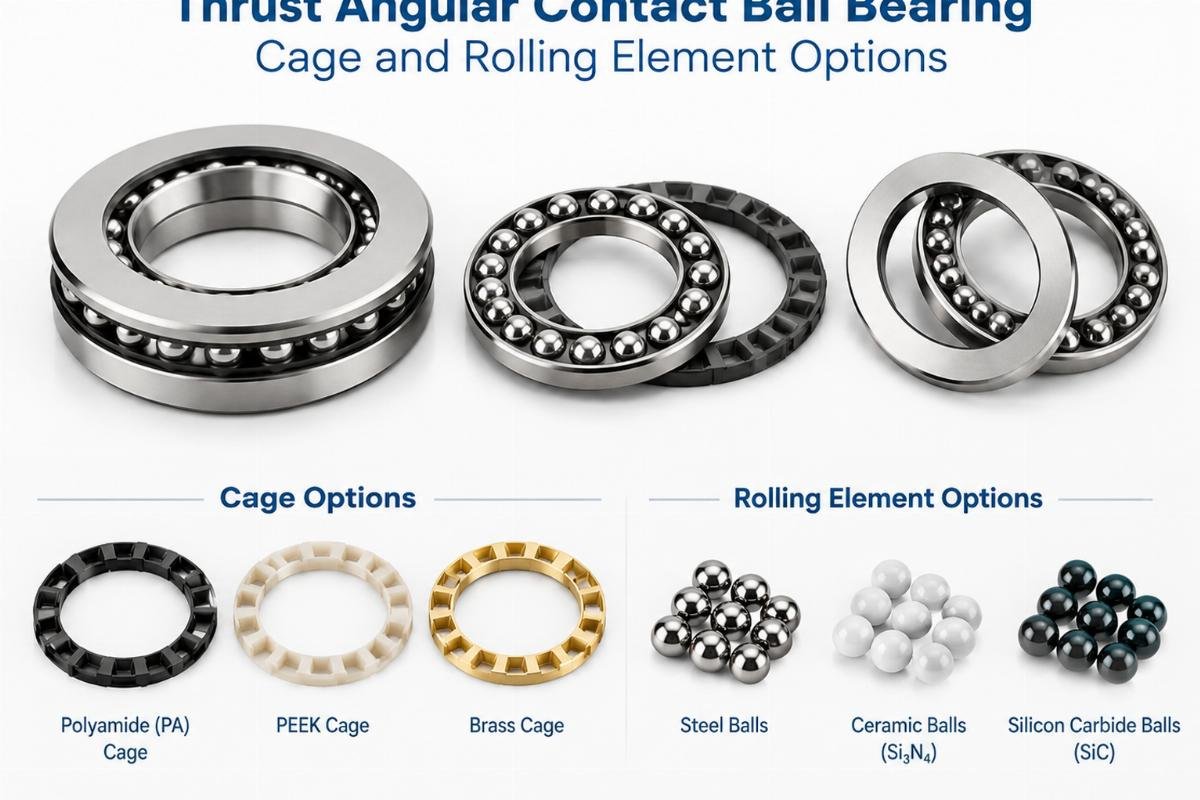
Brass (M), Nylon (Tn), Steel
Seal or Shield Type
Open
Precision Class
P0, P6, P5, P4, P2
Arrangement
Single Row / Double Row
Note: The “tn1” suffix is unverified and requires manufacturer catalog confirmation for exact cage or clearance specifics.
Application Suitability
Industry
Typical Applications
Machine Tools
Ball screw support mechanisms for CNC lathes and milling centers
Precision Equipment
High-accuracy linear positioning stages and indexing tables
Robotics
Articulated joint actuators requiring zero-backlash axial support
Why Cage Material Dictates Survival for the 760205tn1 thrust angular contact ball bearing
Mismatched cage alloys cause rapid thermal seizure in high-speed screw drives. I once saw a CNC ball screw completely lose its positioning accuracy because a steel cage was forced into a high-speed, light-load application. The friction heat warped the screw. Selecting the right 760205tn1 thrust angular contact ball bearing requires matching the cage to the exact rotational profile. If the cage generates excess drag, the entire machining tolerance is compromised, leading to scrapped parts and angry customers. [NEED_CITE: thermal seizure mechanisms in high-speed angular contact bearings]
Aligning Bearing Dynamics with CNC Feed Systems
When specifying a 760205tn1 thrust angular contact ball bearing for ball screw support, the primary goal is eliminating axial play under reversing loads. Our engineering team cross-references your machine’s rapid traverse rates to ensure the selected precision class and cage design maintain rigidity. We evaluate the specific cutting forces and acceleration profiles of your CNC axes. This detailed analysis prevents the common mistake of over-specifying heavy-duty cages for high-speed, light-load routing operations, ensuring optimal thermal stability.
Managing Axial Loads and Thermal Expansion in Screw Drives
Ball screw assemblies endure continuous bidirectional thrust loads and rapid acceleration, demanding exceptional axial stiffness. At elevated speeds, inadequate lubrication in open-type designs leads to rapid temperature spikes, altering the internal clearance and degrading positioning accuracy. Proper preload and lubrication intervals are critical to prevent the rolling elements from skidding. When the thermal expansion of the screw shaft is not compensated by the bearing arrangement, the axial positioning drifts significantly, ruining the surface finish of the machined parts. [NEED_CITE: skidding and smearing in thrust-loaded angular contact bearings]
Decoding the 7602 Series and Cage Variants
The 7602 prefix designates a specialized thrust angular contact geometry optimized for heavy axial loads with minimal radial capacity. The 05 indicates a 25 mm bore diameter, standard for mid-sized machine tool feed screws. While brass cages handle heavy vibrations and shock loads, the nylon variants are essential for high-speed, light-load scenarios to minimize centrifugal forces and friction. Open sealing allows direct integration with the machine’s centralized oil-air lubrication system, ensuring continuous cooling. P4 and P2 precision classes are typically required here to guarantee sub-micron axial runout, keeping the tool tip exactly where the controller commands it.
The Hidden Toll of Incorrect Preload and Cage Selection
Installing a bearing with the wrong internal clearance or cage material leads to unplanned downtime and catastrophic damage to the ball screw nut. According to ISO 15243, inadequate lubrication or excessive preload manifests as surface smearing and premature raceway spalling. This not only voids the machine warranty but forces a complete teardown of the axis assembly to restore geometric accuracy. The hidden costs include lost production shifts, emergency freight for replacement parts, and the labor hours required to realign the entire linear guide system. [NEED_CITE: rolling bearing failure mode classification per ISO 15243]
Securing Authentic Components for Precision Axes
Sourcing genuine thrust angular contact bearings requires strict verification, as counterfeit cages often fail under high RPMs. We provide complete batch traceability for every 760205tn1 unit, ensuring the metallurgical integrity matches the OEM specifications. Our inventory covers multiple precision grades, allowing you to consolidate mixed-brand and mixed-size orders without juggling various suppliers. We also offer cross-reference consultation to verify equivalent models if your preferred brand faces extended lead times. This ensures your maintenance team never has to compromise on the exact precision class needed for the ball screw support.
Documentation & Authenticity
Original manufacturer lot traceability documents verifying the Gcr15 steel pedigree.
Dimensional and running accuracy inspection reports confirming P4 or P2 tolerances.
Material certification validating the specific cage polymer or brass alloy used.
Certificate of Conformity matching the exact precision class requested for the ball screw.
Storage, Handling & Mounting
Store the open-type bearing in its original vapor-phase inhibitor packaging until the exact moment of mounting to prevent raceway corrosion.
Use clean, lint-free gloves when handling the P2 precision components to avoid skin acidity etching the Gcr15 steel surfaces.
Maintain the factory-matched pairing marks on double-row arrangements to preserve the calibrated axial preload during installation.
Apply the specified spindle oil immediately after unsealing, as the open design lacks pre-packed grease for high-speed ball screw operation.
Engineering Data Required for Technical Verification
To ensure the selected thrust angular contact bearing perfectly matches your feed axis, please share the ball screw’s dynamic thrust load, maximum rapid traverse speed, and operating temperature range. Providing the OEM machine tool model number allows our team to perform a precise cross-reference check and validate the required precision class and preload configuration.
Frequently Asked Questions
Q: How do I choose between P4 and P2 precision for ball screw support?
A: P4 is generally sufficient for standard CNC milling and turning centers where micron-level positioning is adequate. P2 precision is reserved for ultra-precision jig borers and grinding machines requiring sub-micron axial accuracy. We review your machine’s tolerance requirements to recommend the exact class.
Q: What lubrication is recommended for open-type thrust angular contact bearings?
A: Open designs in high-speed ball screws typically require oil-air or oil-mist lubrication systems to manage heat and reduce friction. Grease is rarely suitable here due to churning losses at high RPMs. We can advise on the optimal oil viscosity based on your operating speed.
Q: How can I verify the authenticity of the cage material?
A: We supply material certification documents that specify the exact polymer grade for nylon cages or the alloy composition for brass cages. You can also verify the batch through the manufacturer’s official traceability system to ensure the cage can withstand your specific rotational speeds.
Q: What is the difference between single and double row arrangements here?
A: Single row bearings must be mounted in pairs or sets to handle bidirectional axial loads and provide rigidity. Double row or pre-matched sets come with factory-calibrated preload, simplifying installation and ensuring consistent axial stiffness without requiring manual spacer adjustments on the shop floor.
Q: How do I properly preload these bearings during installation?
A: Preload is typically applied using a precision locknut and a spacer ring machined to the exact required thickness. Over-preloading causes excessive heat, while under-preloading leads to axial play. We provide mounting guidelines to help your maintenance team achieve the correct axial rigidity.
Shipping Information
EU Warehouse
3-7 working days (bonded stock)
Direct from China
Shanghai & Ningbo hubs (bulk / FCL)
Markets Served
DE · IT · PL · ES · NL · FR · EU+
Incoterms
DDP / DAP available on request
Minimum Order
Contact us for MOQ details
Documents Included with Every Shipment
EN and ISO Quality Certificates
Batch traceability and manufacturing standard
Material & Heat-Treatment Reports
Full material composition and process records
CE Declaration of Conformity
For bearing units and motion products
RoHS Compliance Declaration
Restriction of hazardous substances
EUR.1 Movement Certificate
Preferential origin for EU customs
Certificate of Origin
Country of manufacture documentation
Correct HS Codes
Pre-classified for smooth customs clearance
Commercial Invoice & Packing List
VAT-compliant intra-EU invoicing
Transparent Landed Cost with Tax Explanation
SKFEU provides full price transparency so EU buyers know exactly what they pay. No hidden duties, no surprise charges at customs.
VAT-Compliant Invoicing
All intra-EU transactions are invoiced with correct VAT treatment. B2B buyers with valid EU VAT numbers receive zero-rated invoices where applicable.
No Unexpected Import Duties
Goods shipped from our EU bonded warehouse arrive as intra-EU movements -- no import duties, no customs delays for EU-based buyers.
EUR.1 & Origin Docs Ready
For shipments direct from China, EUR.1 movement certificates and certificates of origin are prepared in advance to minimise customs clearance time.
DDP Pricing Available
Ask for Delivered Duty Paid quotations -- we absorb all import costs so your landed cost is fixed and predictable from day one.
Need a landed cost breakdown? Contact Sofia at
sofia@skfeu.com
or via WhatsApp for a full DDP quotation including freight, duties and VAT for your country.
Send Inquiry
Request Pricing & Availability
Share your requirements and Sofia will respond within one working day with pricing, lead time and full documentation details.