


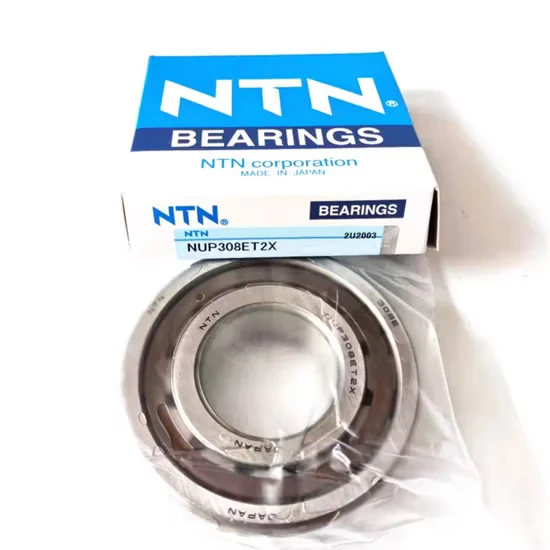


Cross-Reference Triad Alignment — We verify dimensional, load, and speed parameters against OEM textile machinery specs before confirming any cylindrical roller equivalent.
Technical Specifications
| Parameter | Value |
|---|---|
| Product Type | Cylindrical Roller Bearing |
| Material Options | Chrome Steel Gcr15 / 100cr6 |
| Alignment | Non-Aligning Bearings |
| Row Configuration | Single-Row / Double-Row |
| Origin | Shandong, China |
| Certification | ISO-compliant quality assurance |
| Customization | Custom sizes available upon request |
Application Suitability
| Industry | Typical Applications |
|---|---|
| Textile Manufacturing | Loom shedding mechanisms, spinning frame drafting rollers |
| Weaving Machinery | Warp beam let-off systems, weft insertion drives |
| Yarn Processing | Twister spindles, roving frame flywheel supports |
Why Textile Loom Cylindrical Roller Bearing Supplier Selection Dictates Fabric Quality
Vibration from mismatched rolling elements directly translates into visible weaving defects and yarn breakage.
Unplanned downtime in spinning and weaving due to bearing failure directly impacts fabric output and tight delivery schedules. Early in my career analyzing field failures, I saw a spinning frame equipped with standard clearance and pressed steel cages overheat and seize at high speeds, snapping hundreds of yarn ends simultaneously. This catastrophic failure mode highlights why relying on a qualified textile loom cylindrical roller bearing supplier is critical for maintaining continuous loom operation [NEED_CITE: rolling bearing failure mode classification per ISO 15243].

Matching Bearing Configuration to Loom Dynamics
Selecting the right configuration requires understanding the specific radial loads and shaft rigidity demands of your weaving equipment. Our engineering team provides cross-brand equivalent model consultation to ensure the chosen single or double-row setup perfectly aligns with your machine’s operational profile. As a dedicated textile loom cylindrical roller bearing supplier, we prioritize exact fitment over generic substitutions to prevent premature wear in high-cycle textile environments.
Operational Challenges in Spinning and Weaving Environments
Textile machinery operates under continuous radial loads with frequent starts and stops, demanding high fatigue strength from the rolling elements. The ambient environment often contains cotton dust and synthetic fibers, which can infiltrate inadequately sealed housings and degrade lubrication. High rotational speeds in spinning frames generate significant frictional heat, making internal clearance selection vital to accommodate thermal expansion. Proper lubrication intervals must be strictly maintained to prevent cage wear and subsequent roller skewing [NEED_CITE: lubrication failure mechanisms in high-speed textile machinery].
Material and Configuration Options for Textile Machinery
Chrome Steel Gcr15 and 100cr6 variants are available to provide the necessary wear resistance and fatigue strength for continuous loom operation. Depending on the shaft rigidity requirements, buyers can choose between single-row and double-row configurations to optimize radial load distribution. Non-aligning designs are typically specified to ensure strict shaft positioning, which is absolutely critical for textile machinery synchronization. Selecting the appropriate material and row configuration ensures the bearing withstands the specific dynamic stresses of spinning and weaving applications without compromising dimensional stability.

The Hidden Costs of Incorrect Bearing Selection
Specifying an incorrect internal clearance or cage material for high-speed textile applications inevitably leads to catastrophic damage and unplanned production halts. When thermal expansion exceeds the designed operational limits, the rolling elements can bind within the raceway, causing immediate seizure and extensive shaft damage. Such premature failures not only void equipment warranties but also result in massive financial losses from scrapped fabric batches. Adhering to the life calculation and failure analysis frameworks outlined in ISO 281 helps mitigate these severe operational risks [NEED_CITE: bearing life calculation and application guidelines per ISO 281].
Why Source Your Textile Bearings Through Us
We maintain massive spot inventory covering thousands of standard and special part numbers, ensuring rapid fulfillment for urgent MRO replacements. Our technical selection support helps you avoid the costly mistake of mismatching cage materials or internal clearances for high-speed loom shafts. Every shipment includes complete traceability documentation, guaranteeing you receive genuine original bearings rather than unverified substitutes. We offer flexible consolidation shipments, allowing you to mix different bearing sizes and brands in a single container to optimize freight costs. Furthermore, our long-term after-sales technical support provides detailed failure analysis if unexpected wear patterns emerge in your weaving machinery.
Documentation & Authenticity
- Material certification confirming Gcr15 or 100cr6 steel composition for textile applications.
- Dimensional inspection reports verifying strict non-aligning tolerances before dispatch.
- Original batch traceability records linking each bearing to its specific production run.
- Running accuracy inspection confirming precise radial internal clearance for high-speed looms.
Storage, Handling & Mounting
- Store single-row and double-row units in original packaging to prevent cotton dust contamination.
- Use induction heating for mounting chrome steel Gcr15 bearings to preserve precise internal clearances.
- Keep non-aligning cylindrical rollers away from corrosive chemicals to protect the 100cr6 steel surfaces.
- Verify shaft rigidity and housing tolerances before installing double-row configurations on weaving machines.
Requesting a Technical Quotation
To ensure precise model selection, please provide your specific textile equipment model numbers, available installation space, and detailed operating conditions. Sharing information regarding radial loads, rotational speeds, and ambient temperatures allows our engineering team to determine the exact single or double-row configuration required. Specifying the environmental exposure, such as high cotton dust levels, helps us recommend the most appropriate sealing and material options for your application.
Frequently Asked Questions
Q: How to determine the exact cylindrical roller bearing model based on textile loom equipment parameters?
A: Determining the correct model requires analyzing the specific radial loads, shaft speeds, and operating temperatures of your textile loom. Our engineering team cross-references your equipment parameters with manufacturer catalogs to identify the precise single or double-row configuration needed. Providing the original equipment manufacturer part number or detailed housing dimensions ensures an exact fit for your spinning or weaving machinery.
Q: What are the common failure modes of bearings in high-vibration spinning and weaving machines?
A: High-vibration environments often lead to cage wear, roller skewing, and raceway spalling if the bearing lacks adequate fatigue strength. Inadequate internal clearance can cause thermal binding during high-speed operation, leading to complete seizure. Contamination from cotton dust also accelerates lubrication degradation, resulting in premature friction and surface damage. Regular condition monitoring helps identify these failure modes early.
Q: Single-row vs. double-row cylindrical roller bearings: how to choose for specific loom shaft applications?
A: Single-row configurations are typically chosen for applications requiring high radial load capacity and moderate shaft rigidity. Double-row variants are selected when the loom shaft demands enhanced rigidity and superior resistance to complex radial forces. The choice depends on the specific mounting space, load distribution, and synchronization requirements of your weaving or spinning equipment. Our technical team can evaluate your shaft dynamics to recommend the optimal row configuration.
Q: How to manage custom dimensions and MOQ for urgent textile machinery MRO replacements?
A: We offer flexible ordering options ranging from single-unit emergency spare parts to full container consolidation shipments for bulk projects. For custom dimensions, our engineering team reviews your specific housing and shaft drawings to manufacture or source the exact non-standard size required. This flexible approach ensures your textile machinery experiences minimal downtime, regardless of the order volume or urgency of the maintenance requirement.
Q: What maintenance and lubrication cycles are recommended to maximize bearing life in textile equipment?
A: Lubrication cycles depend heavily on the rotational speed, operating temperature, and contamination level within your textile manufacturing environment. High-speed spinning frames typically require more frequent re-lubrication to dissipate frictional heat and flush out microscopic debris. We recommend establishing a condition-based maintenance schedule, monitoring vibration and temperature trends to optimize grease replenishment intervals and extend the operational lifespan of your cylindrical roller bearings.


