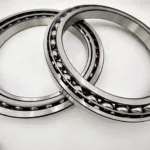
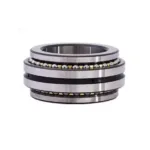
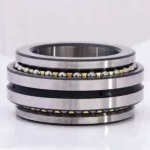
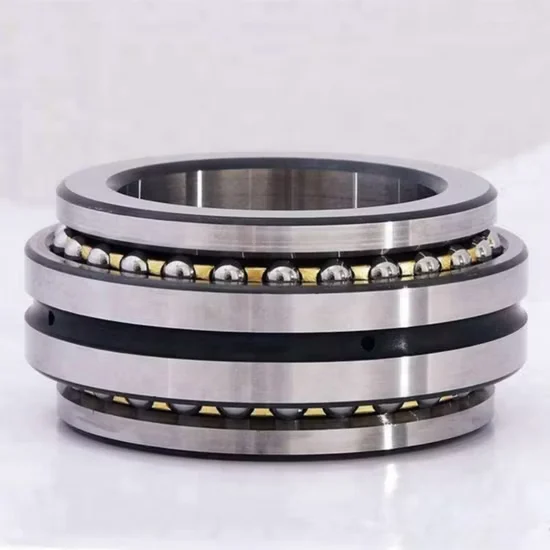
Double-Row Angular Contact Ball Bearing for Excavator & Construction Machinery
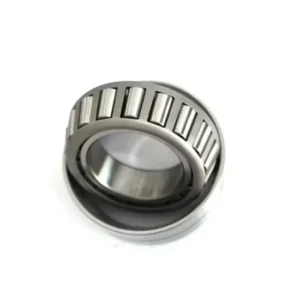
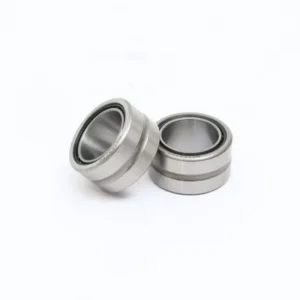
Double-Row Angular Contact Ball Bearing for Excavators — engineered with Gcr15 bearing steel to withstand heavy axial and radial loads in harsh construction environments.
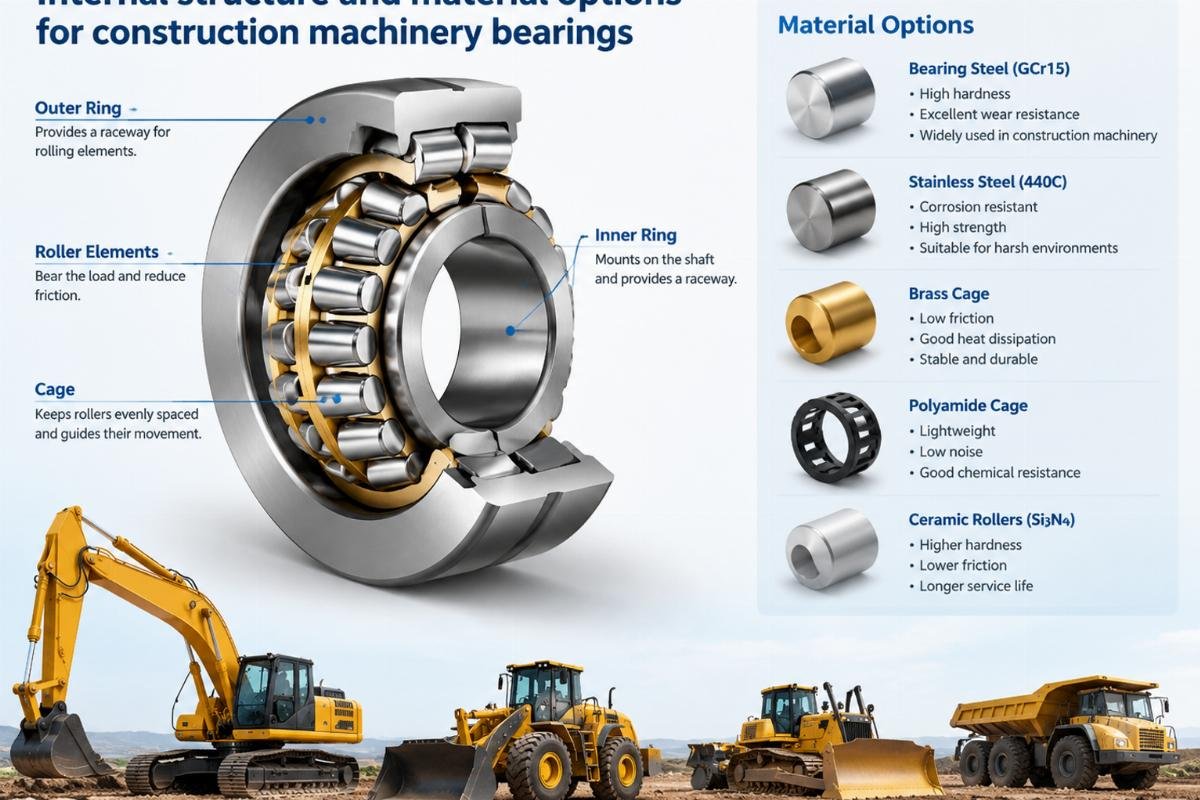
Unseparated design with machined brass, nylon, or pressed steel cages ensures reliable performance under extreme equipment vibration.
Available in P0 to P2 precision ratings to match exact heavy machinery tolerances.
Every shipment includes a complete document package with material certificates and dimensional inspection reports.
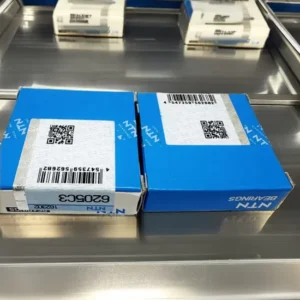
QR Code Verification — Every heavy-duty bearing shipment includes scannable authenticity tags linked directly to the manufacturer’s official validation application.
Technical Specifications
Parameter
Value
Product Type
Angular Contact Ball Bearing
Rows Number
Single Row / Double Row
Separated
Unseparated
Load Direction
Thrust Bearing
Material
Gcr15 (SUJ2) Bearing Steel
Seal
Open
Cage
Brass (M), Nylon (TN), Steel
Precision Rating
P0, P6, P5, P4, P2
Origin
Shandong, China
Application Suitability
Industry
Typical Applications
Construction & Earthmoving
Excavator slewing mechanisms and boom articulation joints
Heavy Equipment
Loader pivot points and crane rotation assemblies
Mining Machinery
Dragline walking mechanisms and continuous miner cutting heads
Why Choosing the Right Excavator Double-Row Angular Contact Ball Bearing Supplier Prevents Premature Slewing Failures
Cage material mismatch under heavy vibration causes catastrophic fragmentation long before the raceways show wear.
Downtime on a mining site costs thousands per hour, yet many procurement teams overlook cage suffixes during cross-referencing. I once tore down an excavator where a brass cage was swapped for pressed steel, leading to immediate shattering under high-impact axial loads. Securing a reliable excavator double-row angular contact ball bearing supplier ensures exact OEM specification matching without the extended lead times of direct channels. [NEED_CITE: rolling bearing failure mode classification per ISO 15243]
Matching Cage Options to Heavy Equipment Vibration Profiles
An authentic excavator double-row angular contact ball bearing supplier provides versatile cage materials, including machined brass, nylon, and pressed steel, to suit distinct operational frequencies. Machined brass cages absorb severe shock loads typical in digging cycles, while polymer alternatives reduce friction in continuous rotation tasks. Selecting the correct cage prevents structural fatigue and extends service intervals in harsh environments.
Managing Axial Loads and Contamination in Earthmoving
Excavator joints endure extreme combined loading, where sudden reverse axial forces can compromise unseparated bearing structures. Open seal configurations require rigorous external lubrication protocols to flush out abrasive silica dust prevalent in mining sites. Thermal expansion from continuous friction demands careful clearance selection to prevent internal binding. Proper grease selection and relubrication cycles are critical to maintaining the integrity of the rolling elements. [NEED_CITE: lubrication and contamination impact on bearing life per ISO 281]
Decoding Material and Precision Options for Construction Machinery
Gcr15 bearing steel offers high wear resistance, forming the baseline for heavy machinery components subjected to immense contact stress. Depending on the specific operating temperature and speed requirements, buyers can choose between brass, nylon, or steel cage variants. Precision ratings spanning from P0 to P2 allow maintenance teams to match exact machinery tolerance requirements for smooth slewing operations. Unseparated designs with double-row configurations efficiently accommodate the heavy axial and radial loads encountered during trenching. Understanding these material and precision options ensures the selected component survives the punishing dynamics of construction sites.
The Financial Impact of Incorrect Cross-Referencing
Substituting a specified machined brass cage with a stamped steel alternative leads to unplanned downtime and catastrophic damage to adjacent structural components. Premature failure in critical articulation joints often voids equipment warranties and halts entire project phases. Misaligned precision classes cause excessive vibration, accelerating wear on seals and housing bores. Recognizing these failure modes through the lens of ISO 15243 helps procurement engineers avoid costly specification errors. [NEED_CITE: economic consequences of unplanned machinery downtime]
Engineering Support Beyond the Transaction
We maintain massive spot inventory covering thousands of standard and special part numbers, enabling full container consolidation or single-unit emergency shipments. Our technical team provides cross-brand equivalent model consultation to verify cage suffixes and precision classes against your OEM manuals. Every order includes complete traceability documentation, ensuring genuine material assurance for critical heavy equipment applications. We offer flexible sourcing costs compared to direct official channels while maintaining ISO-compliant quality standards. Our global shipping consolidation and long-term after-sales technical support guide you through failure analysis and application optimization.
Documentation & Authenticity
Certificate of Conformity validating Gcr15 steel metallurgy for heavy equipment applications.
Original batch traceability records linking each open-type bearing to its production heat number.
Running accuracy inspection reports confirming P4 or P2 precision tolerances before dispatch.
Material test certificates verifying the specific brass or nylon cage composition.
Origin documentation supporting customs clearance for global construction machinery projects.
Storage, Handling & Mounting
Store open-seal configurations in original packaging to prevent abrasive dust ingress before mounting.
Use clean gloves when handling P4 precision bearings to avoid skin moisture causing micro-corrosion on Gcr15 steel.
Apply induction heating for inner ring mounting to preserve the exact interference fit required for excavator slewing joints.
Follow strict external relubrication schedules immediately after installation since these bearings lack integrated seals.
Keep machined brass cage variants separated from pressed steel inventory to prevent accidental misapplication during maintenance.
Preparing Your Technical Requirements
To ensure precise model determination, please provide your equipment model, installation space dimensions, and specific load and speed conditions. Detail the operating environment, including exposure to dust, moisture, or extreme temperatures, so our engineering team can recommend the optimal cage material and precision class. Sharing existing OEM part numbers allows us to perform accurate cross-reference verification and prevent suffix mismatches.
Frequently Asked Questions
Q: How to determine the exact bearing model based on excavator equipment parameters?
A: Provide the equipment model, installation space dimensions, and specific radial and axial load profiles. Our engineering team analyzes these parameters alongside operating speeds and environmental conditions to specify the exact double-row configuration, precision class, and cage material required for your machinery.
Q: What are the common failure modes of angular contact bearings in construction machinery?
A: Common issues include cage fragmentation due to heavy vibration, raceway spalling from abrasive contamination, and internal binding caused by thermal expansion. These failures often stem from incorrect cage material selection or inadequate relubrication cycles in open-type configurations operating in dusty mining environments.
Q: Brass vs. nylon vs. steel cages: which material suits heavy-duty vibrating applications?
A: Machined brass cages are generally preferred for heavy-duty vibrating applications like excavator slewing rings due to their superior shock absorption and structural integrity. Nylon cages offer lower friction for continuous rotation, while pressed steel suits lighter, high-speed tasks but may fracture under severe impact loads.
Q: How to source obsolete or hard-to-find OEM bearings for older construction equipment?
A: Share the original equipment manufacturer part numbers and physical dimensions with our technical team. We utilize comprehensive cross-reference databases to identify exact modern equivalents or source reliable alternative specifications, ensuring older machinery receives compatible, high-quality replacement components without extended lead times.
Q: What is the recommended maintenance and relubrication cycle for heavy machinery bearings?
A: Maintenance intervals depend heavily on operating hours, load severity, and environmental contamination levels. Since these open-type bearings lack integrated seals, establishing a rigorous external relubrication schedule is essential to flush out abrasive particles and maintain a protective grease film across the rolling elements.
Shipping Information
EU Warehouse
3-7 working days (bonded stock)
Direct from China
Shanghai & Ningbo hubs (bulk / FCL)
Markets Served
DE · IT · PL · ES · NL · FR · EU+
Incoterms
DDP / DAP available on request
Minimum Order
Contact us for MOQ details
Documents Included with Every Shipment
EN and ISO Quality Certificates
Batch traceability and manufacturing standard
Material & Heat-Treatment Reports
Full material composition and process records
CE Declaration of Conformity
For bearing units and motion products
RoHS Compliance Declaration
Restriction of hazardous substances
EUR.1 Movement Certificate
Preferential origin for EU customs
Certificate of Origin
Country of manufacture documentation
Correct HS Codes
Pre-classified for smooth customs clearance
Commercial Invoice & Packing List
VAT-compliant intra-EU invoicing
Transparent Landed Cost with Tax Explanation
SKFEU provides full price transparency so EU buyers know exactly what they pay. No hidden duties, no surprise charges at customs.
VAT-Compliant Invoicing
All intra-EU transactions are invoiced with correct VAT treatment. B2B buyers with valid EU VAT numbers receive zero-rated invoices where applicable.
No Unexpected Import Duties
Goods shipped from our EU bonded warehouse arrive as intra-EU movements -- no import duties, no customs delays for EU-based buyers.
EUR.1 & Origin Docs Ready
For shipments direct from China, EUR.1 movement certificates and certificates of origin are prepared in advance to minimise customs clearance time.
DDP Pricing Available
Ask for Delivered Duty Paid quotations -- we absorb all import costs so your landed cost is fixed and predictable from day one.
Need a landed cost breakdown? Contact Sofia at
sofia@skfeu.com
or via WhatsApp for a full DDP quotation including freight, duties and VAT for your country.
Send Inquiry
Request Pricing & Availability
Share your requirements and Sofia will respond within one working day with pricing, lead time and full documentation details.