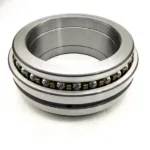
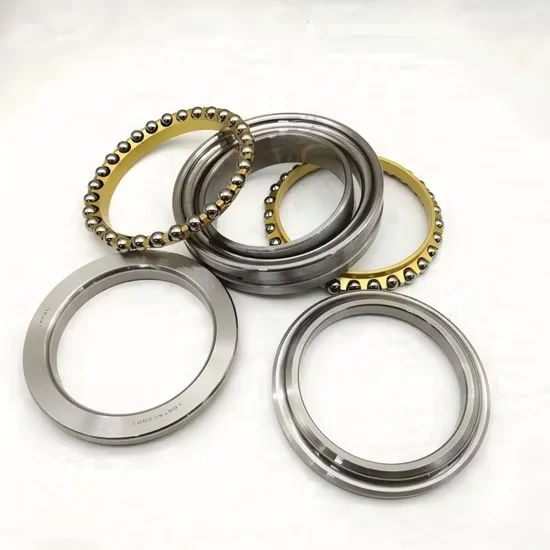
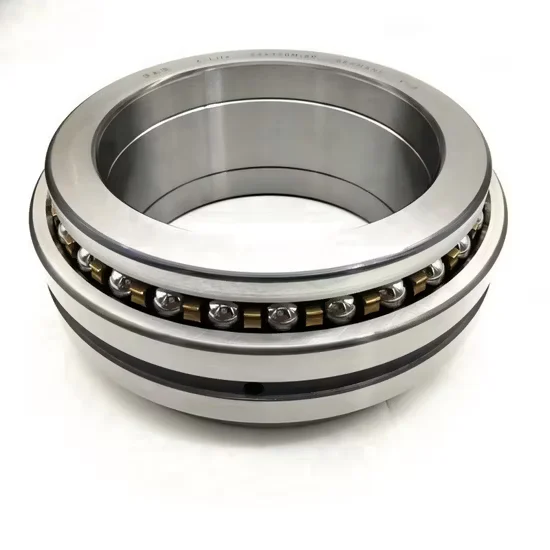
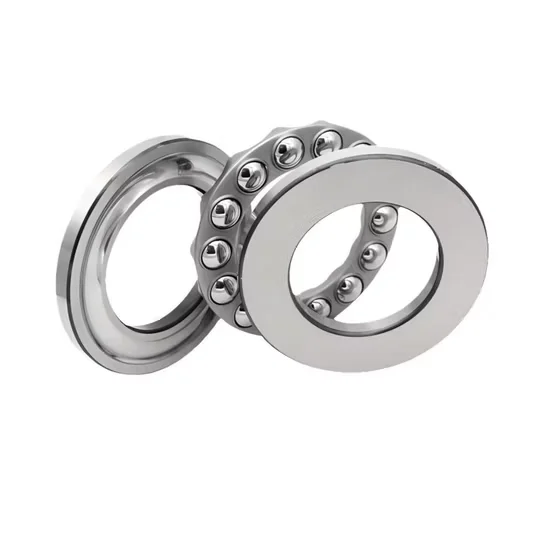
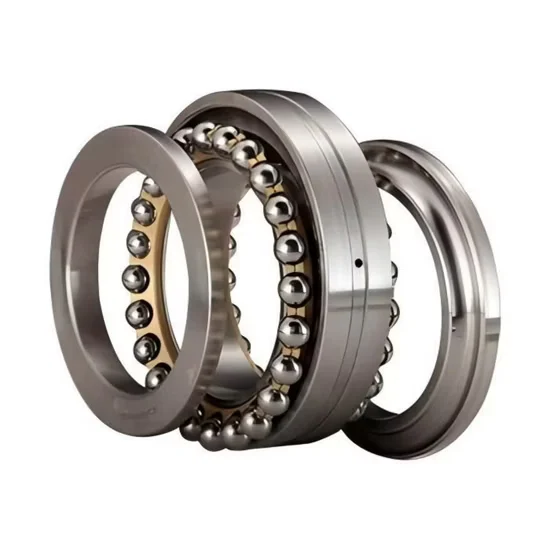
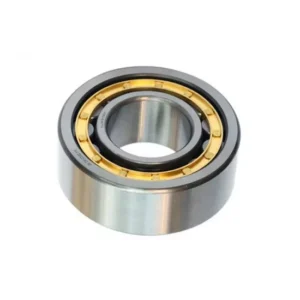
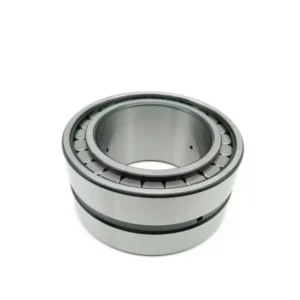
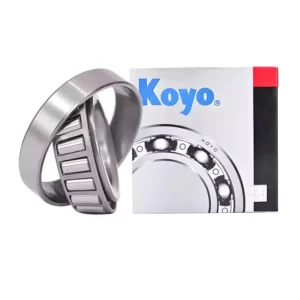
KOYO 7002 Angular Contact Ball Bearing for Machine Tools and Motors
KOYO 7002 Angular Contact Ball Bearing — Manufactured from premium GCr15 bearing steel, this open-type design requires external lubrication and sealing to ensure reliable performance in machine tool spindles and high-speed motors. The unseparated single-row structure effectively supports precise thrust loads. Verify product authenticity instantly by scanning the official app QR code upon delivery.
Unified Sourcing Network — Consolidate KOYO and other premium spindle bearings into a single shipment without juggling multiple regional distributors.
Technical Specifications
Parameter
Value
Designation
KOYO 7002
Bearing Type
Angular Contact Ball Bearing
Material
GCr15 (SUJ2) Bearing Steel
Seal or Shield Type
Open
Cage Material
Brass (M), Nylon (Tn), Steel
Precision Class
P0, P6, P5, P4, P2
Number of Rows
Single Row
Separated
Unseparated
Load Direction
Combined Radial and Axial
Origin
Shandong, China
Application Suitability
Industry
Typical Applications
Machine Tool Spindles
High-speed machining centers and CNC lathe headstocks
Electric Motors
High-frequency motor rotors requiring minimal vibration
Precision Robotics
Articulation joints demanding high rigidity and exact positioning
Why Spindle Vibration Ruins Machining Tolerances Before the Tool Even Wears
Precision class dictates the absolute ceiling of your surface finish.
When sourcing components for high-speed spindles, overlooking the exact tolerance grade leads to catastrophic runout. I learned this the hard way in Vietnam when a batch of standard precision bearings was mistakenly installed in a CNC spindle meant for ultra-precision grades, causing severe vibration and an entire batch of rejected parts. The financial impact of such errors extends far beyond the component cost, affecting overall production yield. [NEED_CITE: spindle vibration impact on surface roughness per ISO 230]
Aligning the KOYO 7002 Angular Contact Ball Bearing with Spindle Demands
Selecting the right KOYO 7002 angular contact ball bearing requires matching the open cage design and precision grade to your specific motor or spindle RPM. Our engineering team cross-references your operational parameters to ensure the selected variant handles the combined loads without premature thermal expansion.
Navigating Thermal and Lubrication Challenges in High-Speed Operations
High-speed spindles generate immense friction, making the open seal type essential for external oil-air or oil-mist lubrication systems. Without proper lubrication flow, the cage material experiences rapid thermal degradation. The choice between brass, nylon, or steel cages directly influences how the bearing manages heat dissipation and centrifugal forces at elevated rotational speeds. Furthermore, ambient temperature fluctuations can alter the internal clearance, demanding precise thermal management protocols during continuous machining cycles. [NEED_CITE: lubrication failure modes in high-speed spindles per ISO 15243]
Decoding the Core Specifications for Precision Applications
The availability of multiple precision classes, from P0 up to P2, allows exact matching to your machine tool’s geometric tolerance requirements. Higher precision grades like P4 and P2 minimize inner and outer ring dimensional deviations, which is critical for maintaining spindle rigidity. Furthermore, the GCr15 (SUJ2) bearing steel provides the necessary core hardness and wear resistance for sustained operation under continuous axial thrust and radial loads. The unseparated single-row design ensures optimal load distribution across the rolling elements during high-speed rotation.
The Hidden Downtime Costs of Ignoring Precision Suffixes
Installing a lower precision class in a high-speed application inevitably leads to unplanned downtime and catastrophic damage to the spindle housing. The resulting geometric errors often void the machine tool warranty and require complete assembly replacement. Adhering to strict tolerance frameworks prevents these compounding financial losses and extends the operational lifecycle of the equipment. Ignoring the specific cage material requirements can also trigger premature fatigue, leading to secondary damage in adjacent transmission components. [NEED_CITE: economic impact of unplanned downtime in precision manufacturing]
Securing Authentic Spindle Components Through Verified Channels
Sourcing the genuine KOYO 7002 angular contact ball bearing requires strict verification of the precision suffix to avoid the exact mismatch I experienced in Vietnam. We provide complete batch traceability and original factory packaging to guarantee the P-class rating matches your order. Our massive spot inventory ensures you receive the exact open-type configuration without enduring typical multi-week lead times. Additionally, our technical team offers cross-brand equivalent model consultation if your supply chain requires alternative premium options for urgent maintenance scenarios.
Documentation & Authenticity
Certificate of Conformity verifying the exact P0 to P2 precision class for your spindle application.
Original factory batch traceability linking the open-type bearing to its specific production run.
Dimensional and running accuracy inspection reports confirming tight geometric tolerances before dispatch.
Material test certificates validating the GCr15 (SUJ2) bearing steel composition and heat treatment.
Storage, Handling & Mounting
Store the open-type bearings in their original anti-corrosion packaging until immediately before spindle assembly to prevent surface oxidation.
Use clean, lint-free gloves when handling the P4 or P2 precision rings to avoid transferring skin oils that compromise high-speed performance.
Apply the specified oil-air or oil-mist lubrication immediately after mounting, as the open seal design relies entirely on external lubrication systems.
Verify the exact cage material (Brass, Nylon, or Steel) matches the spindle’s thermal profile before pressing the bearing into the housing.
Engineering Review and Inquiry Guidelines
To ensure optimal spindle performance, please share your operational parameters, including radial and axial loads, maximum RPM, and operating temperatures. Providing the OEM equipment model number allows our technical team to perform a precise cross-reference and L10 life calculation. This data ensures the selected precision class and cage material perfectly align with your machining requirements.
Frequently Asked Questions
Q: How do I verify the authenticity of the KOYO 7002 angular contact ball bearing upon delivery?
A: We provide original factory packaging with intact seals and complete batch traceability documentation. You can verify the authenticity by checking the provided Certificate of Conformity and cross-referencing the batch number with the manufacturer’s official verification systems to ensure it is a genuine product.
Q: What are the differences between P4 and P2 precision classes for machine tool spindles?
A: P2 precision offers tighter dimensional and running accuracy tolerances compared to P4, which is critical for ultra-high-speed spindles requiring minimal runout. Selecting between them depends on your specific surface finish requirements and the maximum rotational speed of your machining center.
Q: How do I choose the right cage material for high-speed motor applications?
A: Brass cages offer excellent durability and heat dissipation for heavy loads, while nylon cages reduce weight and friction for ultra-high-speed operations. Steel cages provide a balanced solution for standard high-speed applications. The choice depends on your specific RPM and thermal management capabilities.
Q: What is the recommended lubrication for open-type angular contact ball bearings?
A: Open-type bearings require external lubrication systems, typically oil-air or oil-mist setups, to manage the heat generated at high speeds. The exact oil viscosity and flow rate must be calibrated to your spindle’s maximum RPM and the selected cage material to prevent thermal degradation.
Shipping Information
EU Warehouse
3-7 working days (bonded stock)
Direct from China
Shanghai & Ningbo hubs (bulk / FCL)
Markets Served
DE · IT · PL · ES · NL · FR · EU+
Incoterms
DDP / DAP available on request
Minimum Order
Contact us for MOQ details
Documents Included with Every Shipment
EN and ISO Quality Certificates
Batch traceability and manufacturing standard
Material & Heat-Treatment Reports
Full material composition and process records
CE Declaration of Conformity
For bearing units and motion products
RoHS Compliance Declaration
Restriction of hazardous substances
EUR.1 Movement Certificate
Preferential origin for EU customs
Certificate of Origin
Country of manufacture documentation
Correct HS Codes
Pre-classified for smooth customs clearance
Commercial Invoice & Packing List
VAT-compliant intra-EU invoicing
Transparent Landed Cost with Tax Explanation
SKFEU provides full price transparency so EU buyers know exactly what they pay. No hidden duties, no surprise charges at customs.
VAT-Compliant Invoicing
All intra-EU transactions are invoiced with correct VAT treatment. B2B buyers with valid EU VAT numbers receive zero-rated invoices where applicable.
No Unexpected Import Duties
Goods shipped from our EU bonded warehouse arrive as intra-EU movements -- no import duties, no customs delays for EU-based buyers.
EUR.1 & Origin Docs Ready
For shipments direct from China, EUR.1 movement certificates and certificates of origin are prepared in advance to minimise customs clearance time.
DDP Pricing Available
Ask for Delivered Duty Paid quotations -- we absorb all import costs so your landed cost is fixed and predictable from day one.
Need a landed cost breakdown? Contact Sofia at
sofia@skfeu.com
or via WhatsApp for a full DDP quotation including freight, duties and VAT for your country.
Send Inquiry
Request Pricing & Availability
Share your requirements and Sofia will respond within one working day with pricing, lead time and full documentation details.