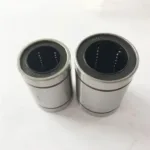
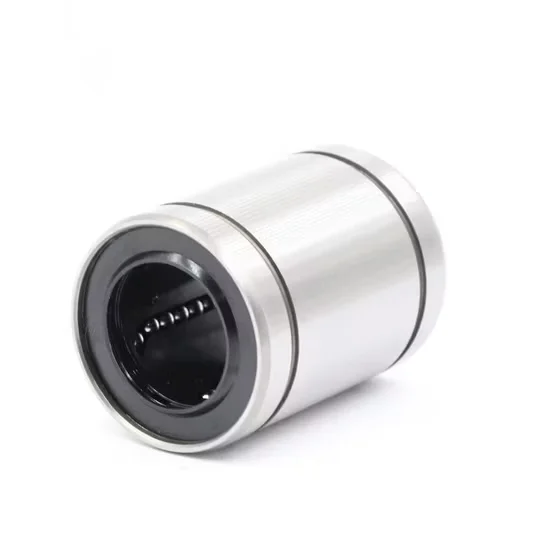
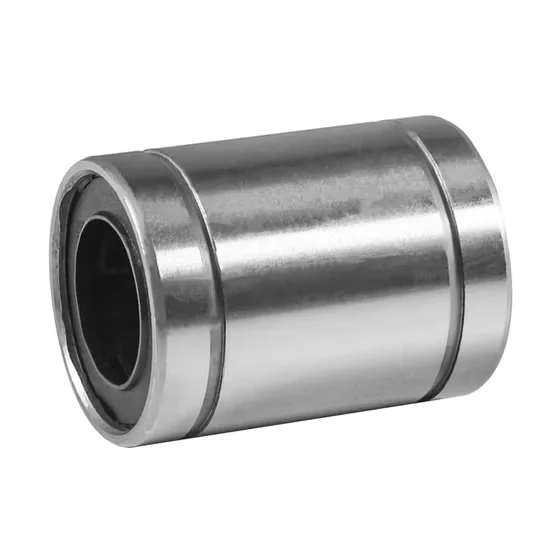
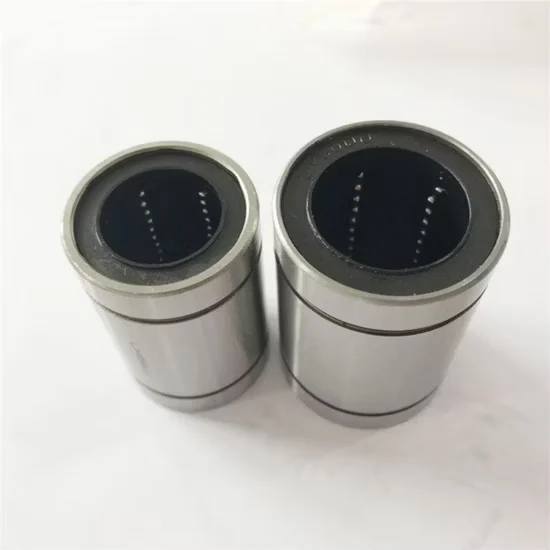
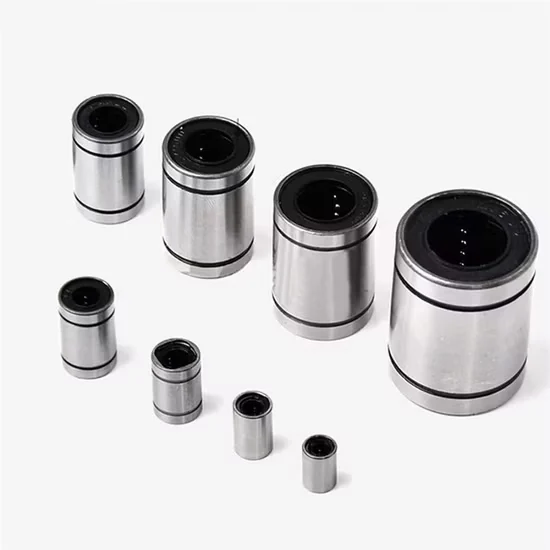
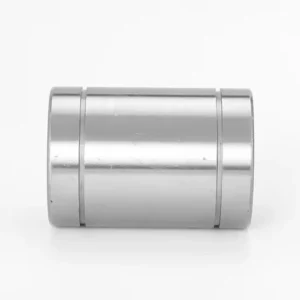
Lm30uu Cylindrical Linear Ball Bearings for CNC Machine Tools
Lm30uu Linear Motion Bearing — engineered with HRC 60-64 hardness for extended service life in continuous linear motion. Multiple cage materials including steel, copper, and nylon allow precise matching to specific CNC operating environments and friction requirements. Cross-reference bore diameter, overall length, and cage specification to guarantee exact dimensional alignment for your automation equipment.
Official QR Authentication — Every Lm30uu linear motion bearing ships with a scannable factory code to verify original batch traceability.
Technical Specifications
Parameter
Value
Designation
Lm30uu
Bearing Type
Linear Motion Bearing
Hardness
HRC 60-64
Cage Material
Steel Cage, Copper Cage, Nylon Cage (Options)
Origin
Shandong, China
Note: The “UU” designation in Lm30uu is an unverified suffix requiring manufacturer catalog confirmation for exact sealing specifications.
Application Suitability
Industry
Typical Applications
CNC Manufacturing
Spindle positioning slides and tool changer mechanisms
Industrial Robotics
Cartesian robot linear axes and end-effector guideways
Automation Equipment
Pick-and-place transfer carriages and precision assembly fixtures
Why Standard Linear Guides Fail in CNC Environments
Contamination breaches the raceway long before the load capacity is exceeded.
When evaluating a Lm30uu linear motion bearing for automated machining, engineers often focus purely on dynamic load ratings and basic static capacities. However, in my early days doing failure analysis on the shop floor, I saw standard open-type bearings installed on woodworking CNC routers. Without proper sealing, fine particulate matter and abrasive dust infiltrated the retainer, jamming the rolling elements within weeks and destroying the shaft surface. Sourcing the correct variant with appropriate environmental protection prevents these catastrophic stoppages and protects the broader machine tool investment from secondary damage. [NEED_CITE: contamination-induced bearing failure modes per ISO 15243]
Aligning Retainer Materials with CNC Operating Profiles
Selecting the right cage material for your Lm30uu linear motion bearing directly impacts high-speed travel smoothness and overall system rigidity. Steel cages handle heavy axial shocks during rapid tool changes and heavy cutting operations, maintaining structural integrity under severe stress. Conversely, nylon variants significantly reduce friction and operational noise in cleanroom automation or high-speed pick-and-place applications where acoustic limits matter. Copper retainers offer a reliable middle ground for continuous duty cycles where thermal dissipation is critical to preventing grease degradation. Our cross-brand sourcing network ensures you get the exact material match for your specific machine tool environment, avoiding the compromises of off-the-shelf generic parts.
Managing Particulate Ingress and Lubrication Starvation
CNC machining generates aggressive metallic swarf, abrasive grinding dust, and corrosive coolant mist that easily compromise linear travel mechanisms. If the sealing configuration is inadequate for the specific workshop environment, microscopic metallic debris scores the hardened shaft and destroys the HRC 60-64 raceway surface through three-body abrasion. Furthermore, high-speed traverse rates demand consistent and adequate lubrication; otherwise, localized overheating rapidly degrades the grease film and accelerates surface fatigue. Evaluating the exact environmental exposure dictates whether you need heavy-duty contact seals for maximum particulate protection or low-friction non-contact shields to minimize heat generation during continuous high-velocity movements. [NEED_CITE: lubrication starvation effects on linear bearing life]
Decoding Hardness and Clearance for Precision Travel
The specified HRC 60-64 hardness ensures the load-bearing plates and rolling elements resist brinelling under heavy static loads during prolonged machine idle times or clamping operations. In linear motion systems, internal clearance isn’t adjusted via preload like angular contact radial ball bearings; instead, the interference fit between the bearing sleeve and the hardened precision shaft dictates the overall rigidity and smoothness. A tighter fit eliminates mechanical play for high-precision milling and optical inspection but increases friction, requiring a careful balance between accuracy and drive motor capacity. Understanding these metallurgical and geometric interactions prevents the selection of overly rigid assemblies that stall drives or excessively loose configurations that ruin part tolerances.
The Cascading Impact of Incorrect Linear Guides
Specifying an inadequate bearing for a high-cycle CNC axis leads to microscopic tracking errors and stick-slip phenomena that inevitably ruin tight part tolerances. This unplanned downtime cascades into missed production deadlines, scrapped expensive material batches, and frustrated machine operators. According to established failure classification frameworks, improper sealing selection or incorrect cage material accounts for a significant share of premature linear guide replacements in heavy manufacturing. Ultimately, the financial cost of replacing a deeply scored linear shaft, rebuilding the carriage, and recalibrating the entire machine tool far outweighs the initial component investment in a properly specified and sealed linear motion assembly. [NEED_CITE: economic impact of unplanned machine downtime]
Securing Traceable Components for Critical Axes
We rigorously verify the exact cage material and sealing configuration before dispatch, preventing the common mismatch where an open bearing is accidentally sent for a highly dusty environment. Our inventory consolidation capability allows you to mix reliable domestic lines and premium international brands in a single shipment, optimizing your MRO budget without sacrificing operational quality. Every batch includes original factory documentation, ensuring your CNC maintenance team receives fully traceable components that satisfy strict ISO compliance audits. We also provide detailed technical cross-referencing to replace obsolete or discontinued linear guides with modern, fully supported equivalents that maintain the original equipment’s performance parameters.
Documentation & Authenticity
Original batch traceability documents linking the Lm30uu to its specific production run
Material hardness certificates confirming the HRC 60-64 raceway specifications
Dimensional inspection reports verifying shaft fit tolerances prior to dispatch
Factory certificate of conformity for international customs and quality audits
Storage, Handling & Mounting
Keep the Lm30uu in its original vapor-corrosion inhibitor packaging until immediate installation to protect the HRC 60-64 surfaces
Use clean lint-free gloves when handling the bearing sleeve to prevent acidic sweat from etching the precision ground raceway
Align the shaft carefully during press-fitting to avoid brinelling the steel or copper cage elements
Apply the recommended linear guide grease immediately after mounting if the bearing is an open type without pre-lubrication
Engineering Data Required for Technical Validation
To ensure the selected linear guide meets your exact CNC requirements, please share the continuous travel speed, maximum radial and moment loads, and the expected operating temperature range. Providing the specific machine tool model, the existing shaft diameter, and the housing bore allows our engineering team to verify cross-reference compatibility and dimensional interchangeability. Detailing the environmental exposure, such as heavy coolant splash, metallic dust concentration, or washdown requirements, helps us confirm the optimal sealing and cage material configuration for your specific application, ensuring long-term reliability and minimal maintenance intervention.
Frequently Asked Questions
Q: How do I verify the authenticity of multi-brand linear bearings?
A: We supply original factory batch traceability documentation and scannable QR codes for every Lm30uu linear motion bearing. This allows your quality control team to verify the manufacturing origin, material certifications, and production date directly through the manufacturer’s official authentication channels, eliminating the risk of counterfeit components in critical CNC assemblies.
Q: What are the critical cross-reference dimensions for linear motion bearings?
A: When replacing linear guides, the internal bore diameter, overall outer diameter, and total length must match precisely to fit the existing housing and shaft. Additionally, verifying the exact sealing type and retainer material ensures the replacement maintains the original equipment’s friction characteristics and contamination resistance without requiring mechanical modifications to the CNC machine tool.
Q: How to select the optimal cage material for specific CNC conditions?
A: Steel cages are ideal for heavy shock loads during rapid traverse, while nylon retainers reduce friction and noise in high-speed, clean automation environments. Copper cages provide excellent thermal dissipation for continuous duty cycles. Evaluating your specific traverse speeds, load profiles, and ambient temperatures allows our technical team to recommend the most durable option.
Q: How to interpret unverified suffixes when upgrading legacy equipment?
A: Legacy equipment manuals sometimes list suffixes that are no longer standard or lack clear definitions in current catalogs. In such cases, we analyze the physical dimensions, operating environment, and load requirements of the existing assembly to identify a modern, fully documented equivalent that matches or exceeds the original performance specifications for your linear motion system.
Q: What are the recommended lubrication practices for linear bearings?
A: Open-type linear bearings require regular external lubrication using high-grade linear guide grease to maintain a protective film on the rolling elements. Sealed variants are pre-lubricated and generally maintenance-free, but they must be monitored for seal degradation in harsh environments. Following the machine tool builder’s relubrication intervals prevents starvation and extends the service life of the assembly.
Shipping Information
EU Warehouse
3-7 working days (bonded stock)
Direct from China
Shanghai & Ningbo hubs (bulk / FCL)
Markets Served
DE · IT · PL · ES · NL · FR · EU+
Incoterms
DDP / DAP available on request
Minimum Order
Contact us for MOQ details
Documents Included with Every Shipment
EN and ISO Quality Certificates
Batch traceability and manufacturing standard
Material & Heat-Treatment Reports
Full material composition and process records
CE Declaration of Conformity
For bearing units and motion products
RoHS Compliance Declaration
Restriction of hazardous substances
EUR.1 Movement Certificate
Preferential origin for EU customs
Certificate of Origin
Country of manufacture documentation
Correct HS Codes
Pre-classified for smooth customs clearance
Commercial Invoice & Packing List
VAT-compliant intra-EU invoicing
Transparent Landed Cost with Tax Explanation
SKFEU provides full price transparency so EU buyers know exactly what they pay. No hidden duties, no surprise charges at customs.
VAT-Compliant Invoicing
All intra-EU transactions are invoiced with correct VAT treatment. B2B buyers with valid EU VAT numbers receive zero-rated invoices where applicable.
No Unexpected Import Duties
Goods shipped from our EU bonded warehouse arrive as intra-EU movements -- no import duties, no customs delays for EU-based buyers.
EUR.1 & Origin Docs Ready
For shipments direct from China, EUR.1 movement certificates and certificates of origin are prepared in advance to minimise customs clearance time.
DDP Pricing Available
Ask for Delivered Duty Paid quotations -- we absorb all import costs so your landed cost is fixed and predictable from day one.
Need a landed cost breakdown? Contact Sofia at
sofia@skfeu.com
or via WhatsApp for a full DDP quotation including freight, duties and VAT for your country.
Send Inquiry
Request Pricing & Availability
Share your requirements and Sofia will respond within one working day with pricing, lead time and full documentation details.