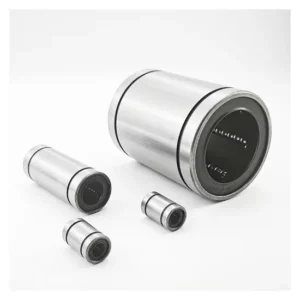
Silent Wear Linear Motion Ball Bearings for CNC Machining and Automation
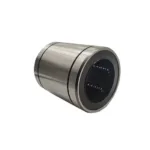
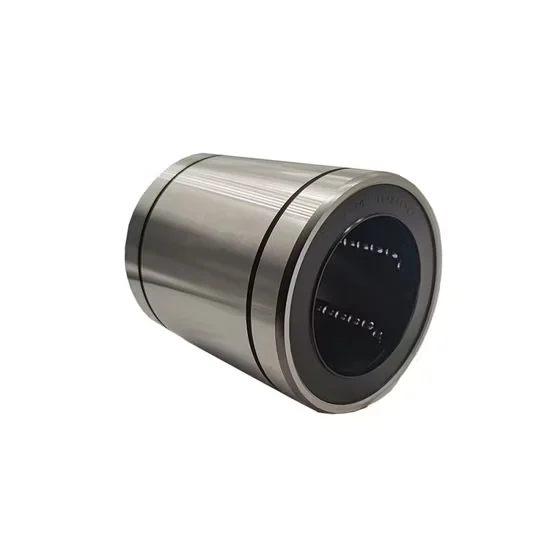
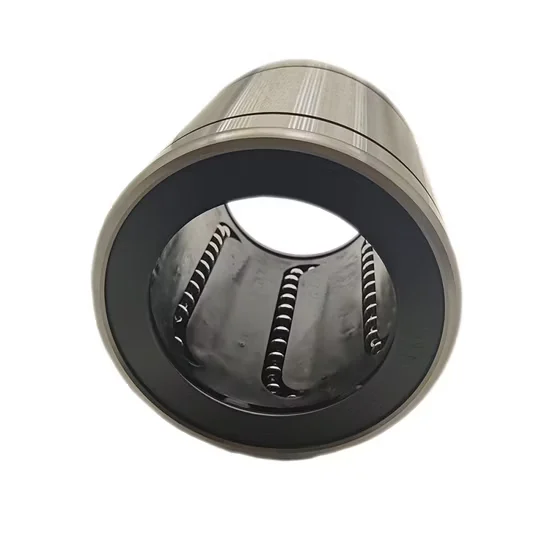
Linear Motion Ball Bearing for CNC Machining and Automation — HRC 60-64 hardness delivers consistent wear resistance across continuous linear travel cycles. Steel, copper, or nylon cage options accommodate varying speed and noise constraints in precision motion systems.
Engineered for machine tools and automated linear guides
Cage selection supports tailored operational performance
Scan the QR code on each package via our official app to verify shipment authenticity instantly.
QR Traceability Assured — Scan the manufacturer’s official app QR code to verify the metallurgical batch origin of each linear motion carriage before assembly.
Technical Specifications
Parameter
Value
Product Type
Linear Motion Ball Bearing
Hardness
HRC 60-64
Cage Material Options
Steel Cage, Copper Cage, Nylon Cage
Origin
Shandong, China
Application Suitability
Industry
Typical Applications
Machine Tools
CNC machining centers, spindle linear guides, tool changers
Automation Equipment
Pick-and-place robots, automated assembly lines, gantry systems
General Manufacturing
Precision measuring machines, packaging machinery linear axes
Why Dust Ingress Destroys Linear Motion Ball Bearings Before Fatigue Sets In
Contaminant exclusion dictates carriage survival far more than dynamic load capacity in dusty machine shops.
During my years installing automation lines in Dongguan, I watched a perfectly sized carriage seize within weeks because an iron-shielded variant was chosen over a rubber-sealed alternative for a dusty environment. The abrasive particles bypassed the non-contact shields, packed tightly into the retainer pockets, and generated severe guide rail chatter that ruined surface finishes. Sourcing from a reliable linear motion ball bearing supplier prevents these costly misapplications by rigorously matching seal types to the actual shop floor atmosphere rather than relying on generic catalog defaults. This proactive approach ensures the carriage survives the harsh reality of the shop floor, not just the theoretical conditions on a spec sheet [NEED_CITE: rolling bearing failure mode classification per ISO 15243].
Aligning Carriage Selection with CNC Machining Demands
Precision linear axes demand exceptionally smooth travel and minimal acoustic emissions during high-speed rapid traverses in modern machining centers. We configure these critical components by deeply evaluating the specific traverse speeds, duty cycles, and dust exposure inherent to your CNC environment. As an experienced linear motion ball bearing supplier, we cross-reference your exact machine tool requirements against multiple global brand catalogs to secure the precise retainer and seal combination needed for uninterrupted, high-precision production runs.
Managing Contamination and High-Speed Traverse Constraints
Linear guides in heavy-duty milling centers endure intense combined radial and axial cutting forces while executing rapid, high-acceleration directional reversals. These high traverse speeds generate significant friction heat, demanding retainers that maintain strict dimensional stability without suffering from excessive lubricant starvation. When machining abrasive materials like cast iron or carbon composites, airborne particulates aggressively attack exposed rolling elements, making full-contact seals absolutely mandatory despite their slight friction penalty. Furthermore, improper lubrication intervals drastically accelerate wear, especially when contaminated way oil mixes with fine metallic swarf inside the carriage block [NEED_CITE: lubrication starvation effects on linear guide service life].
Decoding Hardness and Retainer Material Options
The rolling elements and internal raceways achieve HRC 60-64 hardness, providing the essential wear resistance required for continuous, high-load reciprocating motion. Beyond base metallurgy, selecting the correct retainer material is absolutely critical for your specific operational profile and environmental constraints. Steel cages offer excellent structural integrity and high load capacity for heavy-duty, low-speed gantry applications. Copper variants dissipate friction heat highly efficiently during sustained, high-speed machining cycles where thermal expansion is a concern. Nylon retainers deliver the superior acoustic dampening required for exceptionally quiet operation in clean-room automation or precision coordinate measuring equipment. Matching these material options to your exact speed and noise constraints ensures optimal guide performance and extended service intervals.
The Financial Impact of Premature Guide Seizure
Specifying an open or lightly shielded carriage for a heavily contaminated machining environment inevitably leads to severe unplanned downtime and catastrophic rail scoring. The resulting axis misalignment fundamentally compromises part tolerances across the entire production batch, triggering expensive scrap rates and frustrated clients. Furthermore, replacing a completely seized carriage often requires dismantling and realigning the entire linear guideway system, multiplying maintenance labor costs and extending machine idle time. These premature, costly failures consistently trace back to initial specification errors regarding seal selection rather than inherent material defects or manufacturing flaws [NEED_CITE: financial impact of unplanned downtime in automated manufacturing].
Securing the Right Linear Guide Configuration
Misjudging the seal suffix is the most common and destructive error when ordering replacement carriages, and our engineering team rigorously verifies your environmental constraints before confirming any part number. As a flexible linear motion ball bearing supplier, we maintain massive spot inventory across multiple premium global brands, allowing us to consolidate mixed-size linear guide orders into single, cost-effective shipments. Our strategic sourcing model delivers highly competitive pricing compared to direct OEM channels without ever sacrificing material traceability or dimensional accuracy. We also provide comprehensive cross-brand equivalent consultations when original equipment manufacturer parts face extended, unpredictable lead times. This operational flexibility ensures your automation lines resume full production capacity without waiting weeks for proprietary components.
Documentation & Authenticity
Certificate of Conformity verifying HRC 60-64 raceway hardness for heavy-duty linear axes.
Original manufacturer batch traceability documents linking the carriage to its specific heat-treatment lot.
Dimensional inspection reports confirming parallelism and running accuracy before dispatch.
Material test certificates validating the specific steel, copper, or nylon retainer composition.
Origin documentation supporting customs clearance for international machine tool component shipments.
Storage, Handling & Mounting
Keep nylon-caged carriages in original packaging away from UV light to prevent polymer degradation before installation.
Wipe the HRC 60-64 raceways with lint-free cloths; never use carbon steel brushes that cause cross-contamination.
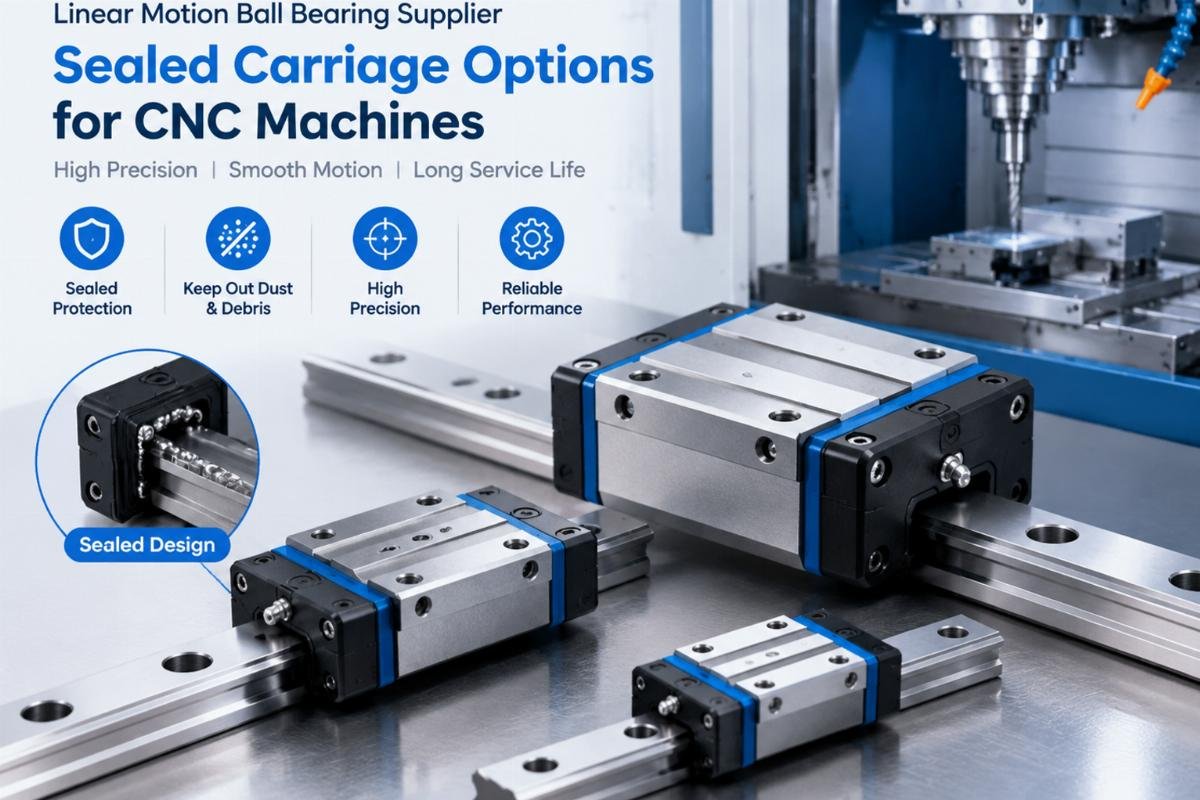
Maintain contact-sealed variants in their factory wrapping until the exact moment of rail mounting to trap dust.
Align the carriage carefully onto the guide rail to avoid chipping the recirculation caps during assembly.
Apply the specified way oil immediately after mounting open-type carriages to prevent static corrosion on exposed balls.
Preparing Your Technical Parameters for Review
To determine the exact carriage model required for your machinery, please provide your equipment brand, the specific rail width, and the exact length of the carriage block. Share detailed operational environment parameters, including ambient dust levels, coolant exposure, and temperature fluctuations, so we can recommend the most appropriate seal configuration. Supplying the maximum traverse speed, acceleration rates, and dynamic load parameters allows our engineering team to calculate the optimal retainer material and confidently confirm the L10 service life for your specific automation application. This detailed technical review eliminates guesswork and guarantees the replacement component integrates flawlessly with your existing mechanical architecture.
Frequently Asked Questions
Q: How do I determine the exact standard model based on equipment shaft diameter and load parameters?
A1: Identifying the correct replacement requires the guide rail width, carriage length, and the specific load direction. Share your machine tool brand and the original OEM part number if visible. Our engineering team cross-references these physical dimensions against global brand catalogs to pinpoint the exact interchangeable model that fits your existing rail profile without requiring mechanical modifications.
Q: How do I select the appropriate cage material for different operating speeds in CNC machines?
A2: High-speed rapid traverse applications benefit from nylon retainers due to their low friction and acoustic dampening properties. For heavy-load, low-speed gantry systems, steel cages provide superior structural rigidity. Copper variants excel in environments generating significant friction heat. Provide your maximum travel speed and load characteristics, and we will recommend the optimal retainer option for your specific machining cycle.
Q: What are the common failure modes of linear ball bearings in dusty automation environments?
A3: Abrasive particulate ingress is the primary culprit, causing severe raceway scoring and retainer jamming. When fine dust bypasses inadequate seals, it mixes with the lubricant to form a grinding paste that rapidly accelerates wear. This leads to axis chatter, lost positioning accuracy, and eventual carriage seizure. Upgrading to fully contact-sealed variants effectively mitigates these contamination-induced premature failures.
Q: What is the recommended lubrication and maintenance cycle for linear motion systems?
A4: Maintenance intervals depend heavily on the seal type and environmental contamination levels. Open or shielded carriages require regular external way oil application to flush out metallic swarf and replenish the lubricant film. Fully sealed variants retain their factory grease longer but still demand periodic inspection for smooth travel. Always follow the machine tool builder’s specific re-lubrication volume and frequency guidelines.
Q: How to source reliable alternatives when original OEM linear bearings are discontinued?
A5: When proprietary OEM carriages become obsolete or face multi-week lead times, cross-referencing to premium global brands provides a reliable solution. We analyze the original block dimensions, load ratings, and seal configurations to identify exact functional equivalents. This approach maintains your machine’s positioning accuracy while utilizing our flexible inventory to secure immediate replacements, keeping your production schedules intact.
Shipping Information
EU Warehouse
3-7 working days (bonded stock)
Direct from China
Shanghai & Ningbo hubs (bulk / FCL)
Markets Served
DE · IT · PL · ES · NL · FR · EU+
Incoterms
DDP / DAP available on request
Minimum Order
Contact us for MOQ details
Documents Included with Every Shipment
EN and ISO Quality Certificates
Batch traceability and manufacturing standard
Material & Heat-Treatment Reports
Full material composition and process records
CE Declaration of Conformity
For bearing units and motion products
RoHS Compliance Declaration
Restriction of hazardous substances
EUR.1 Movement Certificate
Preferential origin for EU customs
Certificate of Origin
Country of manufacture documentation
Correct HS Codes
Pre-classified for smooth customs clearance
Commercial Invoice & Packing List
VAT-compliant intra-EU invoicing
Transparent Landed Cost with Tax Explanation
SKFEU provides full price transparency so EU buyers know exactly what they pay. No hidden duties, no surprise charges at customs.
VAT-Compliant Invoicing
All intra-EU transactions are invoiced with correct VAT treatment. B2B buyers with valid EU VAT numbers receive zero-rated invoices where applicable.
No Unexpected Import Duties
Goods shipped from our EU bonded warehouse arrive as intra-EU movements -- no import duties, no customs delays for EU-based buyers.
EUR.1 & Origin Docs Ready
For shipments direct from China, EUR.1 movement certificates and certificates of origin are prepared in advance to minimise customs clearance time.
DDP Pricing Available
Ask for Delivered Duty Paid quotations -- we absorb all import costs so your landed cost is fixed and predictable from day one.
Need a landed cost breakdown? Contact Sofia at
sofia@skfeu.com
or via WhatsApp for a full DDP quotation including freight, duties and VAT for your country.
Send Inquiry
Request Pricing & Availability
Share your requirements and Sofia will respond within one working day with pricing, lead time and full documentation details.