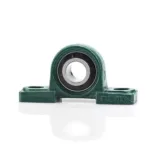
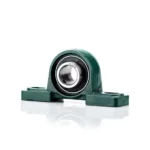
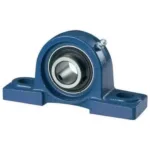
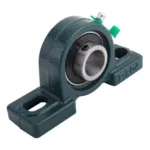
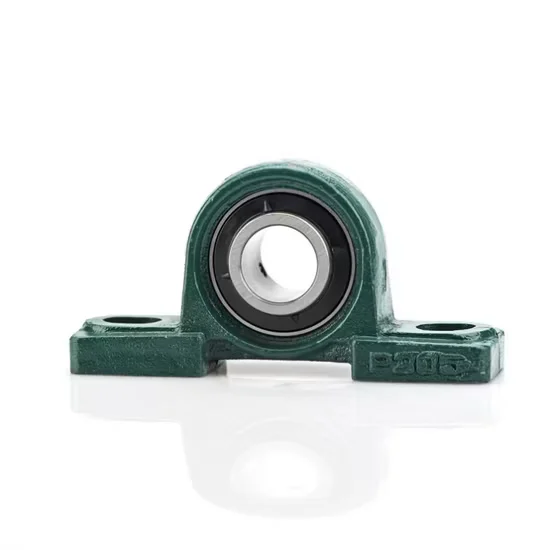
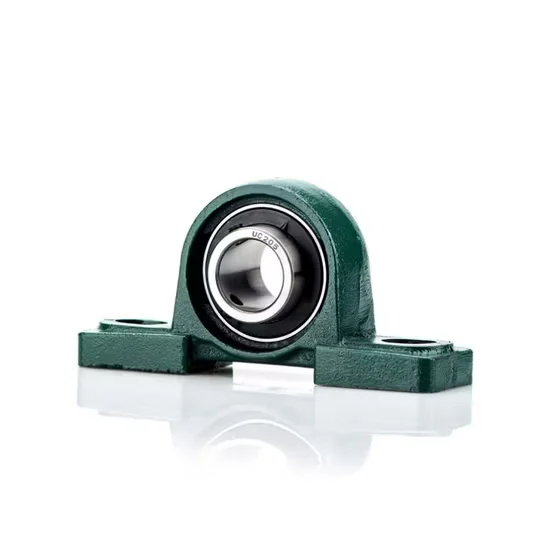
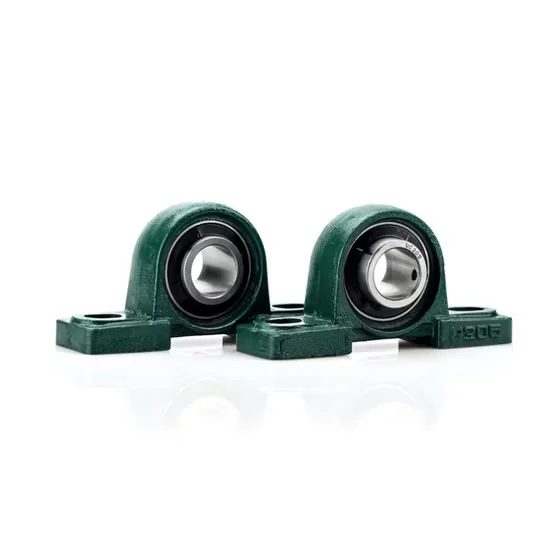
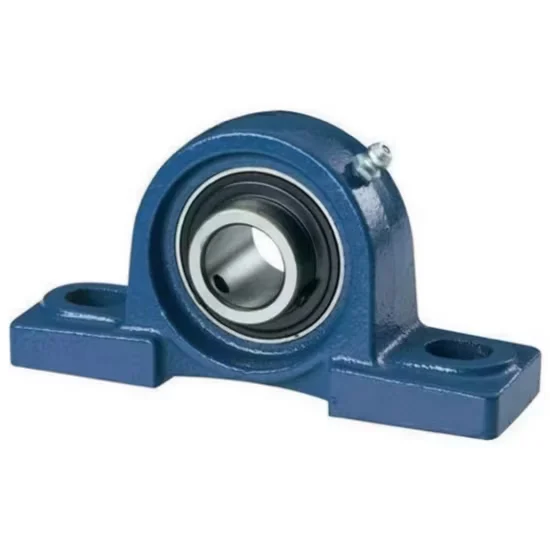
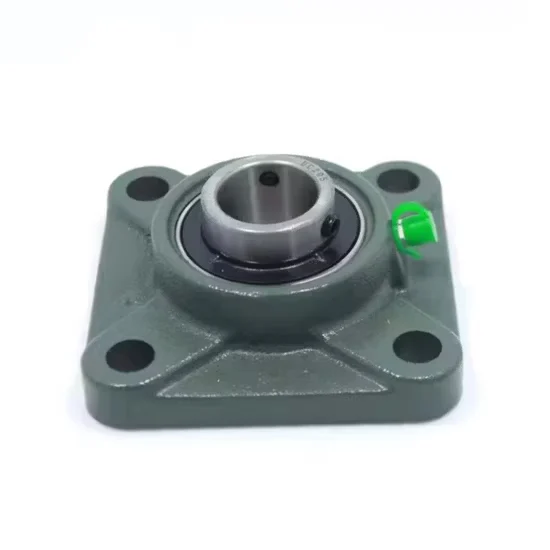
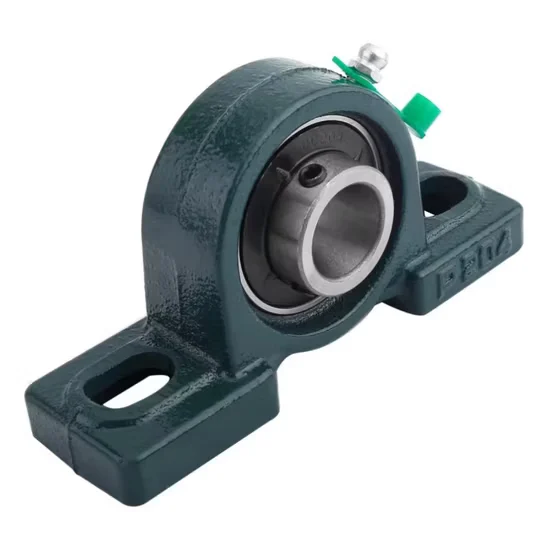
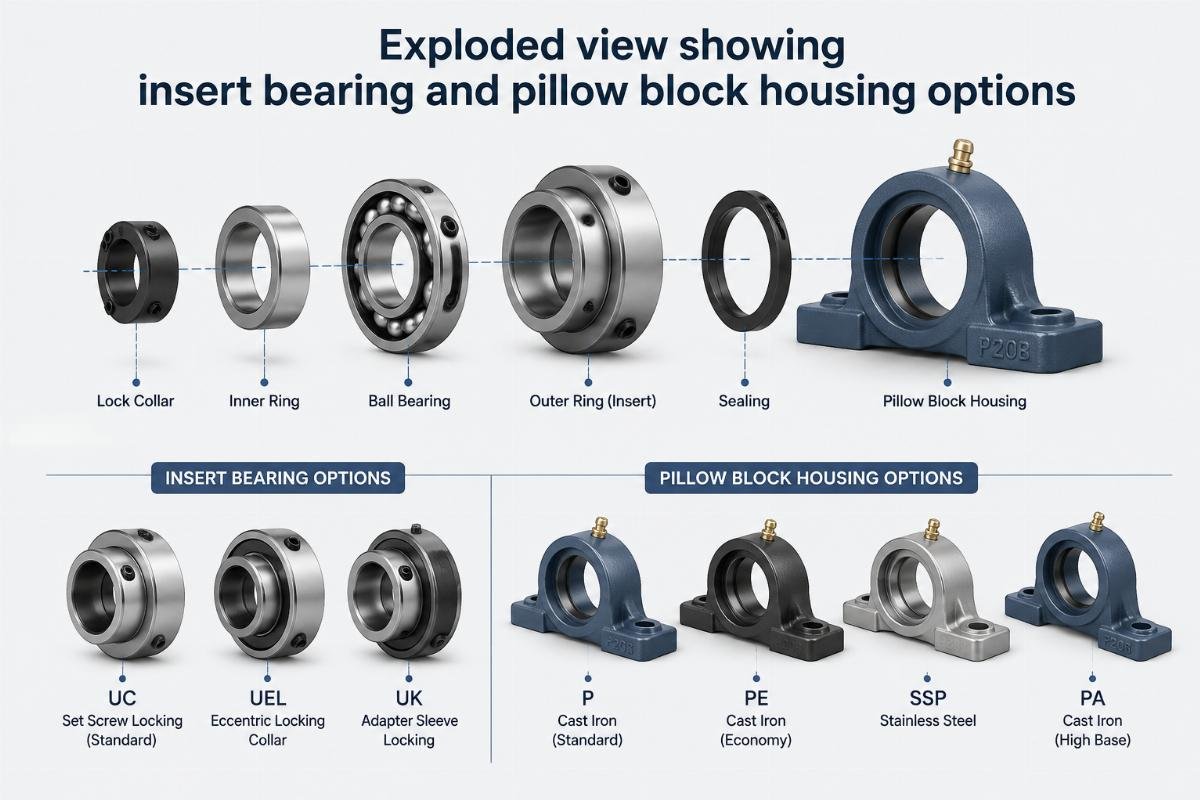
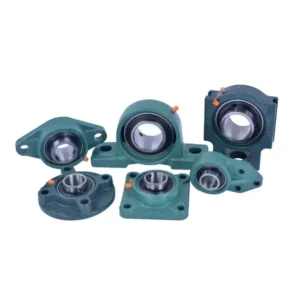
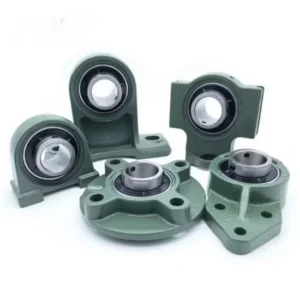
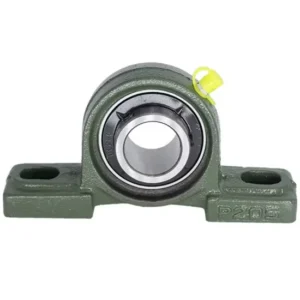
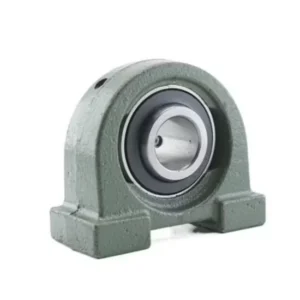
UCP 205 Pillow Block Bearing Unit P4 — Engineered for precise aligning applications, this metric insert bearing features a deep groove raceway and durable cast iron housing with reliable oil lubrication.
The single row separated design efficiently supports heavy radial loads in conveyor or textile machines.
Supplied with a complete documentation package including original material certificates and detailed dimensional inspection reports.
Cross-Reference Alignment Verified — We validate dimensional and load equivalence across SKF, NSK, and NTN catalogs before dispatching any UCP 205 pillow block bearing.
Technical Specifications
Parameter
Value
Designation
UCP 205
Product Type
UCP 205 Pillow Block Bearing
Bearing Type
Insert Bearing / Pillow Block Unit
Aligning Feature
Aligning Bearing
Internal Design
Separated, Single Row, Deep Groove Raceway
Housing Model
P (Pillow Block)
Material Options
Cast Iron (Stainless steel variants available)
Vibration Grades
V1, V2, V3, V4
Lubrication
Oil
Precision Rating
P4
Measurement System
Metric
Origin
Shandong, China
Note: The “205” suffix denotes standard metric dimensions, though specific internal clearance or seal codes require manufacturer catalog confirmation for exact matching.
Application Suitability
Industry
Typical Applications
Material Handling
Conveyor belt drive rollers and tensioning pulleys
Agriculture
Harvester auger supports and grain elevator shafts
Textile Manufacturing
Loom beam mounts and yarn winding spindles
Why Standard Cast Iron Housings Fail in Washdown Environments
The housing material dictates survival, not just the internal rolling elements.
Many maintenance teams assume the bearing insert handles all environmental exposure, overlooking the pillow block housing. When a standard UCP 205 pillow block bearing is installed in high-moisture washdown zones, the cast iron housing corrodes rapidly, seizing the outer ring and preventing the self-aligning function from compensating for shaft deflection. [NEED_CITE: corrosion-induced housing seizure in wet processing environments] This leads to unplanned line stops that cost far more than the initial component savings, especially when the seized outer ring damages the mating shaft surface during forced removal.
Matching the Insert Unit to Continuous Duty Cycles
Selecting the right UCP 205 pillow block bearing means looking beyond basic shaft diameter. For continuous-duty conveyor systems, the deep groove raceway handles steady radial loads efficiently, while the self-aligning spherical outer surface absorbs minor installation misalignments. Our sourcing network ensures you receive units with the correct housing fit, preventing outer ring creep under heavy vibratory stress.
Navigating Moisture, Load, and Lubrication Variables
Washdown and agricultural environments introduce severe contamination risks that compromise standard seals. The choice between contact and non-contact seals dictates the balance between friction heat and ingress protection. Furthermore, oil lubrication systems require precise relubrication intervals to maintain the P4 precision rating, especially when thermal expansion alters internal clearance. Ignoring these variables accelerates raceway spalling and premature cage wear. [NEED_CITE: lubrication starvation and contamination as primary failure modes] Maintenance teams must also consider the viscosity of the oil at peak operating temperatures to ensure an adequate elastohydrodynamic film thickness.
Decoding Precision, Vibration, and Material Options
The P4 precision rating ensures tighter dimensional tolerances, which is critical for high-speed textile spindles where runout causes yarn breakage. Vibration grades from V1 to V4 allow you to specify the exact operational smoothness required for sensitive sorting equipment. While the standard housing is cast iron, stainless steel variants are available for food processing or chemical exposure, paired with specialized seals to prevent washout. The deep groove raceway geometry optimizes load distribution, but achieving the rated life depends heavily on matching the clearance class to the operating temperature and shaft interference fit.
The Financial Impact of Misaligned Specifications
Specifying a standard clearance unit for a high-temperature conveyor oven leads to internal preload, causing catastrophic cage failure within weeks. Conversely, using a lightweight housing in a high-shock agricultural harvester results in mounting base fracture. These failures void warranties and trigger cascading damage to adjacent drive components, turning a minor replacement into a major rebuild. [NEED_CITE: financial impact of cascading mechanical failures per ISO 15243]
Securing Traceability and Technical Accuracy
Sourcing a genuine UCP 205 pillow block bearing requires verifying the manufacturer’s production facilities and batch codes, which we do for every shipment. We cross-reference the P4 precision and V-grade specifications against official catalogs to prevent mismatched substitutes. Our inventory covers both standard cast iron and specialized stainless steel options, eliminating the need to coordinate multiple suppliers for a single maintenance shutdown. We also provide exact dimensional inspection reports to ensure the housing bore matches your shaft tolerance. Additionally, our technical team reviews your application parameters to confirm the selected vibration grade aligns with your operational stability requirements.
Documentation & Authenticity
Certificate of Conformity verifying the P4 precision rating and material grade.
Original factory batch traceability linking the housing and insert to specific heat treatments.
Dimensional inspection report confirming the spherical outer diameter and housing bore alignment.
Material test certificates validating the cast iron or stainless steel composition.
Vibration grade test logs proving the unit meets the specified V1-V4 operational smoothness.
Storage, Handling & Mounting
Store the cast iron housing in a dry environment to prevent surface rust before installation.
Keep the oil-lubricated insert sealed until mounting to avoid contamination of the deep groove raceway.
Use induction heating for the inner ring to preserve the P4 precision tolerance during shaft fitting.
Align the pillow block base carefully to utilize the self-aligning feature without binding the housing.
Apply anti-seize compound on the mounting bolts to prevent galvanic corrosion in washdown areas.
Engineering Data Required for Exact Selection
To ensure the UCP 205 pillow block bearing matches your exact application, please provide the radial and axial load profiles, operating speeds, and ambient temperature ranges. If replacing an existing unit, share the OEM equipment number or the exact shaft and housing dimensions for cross-reference verification. Detailing the environmental exposure, such as chemical washdowns or heavy dust, allows our engineering team to recommend the optimal material and seal configuration.
Frequently Asked Questions
Q: How do I verify the authenticity of the UCP 205 pillow block bearing?
A: We provide original factory batch traceability and a Certificate of Conformity for every unit. You can verify the P4 precision rating and material grade through our documentation. We also cross-reference the dimensional specifications against official catalogs to ensure you receive a genuine product, not a mismatched substitute.
Q: What is the difference between P4 precision and standard clearance?
A: P4 precision offers tighter dimensional and running accuracy, which reduces vibration and heat generation at higher speeds. Standard clearance is suitable for general-purpose, low-speed applications. Selecting the correct precision class ensures the deep groove raceway operates smoothly, preventing premature wear in sensitive equipment like textile machines.
Q: Should I choose cast iron or stainless steel for the housing?
A: Cast iron is ideal for general industrial and agricultural environments due to its high load capacity and cost-effectiveness. Stainless steel variants are necessary for food processing, chemical exposure, or frequent washdowns to prevent corrosion. We can supply both options based on your specific environmental and hygiene requirements.
Q: How do vibration grades V1 to V4 affect equipment performance?
A: Lower vibration grades like V1 indicate tighter manufacturing tolerances and smoother operation, which is critical for high-speed or noise-sensitive applications. Higher grades like V4 are suitable for heavy-duty, low-speed machinery where minor vibrations are acceptable. Matching the grade to your equipment prevents resonance and extends the service life.
Q: What information is needed to cross-reference an existing unit?
A: Please provide the exact shaft diameter, housing bolt spacing, and overall height of your current setup. If available, share the OEM equipment model or the original manufacturer part number. This data allows our engineering team to verify the metric dimensions and recommend the correct equivalent for your application.
Shipping Information
EU Warehouse
3-7 working days (bonded stock)
Direct from China
Shanghai & Ningbo hubs (bulk / FCL)
Markets Served
DE · IT · PL · ES · NL · FR · EU+
Incoterms
DDP / DAP available on request
Minimum Order
Contact us for MOQ details
Documents Included with Every Shipment
EN and ISO Quality Certificates
Batch traceability and manufacturing standard
Material & Heat-Treatment Reports
Full material composition and process records
CE Declaration of Conformity
For bearing units and motion products
RoHS Compliance Declaration
Restriction of hazardous substances
EUR.1 Movement Certificate
Preferential origin for EU customs
Certificate of Origin
Country of manufacture documentation
Correct HS Codes
Pre-classified for smooth customs clearance
Commercial Invoice & Packing List
VAT-compliant intra-EU invoicing
Transparent Landed Cost with Tax Explanation
SKFEU provides full price transparency so EU buyers know exactly what they pay. No hidden duties, no surprise charges at customs.
VAT-Compliant Invoicing
All intra-EU transactions are invoiced with correct VAT treatment. B2B buyers with valid EU VAT numbers receive zero-rated invoices where applicable.
No Unexpected Import Duties
Goods shipped from our EU bonded warehouse arrive as intra-EU movements -- no import duties, no customs delays for EU-based buyers.
EUR.1 & Origin Docs Ready
For shipments direct from China, EUR.1 movement certificates and certificates of origin are prepared in advance to minimise customs clearance time.
DDP Pricing Available
Ask for Delivered Duty Paid quotations -- we absorb all import costs so your landed cost is fixed and predictable from day one.
Need a landed cost breakdown? Contact Sofia at
sofia@skfeu.com
or via WhatsApp for a full DDP quotation including freight, duties and VAT for your country.
Send Inquiry
Request Pricing & Availability
Share your requirements and Sofia will respond within one working day with pricing, lead time and full documentation details.