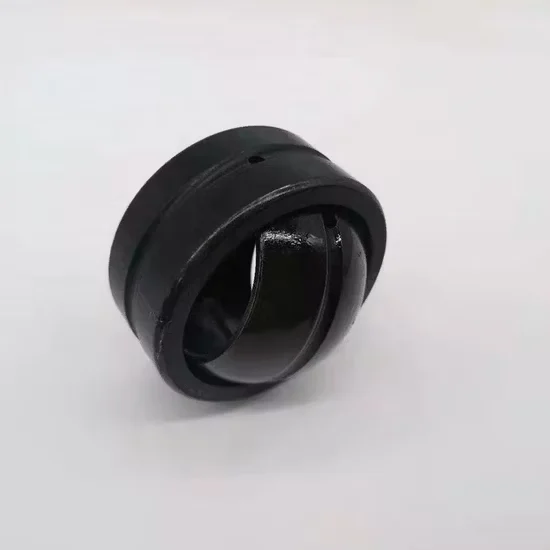
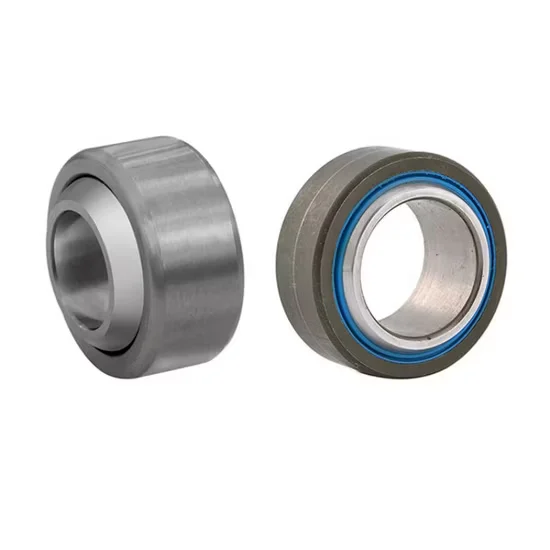
Ge15es 2RS Spherical Plain Bearing P5 P6 — Chrome steel material and a single-slit outer ring provide reliable load distribution for heavy construction machinery. The integrated self-lubricating feature significantly minimizes maintenance frequency in demanding hydraulic cylinder and automation applications.
Always cross-reference precision ratings, structural tolerances, and exact dimensional specifications to guarantee perfect operational alignment with your specific equipment requirements.
Automobile shock absorber mounts, water conservancy machinery gates
Why Dust Ingress Destroys the OZD KOYO NTN NSK Ge15es 2RS spherical plain bearing Before the Steel Yields
Seal failure introduces abrasive particles that score the sliding contact surfaces long before structural fatigue occurs.
When sourcing replacement joints for heavy machinery, buyers often focus solely on the chrome steel hardness, assuming the material alone guarantees longevity in demanding environments. However, extensive field experience in harsh mining and construction sites reveals a different reality. Abrasive dust bypassing compromised or incorrectly specified seals will quickly infiltrate the friction interface, scoring the sliding surfaces and leading to sudden, catastrophic seizure. This type of failure completely bypasses the calculated fatigue life of the steel. Procuring a genuine OZD KOYO NTN NSK Ge15es 2RS spherical plain bearing with intact, factory-applied sealing prevents these unexpected lock-ups. It drastically reduces the frequency of emergency maintenance interventions and protects the surrounding hydraulic cylinders from secondary damage caused by sudden joint binding [NEED_CITE: rolling bearing failure mode classification per ISO 15243].
Matching the Joint Design to Hydraulic and Articulation Loads
This specific joint configuration is explicitly engineered to address the complex oscillating movements and heavy radial loads typical in engineering hydraulic cylinders and construction linkages. Unlike standard rolling element bearings, the sliding contact interface accommodates misalignment and shock loads without inducing localized stress concentrations. The integrated self-lubricating design minimizes maintenance intervals, which is absolutely critical for heavy equipment operating in remote, inaccessible, or highly contaminated areas. By securing a verified OZD KOYO NTN NSK Ge15es 2RS spherical plain bearing, maintenance teams ensure consistent friction characteristics, predictable wear rates, and reliable articulation under dynamic operational stresses, ultimately extending the service intervals of the entire mechanical assembly.
Navigating Contamination and Friction in Heavy-Duty Environments
Oscillating applications generate distinct frictional heat profiles and demand reliable, long-term exclusion of external contaminants to maintain operational stability. The single-slit outer ring design facilitates mounting flexibility, allowing for slight elastic deformation during installation while maintaining structural integrity under heavy radial and axial loads. In environments saturated with fine silica dust, mud, or moisture, the physical integrity of the sealing lips becomes the primary and most critical defense against premature abrasive wear. Proper alignment and precise housing tolerances during installation prevent edge loading, ensuring the sliding contact surfaces distribute operational stresses evenly across the entire raceway interface. Ignoring these environmental factors inevitably leads to accelerated degradation of the friction surfaces [NEED_CITE: tribological challenges in oscillating bearing applications].
Decoding the Material and Structural Configuration
The high-carbon chrome steel construction provides the necessary core hardness and structural rigidity to withstand high static and dynamic contact stresses without undergoing plastic deformation. The single-slit outer ring design allows for controlled elastic deformation when pressing the component into the housing, ensuring a secure, vibration-resistant fit without compromising the internal operational clearance. Furthermore, the specified P5 and P6 precision ratings guarantee tight dimensional and geometric tolerances, which is essential for maintaining precise positional control in sensitive automation equipment and high-pressure hydraulic actuators. The self-lubricating feature completely eliminates the need for external grease lines and manual relubrication schedules, significantly simplifying the overall machine design and reducing long-term operational costs.
The Operational Impact of Incorrect Seal and Clearance Selection
Selecting a spherical plain joint without adequate sealing for dusty or wet environments inevitably leads to severe abrasive wear, causing unplanned downtime and highly costly hydraulic cylinder rebuilds. If the internal clearance is mismatched to the operating temperature or load profile, thermal expansion and structural deflection can induce excessive internal preload. This accelerates surface fatigue and can result in catastrophic damage to the surrounding housing and connecting rods. Adhering to standardized failure analysis frameworks helps maintenance engineers identify these root causes early in the failure cycle, preventing repeated warranty voidance, secondary component damage, and prolonged equipment outages [NEED_CITE: bearing damage analysis per ISO 15243].
Securing Traceable and Technically Verified Joint Bearings
Sourcing multi-brand bearing portfolios often introduces the significant risk of mixed batches, missing documentation, or incorrect substitutions, which severely complicates quality audits and ISO compliance. Our specialized supply chain ensures complete, unbroken traceability for every single unit, allowing your quality team to verify the origin and material certificates directly. When cross-referencing equivalents for the OZD KOYO NTN NSK Ge15es 2RS spherical plain bearing, our dedicated engineering team validates the exact dimensional specifications, seal configurations, and material grades against your specific OEM requirements. This rigorous technical vetting process eliminates the guesswork in mixed-brand consolidation orders and guarantees that the delivered components perfectly match the precise operational demands of your heavy machinery.
Documentation & Authenticity
Certificate of Conformity detailing the specific batch and chrome steel heat treatment records.
Dimensional inspection reports confirming P5/P6 tolerances for the single-slit outer ring.
Original manufacturer batch traceability codes for the Ge15es 2RS units linked to the production facility.
Material test certificates verifying the chemical composition of the self-lubricating sliding contact surfaces.
Seal integrity test documentation ensuring dust exclusion capabilities prior to dispatch.
Storage, Handling & Mounting
Store the units in original moisture-barrier packaging to protect the self-lubricating surfaces from humidity.
Use clean lint-free gloves when handling the chrome steel components to prevent acidic sweat corrosion.
Press the single-slit outer ring evenly using a dedicated tubular drift to avoid distorting the slit.
Do not wash the self-lubricating joints, as solvents will degrade the factory-applied friction modifiers.
Align the inner ring precisely to prevent edge loading on the sliding contact surfaces during articulation.
Providing the Right Parameters for Technical Validation
To ensure the selected joint meets your exact operational requirements, please provide the specific radial and axial load profiles, oscillating frequency, and ambient temperature ranges. Sharing the OEM equipment model numbers or existing housing dimensions allows our engineering team to perform accurate cross-reference checks and verify the sealing suitability. This technical data enables us to recommend the optimal configuration and confirm the L10 life expectancy for your specific application.
Frequently Asked Questions
Q: How can we verify the authenticity of multi-brand spherical plain bearings?
A: Authenticity is confirmed through comprehensive traceability documentation, including original manufacturer batch codes and material certificates. For multi-brand orders, we provide cross-reference validation to ensure the supplied units meet the exact dimensional and performance specifications of your OEM requirements, preventing the installation of counterfeit or substandard components.
Q: What are the cross-reference considerations for aligning precision in GE series bearings?
A: When cross-referencing GE series joints, it is critical to match the internal clearance, precision rating, and outer ring structure. A mismatch in the single-slit design or P5/P6 tolerances can lead to improper housing fits and edge loading. Our technical team verifies these parameters against official catalogs to ensure seamless interchangeability.
Q: How to choose between self-lubricating and oil-lubricated joints for specific conditions?
A: Self-lubricating joints are ideal for applications where maintenance access is limited or external contamination risks are high, as they eliminate the need for grease lines. Oil-lubricated variants are better suited for continuous high-speed rotation or extreme thermal environments. Evaluating the oscillating frequency and ambient conditions determines the optimal lubrication strategy.
Q: What are the correct installation practices for single-slit outer ring bearings?
A: Installation requires pressing the outer ring evenly into the housing using a dedicated tubular drift that contacts the face of the ring. Avoid applying force directly to the inner ring or the sliding surfaces. Proper alignment prevents distortion of the single-slit structure and ensures uniform load distribution across the contact area.
Q: How to determine the relubrication cycle for radial spherical plain joints?
A: For self-lubricating variants, relubrication is generally not required, as the friction modifiers are integrated into the sliding surfaces. For standard steel-on-steel joints, the cycle depends on the load, oscillating angle, and environmental contamination. Monitoring the operating temperature and friction torque helps establish an optimal maintenance schedule to prevent premature wear.
Shipping Information
EU Warehouse
3-7 working days (bonded stock)
Direct from China
Shanghai & Ningbo hubs (bulk / FCL)
Markets Served
DE · IT · PL · ES · NL · FR · EU+
Incoterms
DDP / DAP available on request
Minimum Order
Contact us for MOQ details
Documents Included with Every Shipment
EN and ISO Quality Certificates
Batch traceability and manufacturing standard
Material & Heat-Treatment Reports
Full material composition and process records
CE Declaration of Conformity
For bearing units and motion products
RoHS Compliance Declaration
Restriction of hazardous substances
EUR.1 Movement Certificate
Preferential origin for EU customs
Certificate of Origin
Country of manufacture documentation
Correct HS Codes
Pre-classified for smooth customs clearance
Commercial Invoice & Packing List
VAT-compliant intra-EU invoicing
Transparent Landed Cost with Tax Explanation
SKFEU provides full price transparency so EU buyers know exactly what they pay. No hidden duties, no surprise charges at customs.
VAT-Compliant Invoicing
All intra-EU transactions are invoiced with correct VAT treatment. B2B buyers with valid EU VAT numbers receive zero-rated invoices where applicable.
No Unexpected Import Duties
Goods shipped from our EU bonded warehouse arrive as intra-EU movements -- no import duties, no customs delays for EU-based buyers.
EUR.1 & Origin Docs Ready
For shipments direct from China, EUR.1 movement certificates and certificates of origin are prepared in advance to minimise customs clearance time.
DDP Pricing Available
Ask for Delivered Duty Paid quotations -- we absorb all import costs so your landed cost is fixed and predictable from day one.
Need a landed cost breakdown? Contact Sofia at
sofia@skfeu.com
or via WhatsApp for a full DDP quotation including freight, duties and VAT for your country.
Send Inquiry
Request Pricing & Availability
Share your requirements and Sofia will respond within one working day with pricing, lead time and full documentation details.