Bearing Returns from the EU: Customs on Returned Goods
Returning bearings from the EU without paying full import tariffs and VAT requires strict proof of original condition. Avoid costly tax traps by maintaining unbroken packaging, meeting three-year time limits, and providing a complete evidence chain to ensure duty-free customs clearance.


Bearing Returns from the EU: Customs on Returned Goods
Most buyers assume a commercial invoice is enough to clear returned goods duty-free. It is not.
To return bearings from the EU without paying full import tariffs and VAT, you must prove the items are in their “original condition” with unbroken packaging, declare them within strict time limits, and provide an unbroken evidence chain linking the export to the return. Failure to meet these conditions triggers general trade taxation, turning a simple return into a significant financial loss.
I learned this the hard way in Ningbo. Years ago, I was machining bearing rings when a batch of deep groove ball bearings shipped to Hamburg was rejected due to incorrect internal clearance. The customer sent them back. I viewed it as a simple logistics reversal and attempted to clear the goods through customs by paying standard duties, assuming the original export documentation would suffice. However, customs officers inspected the cargo and found the original factory sealing broken. Because I could not prove the bearings were returned in their exact original state, they classified the shipment as new imports. The resulting tariff and VAT charges wiped out the profit margin of that entire order. That incident shifted my focus from mere product quality to the rigid mechanics of customs supervision codes and the evidentiary requirements for returned goods. [NEED_CITE: EU Customs Code provisions on returned goods relief]
Understanding the regulatory framework is essential for any global distributor or OEM managing reverse logistics. The process is not merely about shipping boxes back; it is a compliance exercise where documentation integrity determines tax liability.
What Are the Core Conditions for Duty-Free Bearing Returns?
Duty-free treatment for returned goods is not automatic; it is conditional upon meeting three strict criteria: original condition, timely re-importation, and valid justification.
The European Union’s customs regulations allow for relief from import duties on goods returned after being exported, but only if specific conditions are met. First, the goods must be returned in the same state as they were exported. This means no processing, repair, or alteration should have occurred abroad, except for actions necessary to preserve them. Second, the return must occur within a specific time frame, typically three years from the date of export, though this can vary based on national implementations and specific trade agreements. Third, the exporter must provide valid reasons for the return, such as defective quality, non-conformity to specifications, or rejection by the buyer. [NEED_CITE: Time limits for returned goods relief under Union Customs Code]
For bearing distributors, this implies that mixing brands or repackaging items in the EU before returning them can void eligibility. A common mistake is consolidating different brands of bearings into a single pallet to save on shipping costs. While efficient for logistics, this alters the “original condition” of each individual brand’s packaging and traceability. Customs officials require a direct link between the exported item and the returned item. If the original SKF or FAG box is replaced with a generic crate, the proof of origin is severed.
Consider a case involving a regional distributor in Southeast Asia. They received a mixed container of spherical roller bearings and cylindrical roller bearings from various premium brands. Upon arrival, they discovered a specification error in one brand’s batch. Instead of isolating the defective batch, they repacked all items into neutral boxes for return. When the shipment arrived back in China, customs could not verify which specific units corresponded to the original export declarations. The entire shipment was treated as a new import, subjecting the distributor to full tariffs and VAT on all brands, not just the defective ones. This highlights the importance of maintaining brand-specific packaging integrity throughout the reverse logistics cycle.
How to Prove “Original Condition” to EU Customs?
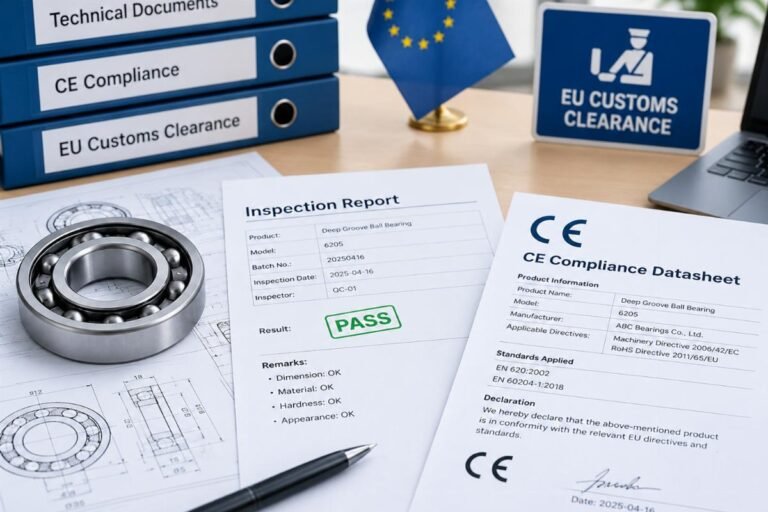
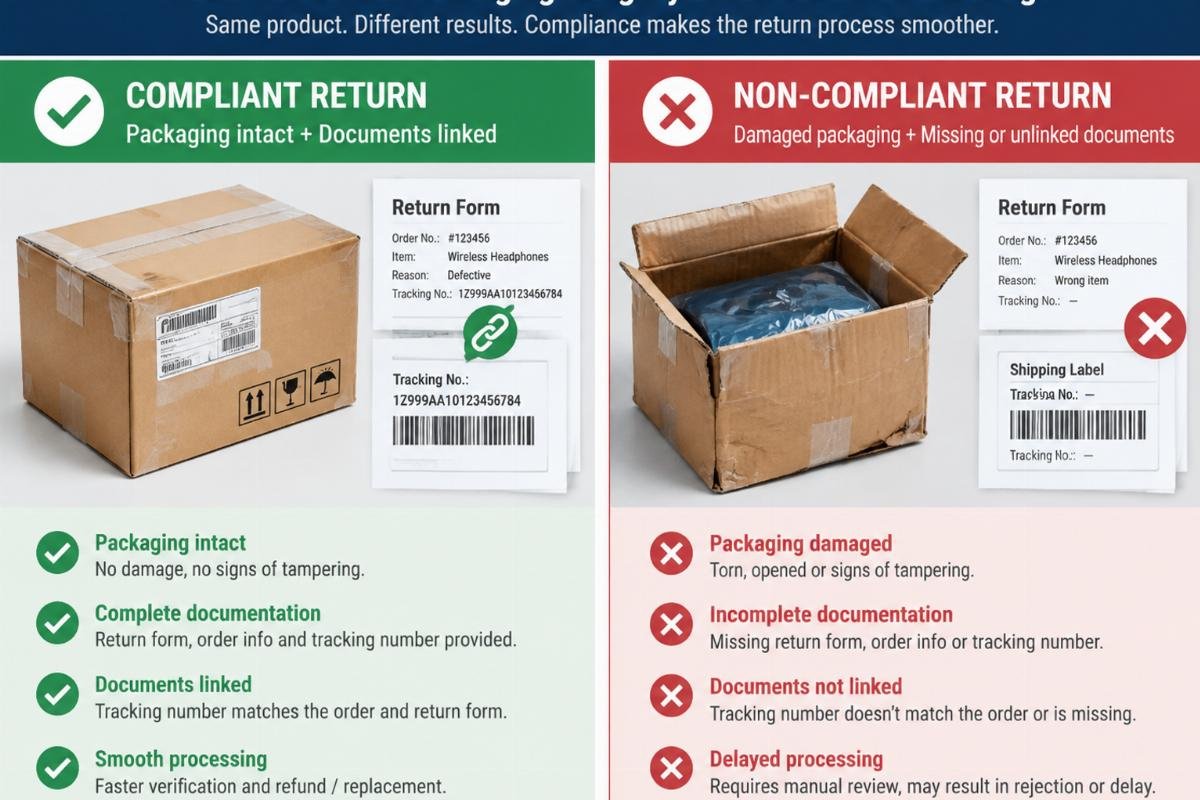
Proving “original condition” requires an unbroken evidence chain that includes intact original packaging, serial number verification, and documentation of no overseas processing.
Customs authorities do not take your word for it; they require physical and documentary proof. The most critical element is the packaging. Original manufacturer seals, labels, and barcodes must remain intact. If a bearing box has been opened, even slightly, it raises suspicion of tampering or substitution. For high-precision bearings used in wind turbines or machine tools, the preservation of anti-corrosion packaging is also vital. Any sign of moisture damage or resealing can lead to rejection of the duty-free claim. [NEED_CITE: WCO guidelines on evidence for returned goods]
Beyond packaging, the physical identity of the bearing must match the export records. This involves checking part numbers, batch codes, and where applicable, serial numbers. For large industrial bearings, such as those used in mining crushers or steel mills, unique identifiers are often etched onto the ring. These must match the original commercial invoice and packing list exactly. If the bearing has been installed, even briefly, it is no longer in its “original condition” and cannot be returned under duty-free relief. It must be declared as used goods or scrap, which carries different tax implications.
A European OEM once faced this issue with defective tapered roller bearings intended for heavy equipment. The bearings had been removed from their machines but showed minor signs of handling. The OEM provided high-resolution photos of the bearings still in their original wax-paper wrapping and sealed boxes, along with a signed statement from the site manager confirming no installation had occurred. This detailed evidence chain allowed them to clear the return without duties. In contrast, another buyer simply returned loose bearings in a cardboard box, claiming they were “unused.” Customs rejected the claim due to lack of packaging integrity, resulting in full taxation.

What Happens If the Return Declaration Fails?
Failed return declarations trigger general trade taxation, leading to severe margin erosion and potential delays in cargo release.
When a return does not meet the criteria for duty-free relief, it is classified as a standard import. This means you must pay the applicable import duty and Value Added Tax (VAT) based on the current tariff schedule. For bearings, duty rates can vary significantly depending on the type and origin, but when combined with VAT, the total tax burden can exceed a substantial portion of the product’s value. This effectively turns a return into a double loss: you lose the sale revenue and incur additional tax costs on goods you already paid to produce or source. [NEED_CITE: National customs tariff schedules for bearing imports]
Moreover, incorrect declarations can lead to customs audits and penalties. If customs suspects intentional misdeclaration to avoid taxes, they may impose fines and hold the cargo for extended inspections. This delays the restocking of inventory and disrupts supply chains. For MRO operators needing urgent spare parts, such delays can cause prolonged equipment downtime, further increasing operational costs.
The financial impact is not just limited to taxes. There are also storage fees at the port, demurrage charges, and administrative costs associated with correcting the declaration. In one instance, a distributor attempted to return a batch of angular contact ball bearings by declaring them as “samples” to bypass complex return procedures. Customs identified the volume as inconsistent with sample usage and reclassified the shipment. The resulting duties, VAT, and penalty fees amounted to a mid-six-figure loss, far exceeding the value of the bearings themselves. This underscores the risk of attempting to shortcut proper customs procedures.

How to Optimize the Return Clearance Process?
Optimizing return clearance involves pre-shipment inspection, precise HS code matching, and proactive deadline tracking to ensure compliance.
To avoid the pitfalls of failed declarations, implement a structured return process. Start with a pre-shipment inspection in the EU. Verify that the bearings are unused, the packaging is sealed, and the labels match the original export documents. Take dated photographs of the goods and packaging as evidence. Next, ensure the HS code used for the return matches the original export code exactly. Discrepancies in classification can raise red flags with customs algorithms. [NEED_CITE: Importance of consistent HS coding for returned goods]
Track the time elapsed since the original export. Ensure the return is initiated well within the statutory limit, usually three years. Prepare a comprehensive documentation package that includes the original export declaration, the commercial invoice for the return (marked as “Returned Goods”), a detailed explanation of the reason for return, and the evidence photos. Submit this package to your customs broker before the cargo arrives to pre-clear any potential issues.
For companies managing frequent returns, establishing a traceability system is crucial. Link each exported batch to its specific packaging and documentation. This allows for quick retrieval of proof when a return is necessary. Additionally, consider using consolidated shipping services that maintain brand-specific segregation, ensuring that mixed-brand orders do not compromise the individual integrity of each product’s return eligibility. By treating return logistics with the same rigor as forward logistics, you can protect your margins and maintain smooth operations.

Conclusion
Returning bearings from the EU is a compliance-driven process, not just a logistical one. Success depends on proving original condition through intact packaging and robust documentation. Avoid repacking or mixing brands, and always adhere to time limits. By prioritizing evidence integrity and precise declaration, you can navigate customs regulations effectively and avoid unnecessary tax burdens.
Tagged

Written by
author
Editor covering global sourcing, supplier verification, and industrial product knowledge. Content is compiled from manufacturer specifications, industry standards, and hands-on experience with international B2B buyers. Every article is fact-checked before publishing to help procurement professionals make informed decisions.