Bearings to Europe: Sea, Rail & Air Shipping from Wholesale Supplier
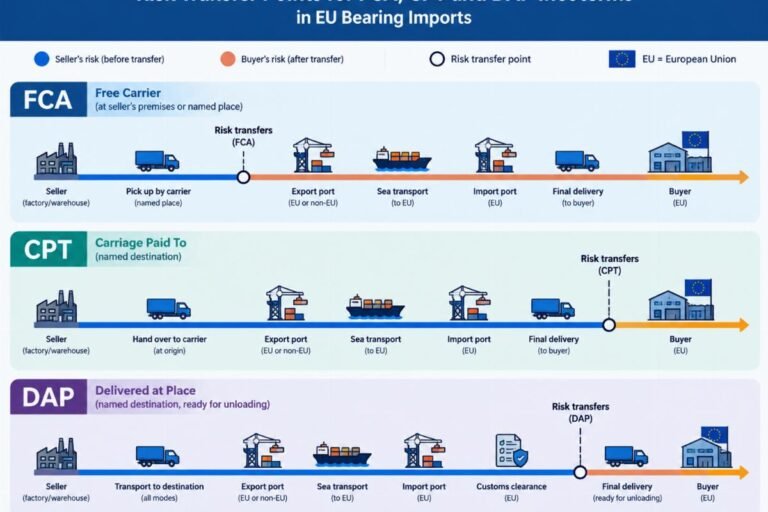
Optimize bearing delivery times to Europe by matching freight modes to order urgency and volume. Air freight delivers in 3-5 days for urgent needs, while rail offers a balanced 15-20 day transit. Sea freight suits bulk shipments but requires strict VCI packaging to prevent corrosion during the 30-40 day journey.

Bearings to Europe: Sea, Rail & Air Shipping from Wholesale Supplier
Air freight is not always the safest option for precision bearings. Rapid temperature shifts in cargo holds can cause condensation inside poorly sealed packages, leading to immediate corrosion upon arrival.
For most European buyers, the optimal shipping method depends on order urgency and volume rather than a single “best” mode. Air freight delivers in days but carries high costs and condensation risks. Rail freight offers a balanced 15-20 day transit for mixed pallets. Sea freight remains the most cost-effective for bulk heavy roller bearings but requires strict moisture control over 30-40 days.
Standing on the docks of Ningbo Beilun Port, I have watched countless containers of bearings depart for Europe. Early in my career, I handled documentation for a shipment of precision spindle bearings destined for Germany. The vessel encountered a typhoon, forcing a detour, and arrived during the plum rain season. Despite standard packaging, the humidity penetrated the crates. The anti-rust oil failed, and the client’s production line halted due to seized spindles. The resulting claim was a mid-six-figure loss. That incident reshaped my approach to logistics. I no longer view shipping as merely moving boxes. It is a critical component of product integrity. Selecting the wrong channel for bearing delivery times to Europe is digging a pit for your own supply chain.
Understanding the trade-offs between speed, cost, and protection allows distributors and MRO buyers to make informed decisions. The following analysis breaks down the realities of each freight mode.
How Long Does Each Freight Mode Actually Take?
Transit times vary significantly, but published schedules often ignore real-world variables. Buyers must account for port congestion, customs clearance, and last-mile delivery.
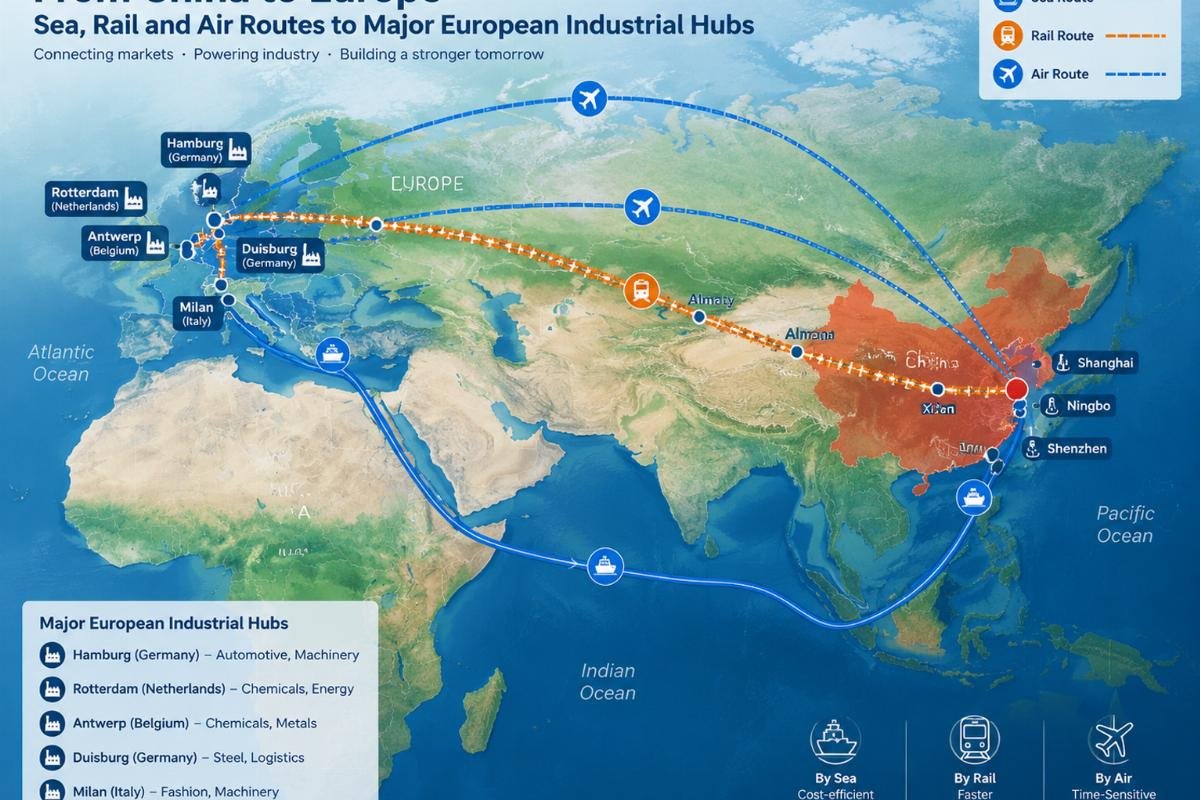
Sea freight typically takes 30-40 days, rail freight 15-20 days, and air freight 3-5 days for transit, but total lead time includes handling and customs.
When calculating bearing delivery times to Europe, consider the entire journey. Ocean freight from major Chinese ports like Ningbo or Shanghai to Rotterdam or Hamburg is subject to seasonal fluctuations. During peak seasons, vessels may face delays at transshipment hubs. The actual time on water is consistent, but port dwell time is unpredictable. [NEED_CITE: average port dwell times in Northern Europe]
Rail freight, primarily via the China-Europe Railway Express, offers a middle ground. Trains depart regularly from inland hubs and coastal cities. The journey through Central Asia and into Poland or Germany is faster than sea but slower than air. However, rail schedules can be affected by geopolitical tensions or border crossing bottlenecks. [NEED_CITE: railway transport association data on border crossing delays]
Air freight is the fastest for urgent needs. Small precision bearings can reach major European airports within days. Yet, this speed comes with a premium price tag. It is rarely economical for large volumes unless the cost of downtime far exceeds the freight charge.
| Freight Mode | Typical Transit Time | Cost Level | Best For |
|---|---|---|---|
| Air Freight | 3-5 days | High | Urgent MRO breakdowns, small precision parts |
| Rail Freight | 15-20 days | Medium | Distributor restocks, mixed pallets |
| Sea Freight | 30-40 days | Low | Bulk projects, heavy roller bearings |
A European distributor once needed to restock a mix of deep-groove ball bearings and spherical roller bearings. Choosing sea freight would have meant empty shelves for over a month. Air freight was prohibitively expensive for the entire order. We consolidated the shipment via rail. The goods arrived in two weeks, balancing cost and availability. This experience highlights that shipping bearings from China to Europe requires matching the mode to the specific batch size and downtime risk.
Which Mode Fits Your Order Volume and Urgency?
Selecting the right freight mode is not just about speed. It is about aligning logistics with business impact.
Match the freight type to your order volume and the criticality of the equipment being serviced.
For urgent MRO breakdowns, time is the primary constraint. A mining operation in Scandinavia faced a critical failure in a crusher gearbox. Waiting weeks for a replacement tapered roller bearing was not an option. We shipped a small batch of angular contact ball bearings and cylindrical roller bearings via air. The transit took four days. The high freight cost was negligible compared to the revenue lost from idle machinery. In such cases, bearing delivery times to Europe are measured in hours, not days.
For distributor restocking, predictability and cost matter more. A wholesaler in Italy needed to replenish inventory for the upcoming maintenance season. The order included various brands and sizes, from needle bearings to thrust bearings. Sea freight would have tied up capital in inventory for too long. Air freight would have erased margins. Rail freight provided a reliable 18-day window. The mixed pallets arrived intact, allowing the distributor to meet customer demand without excessive holding costs.
Bulk projects, such as wind farm construction or steel mill upgrades, involve heavy loads. Large spherical roller bearings and slewing bearings are dense and heavy. Sea freight is the only viable option for these volumes. The key here is planning. Orders must be placed well in advance to accommodate the 30-40 day transit. Rushing these shipments via air or rail is often logistically impossible due to weight and size restrictions.
How to Prevent Bearing Rust During Long Transits?
Moisture control is the most overlooked aspect of international bearing shipping. Many buyers assume that original manufacturer packaging is sufficient. It is not.
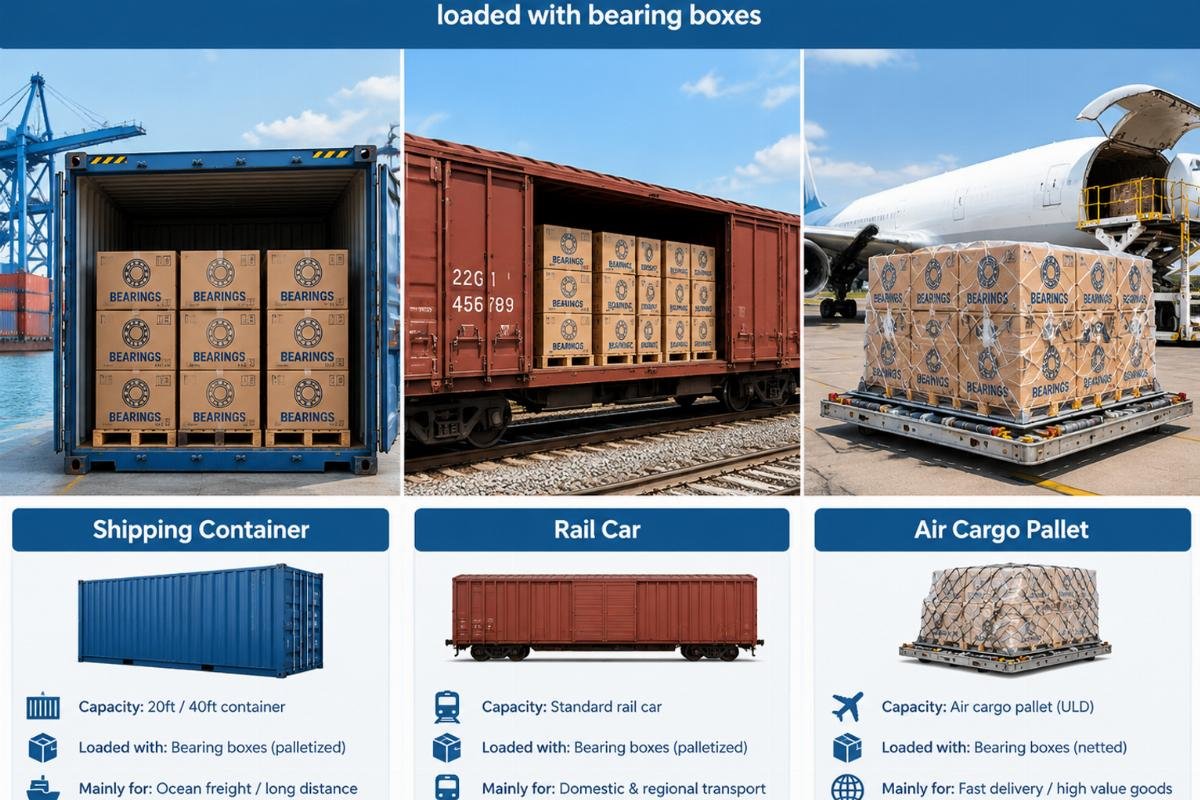
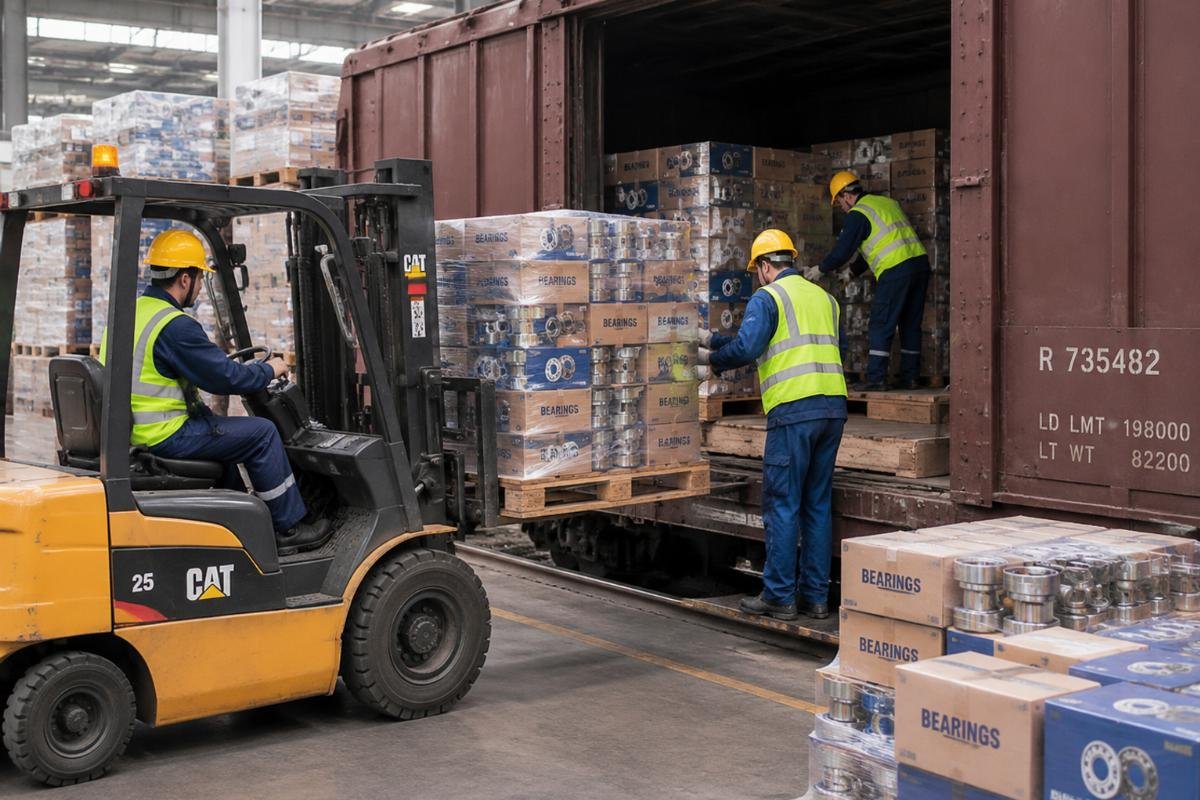
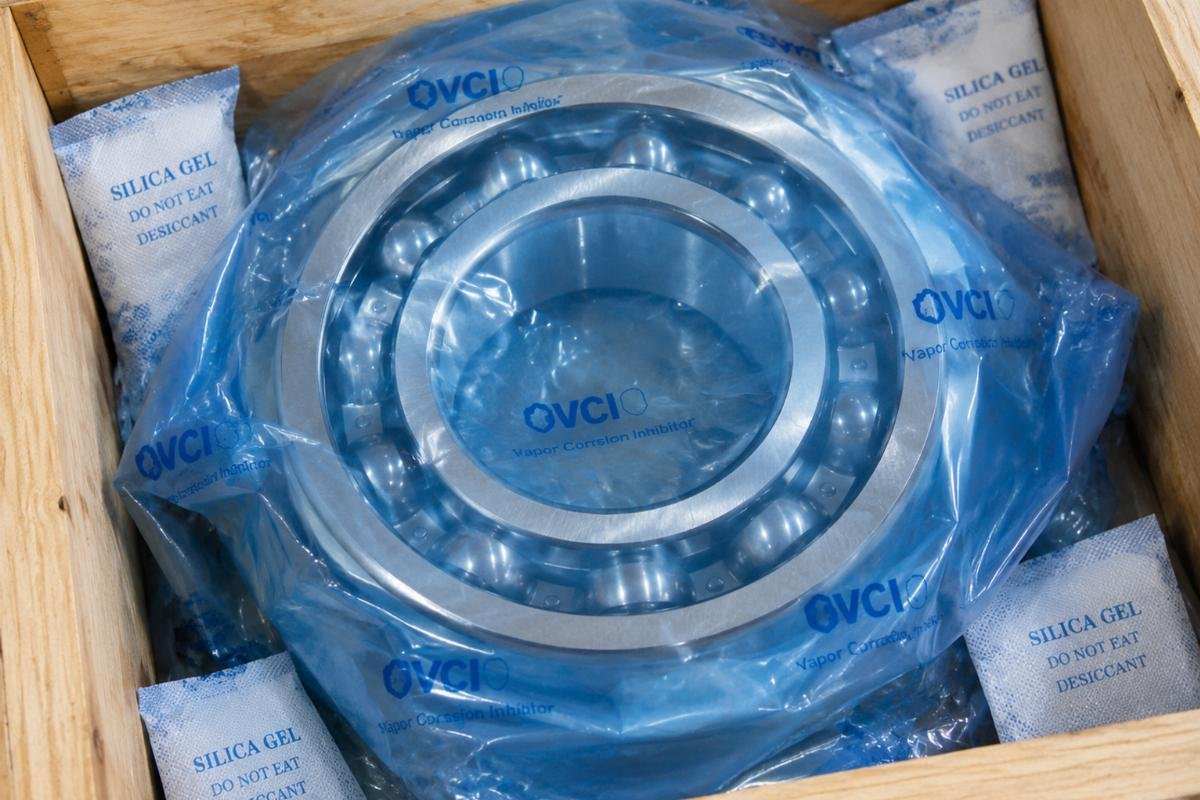
Standard paper and plastic wrapping are insufficient for sea and rail freight. VCI (Vapor Corrosion Inhibitor) packaging and desiccants are critical for preventing rust during long transits.
Bearings are made of steel. Steel rusts. The combination of temperature fluctuations and humidity in shipping containers creates a perfect environment for corrosion. This phenomenon, known as “container rain,” occurs when warm, moist air inside the container cools at night, causing water to condense on the cargo. [NEED_CITE: physics of condensation in shipping containers]
I recall a shipment of insert bearings sent to a port in Southern Europe. The outer cartons looked dry, but inside, the individual bearing boxes were damp. The VCI bags had been compromised during packing. The bearings showed surface rust upon inspection. The client rejected the entire lot.
To prevent this, we use export-standard VCI packaging. VCI emitters release a protective vapor that forms a molecular layer on the metal surface, inhibiting corrosion. This is essential for sea freight, where exposure to salt air and humidity is prolonged. For rail freight, which passes through varying climate zones, desiccants are added to absorb moisture.
When evaluating sea vs rail vs air freight bearings, consider the packaging requirements. Air freight is quicker, reducing exposure time, but the pressure changes in cargo holds can still cause condensation if seals are weak. Sea and rail require robust, multi-layered protection. Our consolidation services include rigorous inspection of packaging integrity before loading. This ensures zero-rust delivery, regardless of the route taken.
What Are the Hidden Costs of Each Shipping Method?
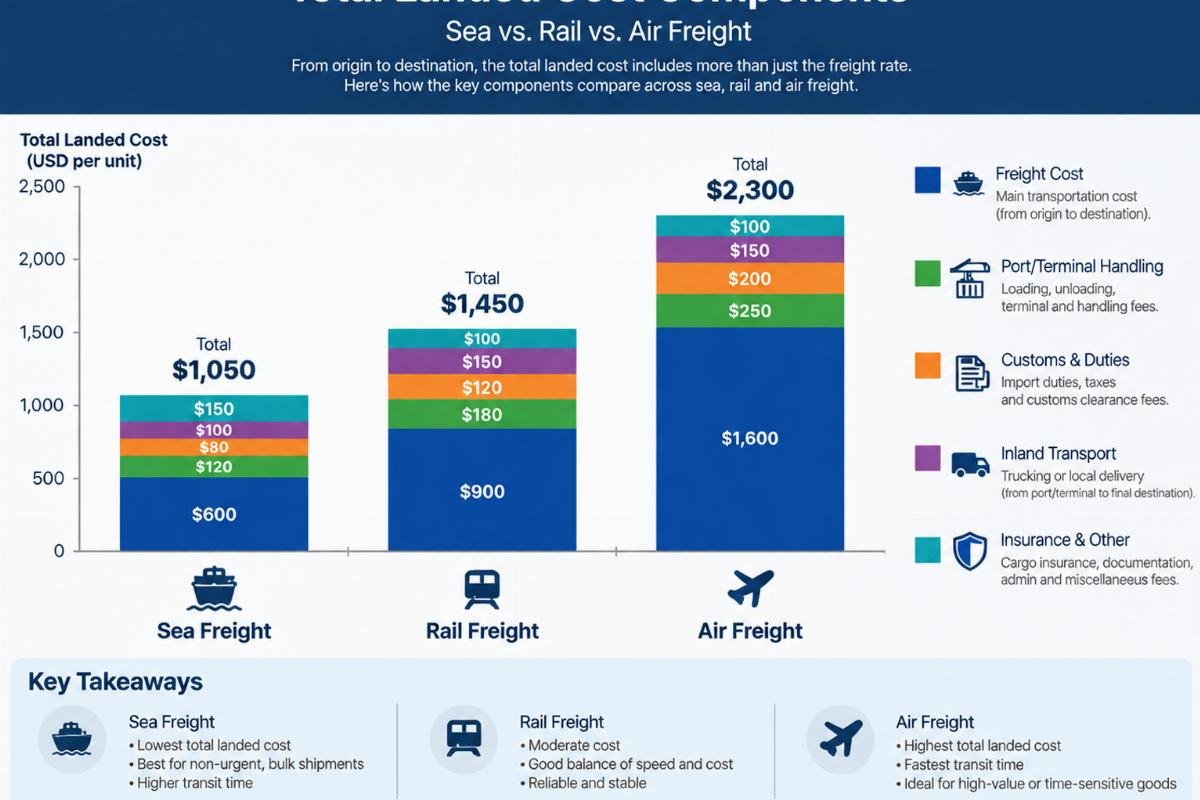
Freight rates are only part of the equation. Total landed cost includes inventory holding, demurrage, and risk mitigation.
Sea freight may have the lowest freight rate, but for mid-sized urgent orders, rail can lower total landed cost by avoiding port demurrage and reducing inventory holding time.
Inventory holding cost is the expense of keeping goods in stock. The longer the transit time, the more capital is tied up. For a distributor, a 40-day sea transit means paying for goods that are not yet generating revenue. Rail freight cuts this period in half, improving cash flow. [NEED_CITE: calculation method for inventory holding cost vs transit time]
Demurrage and detention charges at ports can be substantial. If a container sits at the terminal beyond the free time due to customs delays or documentation issues, daily fees accrue. Sea freight is more prone to these delays than rail, which often has streamlined customs procedures along the railway corridor. [NEED_CITE: comparison of customs clearance efficiency sea vs rail]
Air freight has high upfront costs but minimal hidden fees. There is no demurrage in the traditional sense, and inventory turnover is rapid. However, the cost per kilogram is significantly higher. For low-value, high-volume items like standard deep-groove ball bearings, air freight is rarely justified. For high-value, low-volume precision bearings, it may be the most economical choice when downtime costs are factored in.
When analyzing bearing lead time Europe, buyers must look beyond the freight invoice. A cheaper shipping method that results in rusted goods or delayed clearance is ultimately more expensive. Our technical selection support helps clients choose the right balance. We provide cross-brand equivalent model consultation, allowing buyers to source reliable alternatives that fit their budget and timeline without compromising quality.
Conclusion
Choosing the right shipping mode for bearings to Europe requires balancing speed, cost, and protection.
There is no one-size-fits-all solution. Air freight suits urgent, high-value spares. Rail freight offers a balanced approach for regular restocking. Sea freight remains the backbone for bulk heavy equipment projects. Regardless of the mode, moisture control through VCI packaging is non-negotiable. By understanding the hidden costs and risks of each method, buyers can optimize their supply chain for reliability and efficiency. Proper planning and professional consolidation ensure that every bearing arrives in perfect condition, ready for installation.
Tagged

Written by
author
Editor covering global sourcing, supplier verification, and industrial product knowledge. Content is compiled from manufacturer specifications, industry standards, and hands-on experience with international B2B buyers. Every article is fact-checked before publishing to help procurement professionals make informed decisions.