Buy Bearings in Poland: Genuine SKF FAG NSK Wholesale Supplier
Sourcing bearings in Poland requires balancing competitive pricing with strict customs compliance to avoid costly port delays. Compare real price differences for SKF and FAG bearings, verify mixed-brand stock availability, and secure genuine traceability documentation for seamless imports.


Buy Bearings in Poland: Genuine SKF FAG NSK Wholesale Supplier
The lowest unit price is often the most expensive line item on your invoice.
Sourcing bearings in Poland requires balancing competitive pricing and stock availability with strict customs compliance and genuine traceability to avoid costly port delays. Many buyers focus exclusively on the sticker price, ignoring the hidden costs of demurrage, counterfeit replacements, and production downtime caused by unclear import procedures. A successful procurement strategy prioritizes verified documentation and consolidated logistics over fragmented local purchasing.
I still remember the silence in the office when the phone rang from Gdynia port. It was not a celebration of a new contract, but a distress call about a container stuck in customs. The client had tried to save money by mixing deep-groove ball bearings and spherical roller bearings from different brands into one shipment, using vague descriptions on the commercial invoice. They assumed that since all items were “bearings,” the classification would be straightforward. Instead, Polish customs officials demanded specific brand authorization letters and original certificates of origin for each SKU. The container sat idle for weeks. The demurrage charges eventually exceeded the total value of the cargo. That incident reshaped how I approach every single order destined for Central Europe. It is not just about moving metal; it is about moving data that proves the metal is genuine. [NEED_CITE: common customs clearance delays due to incomplete documentation in EU ports]
What are the real price differences for SKF/FAG bearings in Poland?
Local dealer markups often hide the true cost of direct global sourcing.
When comparing prices, many distributors in Poland look at the list price from official brand channels and assume that any lower offer is suspicious. While counterfeits are a real risk, the premium charged by local authorized dealers includes layers of distribution costs, local warehousing, and high overheads. Direct sourcing from a professional global full-range bearing supplier can offer significantly lower landed costs, even after accounting for shipping and duties. The key is understanding the total landed cost rather than just the ex-works price.
| Cost Component | Local Authorized Dealer | Direct Global Sourcing |
|---|---|---|
| Unit Price | High (includes local overhead) | Competitive (wholesale tier) |
| MOQ Flexibility | Low (often restricted to bulk) | High (single unit to container) |
| Documentation | Standard local invoice | Full traceability package |
| Lead Time | Immediate (if in stock) | Variable (depends on shipping mode) |
| Risk of Counterfeit | Low | Low (if supplier is verified) |
A European wind farm operator once switched to direct sourcing for their maintenance spare parts. They initially feared the complexity of importing, but found that the savings on a single container of spherical roller bearings covered the entire logistics cost for the year. The critical factor was verifying the supplier’s ability to provide complete traceability documentation. [NEED_CITE: total landed cost calculation methods for industrial imports]
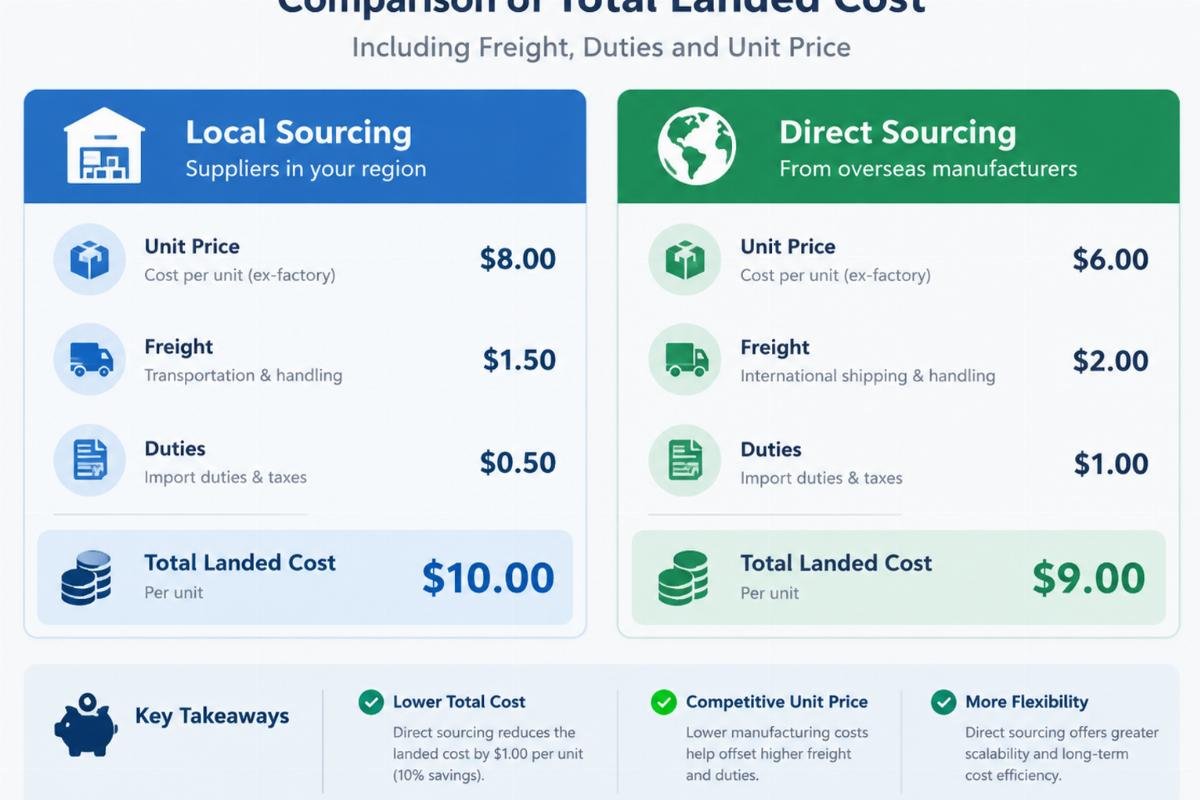
The misconception that local stock is always cheaper ignores the volume discounts available through consolidated international orders. By working with a supplier who offers mixed-brand consolidation, buyers can achieve wholesale pricing without committing to massive single-brand volumes. This approach allows for better cash flow management and reduced inventory holding costs.
How to verify stock availability for mixed-brand orders?
Inventory depth matters more than broad brand lists.
Many suppliers claim to stock everything, but few can deliver mixed-brand orders with consistent availability. For regional distributors and MRO buyers, the ability to source SKF, FAG, NSK, NTN, TIMKEN, KOYO, NACHI, and IKO bearings in a single shipment is crucial. This reduces administrative burden and simplifies customs clearance. However, verifying this capability requires more than checking a website catalog.

I once assisted a Middle East steel mill that needed emergency replacements for a crusher. They required specific tapered roller bearings from one brand and cylindrical roller bearings from another. Most local suppliers only had one brand in stock, forcing the buyer to place two separate orders with different delivery timelines. By leveraging a supplier with massive spot inventory covering thousands of standard and special part numbers, we consolidated the order. The result was a single shipment that arrived days earlier than the fastest local alternative. [NEED_CITE: benefits of consolidated shipping for MRO operations]
Verifying stock availability involves asking for real-time inventory reports and photos of the actual stock with batch numbers. A reliable supplier will provide cross-brand equivalent model consultation to ensure that if a specific part number is out of stock, a technically suitable alternative from another premium brand is available. This technical selection support is vital for minimizing unplanned production downtime.
What are the delivery timelines from China to Gdansk/Gdynia?
Consolidated sea freight often beats fragmented local purchasing in total lead time.
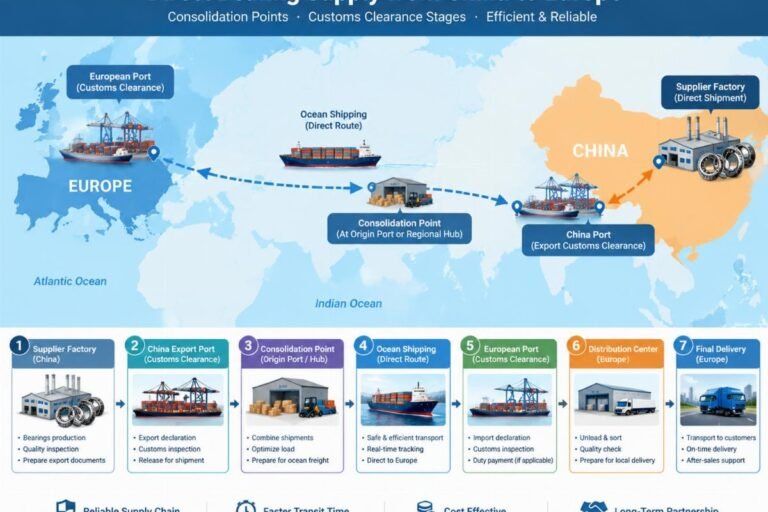
While air freight is faster for individual packages, it is prohibitively expensive for bulk orders. Sea freight consolidation from China to major Polish ports like Gdansk or Gdynia typically takes several weeks. However, when compared to the time spent negotiating with multiple local dealers, waiting for their separate restocks, and handling multiple deliveries, consolidated direct shipping can be more efficient overall.
| Shipping Mode | Typical Transit Time | Cost Efficiency | Best For |
|---|---|---|---|
| Air Freight | Days | Low | Urgent single-unit spares |
| Sea Freight Consolidation | Weeks | High | Bulk project orders |
| Local Purchase | Immediate (if stock) | Variable | Small emergency needs |
A Latin American automotive aftermarket supplier found that ordering mixed batches of needle bearings and insert bearings via sea freight allowed them to maintain higher stock levels at a lower cost. The predictability of the schedule meant they could plan their inventory replenishment cycles more effectively. [NEED_CITE: average sea freight transit times from Asia to Northern Europe]

It is essential to factor in customs clearance time when calculating delivery timelines. Proper preparation of documents can prevent delays that might otherwise negate the speed advantage of faster shipping modes. Working with a supplier who understands the specific requirements for bearing imports into Poland ensures that the goods move smoothly through the port.
How to avoid customs traps and counterfeit risks?
Strict HS code declaration and original traceability documentation are non-negotiable.
The biggest risk in importing bearings is not the shipping cost, but the potential for customs seizure due to incorrect classification or suspected counterfeits. Polish customs authorities are stringent about intellectual property rights and origin verification. Using vague HS codes or missing brand authorization letters can lead to lengthy inspections and fines.

Every bearing must be declared with the correct HS code based on its type and application. For example, deep-groove ball bearings and angular contact ball bearings may have different classifications. A professional supplier will provide a detailed packing list that matches the commercial invoice exactly, including brand names, part numbers, and quantities. [NEED_CITE: HS code classification matrix for rolling bearings]
Counterfeit bearings often lack the precise machining and material quality of genuine products. They may look similar but fail prematurely under load. To avoid this, buyers should insist on seeing the original packaging and traceability documents. Genuine products from brands like SKF, FAG, and NSK come with specific security features and batch codes that can be verified with the manufacturer. A supplier who offers ISO-compliant quality assurance and complete genuine traceability documentation provides an extra layer of security.
I recall a case where a buyer received bearings that looked authentic but had slightly off-spec dimensions. The supplier had not provided the original factory certificates. Upon testing, the bearings failed within hours. Switching to a supplier who provided full traceability documentation eliminated this risk. The peace of mind knowing that every bearing is genuine and traceable to the manufacturer’s production facilities is worth the slight premium in verification effort. [NEED_CITE: ISO quality standards for bearing manufacturing and traceability]
Conclusion
Genuine traceability and compliant documentation are the true metrics of value.
Buying bearings in Poland is not just about finding the lowest price. It is about securing a reliable supply chain that delivers genuine products with full documentation. By focusing on total landed cost, verifying stock depth, and ensuring strict customs compliance, buyers can avoid costly delays and counterfeit risks. Partnering with a supplier who offers mixed-brand consolidation and technical support transforms procurement from a transactional task into a strategic advantage.

Written by
author
Editor covering global sourcing, supplier verification, and industrial product knowledge. Content is compiled from manufacturer specifications, industry standards, and hands-on experience with international B2B buyers. Every article is fact-checked before publishing to help procurement professionals make informed decisions.