Genuine Bearings for Automated Warehouses & Intralogistics Wholesale Supplier
Selecting genuine bearings for automated warehouses and intralogistics requires prioritizing traceability and precision grades over initial cost to prevent catastrophic downtime. Standard commercial bearings often lack the thermal stability needed for high-cycle stacker cranes, leading to premature failure that far outweighs any upfront savings.


Genuine Bearings for Automated Warehouses & Intralogistics Wholesale Supplier
Unit price is the most expensive metric in automated warehousing.
Selecting genuine bearings for automated warehouses and intralogistics requires prioritizing traceability, specific radial clearance classes like C3 or C4, and precision grades over initial procurement cost to prevent catastrophic system downtime. Standard commercial bearings often lack the thermal stability and metallurgical purity needed for high-cycle stacker cranes and shuttle systems, leading to premature failure that far outweighs any upfront savings.
I still remember the silence in a European distribution center when their primary stacker crane seized up during peak season. The maintenance team had sourced what they believed were compatible deep groove ball bearings from a non-authorized channel to cut costs. Within months, the high-speed operation generated excessive heat, causing the lubricant to break down and the rolling elements to weld themselves to the raceways. The resulting downtime cost them significantly more than the entire annual bearing budget. Standing on the warehouse floor, watching the technicians struggle to extract the fused components, I realized that in intralogistics, a bearing is not just a commodity; it is a critical safety and continuity component. [NEED_CITE: impact of unplanned downtime in automated storage and retrieval systems]
The difference between a smoothly operating automated storage and retrieval system (AS/RS) and a logistical nightmare often lies in the microscopic details of component selection. As a supplier who has managed countless shipments from Qingdao to global industrial hubs, I have seen how minor compromises in material quality or clearance specifications escalate into major operational failures. This guide breaks down the technical necessities for selecting reliable components, ensuring that your sourcing strategy aligns with the rigorous demands of modern automation.
Why Standard Bearings Fail in High-Speed AS/RS?
Standard industrial bearings are engineered for general applications, not the relentless high-cycle fatigue of automated logistics.
In a typical manufacturing setting, a bearing might rotate intermittently under moderate loads. In an AS/RS, however, stacker cranes and shuttle systems operate continuously, often completing hundreds of cycles per hour. This constant motion generates significant heat, which causes standard steel to expand. If the internal clearance is not specifically calculated to accommodate this thermal expansion, the rolling elements bind against the raceways. [NEED_CITE: thermal expansion effects on bearing clearance in high-speed applications]
Furthermore, the vibration spectrum in automated warehouses is complex. Shuttles moving along rails experience constant micro-shocks and directional changes. Standard bearings, which may have acceptable tolerance levels for static machinery, often fail to maintain the required rigidity and noise levels in these dynamic environments. The result is not just wear, but a degradation in positioning accuracy. For a stacker crane that needs to place a pallet within millimeters, even slight play in the bearing can lead to misalignment, causing collisions or dropped loads.
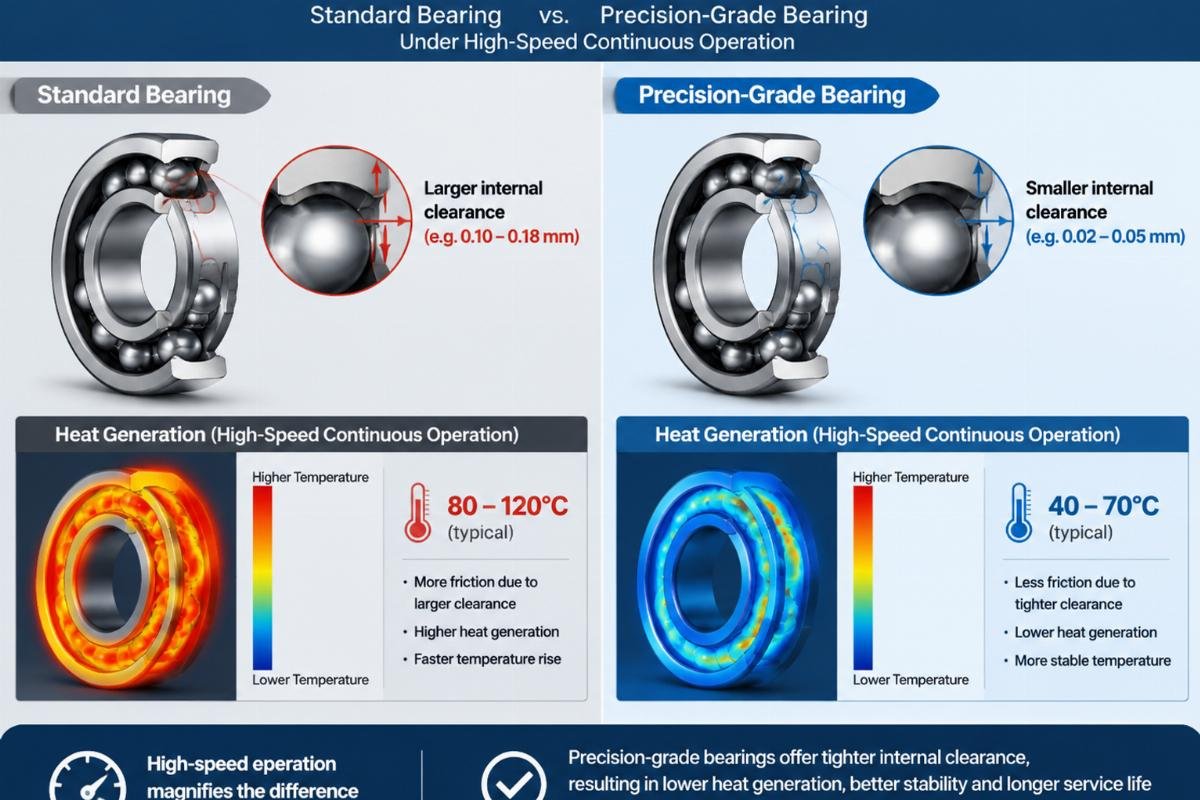
The failure mode is rarely sudden. It begins with subtle noise increases, which are often ignored until the system triggers a fault alarm. By then, the damage to the shaft and housing is often extensive. Using genuine bearings designed for these specific conditions ensures that the material purity and heat treatment processes can withstand the repetitive stress without premature fatigue cracking. [NEED_CITE: fatigue life calculation methods for high-cycle bearing applications]
How to Compare Deep Groove vs. Cylindrical Roller Bearings for Stackers?
Selection depends on the specific load direction and rigidity requirements of the stacker crane axis.
Choosing between deep groove ball bearings and cylindrical roller bearings is not a matter of preference but of mechanical necessity. Each type offers distinct advantages depending on whether the application involves primarily radial loads, axial loads, or a combination of both. Understanding these differences is crucial for optimizing the performance and longevity of the stacking mechanism.
| Feature | Deep Groove Ball Bearings | Cylindrical Roller Bearings |
|---|---|---|
| Load Capacity | Moderate radial and axial | High radial only |
| Speed Capability | High | Moderate to High |
| Rigidity | Lower | Higher |
| Noise Level | Low | Moderate |
| Misalignment Tolerance | Good | Poor |
| Typical Application | Guide wheels, light duty axes | Main mast support, heavy load axes |
Deep groove ball bearings are versatile and capable of handling both radial and axial loads. They are ideal for guide wheels and lighter-duty axes where speed and low noise are priorities. Their ability to tolerate some misalignment makes them forgiving in installations where perfect alignment is challenging. However, their load capacity is limited compared to roller bearings. [NEED_CITE: load rating standards for ball vs roller bearings]
Cylindrical roller bearings, on the other hand, excel in handling high radial loads. They are the preferred choice for the main mast support of stacker cranes, where the weight of the lifted load creates immense radial stress. Their line contact design provides greater rigidity, which is essential for maintaining positioning accuracy under heavy loads. However, they cannot handle axial loads and are sensitive to misalignment, requiring precise installation and housing design.
A case in point involved a project in Southeast Asia where the initial design used deep groove bearings for the main mast supports. Under full load, the deflection was excessive, causing uneven wear and premature failure. Switching to cylindrical roller bearings resolved the rigidity issue, extending the service life meaningfully. This highlights the importance of matching the bearing type to the specific mechanical demands of the application.

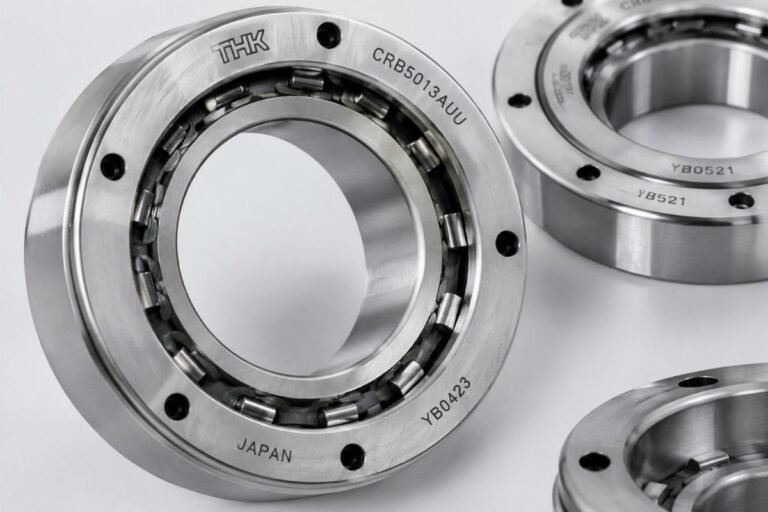
When sourcing these components, it is vital to ensure that the selected brands meet the required precision grades. Brands like SKF, FAG, and NSK offer specialized lines for industrial automation that provide the necessary consistency and performance. Verifying the authenticity of these products is essential, as counterfeit bearings often fail to meet the specified load ratings and precision tolerances. [NEED_CITE: risks of counterfeit bearings in critical industrial applications]
What Traceability Documents Prove Bearing Authenticity?
Visual inspection is insufficient; metallurgical and documentary traceability are the only guarantees against counterfeits.
The market for industrial bearings is flooded with counterfeits that look identical to genuine products but lack the material integrity and precision engineering. A fake bearing might pass a visual check, but under the microscope, the steel structure reveals impurities and inconsistent heat treatment. These defects lead to unpredictable failure modes, posing significant risks to automated systems. [NEED_CITE: methods for detecting counterfeit industrial bearings]
To ensure authenticity, buyers must demand comprehensive traceability documentation. This includes mill certificates that verify the origin and chemical composition of the steel used in the bearing rings and rolling elements. Additionally, brand-specific QR codes or serial numbers allow for verification through the manufacturer’s official channels. These documents provide a chain of custody from the production facility to the end user, ensuring that the product has not been tampered with or substituted.
A US buyer once encountered a batch of bearings that appeared genuine but failed prematurely. Upon investigation, it was discovered that the packaging was authentic, but the bearings inside were counterfeit. The lack of proper traceability documentation made it difficult to hold the supplier accountable. This incident underscores the importance of sourcing from suppliers who can provide verifiable proof of authenticity for every item shipped.
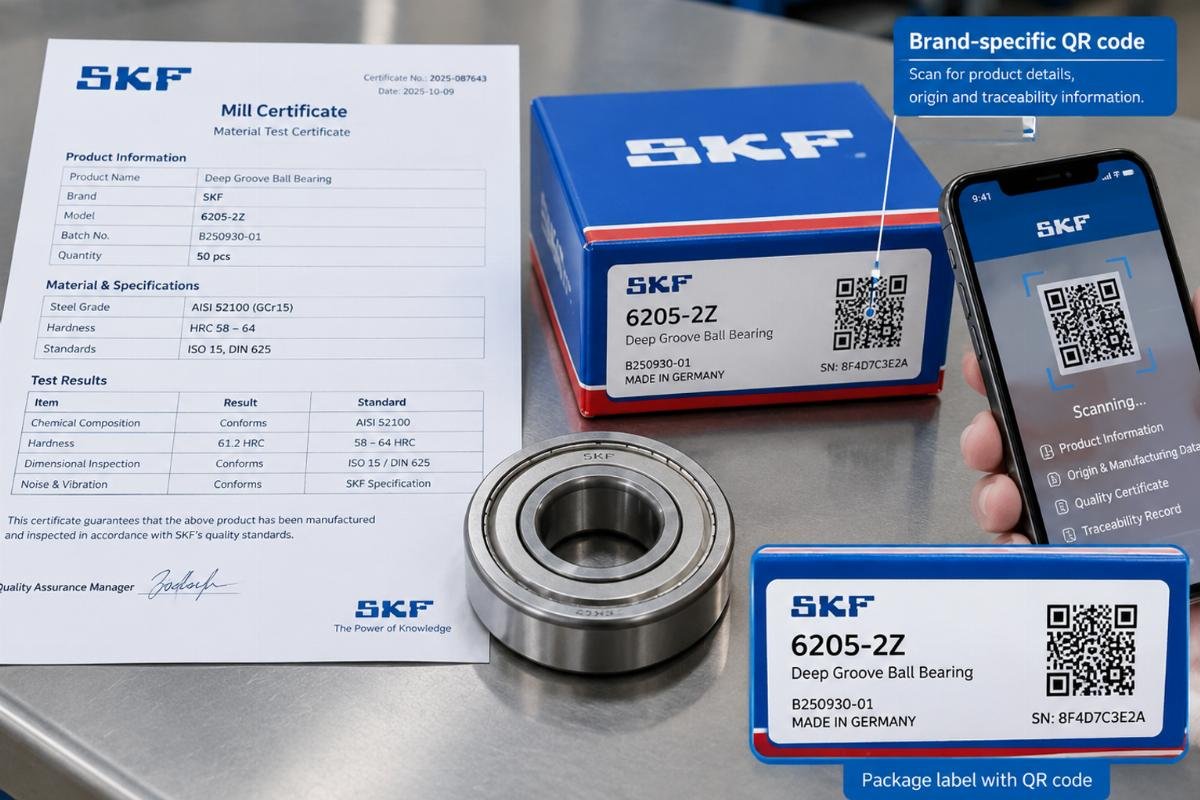
Risk mitigation involves more than just checking papers. It requires establishing a relationship with suppliers who prioritize transparency and quality assurance. Suppliers who stock genuine products from reputable brands like INA, TIMKEN, and NTN typically have robust systems in place to ensure traceability. They can provide detailed technical datasheets and support for failure analysis, which is invaluable for maintaining system reliability.
Key documents to request include:
- Mill certificates for steel origin and composition.
- Brand-specific authentication codes or serial numbers.
- Certificate of Conformity indicating compliance with ISO standards.
- Batch numbers for traceability back to the production date and facility.
Without these documents, the risk of introducing substandard components into your automated warehouse system remains unacceptably high. [NEED_CITE: industry standards for bearing documentation and traceability]
How to Optimize MOQ and Lead Times for Mixed Intralogistics Projects?
Consolidation from a single global source prevents project delays and reduces administrative overhead.
Automated warehouse projects often require a wide variety of bearing types and sizes, from miniature bearings for sensors to large spherical roller bearings for conveyor drives. Sourcing these items from multiple distributors can lead to fragmented shipments, inconsistent lead times, and increased administrative burden. Coordinating deliveries from different suppliers often results in delays that can stall the entire project commissioning.
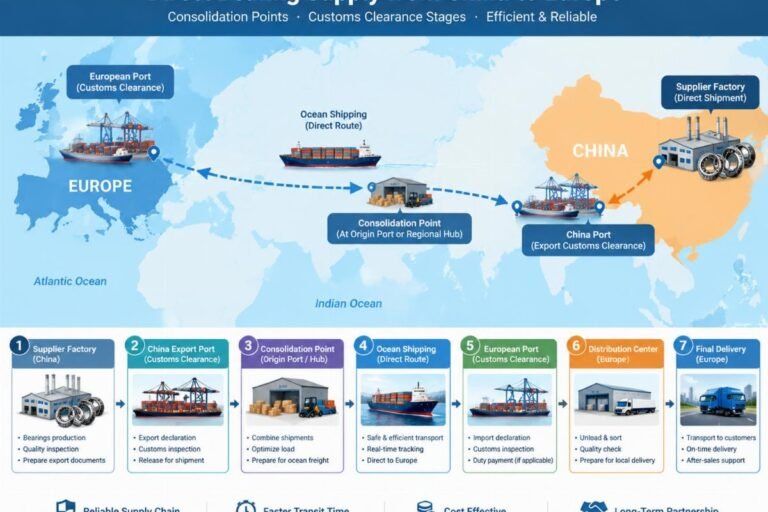
By consolidating orders with a single supplier who offers a full range of genuine brands, buyers can streamline the procurement process. This approach allows for mixed-brand and mixed-size packages to be shipped together, reducing shipping costs and simplifying customs clearance. Furthermore, a single point of contact facilitates better communication and technical support, ensuring that any issues with selection or delivery are resolved quickly.
For MRO operators, having access to a supplier with substantial spot inventory is crucial for minimizing unplanned downtime. Emergency replacement parts need to be available immediately, regardless of the brand or size. Suppliers who maintain large inventories of standard and special part numbers can fulfill these urgent requirements faster than those who rely on made-to-order production. [NEED_CITE: benefits of consolidated sourcing for industrial MRO operations]
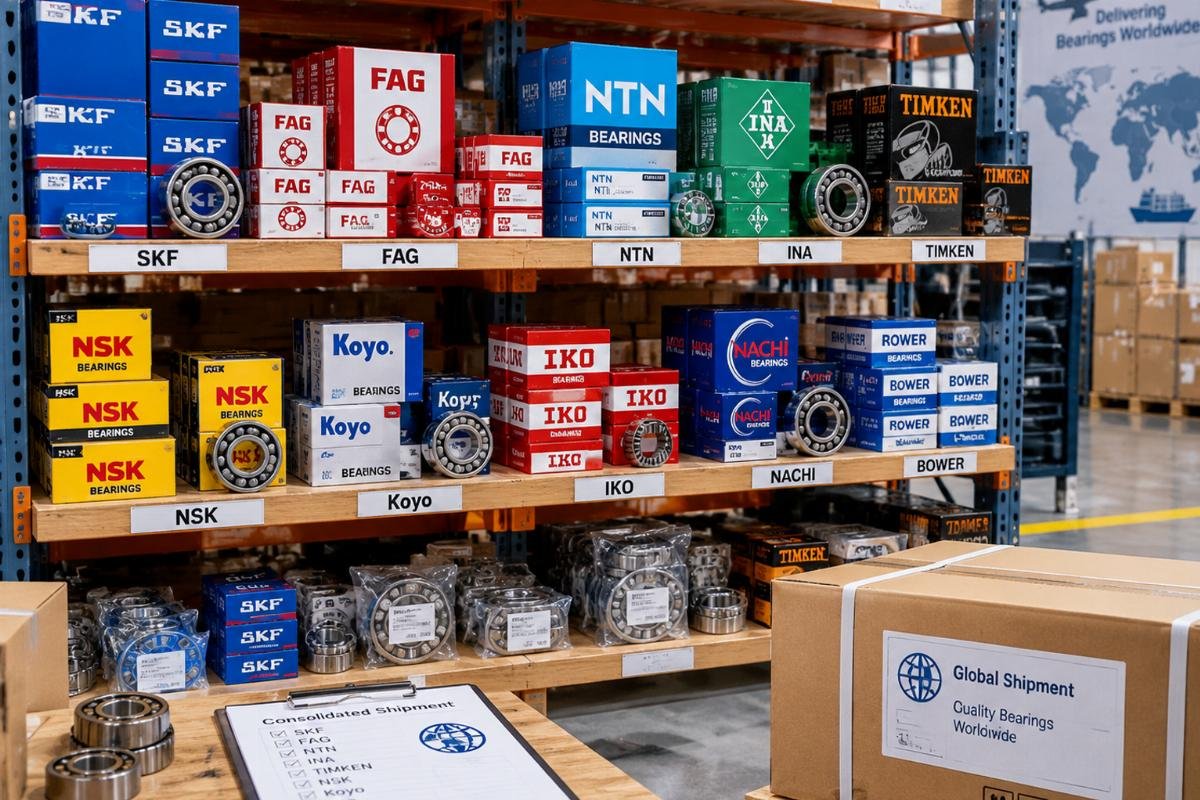
Flexibility in minimum order quantities (MOQ) is another critical factor. Projects often require small batches for testing or specific replacements, while others need container-load quantities for new installations. A supplier who can accommodate both scenarios provides the agility needed to manage complex intralogistics projects effectively. This flexibility ensures that you are not forced to overstock slow-moving items or wait excessively for small urgent orders.
Technical support plays a vital role in this optimization. Suppliers who offer cross-brand equivalent model consultation can help identify suitable alternatives if a specific brand is unavailable, ensuring that project timelines are not compromised. This level of service transforms the supplier from a mere vendor into a strategic partner in maintaining operational efficiency.
Conclusion
Precision and traceability are non-negotiable for automated warehouse reliability.
Selecting the right bearings for intralogistics systems requires a deep understanding of mechanical demands, material science, and supply chain integrity. Prioritizing genuine products with verified traceability over lower-cost alternatives prevents costly downtime and ensures long-term operational stability. By consolidating sourcing with a reliable global partner, buyers can optimize lead times, reduce administrative complexity, and secure the technical support needed for successful project execution. Genuine bearings for automated warehouses and intralogistics wholesale supplier partnerships built on transparency and expertise are the foundation of efficient automated logistics.
Tagged

Written by
author
Editor covering global sourcing, supplier verification, and industrial product knowledge. Content is compiled from manufacturer specifications, industry standards, and hands-on experience with international B2B buyers. Every article is fact-checked before publishing to help procurement professionals make informed decisions.