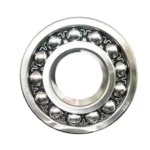
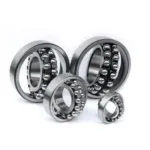
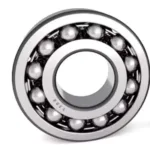
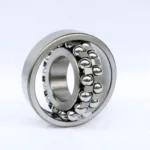
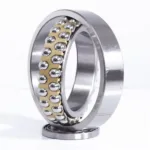
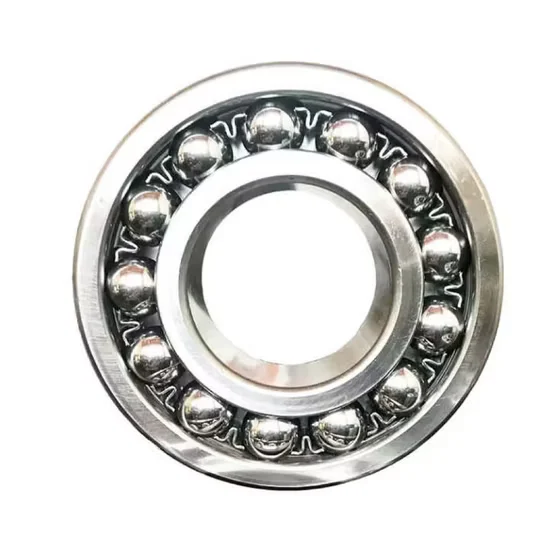
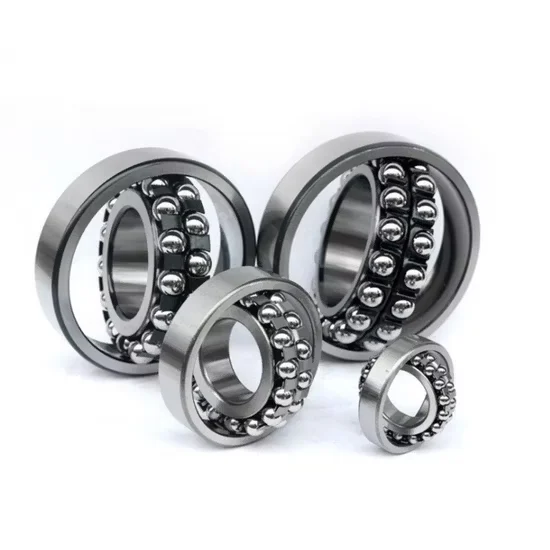
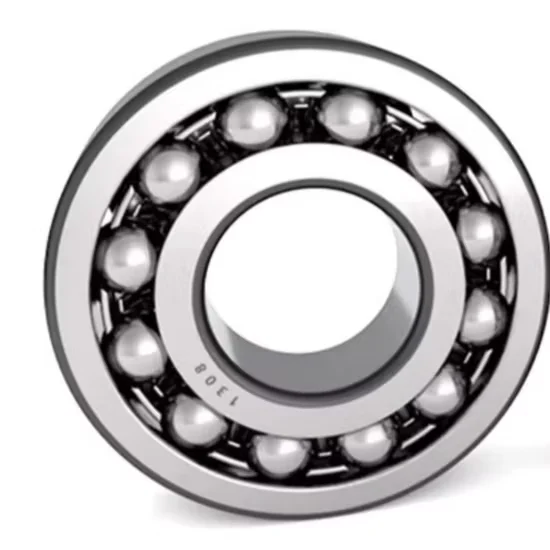
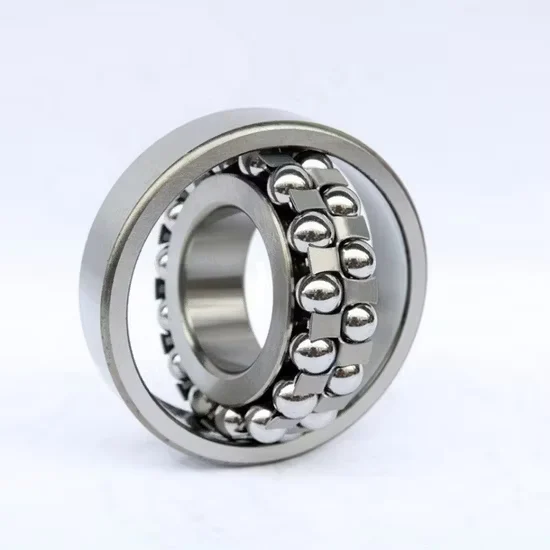
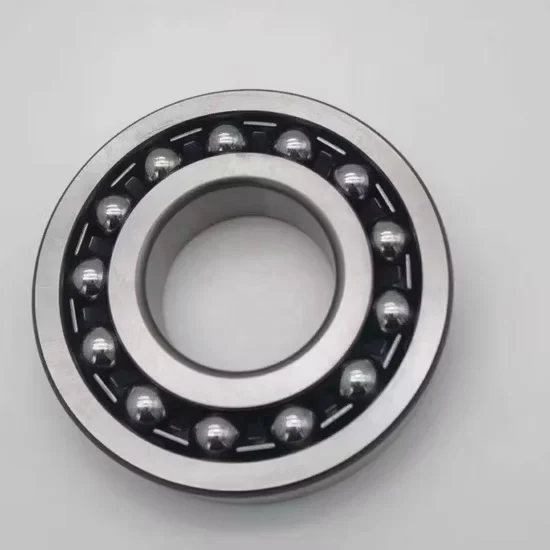
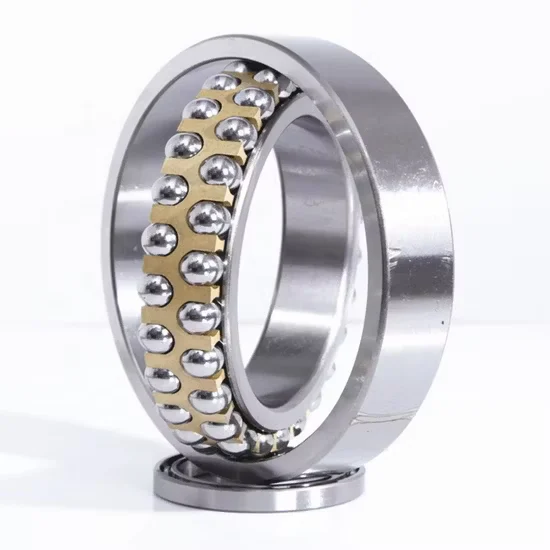
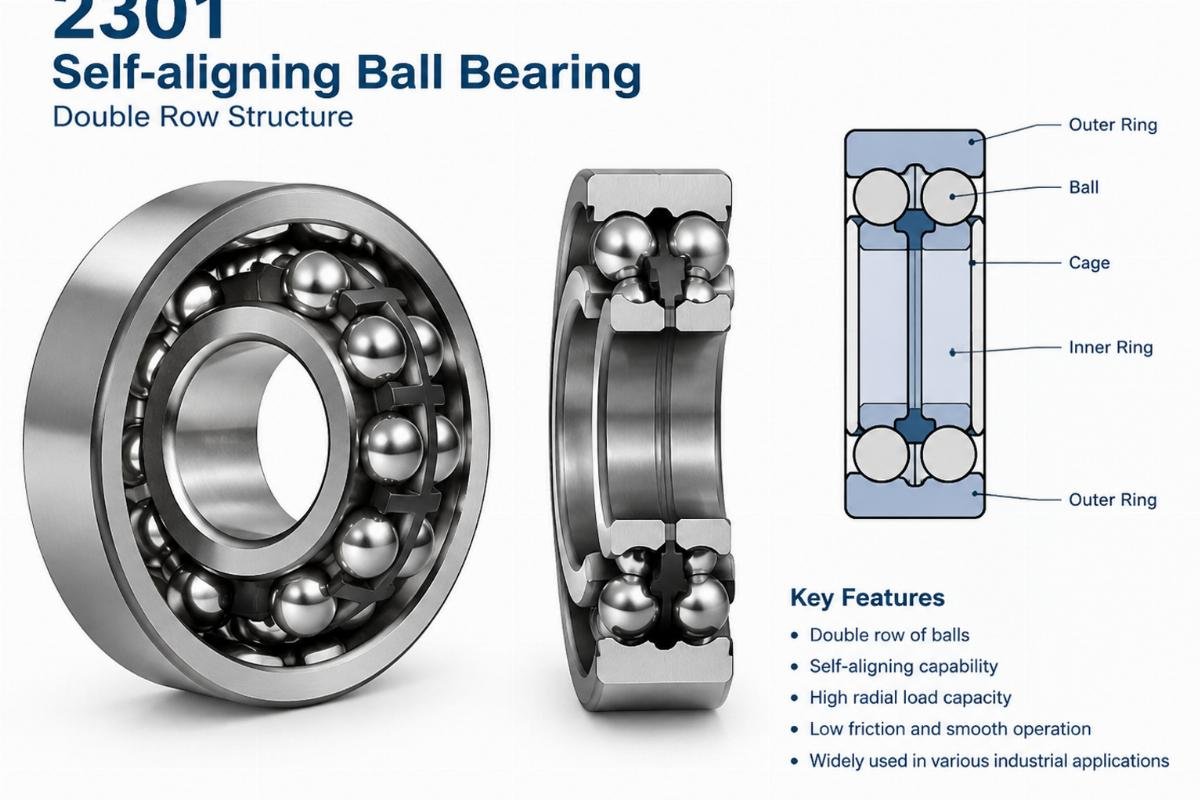
2301 Self-Aligning Ball Bearing 12x37x17 mm — Machined from high-purity Gcr15 chrome steel, this double-row configuration effectively accommodates shaft misalignment during operation. It reliably supports a 12.7 kN dynamic load rating and a 3.7 kN static load rating in demanding industrial environments.
Suitable for textile machines, conveyors, and agricultural equipment.
Every shipment guarantees complete original factory batch traceability documentation for strict quality verification.
Multi-Brand Sourcing Covered — Procure KOYO, NTN, and NSK variants of the 2301 self-aligning ball bearing in a single consolidated shipment without juggling multiple vendors.
Technical Specifications
Parameter
Value
Designation
2301
Bearing Type
Self-Aligning Ball Bearing
Bore Diameter (d)
12 mm
Outside Diameter (D)
37 mm
Width (B)
17 mm
Dynamic Load Rating (C)
12.7 kN
Static Load Rating (C₀)
3.7 kN
Number of Rows
Double-Row
Material
Chrome Steel Gcr15 / 100cr6
Origin
Shandong, China
Application Suitability
Industry
Typical Applications
Textile Machinery
Spindle supports and yarn guide rollers requiring misalignment compensation
Agricultural Machinery
Seed drill metering mechanisms and conveyor drive shafts
General Manufacturing
Light-duty transmission shafts and automated assembly line conveyors
Why Shaft Misalignment Destroys Standard Bearings Faster Than Overloading
Standard deep-groove designs bind and fail when shafts deflect, whereas self-aligning architectures absorb the angular errors gracefully.
In my early years supplying agricultural equipment, I saw countless standard bearings seize in field conditions simply because the mounting brackets flexed under heavy operational loads. When a rigid bearing cannot accommodate this structural deflection, the rolling elements skid across the raceway, generating excessive friction heat and leading to premature cage failure [NEED_CITE: rolling bearing failure mode classification per ISO 15243]. Sourcing the correct 2301 self-aligning ball bearing prevents these catastrophic downtime events by allowing the inner ring to pivot freely within the spherical outer ring. This pivotal movement ensures that the load remains evenly distributed across the double-row rolling elements, fundamentally altering the fatigue life of the component in demanding MRO scenarios where structural rigidity cannot be guaranteed.
Matching the 2301 Self-Aligning Ball Bearing to Your Operating Environment
When specifying a 2301 self-aligning ball bearing for textile or agricultural machinery, the primary challenge is managing constant shaft deflection without sacrificing rotational speed or compromising the structural integrity of the housing. Our engineering team cross-references your exact equipment model to ensure the selected double-row configuration provides adequate radial load support while compensating for unavoidable structural flexing. This targeted selection process eliminates the guesswork and ensures long-term reliability in demanding MRO scenarios. By analyzing the specific load vectors and mounting constraints of your application, we can determine whether the standard open design requires supplementary external seals to keep contaminants out of the precision-machined raceways.
Navigating Dust, Deflection, and Dynamic Loads in the Field
Agricultural and textile environments expose components to severe radial loads combined with moderate axial thrust, demanding a double-row arrangement for enhanced stability and load distribution. High dust concentrations in field operations easily penetrate standard open designs, making proper external sealing selection critical to prevent abrasive wear inside the raceway and maintain the integrity of the lubrication film. Furthermore, thermal expansion during continuous operation alters internal clearance, requiring careful consideration of the operating temperature range to maintain optimal lubrication film thickness and prevent metal-to-metal contact [NEED_CITE: influence of operating temperature on bearing lubrication and clearance]. Proper installation alignment, despite the inherent self-aligning capability, remains essential to avoid inducing artificial preload that accelerates fatigue and compromises the dynamic load rating. The interplay between environmental contamination and shaft deflection dictates the ultimate service life of the assembly.
Decoding the Double-Row Architecture and Material Selection
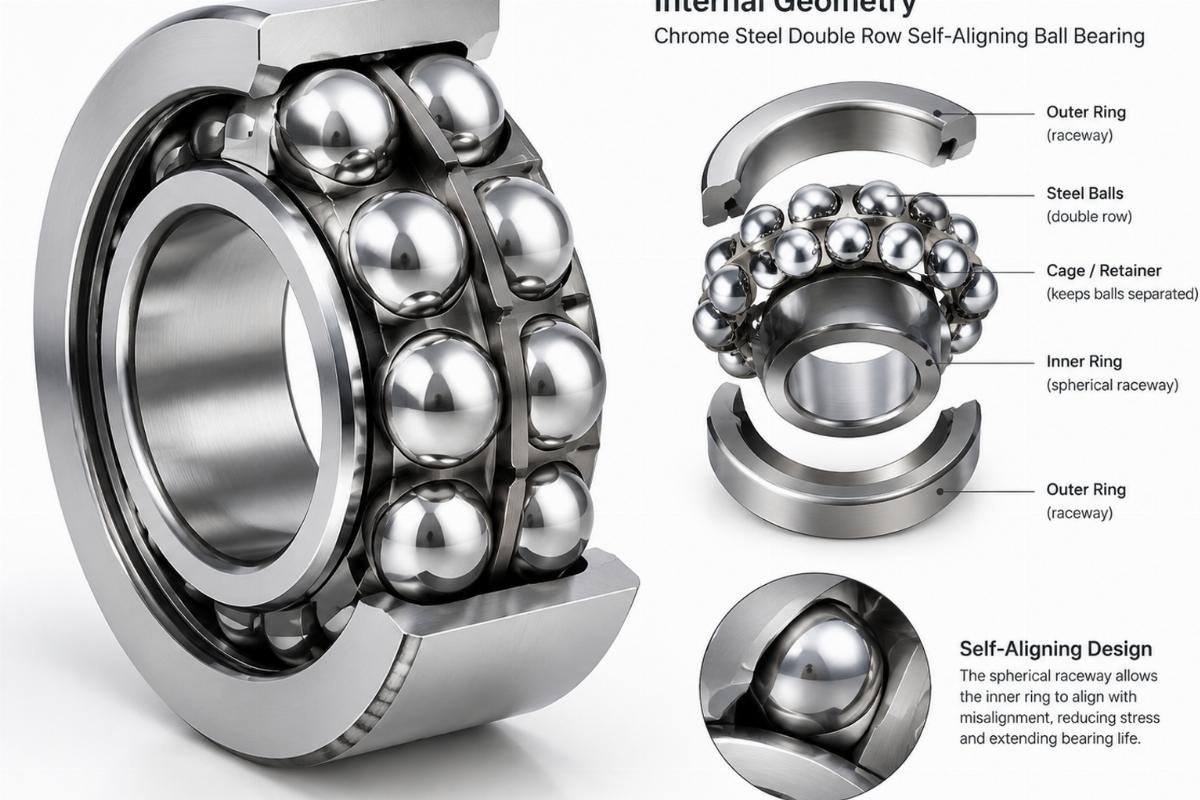
The double-row arrangement of this bearing provides a wider load distribution zone, significantly improving radial capacity compared to single-row alternatives while maintaining a compact axial footprint. Manufactured from high-purity Chrome Steel Gcr15 / 100cr6, the raceways achieve the necessary hardness to resist surface fatigue under cyclic loading and prolonged operational stress. The 12 mm bore and 37 mm outside diameter define a precise dimensional envelope suitable for light-to-medium duty shafts where spatial constraints are strict and housing tolerances are tight. With a dynamic load rating of 12.7 kN and a static load rating of 3.7 kN, the internal geometry is optimized for applications experiencing steady radial forces with occasional shock loads typical in conveyor drives. The absence of specific seal or clearance suffixes in the base designation indicates an open, standard clearance configuration, requiring external sealing solutions and precise clearance selection based on your specific thermal profile and mounting practices.
The Downtime Penalty of Ignoring Misalignment Tolerances
Selecting a rigid bearing for a flexing shaft inevitably leads to edge loading, which drastically reduces the calculated L10 life and triggers unplanned downtime across the entire production line. When the internal geometry is forced out of alignment, the resulting friction generates localized hot spots that degrade the lubricant and cause premature seizure of the rolling elements [NEED_CITE: bearing life calculation and fatigue limits per ISO 281]. This catastrophic damage often extends beyond the bearing itself, scoring the shaft journal and destroying adjacent seals, thereby multiplying the repair costs and extending the equipment outage. Relying on the self-aligning capability of the correct model mitigates these hidden costs and preserves the integrity of the entire drive assembly, ensuring that maintenance intervals remain predictable and manageable.
Securing Traceable Quality for Your MRO and Project Orders
Procuring genuine multi-brand bearings like KOYO, NTN, or NSK requires strict channel verification to avoid counterfeit units that fail prematurely under dynamic loads. We provide complete traceability documentation for every 2301 self-aligning ball bearing, ensuring the metallurgical integrity and dimensional tolerances strictly match the manufacturer’s original specifications. Our flexible consolidation services allow you to mix this 12x37x17mm model with other sizes and brands in a single shipment, significantly optimizing your international freight costs and simplifying customs clearance. Furthermore, our technical team assists with cross-brand equivalent model consultation, ensuring you receive the exact dimensional and load rating match even if your preferred brand faces unexpected supply shortages. This comprehensive sourcing strategy guarantees that your maintenance schedules are never compromised by logistical bottlenecks or unverified inventory.
Documentation & Authenticity
Certificate of Conformity verifying the Gcr15 chrome steel material grade for each batch.
Original manufacturer batch traceability codes linking the 12.7 kN load rating to specific production runs.
Official brand app QR code verification to confirm authenticity of KOYO, NTN, or NSK units.
Dimensional inspection reports confirming the 12x37x17mm tolerances before dispatch.
Storage, Handling & Mounting
Store the open-design bearings in original packaging to prevent moisture ingress before external seals are installed.
Use induction heating for the 37 mm outer ring during mounting to avoid damaging the double-row cage.
Apply clean gloves when handling the Gcr15 chrome steel surfaces to prevent acidic sweat corrosion.
Verify the shaft deflection angle remains within the self-aligning limit to prevent binding the 12 mm bore.
Engineering Data Required for Precision Selection
To ensure the selected 2301 configuration meets your operational demands, please provide the exact radial and axial load profiles along with the maximum operating speed. Sharing the specific OEM equipment model number allows our engineering team to perform a precise cross-reference check and verify the required clearance class. Detailing the environmental exposure, such as dust levels or moisture, helps us recommend the appropriate external sealing arrangement for this open bearing design.
Frequently Asked Questions
Q: How to verify the authenticity of multi-brand bearings upon delivery?
A: We supply official manufacturer documentation and batch traceability codes for every unit. Buyers can scan the QR codes using the respective brand’s official mobile application to confirm the origin and specifications of the KOYO, NTN, or NSK bearings. This ensures the metallurgical composition and load ratings strictly match the original engineering standards.
Q: What are the cross-reference precautions regarding clearance and cage alignment?
A: When cross-referencing the 2301 series across different manufacturers, always verify the internal clearance class and cage material match your specific thermal and speed requirements. Different brands may use varying cage designs for the same base designation, which can affect high-speed stability and lubrication retention in double-row configurations.
Q: How does the self-aligning feature compensate for shaft misalignment in agricultural machinery?
A: The outer ring features a spherical raceway that allows the inner ring and ball assembly to pivot slightly. This design absorbs angular errors caused by shaft deflection or mounting inaccuracies in agricultural equipment, preventing edge loading and ensuring the rolling elements maintain smooth contact with the raceways under dynamic field conditions.
Q: What is the recommended lubrication interval for double-row self-aligning ball bearings?
A: Since the base designation indicates an open design without integrated seals, the relubrication interval depends entirely on your external sealing solution and operating environment. In dusty agricultural applications, frequent purging with compatible grease is necessary to expel contaminants, whereas clean textile environments allow for extended maintenance cycles based on standard operating hours.
Q: How to select the right clearance class for varying operating temperatures?
A: Standard clearance is suitable for ambient temperatures, but if the inner ring runs significantly hotter than the outer housing due to friction or process heat, a C3 or C4 clearance is required. This extra internal space accommodates thermal expansion, preventing the double-row bearing from seizing when the operational temperature stabilizes.
Shipping Information
EU Warehouse
3-7 working days (bonded stock)
Direct from China
Shanghai & Ningbo hubs (bulk / FCL)
Markets Served
DE · IT · PL · ES · NL · FR · EU+
Incoterms
DDP / DAP available on request
Minimum Order
Contact us for MOQ details
Documents Included with Every Shipment
EN and ISO Quality Certificates
Batch traceability and manufacturing standard
Material & Heat-Treatment Reports
Full material composition and process records
CE Declaration of Conformity
For bearing units and motion products
RoHS Compliance Declaration
Restriction of hazardous substances
EUR.1 Movement Certificate
Preferential origin for EU customs
Certificate of Origin
Country of manufacture documentation
Correct HS Codes
Pre-classified for smooth customs clearance
Commercial Invoice & Packing List
VAT-compliant intra-EU invoicing
Transparent Landed Cost with Tax Explanation
SKFEU provides full price transparency so EU buyers know exactly what they pay. No hidden duties, no surprise charges at customs.
VAT-Compliant Invoicing
All intra-EU transactions are invoiced with correct VAT treatment. B2B buyers with valid EU VAT numbers receive zero-rated invoices where applicable.
No Unexpected Import Duties
Goods shipped from our EU bonded warehouse arrive as intra-EU movements -- no import duties, no customs delays for EU-based buyers.
EUR.1 & Origin Docs Ready
For shipments direct from China, EUR.1 movement certificates and certificates of origin are prepared in advance to minimise customs clearance time.
DDP Pricing Available
Ask for Delivered Duty Paid quotations -- we absorb all import costs so your landed cost is fixed and predictable from day one.
Need a landed cost breakdown? Contact Sofia at
sofia@skfeu.com
or via WhatsApp for a full DDP quotation including freight, duties and VAT for your country.
Send Inquiry
Request Pricing & Availability
Share your requirements and Sofia will respond within one working day with pricing, lead time and full documentation details.