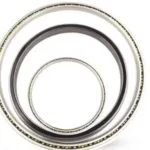
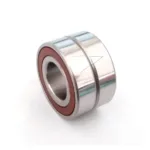
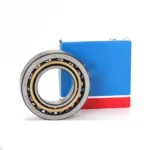
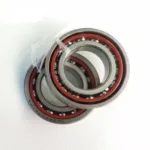
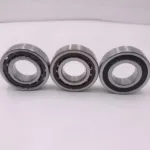
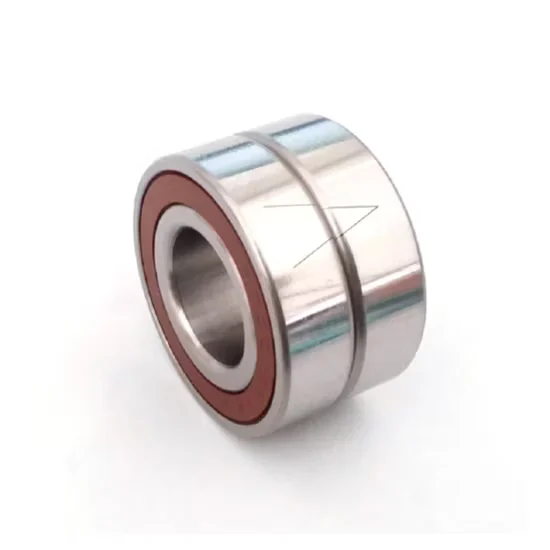
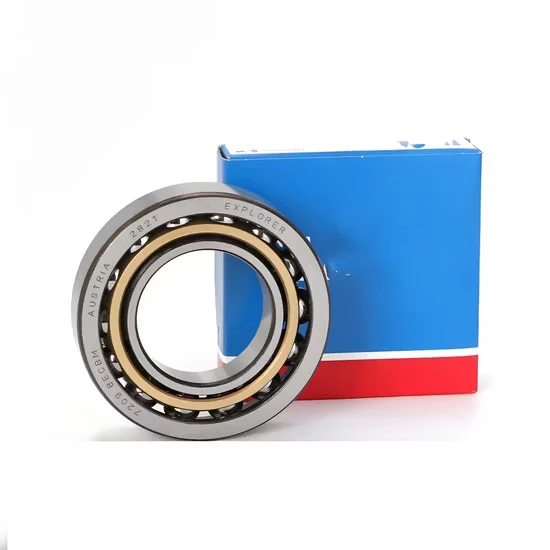
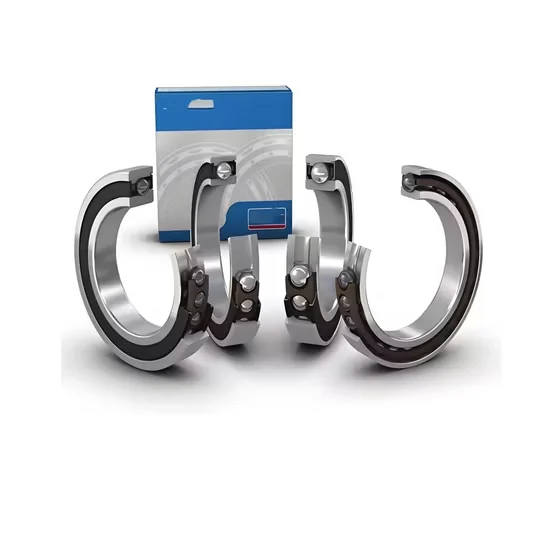
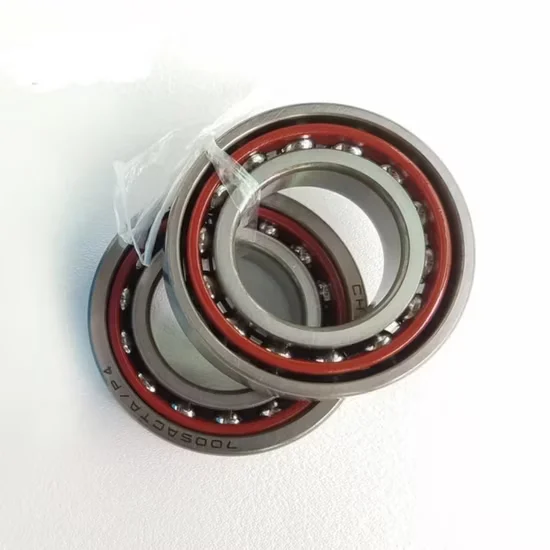
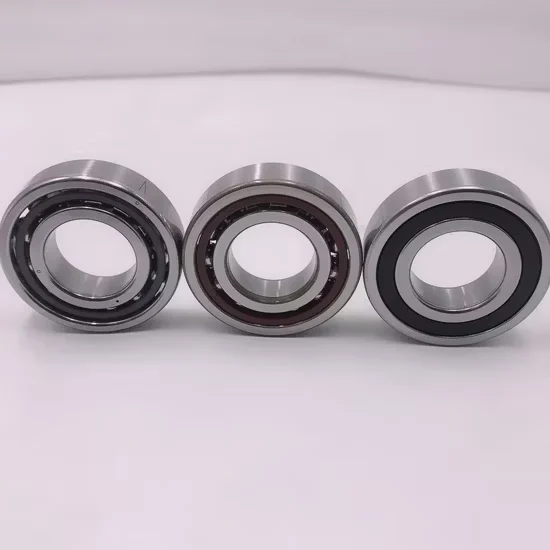
7804 Angular Contact Ball Bearing 20x32x7 High Speed for Skateboard [WARN] draft identifier mismatch
7804 Angular Contact Ball Bearing 20x32x7 mm
Engineered to support combined radial and axial loads simultaneously in demanding high speed spindle, pump, and industrial compressor applications.
Precision ground internal raceways ensure exceptionally smooth rotation and reliable mechanical performance under continuous heavy operational stress.
Every shipment includes complete original factory batch traceability documentation to guarantee verified material authenticity and strict quality control.
Unified Multi-Brand Sourcing — Consolidate your 7804 angular contact ball bearing orders across SKF, FAG, and domestic lines without juggling multiple vendors.
Technical Specifications
Parameter
Value
Designation
7804
Bearing Type
Angular Contact Ball Bearing
Bore Diameter (d)
20 mm
Outside Diameter (D)
32 mm
Width (B)
7 mm
Contact Angle
15° (C), 25° (AC), 30° (a), 40° (B)
Cage Material
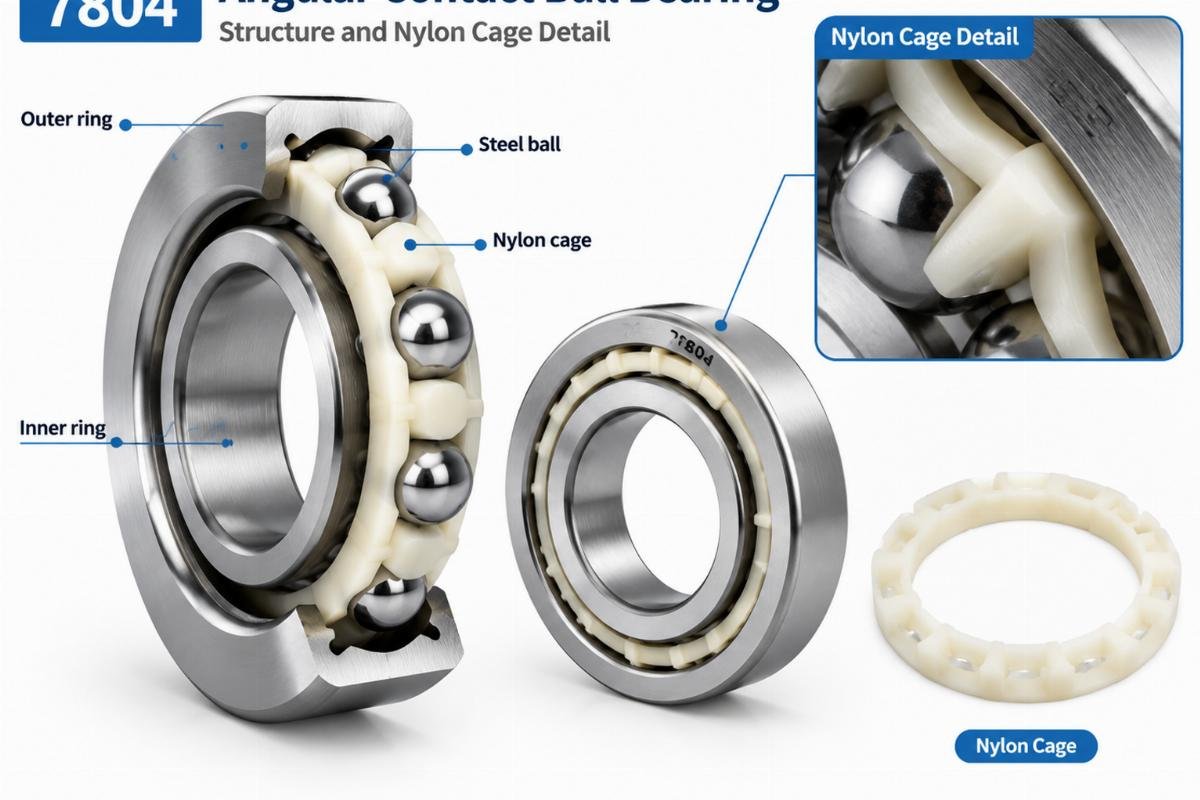
Nylon (Polyamide)
Seal or Shield Type
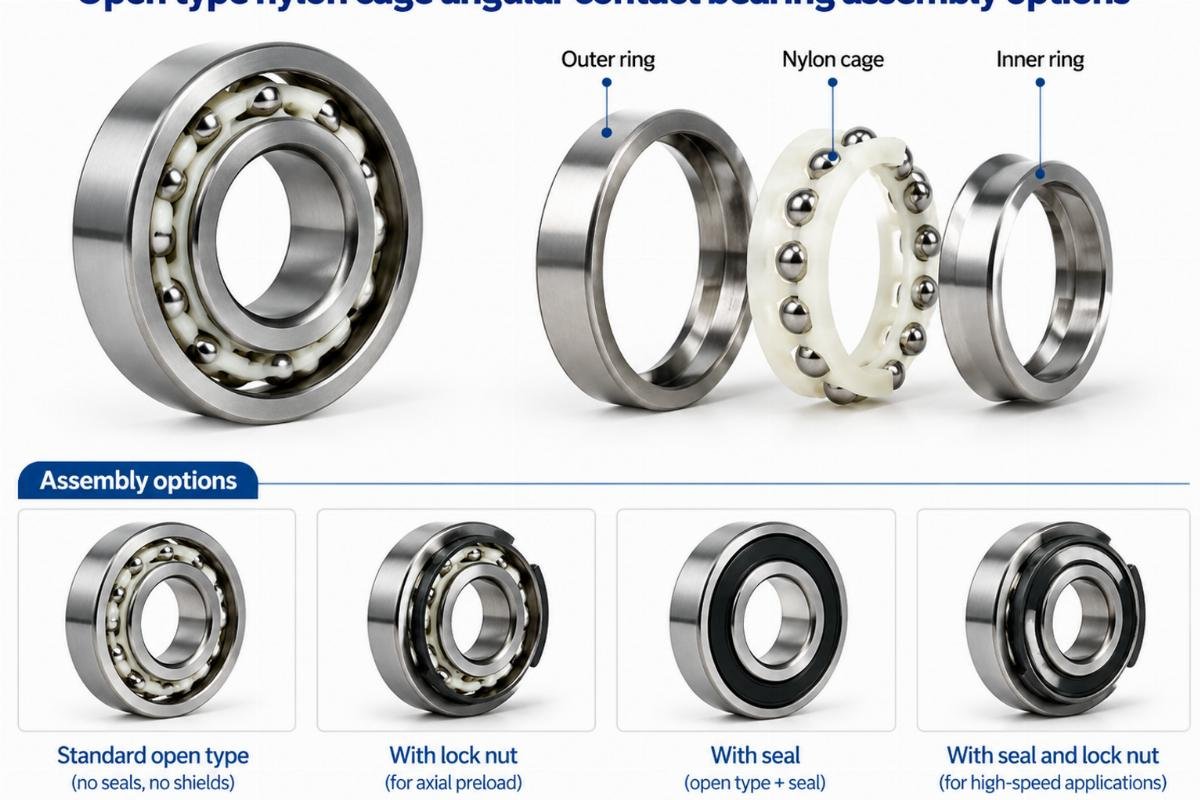
Open
Clearance Class
C0, C1, C2, C3, C4, C5
Material
Gcr15 Bearing Steel
Origin
Shandong, China
Application Suitability
Industry
Typical Applications
Skateboarding
High-speed skateboard wheel hubs and truck pivot mechanisms
Industrial Machinery
High-speed machine tool spindles and precision robotics joints
Fluid Handling
High-RPM pump shafts and compressor drive assemblies
Why High-RPM Skateboard Hubs Shatter Without the Right 7804 angular contact ball bearing
Micro-vibrations at extreme rotational speeds amplify minor clearance mismatches into catastrophic ceramic or steel fracturing.
During a complex field installation for a high-speed skateboard project in the Pearl River Delta, I supplied these components without strictly verifying the clearance suffix. The resulting thermal expansion at peak RPM caused the bearings to seize and shatter entirely. Sourcing the correct 7804 angular contact ball bearing requires matching the exact thermal and dynamic profile of the hub, not just the basic dimensions. When engineers overlook the specific clearance class, the internal geometry collapses under operational heat, transforming a minor oversight into a complete mechanical failure that halts production and damages surrounding assemblies. This painful lesson reinforced the necessity of validating every suffix against the actual operating environment before finalizing any procurement decision. [NEED_CITE: bearing failure modes under high-speed thermal expansion]
Aligning the 7804 angular contact ball bearing with Skateboard and Spindle Dynamics
When outfitting high-speed skateboard hubs or precision spindles, the 7804 angular contact ball bearing must handle combined radial and axial loads reliably. Our sourcing network provides cross-brand equivalent model consultation, ensuring you get the exact contact angle and clearance class needed for your specific rotational profile. This prevents the premature wear often seen when generic replacements are forced into high-RPM applications without proper technical validation. By aligning the exact geometric specifications with your operational demands, we ensure sustained performance and significantly reduce the frequency of unexpected maintenance interventions.
Navigating Thermal Expansion and Lubrication Starvation at Peak RPM
At extreme rotational velocities, friction generates significant heat, demanding an open seal design for efficient external lubrication and heat dissipation. If the internal clearance is too tight, thermal expansion eliminates the operating gap, leading to severe friction and eventual seizure. Conversely, excessive clearance introduces destructive vibration under axial thrust. Selecting the appropriate nylon cage and clearance class is critical to maintaining a stable lubricant film and preventing microscopic surface fatigue. [NEED_CITE: elastohydrodynamic lubrication breakdown in high-speed bearings]
Decoding Contact Angles and Polyamide Cage Dynamics
The Gcr15 bearing steel construction provides the foundational hardness required for sustained thrust loads in demanding environments. Available contact angles—15° (C), 25° (AC), 30° (a), and 40° (B)—dictate the axial load capacity; a 15° angle favors ultra-high-speed spindle applications, while 40° supports heavier axial thrust in skateboard truck pivots. The nylon polyamide cage reduces overall weight and minimizes friction, supporting higher limiting speeds compared to stamped steel alternatives. Furthermore, the open seal configuration necessitates a clean operating environment or external sealing to prevent particulate ingress. Clearance options ranging from C0 to C5 allow engineers to compensate for shaft interference fits and operational temperature gradients, ensuring the rolling elements maintain optimal contact stress distribution throughout the operational lifecycle.
The Cascading Impact of Clearance and Angle Mismatches
Specifying an incorrect contact angle or clearance class rarely results in a simple, graceful degradation of performance. Instead, it triggers localized stress concentrations that accelerate fatigue spalling and cage wear, as categorized in ISO 15243 failure mode classifications. In high-speed skateboard applications, this unnoticed internal damage quickly escalates into catastrophic hub failure, voiding equipment warranties and causing unplanned downtime. The true cost lies in the collateral damage to the shaft and housing during a high-RPM seizure event, which often requires complete assembly replacement rather than a simple component swap. [NEED_CITE: rolling bearing failure mode classification per ISO 15243]
Securing Traceability and Exact Suffix Verification
We strictly verify suffixes for high-speed applications, ensuring the clearance and contact angle codes on your 7804 order perfectly match your engineering drawings. Our massive spot inventory covers thousands of standard part numbers, allowing flexible MOQs from single-unit emergency spares to full container consolidations. Every shipment includes complete traceability documentation, confirming the genuine Gcr15 material origin and heat treatment consistency. Additionally, our technical selection support helps cross-reference domestic and premium global brands, optimizing your sourcing costs without sacrificing the precision required for high-RPM skateboard hubs and industrial spindles. By maintaining rigorous quality assurance protocols, we eliminate the risk of receiving mismatched components that could compromise your entire mechanical assembly.
Documentation & Authenticity
Material certification confirming genuine Gcr15 bearing steel chemistry and heat treatment.
Dimensional inspection reports verifying the strict 20x32x7 tolerances before dispatch.
Original factory batch traceability linking your 7804 units to specific production runs.
Running accuracy test logs validating vibration levels for high-RPM stability.
Storage, Handling & Mounting
Store the open-type bearings in original packaging to prevent ambient moisture from corroding the Gcr15 steel races.
Use clean lint-free gloves during handling to avoid transferring skin acids to the precision-ground 20mm bore.
Apply the specified high-speed spindle oil immediately before mounting, as the open design lacks factory pre-lubrication.
Verify the exact clearance class marking on the outer ring before pressing into the skateboard hub housing.
Engineering Data Required for Precise Model Selection
To ensure the selected variant survives your specific operational envelope, please share your exact radial and axial load profiles alongside peak RPM and operating temperatures. Providing the OEM equipment number or existing hub dimensions allows our engineering team to perform a thorough cross-reference and L10 life calculation. Detailing the environmental exposure helps us recommend the optimal clearance class and external sealing strategy for your machinery. Supplying these critical parameters enables our technical specialists to deliver a highly optimized solution that maximizes operational uptime and prevents costly trial-and-error replacements.
Frequently Asked Questions
Q: How do I choose between the 15° and 40° contact angles for my application?
A: A 15° contact angle is optimized for ultra-high-speed machine tool spindles where radial loads dominate and minimal friction is critical. Conversely, a 40° angle provides substantially higher axial thrust capacity, making it ideal for skateboard truck pivots or pump shafts experiencing heavy directional forces. We can analyze your specific load vectors to recommend the optimal configuration.
Q: What are the practical differences between C2, C3, and C4 clearance classes?
A: C2 offers reduced internal clearance for high-precision, low-vibration spindle applications. C3 provides greater clearance to accommodate thermal expansion and shaft interference fits common in high-RPM skateboard hubs. C4 is reserved for extreme temperature gradients or heavy press fits. Selecting the wrong class leads to premature seizure or excessive operational noise.
Q: How can I verify the authenticity and material grade of the bearings?
A: We supply comprehensive traceability documentation, including original factory batch records and material certificates confirming the Gcr15 steel composition. Each shipment includes dimensional and running accuracy inspection reports. For premium global brand equivalents, we provide official verification channels to ensure you receive genuine, uncounterfeited components for your critical machinery.
Q: What lubrication strategy is recommended for open-type nylon cage bearings?
A: Since the open seal design lacks factory grease, you must apply a high-speed synthetic oil or specialized spindle grease immediately prior to installation. The nylon polyamide cage operates well with oil-air or oil-mist lubrication systems, which provide excellent cooling at high RPM. Always ensure the lubricant is compatible with polyamide to prevent cage degradation.
Shipping Information
EU Warehouse
3-7 working days (bonded stock)
Direct from China
Shanghai & Ningbo hubs (bulk / FCL)
Markets Served
DE · IT · PL · ES · NL · FR · EU+
Incoterms
DDP / DAP available on request
Minimum Order
Contact us for MOQ details
Documents Included with Every Shipment
EN and ISO Quality Certificates
Batch traceability and manufacturing standard
Material & Heat-Treatment Reports
Full material composition and process records
CE Declaration of Conformity
For bearing units and motion products
RoHS Compliance Declaration
Restriction of hazardous substances
EUR.1 Movement Certificate
Preferential origin for EU customs
Certificate of Origin
Country of manufacture documentation
Correct HS Codes
Pre-classified for smooth customs clearance
Commercial Invoice & Packing List
VAT-compliant intra-EU invoicing
Transparent Landed Cost with Tax Explanation
SKFEU provides full price transparency so EU buyers know exactly what they pay. No hidden duties, no surprise charges at customs.
VAT-Compliant Invoicing
All intra-EU transactions are invoiced with correct VAT treatment. B2B buyers with valid EU VAT numbers receive zero-rated invoices where applicable.
No Unexpected Import Duties
Goods shipped from our EU bonded warehouse arrive as intra-EU movements -- no import duties, no customs delays for EU-based buyers.
EUR.1 & Origin Docs Ready
For shipments direct from China, EUR.1 movement certificates and certificates of origin are prepared in advance to minimise customs clearance time.
DDP Pricing Available
Ask for Delivered Duty Paid quotations -- we absorb all import costs so your landed cost is fixed and predictable from day one.
Need a landed cost breakdown? Contact Sofia at
sofia@skfeu.com
or via WhatsApp for a full DDP quotation including freight, duties and VAT for your country.
Send Inquiry
Request Pricing & Availability
Share your requirements and Sofia will respond within one working day with pricing, lead time and full documentation details.