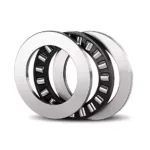
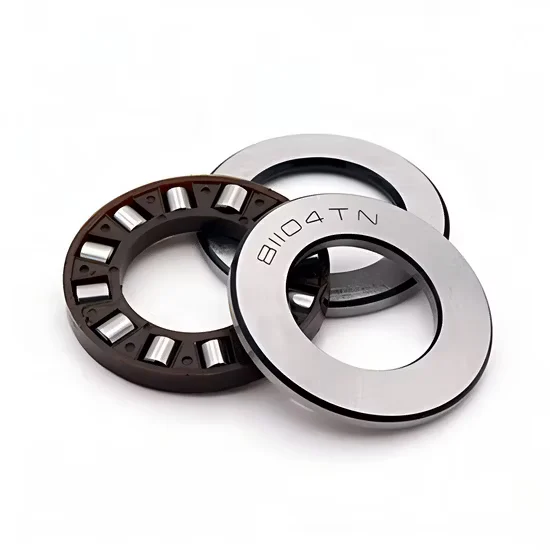
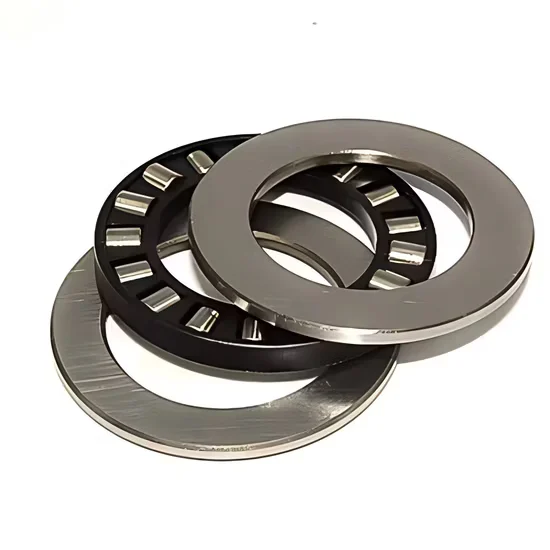
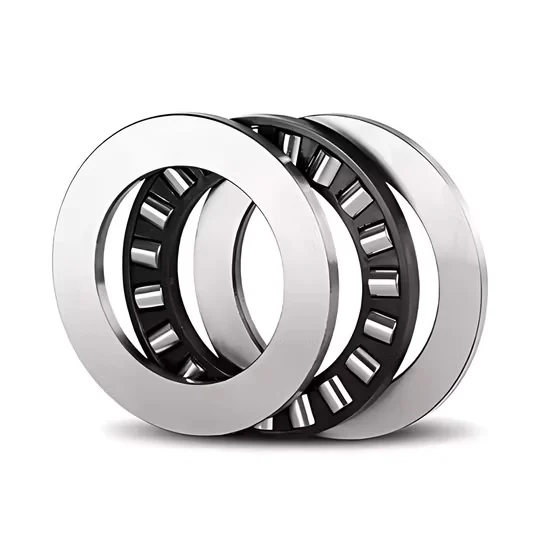
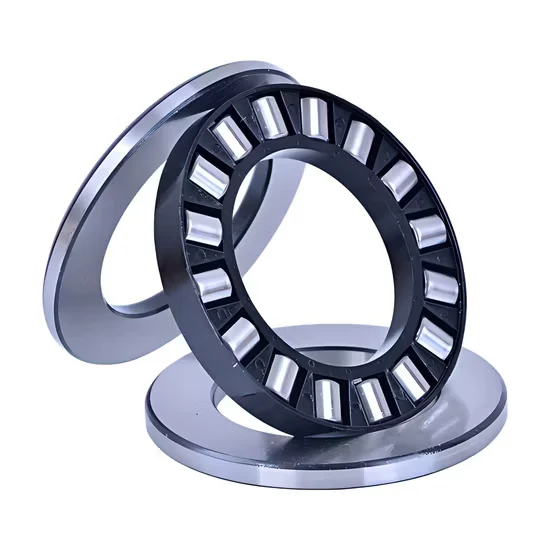
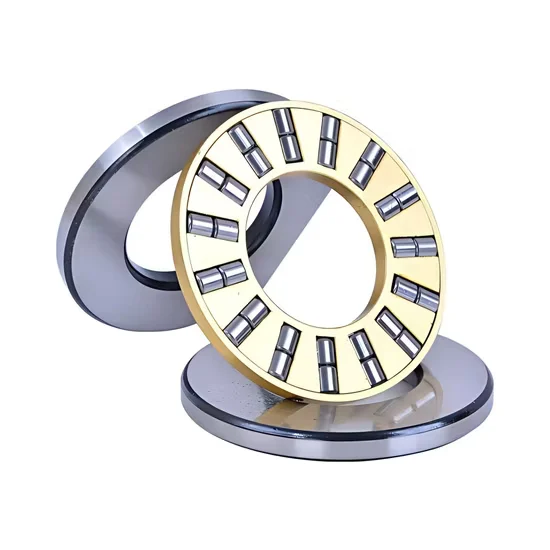
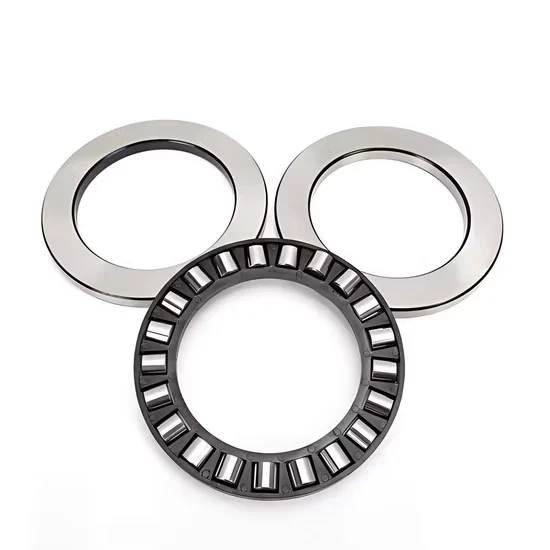
81106 Thrust Cylindrical Roller Bearing — Manufactured from premium Gcr15 chrome steel to deliver high wear resistance and reliable axial load capacity for heavy-duty gearboxes and rolling mills.
Features a fully separable design for simplified mounting, dismounting, and routine maintenance of matching shaft and housing washers.
Scan the official app QR code on each package to instantly verify product authenticity and trace origin.
Original Batch Traceability — Every 81106 thrust cylindrical roller bearing ships with verifiable heat-treatment records linking directly to the steel mill melt number.
Technical Specifications
Parameter
Value
Designation
81106
Bearing Type
Thrust Cylindrical Roller Bearing
Material
Chrome Steel Gcr15 / 100cr6
Separated
Separated
Load Direction
Thrust Bearing
Spherical
Non-Aligning Bearings
Customization
Standard and equivalent cross-reference options
Origin
Global premium and domestic manufacturing networks
Application Suitability
Industry
Typical Applications
Heavy-duty gearboxes
Main shaft axial positioning and thrust absorption
Axial runout failures almost always trace back to mismatched washer thickness rather than the roller cage itself.
I have seen countless procurement teams focus solely on the basic 81106 designation while completely overlooking the dimensional tolerances of the mating washers. During early failure analysis fieldwork, replacing an old unit without verifying the exact thickness profiles of the mating components led to excessive axial play and eventual seizure under load. Sourcing the correct assembly requires strict alignment of all separable parts to prevent catastrophic downtime. Many buyers assume that any standard washer will fit, but microscopic deviations in the raceway curvature or thickness will immediately compromise the load distribution. This oversight forces the cylindrical rollers to operate at an angle, generating immense friction heat and accelerating surface fatigue [NEED_CITE: rolling bearing failure mode classification per ISO 15243].
How Component Matching Secures Heavy Axial Loads
Ensuring precise geometric alignment between the central roller cage and the outer rings is critical for heavy machinery. A properly matched 81106 thrust cylindrical roller bearing relies on exact dimensional pairing to distribute axial forces evenly across the rolling elements. Our sourcing network guarantees that all associated components meet strict geometric tolerances, eliminating the risk of uneven load distribution that plagues poorly consolidated shipments. When the housing and shaft washers are perfectly matched to the cage, the assembly can absorb severe thrust loads without inducing localized stress concentrations. This rigorous component verification is what separates reliable industrial operations from frequent breakdown scenarios.
Managing Shock Loads and Lubrication Starvation
Heavy industrial environments subject thrust assemblies to severe shock loads and sudden directional shifts that challenge standard lubrication films. When axial forces spike, the elastohydrodynamic lubrication layer can collapse, leading to direct metal-to-metal contact between the rollers and the raceways. Maintaining adequate oil flow or grease replenishment intervals is essential to dissipate friction heat and prevent surface smearing. Furthermore, non-aligning designs demand perfectly square housing seats to avoid edge loading on the cylindrical rollers. If the housing bore is even slightly misaligned, the rollers will skew, causing rapid wear on the cage pockets and the washer raceways [NEED_CITE: elastohydrodynamic lubrication breakdown in thrust applications].
Decoding the Separable Architecture and Material Options
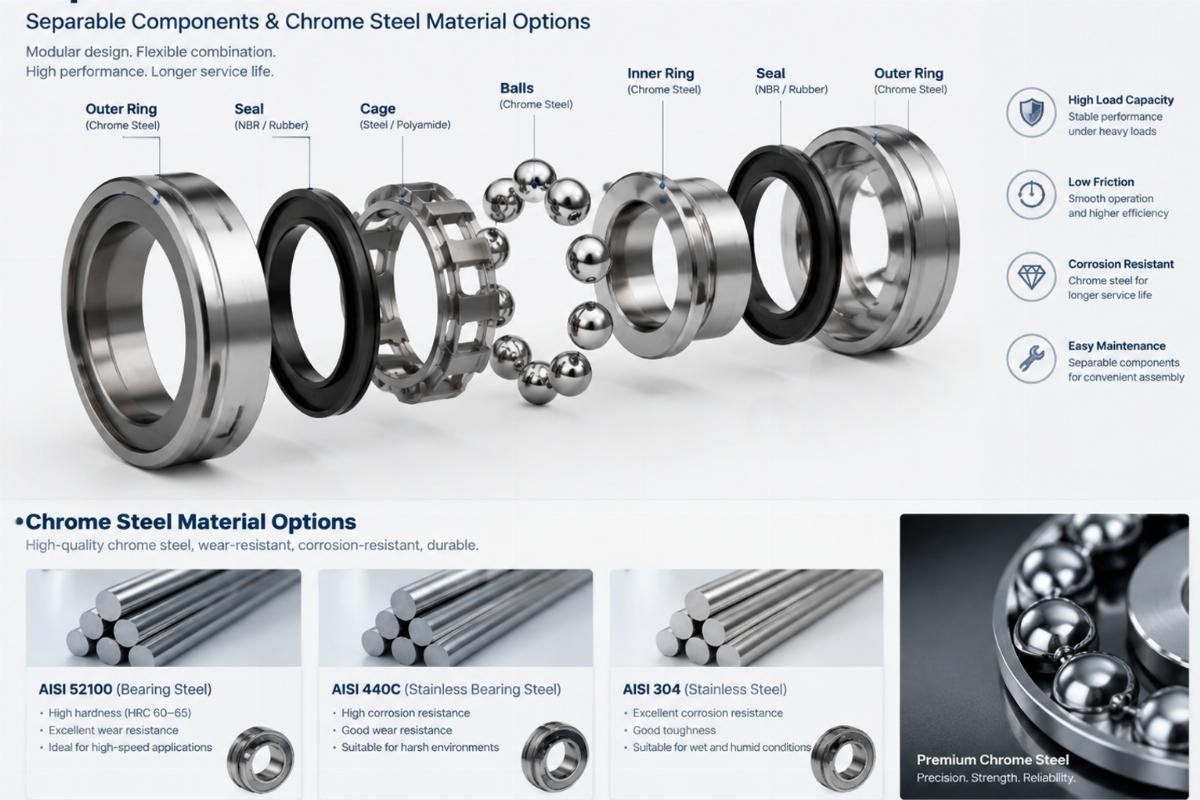
The separable nature of this configuration allows maintenance crews to mount the shaft washer, housing washer, and roller cage independently, significantly simplifying installation in confined gearbox housings. Manufactured primarily from Chrome Steel Gcr15 or 100cr6 variants, the components offer high wear resistance necessary for continuous axial loading. The non-aligning structure demands rigorous perpendicularity between the shaft and housing axes, meaning any misalignment will immediately concentrate stress on the roller ends. Buyers can also explore alternative material options depending on specific environmental exposures, though standard bearing steel remains the baseline for heavy load capacity. Understanding these material choices ensures that the selected assembly can withstand the specific thermal and mechanical demands of your equipment without premature degradation.
The Hidden Toll of Mismatched Thrust Components
Procuring a basic bearing unit without verifying the accompanying washers frequently results in unplanned downtime and premature failure. When the housing and shaft washers exhibit slight thickness deviations, the internal clearance shifts dramatically, causing abnormal friction and accelerated fatigue. According to failure analysis frameworks, such geometric mismatches accelerate surface-initiated spalling and ultimately lead to catastrophic damage within the gearbox. This voidance of operational reliability far outweighs any initial savings from unverified component sourcing. The resulting secondary damage to gears and shafts often necessitates a complete overhaul of the transmission system, turning a minor procurement error into a massive financial liability [NEED_CITE: geometric mismatch failures per ISO 15243].
Securing Exact Washer Geometry from Our Inventory
Consolidating mixed-brand packages often leads to mismatched thrust components, which is why we strictly verify the dimensional alignment of the 81106 unit with its corresponding GS81106 housing washers and Ws81106 shaft washers before dispatch. Our massive spot inventory covers thousands of standard part numbers, ensuring you receive a fully matched set rather than a fragmented collection of loose parts. We provide complete traceability documentation for every component, giving procurement engineers absolute confidence in the material origin and heat-treatment history. Furthermore, our cross-brand equivalent model consultation ensures that if an exact OEM part is unavailable, the replacement geometry perfectly mirrors the original specifications. This rigorous verification process eliminates the guesswork and ensures long-term reliability in demanding applications.
Documentation & Authenticity
Material certification confirming Gcr15/100cr6 chemical composition and hardening profiles.
Dimensional inspection reports verifying GS81106 and Ws81106 washer thickness tolerances.
Original batch traceability linking the 81106 assembly to specific steel mill melts.
Running accuracy inspection confirming axial runout limits before final packaging.
Storage, Handling & Mounting
Keep the GS81106 and Ws81106 washers in original VCI packaging until mounting to prevent surface corrosion.
Use induction heating for the shaft washer to ensure proper interference fit without damaging the Gcr15 raceway.
Apply clean lint-free gloves when handling the separable roller cage to avoid sweat-induced micro-pitting.
Verify housing seat perpendicularity before installing the non-aligning 81106 assembly to prevent edge loading.
Follow strict external lubrication protocols since this open design relies entirely on the gearbox oil bath.
Provide Operating Parameters for L10 Life Verification
To ensure optimal selection, please share your specific axial load profiles, operating speeds, and thermal conditions so our engineering team can perform a thorough L10 life calculation. Providing the original equipment manufacturer part numbers allows us to execute precise cross-reference checks against the GS81106 and Ws81106 components. Detailed housing dimension sketches help us verify that the non-aligning structure will seat correctly within your specific gearbox configuration.
Frequently Asked Questions
Q: How do I properly match the GS81106 and Ws81106 washers with the central assembly?
A: You must verify the exact thickness and raceway geometry of both washers against the central roller cage specifications. Mismatched washers alter internal clearance, leading to excessive axial play or binding. We supply fully matched sets with dimensional inspection reports confirming that the GS81106 housing and Ws81106 shaft washers meet strict tolerance requirements for optimal integration.
Q: What are the general load limits for Gcr15 thrust assemblies in heavy gearboxes?
A: Chrome Steel Gcr15 provides substantial static and dynamic axial load capacity, but exact limits depend on the specific cage design and lubrication regime. Continuous shock loads require careful evaluation of the safety factor to prevent roller end stress. We recommend sharing your precise operational data so we can calculate the appropriate load ratings and verify suitability for your application.
Q: How can I verify the material traceability of the supplied thrust components?
A: Every shipment includes comprehensive documentation, including material certificates detailing the chemical composition and heat-treatment records of the Gcr15 steel. These documents link the specific batch to the original steel mill melt number. This rigorous traceability ensures you receive genuine components that meet ISO-compliant quality assurance standards, eliminating the risk of counterfeit or substandard materials.
Q: How does the separable design impact maintenance and replacement cycles?
A: The separable architecture allows technicians to inspect and replace the shaft washer, housing washer, or roller cage independently without dismantling the entire surrounding machinery. This modularity significantly reduces maintenance downtime and simplifies the mounting process in confined spaces. However, it requires strict adherence to cleanliness and precise alignment during reassembly to maintain optimal load distribution.
Shipping Information
EU Warehouse
3-7 working days (bonded stock)
Direct from China
Shanghai & Ningbo hubs (bulk / FCL)
Markets Served
DE · IT · PL · ES · NL · FR · EU+
Incoterms
DDP / DAP available on request
Minimum Order
Contact us for MOQ details
Documents Included with Every Shipment
EN and ISO Quality Certificates
Batch traceability and manufacturing standard
Material & Heat-Treatment Reports
Full material composition and process records
CE Declaration of Conformity
For bearing units and motion products
RoHS Compliance Declaration
Restriction of hazardous substances
EUR.1 Movement Certificate
Preferential origin for EU customs
Certificate of Origin
Country of manufacture documentation
Correct HS Codes
Pre-classified for smooth customs clearance
Commercial Invoice & Packing List
VAT-compliant intra-EU invoicing
Transparent Landed Cost with Tax Explanation
SKFEU provides full price transparency so EU buyers know exactly what they pay. No hidden duties, no surprise charges at customs.
VAT-Compliant Invoicing
All intra-EU transactions are invoiced with correct VAT treatment. B2B buyers with valid EU VAT numbers receive zero-rated invoices where applicable.
No Unexpected Import Duties
Goods shipped from our EU bonded warehouse arrive as intra-EU movements -- no import duties, no customs delays for EU-based buyers.
EUR.1 & Origin Docs Ready
For shipments direct from China, EUR.1 movement certificates and certificates of origin are prepared in advance to minimise customs clearance time.
DDP Pricing Available
Ask for Delivered Duty Paid quotations -- we absorb all import costs so your landed cost is fixed and predictable from day one.
Need a landed cost breakdown? Contact Sofia at
sofia@skfeu.com
or via WhatsApp for a full DDP quotation including freight, duties and VAT for your country.
Send Inquiry
Request Pricing & Availability
Share your requirements and Sofia will respond within one working day with pricing, lead time and full documentation details.