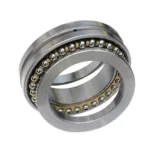
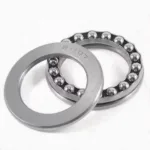
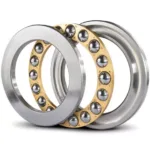
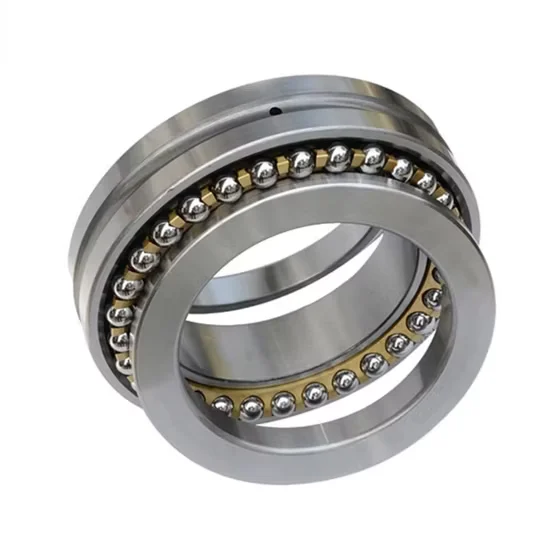
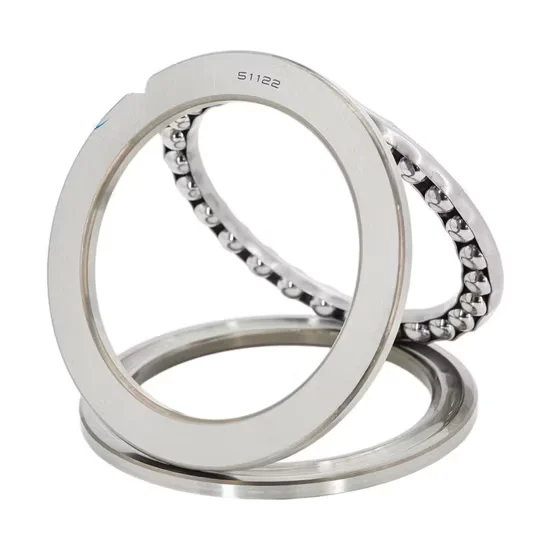
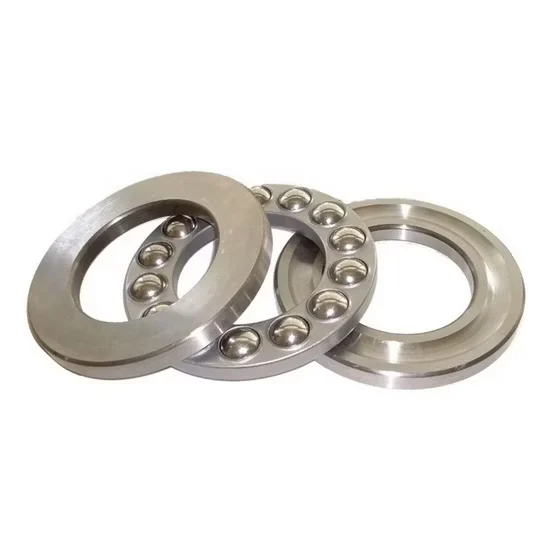
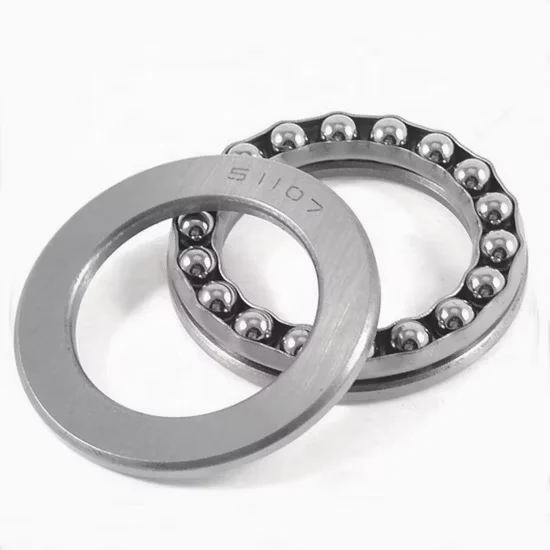
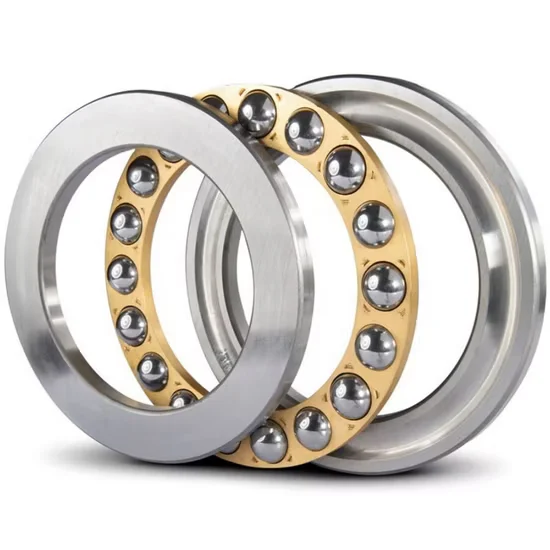
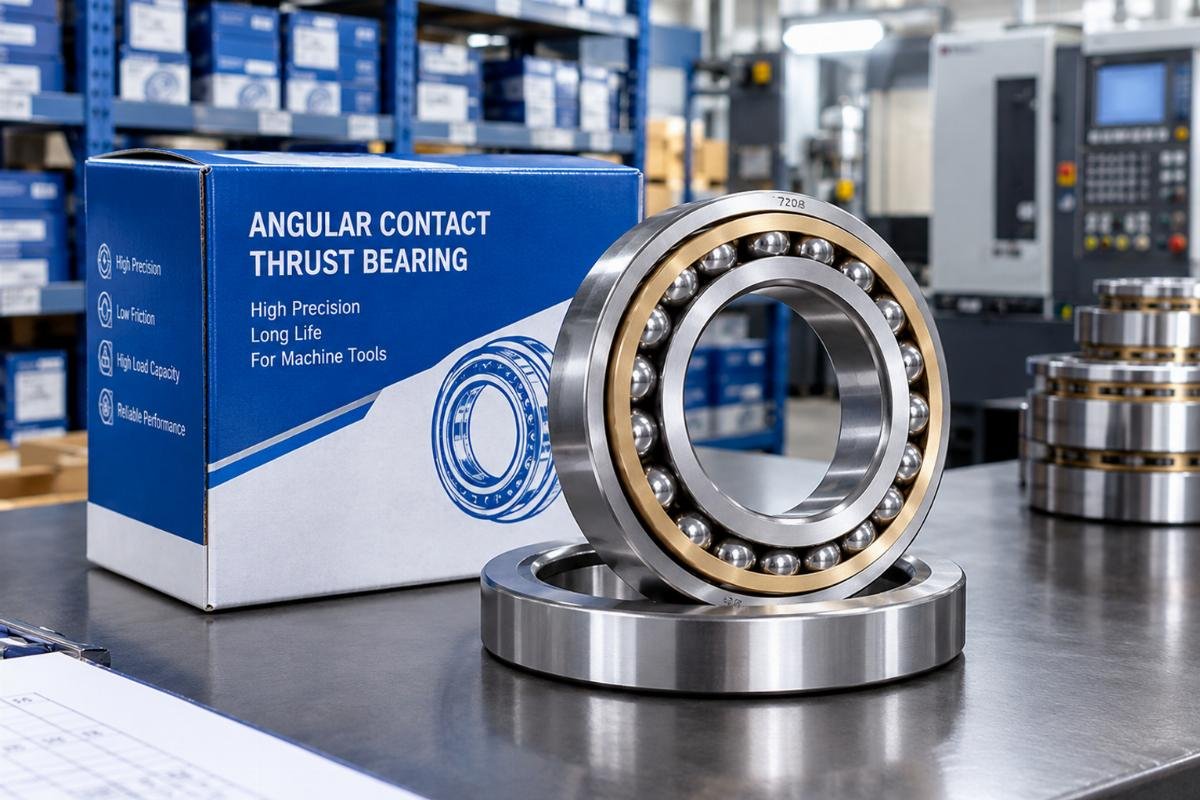
High Precision Single Row Angular Contact Thrust Bearing for Machine Tools
High Precision Single Row Angular Contact Thrust Bearing — Gcr15 bearing steel construction ensures high fatigue strength for continuous heavy axial loads in machine tools.
Available in 55°, 60°, and 62° contact angles with P4 or P2 precision classes for strict CNC spindle and ball screw support requirements.
Sourced with complete original factory batch traceability to guarantee authentic quality and exact equipment compatibility.
Global Brand Consolidation — Source mixed-brand thrust angular contact ball bearings in a single shipment without juggling multiple vendors.
Technical Specifications
Parameter
Value
Product Type
Thrust Angular Contact Ball Bearing
Contact Angle
55° / 60° / 62°
Alignment
Non-Aligning Bearing
Separation
Unseparated
Row Configuration
Single Row / Double Row
Load Direction
Thrust Bearing
Material Options
Gcr15 (Suj2) Bearing Steel
Seal Type
Open
Cage Material Options
Brass (M), Nylon (Tn), Steel
Precision Class
P0, P6, P5, P4, P2
Origin
Shandong, China
Application Suitability
Industry
Typical Applications
Machine Tool Manufacturing
CNC spindle axial support and ball screw drive mechanisms
Industrial Automation
Robotics joint actuators and high-speed precision pumps
Precision Engineering
Optical measuring equipment and semiconductor manufacturing stages
Why Spindle Runout Persists Despite Perfect Assembly with a high precision single row angular contact thrust bearing supplier
Mismatched contact angles and compromised precision classes silently destroy axial rigidity long before physical wear appears.
During my years conducting failure analysis in Vietnam, I witnessed a local machine tool plant suffer catastrophic spindle seizure. The root cause was not poor assembly, but a subtle substitution where a P5 class bearing replaced a specified P4 unit, leading to excessive vibration at high speeds. Sourcing from a reliable high precision single row angular contact thrust bearing supplier prevents these hidden compromises that ultimately trigger unplanned downtime and void equipment warranties [NEED_CITE: rolling bearing failure mode classification per ISO 15243].
Sourcing Strategy for Demanding Axial Loads
When specifying thrust bearings for ball screw supports, the primary focus must remain on axial rigidity and running accuracy. A verified high precision single row angular contact thrust bearing supplier provides the technical cross-referencing needed to match exact equipment requirements. We consolidate genuine products from premium global and domestic brands, ensuring that the selected contact angle and precision class perfectly align with the continuous heavy axial loads typical in CNC machinery.
Thermal Expansion and Lubrication in High-Speed Spindles
Continuous high-speed rotation generates significant friction heat, which directly impacts internal clearance and lubricant degradation. Open-type thrust bearings in these environments rely on precise external oil-air or oil-jet lubrication systems to manage thermal expansion without introducing excessive fluid drag. Furthermore, the non-aligning nature of these components demands absolute parallelism in the housing seating to prevent uneven load distribution across the rolling elements [NEED_CITE: thermal displacement effects on bearing internal clearance]. Any misalignment exacerbates localized stress, accelerating fatigue and compromising the dimensional stability required for precision machining.
Decoding Material and Precision Options for Axial Support
Selecting the appropriate material and precision class dictates the operational ceiling of the spindle assembly. Gcr15 (Suj2) bearing steel offers the necessary fatigue strength for continuous heavy axial loads, while alternative options like ceramic variants can be considered for specific high-speed or insulated requirements. The precision spectrum ranges from standard P0 up to ultra-precise P2, where P4 and P2 classes are mandatory for eliminating ball screw backlash and maintaining strict running accuracy. Additionally, choosing between brass, nylon, or steel cages depends on the specific speed-to-load ratio, as brass cages generally provide superior stability under heavy axial thrust, whereas polymer cages reduce weight and operate quieter at extreme rotational speeds.
The Financial Impact of Compromised Axial Rigidity
Installing a bearing with an incorrect contact angle or insufficient precision class introduces micro-vibrations that rapidly degrade the surface finish of machined parts. This subtle degradation often goes unnoticed until the spindle experiences catastrophic thermal seizure or the ball screw drive loses positional accuracy. Such failures result in severe unplanned downtime, scrapped production batches, and expensive spindle rebuilds. Adhering to ISO 281 guidelines for dynamic load rating calculations ensures that the selected bearing can withstand the specific axial forces without premature fatigue [NEED_CITE: ISO 281 methods for calculating bearing life].
Verification and Technical Alignment for Precision Components
Our procurement process strictly verifies authorized channel documentation and original factory batch traceability for every high precision single row angular contact thrust bearing supplier order. We actively prevent the dangerous substitution of precision classes by cross-checking the exact contact angle, cage material, and dimensional tolerances against your machine tool specifications. Our engineering team provides detailed cross-brand equivalent model consultations, ensuring you receive the correct axial rigidity characteristics without being forced into a single manufacturer’s ecosystem. Furthermore, we offer flexible consolidation shipments, allowing you to mix emergency single-unit spares with bulk project orders while maintaining strict ISO-compliant quality assurance.
Documentation & Authenticity
Original factory batch traceability documents linking the specific P4/P2 precision class to the production run.
Dimensional and running accuracy inspection reports confirming 55°, 60°, or 62° contact angle tolerances.
Material certification verifying the metallurgical composition of the Gcr15 (Suj2) bearing steel rings and rolling elements.
Certificate of Conformity issued by the authorized channel to guarantee genuine origin and prevent counterfeit substitution.
Storage, Handling & Mounting
Store open-type bearings in their original vapor-phase inhibitor packaging to prevent micro-corrosion on the precision-ground raceways.
Maintain strict climate control in the storage area to prevent thermal shock that could alter the P4/P2 dimensional tolerances.
Use lint-free cleanroom gloves when handling the brass or nylon cages to avoid transferring skin oils that degrade high-speed lubricants.
Verify housing seating parallelism with a dial indicator before mounting, as non-aligning thrust bearings cannot compensate for angular misalignment.
Apply the specified high-speed spindle oil immediately after unsealing to protect the Gcr15 steel surfaces from ambient humidity.
Engineering Data Required for Accurate Model Selection
To determine the exact part number for your application, please provide the specific ball screw parameters, including maximum axial load, operating speed, and required positional accuracy. Sharing the OEM equipment model and existing housing dimensions allows our technical team to perform precise cross-referencing and verify the optimal contact angle. Additionally, detailing the operating environment, such as exposure to coolant mist or elevated ambient temperatures, helps us recommend the most suitable cage material and precision class for your machinery.
Frequently Asked Questions
Q: How do I determine the specific model based on my ball screw parameters?
A: Determining the exact model requires analyzing the maximum axial load, operating speed, and required positional accuracy of your ball screw system. By providing these parameters along with the OEM equipment model, our engineering team calculates the necessary dynamic load rating and selects the appropriate contact angle and precision class to ensure optimal axial rigidity and eliminate backlash.
Q: What are the common failure modes in high-speed spindles?
A: High-speed spindles typically suffer from thermal seizure, lubricant degradation, and fatigue spalling caused by micro-vibrations. These issues often stem from mismatched contact angles, insufficient precision classes, or housing misalignment. Adhering to strict mounting tolerances and verifying the bearing’s authenticity through a reliable high precision single row angular contact thrust bearing supplier significantly mitigates these premature failure risks.
Q: How should I choose between brass, nylon, and steel cages?
A: The cage material selection depends on the specific speed-to-load ratio of your application. Brass cages offer superior stability and heat dissipation under heavy continuous axial thrust, making them ideal for heavy-duty machine tool spindles. Nylon cages reduce weight and operate quieter at extreme rotational speeds, while steel cages provide a balanced approach for general precision equipment.
Q: How can I verify the authenticity and compliance of these precision bearings?
A: Authenticity is verified by requesting original factory batch traceability documents and dimensional inspection reports that confirm the specific P4 or P2 tolerances. We provide comprehensive documentation, including material certifications and Certificates of Conformity from authorized channels, ensuring every component meets ISO-compliant quality standards and prevents the dangerous substitution of lower precision classes.
Shipping Information
EU Warehouse
3-7 working days (bonded stock)
Direct from China
Shanghai & Ningbo hubs (bulk / FCL)
Markets Served
DE · IT · PL · ES · NL · FR · EU+
Incoterms
DDP / DAP available on request
Minimum Order
Contact us for MOQ details
Documents Included with Every Shipment
EN and ISO Quality Certificates
Batch traceability and manufacturing standard
Material & Heat-Treatment Reports
Full material composition and process records
CE Declaration of Conformity
For bearing units and motion products
RoHS Compliance Declaration
Restriction of hazardous substances
EUR.1 Movement Certificate
Preferential origin for EU customs
Certificate of Origin
Country of manufacture documentation
Correct HS Codes
Pre-classified for smooth customs clearance
Commercial Invoice & Packing List
VAT-compliant intra-EU invoicing
Transparent Landed Cost with Tax Explanation
SKFEU provides full price transparency so EU buyers know exactly what they pay. No hidden duties, no surprise charges at customs.
VAT-Compliant Invoicing
All intra-EU transactions are invoiced with correct VAT treatment. B2B buyers with valid EU VAT numbers receive zero-rated invoices where applicable.
No Unexpected Import Duties
Goods shipped from our EU bonded warehouse arrive as intra-EU movements -- no import duties, no customs delays for EU-based buyers.
EUR.1 & Origin Docs Ready
For shipments direct from China, EUR.1 movement certificates and certificates of origin are prepared in advance to minimise customs clearance time.
DDP Pricing Available
Ask for Delivered Duty Paid quotations -- we absorb all import costs so your landed cost is fixed and predictable from day one.
Need a landed cost breakdown? Contact Sofia at
sofia@skfeu.com
or via WhatsApp for a full DDP quotation including freight, duties and VAT for your country.
Send Inquiry
Request Pricing & Availability
Share your requirements and Sofia will respond within one working day with pricing, lead time and full documentation details.