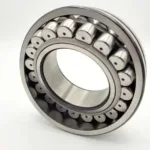
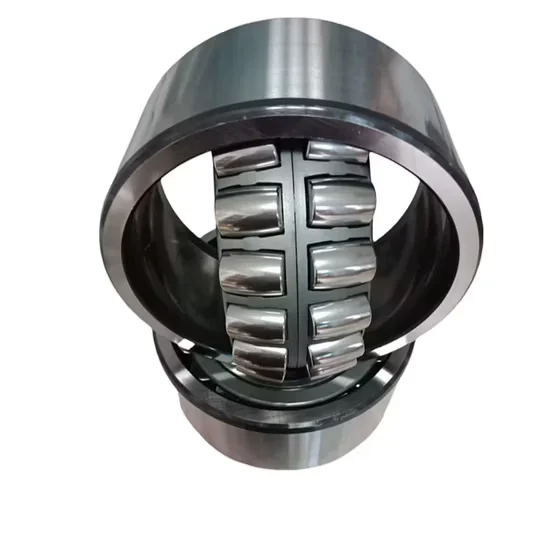
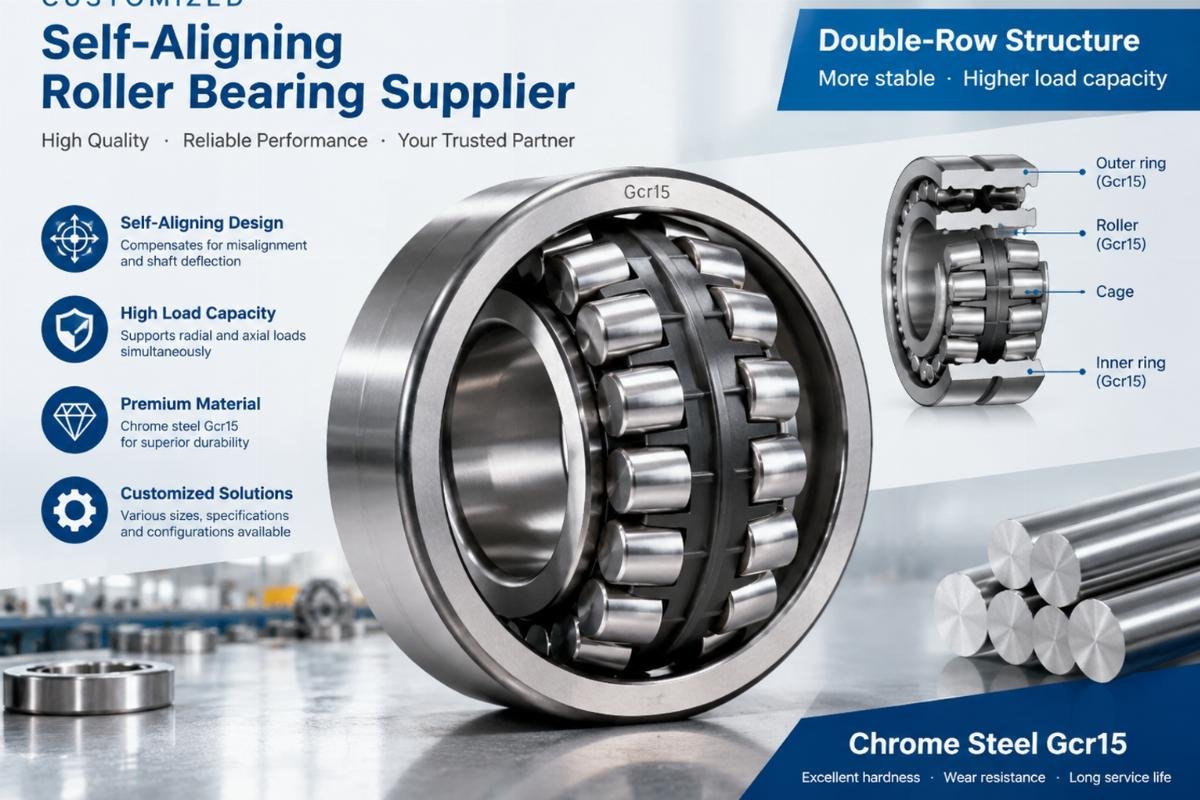
Customized Self-Aligning Roller Bearing for Heavy-Duty Mining and Metallurgy — double-row chrome steel Gcr15 construction withstands extreme radial loads and shaft misalignment in harsh industrial environments.
Optimized for continuous operation across agriculture and chemical processing using precise non-standard dimensions.
Every shipment includes a complete documentation package featuring material certificates and detailed dimensional inspection reports matching your custom engineering drawings.
Cross-Reference Alignment — We verify dimensional, load, and speed equivalencies across OZD, KOYO, NTN, and NSK catalogs to ensure exact machinery fit.
Why Non-Standard Spherical Roller Bearings Fail in Heavy Industry
Misaligned clearances and incorrect cage materials cause catastrophic seizures under thermal expansion.
I once investigated a sugar mill press in Vietnam where a spherical roller bearing seized completely during peak season. The root cause was selecting a standard CN clearance instead of C3 for high-temperature operations. When sourcing non-standard setups, ignoring thermal growth and load dynamics leads to unplanned downtime and massive production losses. Finding a reliable customized self-aligning roller bearing supplier is critical to avoid these field failures and ensure continuous operation. [NEED_CITE: rolling bearing failure mode classification per ISO 15243]
Matching Non-Standard Dimensions to Equipment Constraints
When standard catalogs fall short, adapting the outer ring and bore profile becomes essential for direct integration into legacy machinery. A capable customized self-aligning roller bearing supplier provides dimensional flexibility without compromising the double-row chrome steel Gcr15 core. This ensures the bearing accommodates heavy radial loads while maintaining self-alignment capabilities in misaligned housings, effectively compensating for shaft deflections and structural inaccuracies common in older mining and metallurgy plants.
Managing Thermal and Contamination Challenges in Harsh Sites
Mining and metallurgy environments expose bearings to extreme particulate contamination and fluctuating thermal cycles. Dust ingress accelerates abrasive wear, while localized heat generation alters internal clearance dynamically. Selecting the appropriate cage material and clearance class prevents the rolling elements from skidding or binding under shock loads. Proper lubrication intervals and seal configurations are equally vital to withstand the aggressive chemical and agricultural conditions, ensuring the grease film remains intact despite severe operational vibrations. [NEED_CITE: environmental contamination effects on bearing fatigue life per ISO 281]
Evaluating Material Options and Clearance Configurations
Chrome steel Gcr15 offers exceptional fatigue strength for heavy radial loads, but alternative materials like stainless steel or ceramic variants are available for highly corrosive or high-temperature applications. The double-row arrangement inherently manages moderate axial loads alongside primary radial forces, providing crucial stability. Furthermore, matching the internal clearance to the operating temperature and shaft interference fit is non-negotiable. A C3 or C4 clearance compensates for thermal expansion, preventing the internal seizure I witnessed in Southeast Asian heavy-duty presses.
The Hidden Financial Drain of Incorrect Bearing Selection
Specifying a standard off-the-shelf unit for a non-standard housing inevitably results in premature fatigue and catastrophic raceway spalling. According to ISO 15243 frameworks, improper clearance selection directly triggers smearing and cage fractures under heavy shock loads. These failures cascade into secondary equipment damage, voiding machinery warranties and inflating maintenance budgets significantly. Relying on precise engineering validation and accurate cross-referencing mitigates these hidden operational costs and prevents unexpected line stoppages. [NEED_CITE: bearing damage and failure analysis per ISO 15243]
Securing Reliable Sourcing for Custom Industrial Bearings
We maintain massive spot inventory and flexible manufacturing pipelines to deliver non-standard dimensions without extended delays. Our engineering team cross-checks your specific housing tolerances to recommend the exact clearance and cage configuration, avoiding the costly CN-to-C3 mismatch. Every shipment includes complete traceability documentation, ensuring the chrome steel Gcr15 material meets rigorous metallurgical standards. We consolidate mixed-brand orders, allowing you to source OZD, KOYO, NTN, or NSK equivalents from a single customized self-aligning roller bearing supplier, simplifying your procurement process.
Documentation & Authenticity
Material test certificates verifying Gcr15 chrome steel heat treatment and hardness.
Dimensional inspection reports confirming non-standard bore and outside diameter tolerances.
Origin documentation validating Shandong manufacturing facilities for customs clearance.
Batch traceability records linking each double-row bearing to its specific production run.
Storage, Handling & Mounting
Store non-standard units in original moisture-proof packaging to prevent Gcr15 chrome steel corrosion before installation.
Use induction heaters for cylindrical bore mounting, strictly controlling temperature to preserve factory clearance.
Align the outer ring lubrication grooves with the housing oil holes to ensure adequate grease flow.
Handle double-row assemblies with clean cotton gloves to prevent acidic sweat from etching precision raceways.
Engineering Data Required for Custom Quotations
To accurately specify your non-standard spherical roller bearing, please provide the exact housing bore, shaft diameter, and available axial space. Detail the operating temperature range, rotational speed, and specific radial or axial load profiles. Finally, describe the environmental exposure, such as chemical splashes or heavy dust, so our technical team can finalize the optimal material and clearance configuration for your unique application.
Frequently Asked Questions
Q: How to determine exact non-standard dimensions for custom self-aligning roller bearings?
A: Measure the existing housing bore, shaft diameter, and axial space constraints precisely. Provide these physical limits alongside your operational load and speed parameters. Our engineering team will then calculate the required dynamic load rating and recommend the optimal non-standard outer ring and bore profile to ensure perfect machinery integration.
Q: What are the common failure modes in mining and metallurgy applications?
A: Contamination and improper internal clearance are the primary culprits. Abrasive dust accelerates raceway wear, while insufficient clearance causes thermal seizure under heavy loads. Following ISO 15243 guidelines, we typically see smearing, cage fractures, and surface spalling when standard bearings are forced into harsh, non-standard heavy-duty environments.
Q: When to choose Gcr15 chrome steel over other alloys for heavy equipment?
A: Chrome steel Gcr15 is ideal for standard heavy-duty applications requiring high fatigue strength and wear resistance. However, if your equipment operates in highly corrosive chemical environments or extreme temperatures, we recommend exploring available stainless steel or ceramic variants to prevent premature degradation and ensure long-term operational reliability.
Q: What is the typical lead time for custom non-standard bearing production?
A: Lead times vary based on the complexity of the non-standard dimensions and current factory capacity. While standard sizes ship immediately from our spot inventory, custom-produced double-row spherical roller bearings typically require multi-week manufacturing cycles. We provide precise scheduling upon reviewing your specific dimensional drawings and material requirements.
Q: How to maintain customized bearings in harsh agricultural or chemical environments?
A: Establish strict relubrication schedules using high-viscosity, water-resistant greases to flush out contaminants. Regularly inspect seal integrity and listen for abnormal acoustic emissions during operation. Ensuring the correct internal clearance was selected initially will significantly reduce friction heat, extending the service life of the bearing in aggressive conditions.
Shipping Information
EU Warehouse
3-7 working days (bonded stock)
Direct from China
Shanghai & Ningbo hubs (bulk / FCL)
Markets Served
DE · IT · PL · ES · NL · FR · EU+
Incoterms
DDP / DAP available on request
Minimum Order
Contact us for MOQ details
Documents Included with Every Shipment
EN and ISO Quality Certificates
Batch traceability and manufacturing standard
Material & Heat-Treatment Reports
Full material composition and process records
CE Declaration of Conformity
For bearing units and motion products
RoHS Compliance Declaration
Restriction of hazardous substances
EUR.1 Movement Certificate
Preferential origin for EU customs
Certificate of Origin
Country of manufacture documentation
Correct HS Codes
Pre-classified for smooth customs clearance
Commercial Invoice & Packing List
VAT-compliant intra-EU invoicing
Transparent Landed Cost with Tax Explanation
SKFEU provides full price transparency so EU buyers know exactly what they pay. No hidden duties, no surprise charges at customs.
VAT-Compliant Invoicing
All intra-EU transactions are invoiced with correct VAT treatment. B2B buyers with valid EU VAT numbers receive zero-rated invoices where applicable.
No Unexpected Import Duties
Goods shipped from our EU bonded warehouse arrive as intra-EU movements -- no import duties, no customs delays for EU-based buyers.
EUR.1 & Origin Docs Ready
For shipments direct from China, EUR.1 movement certificates and certificates of origin are prepared in advance to minimise customs clearance time.
DDP Pricing Available
Ask for Delivered Duty Paid quotations -- we absorb all import costs so your landed cost is fixed and predictable from day one.
Need a landed cost breakdown? Contact Sofia at
sofia@skfeu.com
or via WhatsApp for a full DDP quotation including freight, duties and VAT for your country.
Send Inquiry
Request Pricing & Availability
Share your requirements and Sofia will respond within one working day with pricing, lead time and full documentation details.