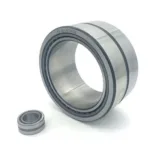
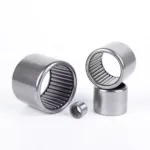
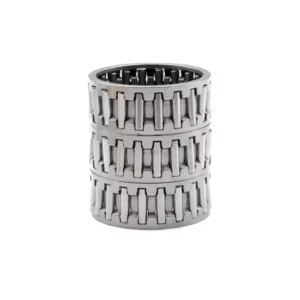
HK 1015 Drawn Cup Needle Roller Bearing 10x14x15mm Cage Assembly [WARN] draft identifier mismatch
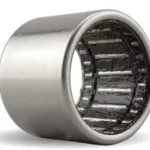
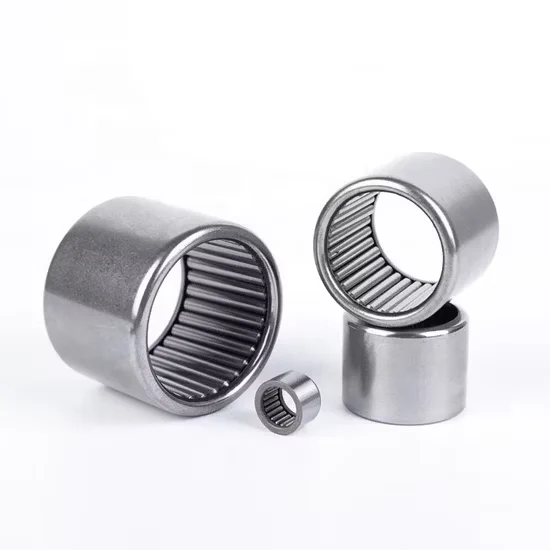
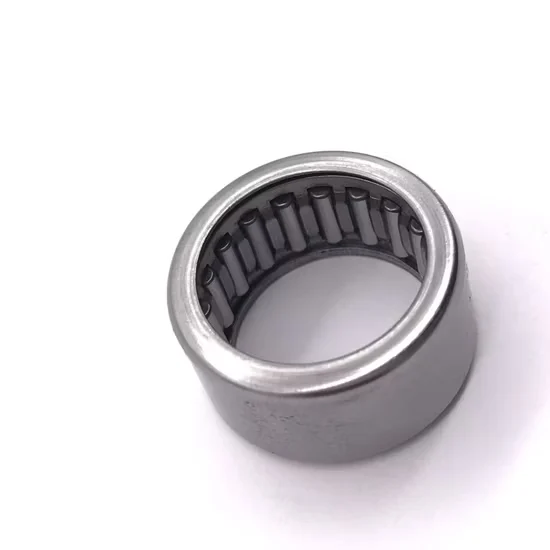
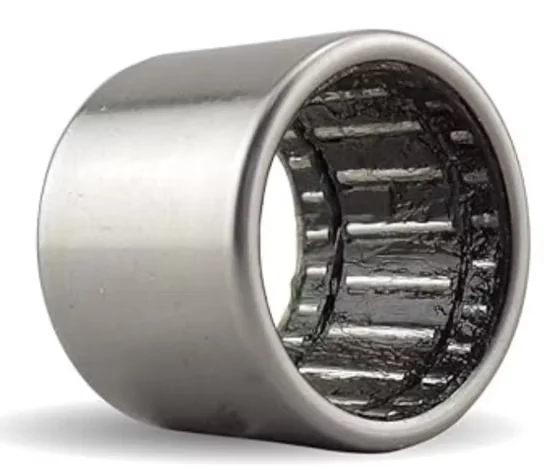
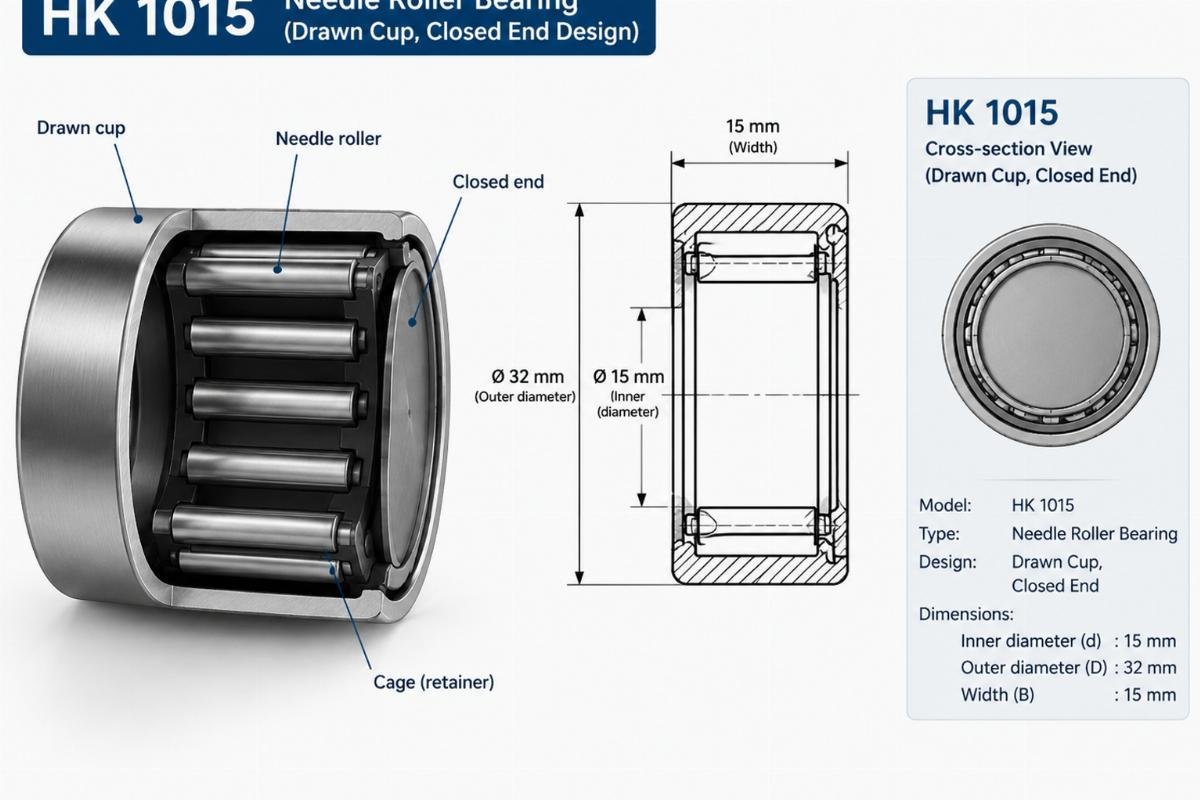
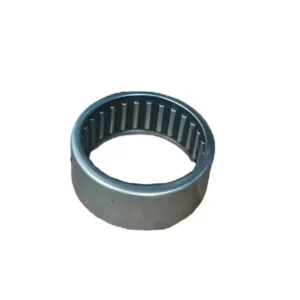
HK 1015 Drawn Cup Needle Roller Bearing 10×14×15 mm
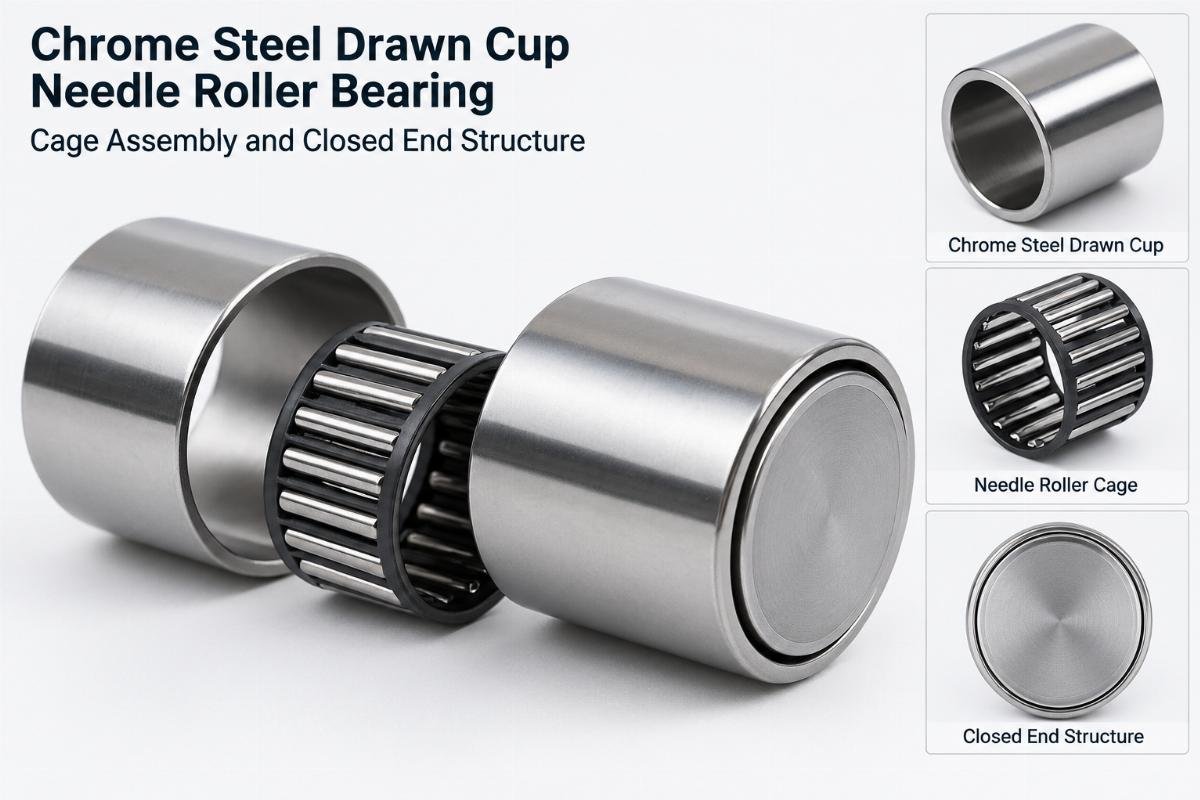
Chrome steel construction delivers reliable structural durability for compact radial spaces.
The closed-end design effectively shields internal needle components from dust and contamination.
Offered in P0, P6, and P5 precision classes to match specific application tolerances.
Every shipment includes a complete documentation package with original material certificates and detailed dimensional inspection reports.
Cross-reference alignment verified — We match HK 1015 dimensional boundaries against major catalog equivalents to ensure drop-in replacement compatibility.
Technical Specifications
Parameter
Value
Designation
HK 1015
Bearing Type
Needle Roller Bearing
Bore Diameter (d)
10 mm
Outside Diameter (D)
14 mm
Width (B)
15 mm
Material
Chrome Steel
Precision Class
P0 / P6 / P5
Type
Closed End
Feature
High Speed Low Noise
Application Suitability
Industry
Typical Applications
Automotive Components
Transmission shafts and steering column joints
Machinery Repair Shops
Compact pivot points in textile and packaging equipment
Pumps & Gearboxes
High-speed input shafts requiring minimal radial space
Why Compact HK 1015 Needle Roller Bearing Units Fail Under High-Speed Thermal Stress
Inadequate cage material selection causes rapid deformation when friction heat exceeds polymer limits.
I learned this the hard way while sourcing components for textile machinery in Vietnam. Ignoring the specific cage material requirements on a basic HK 1015 needle roller bearing led to melted plastic retainers and a complete production line shutdown under continuous operation. [NEED_CITE: bearing failure mechanisms related to cage thermal degradation per ISO 15243]. When dealing with extremely tight 10x14x15mm dimensional envelopes, assuming standard materials will effortlessly handle dynamic, high-speed operations is a critical procurement error that leads to catastrophic equipment damage. Many buyers focus solely on the basic designation, completely overlooking how internal component materials react to localized friction heat.
Matching the HK 1015 Needle Roller Bearing to Dynamic Machinery
In high-speed gearboxes, automotive steering columns, and compact pump assemblies, radial installation space is strictly limited by the surrounding housing design. The HK 1015 needle roller bearing delivers maximum radial load capacity within a minimal 14 mm outer diameter footprint, making it indispensable for these constrained environments. Our extensive sourcing network ensures these compact units arrive with verified precision grades and correct internal geometries, preventing early wear and excessive vibration in sensitive transmission setups. By strictly validating the dimensional boundaries, we ensure drop-in replacement compatibility without requiring costly housing modifications.
Managing Friction, Heat, and Lubrication Starvation in Tight Envelopes
Compact drawn cup designs operate with minimal internal volume, making adequate lubrication retention highly challenging during continuous duty cycles. At elevated rotational speeds, friction generates localized heat that can rapidly compromise standard grease formulations and degrade sealing materials. [NEED_CITE: lubrication starvation effects on needle roller bearing service life]. Selecting the correct initial grease fill and thoroughly understanding the thermal limits of the cage material are absolutely essential to prevent catastrophic seizure in continuous-duty pump and gearbox applications. Furthermore, the absence of an integrated outer ring means the bearing relies entirely on the hardness and surface finish of the housing bore for proper structural support and heat dissipation.
Decoding Precision Grades and Material Options for Drawn Cup Assemblies
The available P0, P6, and P5 precision classes directly dictate the running accuracy and acceptable noise levels during high-speed operation. While the standard P0 grade suffices for general machinery repair and low-speed pivots, P5 precision is frequently required for precision machine tools to minimize shaft runout and harmonic vibration. The chrome steel construction provides the necessary core hardness and structural rigidity for sustained radial load support. Furthermore, the closed-end design effectively protects the internal rolling elements from contaminant ingress on one side, which is crucial when the bearing is mounted at the exposed extremity of a shaft. Understanding these specific tolerance bands ensures the selected component aligns perfectly with the operational demands of the host equipment.
The Hidden Downtime Costs of Ignoring Clearance and Cage Specifications
Specifying a standard off-the-shelf bearing for an application that demands high-speed thermal stability often results in premature and unpredictable failure. Incorrect internal clearance combined with operational thermal expansion leads to excessive internal preload, rapid cage wear, and eventual roller skewing. [NEED_CITE: impact of internal clearance on bearing fatigue life per ISO 281]. This unplanned downtime in critical automotive or industrial pump assemblies far outweighs the initial procurement savings of skipping thorough technical verification. Replacing a seized bearing in a complex gearbox requires extensive labor, secondary component replacement, and significant production delays, transforming a minor sourcing oversight into a major operational financial burden.
Securing Reliable Supply and Technical Validation for Compact Needle Assemblies
Procuring compact drawn cup bearings often involves mixed-brand consolidation, which we handle efficiently without compromising lot traceability or quality assurance. We specifically verify the cage material integrity and strict dimensional tolerances for the HK 1015 to prevent the exact thermal failures I encountered early in my career. Our flexible ordering parameters allow you to source single emergency maintenance spares or coordinate full container consolidation shipments. Additionally, our technical team provides comprehensive cross-brand equivalent consultations, ensuring your replacement parts fit perfectly even when original equipment manufacturer lead times are unacceptably long.
Documentation & Authenticity
Certificate of Conformity confirming original manufacturer batch codes for traceability.
Dimensional inspection reports verifying the strict 10x14x15mm envelope tolerances.
Material test certificates validating the chrome steel composition and heat treatment.
Running accuracy inspection confirming P0, P6, or P5 precision classes before dispatch.
Storage, Handling & Mounting
Store the closed-end units in original packaging to prevent moisture ingress into the exposed open side.
Use clean gloves during installation to avoid contaminating the high-speed low-noise internal assembly.
Press the drawn cup outer ring evenly using a specialized mandrel to prevent buckling the thin 14 mm shell.
Apply the recommended high-speed grease immediately before mounting if the bearing is supplied open and ungreased.
Technical Data Required for Comprehensive Selection Verification
To ensure optimal long-term performance and prevent premature failure, please share your specific radial load profiles, maximum operating speeds, and expected ambient temperature ranges. Providing the exact OEM equipment model numbers allows our engineering team to perform accurate cross-reference checks and confirm the required precision class and internal geometry. This detailed technical review guarantees the selected unit perfectly matches your housing bore tolerances, shaft dimensions, and specific operational demands, eliminating guesswork from the procurement process.
Frequently Asked Questions
Q: What is the difference between open and closed-end drawn cup needle roller bearings?
A: Closed-end designs feature a solid bottom that prevents contaminant ingress and retains lubrication on one side, making them ideal for shaft extremities. Open-end variants allow for through-shaft mounting and are typically used when the housing provides adequate sealing on both sides.
Q: How to verify the authenticity and traceability of HK series bearings?
A: Authenticity is confirmed by cross-referencing the manufacturer batch codes on the packaging with official production records. We provide complete traceability documentation, including material certificates and dimensional inspection reports, ensuring every unit meets original equipment specifications and strict quality standards.
Q: What are the precision class differences for needle roller bearings?
A: Standard P0 class is suitable for general machinery, while P6 and P5 offer tighter dimensional and running accuracy tolerances. Higher precision reduces vibration and noise, which is critical for high-speed gearboxes and precision machine tools where minimal shaft runout is required.
Q: How to select the correct clearance and lubrication for high-speed applications?
A: High-speed operations generate significant friction heat, requiring specialized high-temperature grease and potentially larger internal clearances to accommodate thermal expansion. Sharing your exact RPM and operating temperature allows our technical team to recommend the optimal lubrication and clearance configuration.
Q: What tools are recommended for installing drawn cup needle roller bearings?
A: A precision installation mandrel matching the outer diameter is essential. Pressing directly on the thin drawn cup without a mandrel can easily distort the shell, causing the rolling elements to bind. Always apply force evenly to the outer ring during press-fitting.
Shipping Information
EU Warehouse
3-7 working days (bonded stock)
Direct from China
Shanghai & Ningbo hubs (bulk / FCL)
Markets Served
DE · IT · PL · ES · NL · FR · EU+
Incoterms
DDP / DAP available on request
Minimum Order
Contact us for MOQ details
Documents Included with Every Shipment
EN and ISO Quality Certificates
Batch traceability and manufacturing standard
Material & Heat-Treatment Reports
Full material composition and process records
CE Declaration of Conformity
For bearing units and motion products
RoHS Compliance Declaration
Restriction of hazardous substances
EUR.1 Movement Certificate
Preferential origin for EU customs
Certificate of Origin
Country of manufacture documentation
Correct HS Codes
Pre-classified for smooth customs clearance
Commercial Invoice & Packing List
VAT-compliant intra-EU invoicing
Transparent Landed Cost with Tax Explanation
SKFEU provides full price transparency so EU buyers know exactly what they pay. No hidden duties, no surprise charges at customs.
VAT-Compliant Invoicing
All intra-EU transactions are invoiced with correct VAT treatment. B2B buyers with valid EU VAT numbers receive zero-rated invoices where applicable.
No Unexpected Import Duties
Goods shipped from our EU bonded warehouse arrive as intra-EU movements -- no import duties, no customs delays for EU-based buyers.
EUR.1 & Origin Docs Ready
For shipments direct from China, EUR.1 movement certificates and certificates of origin are prepared in advance to minimise customs clearance time.
DDP Pricing Available
Ask for Delivered Duty Paid quotations -- we absorb all import costs so your landed cost is fixed and predictable from day one.
Need a landed cost breakdown? Contact Sofia at
sofia@skfeu.com
or via WhatsApp for a full DDP quotation including freight, duties and VAT for your country.
Send Inquiry
Request Pricing & Availability
Share your requirements and Sofia will respond within one working day with pricing, lead time and full documentation details.