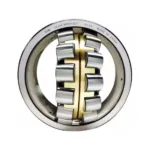
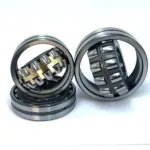
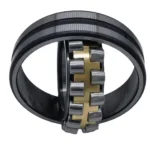
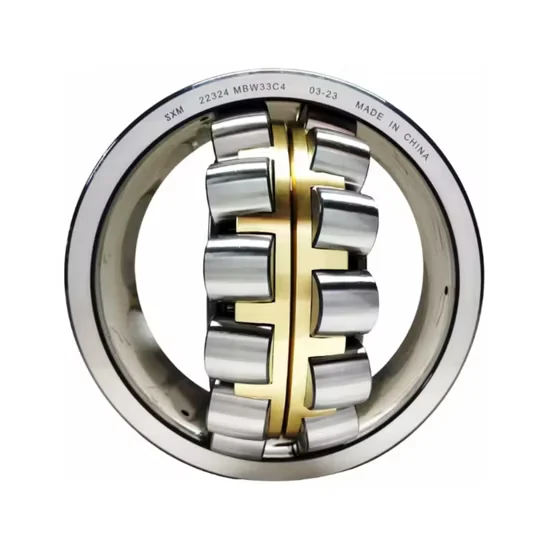
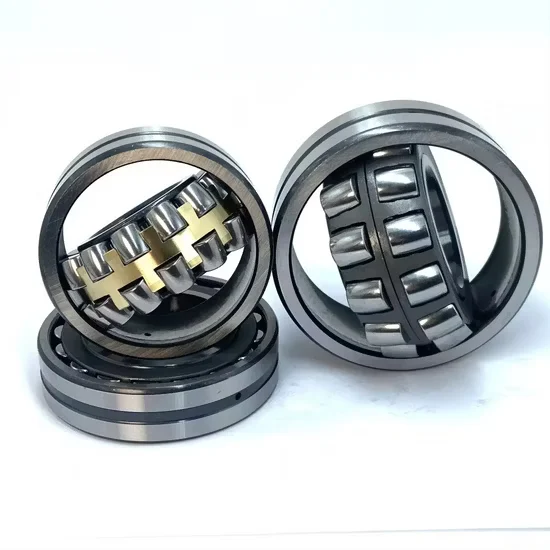
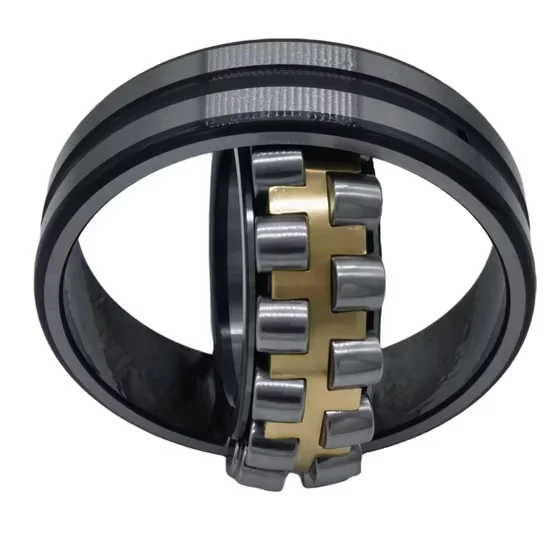
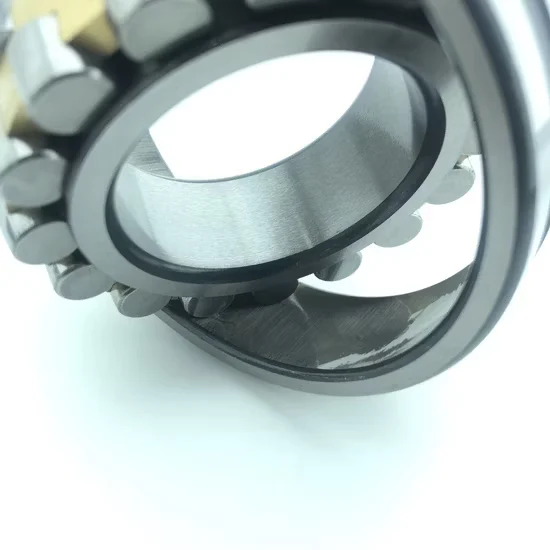
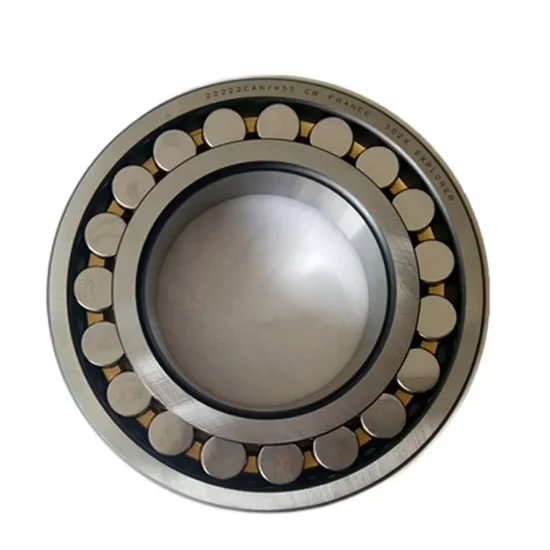
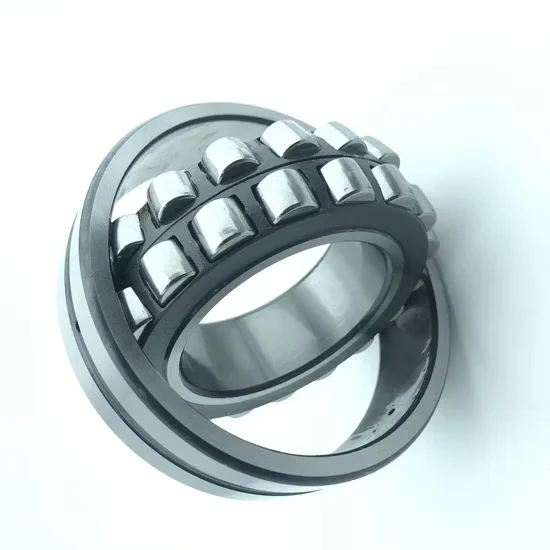
Cross-Reference Alignment Verified — Dimensional, load, and speed parameters cross-checked against major global catalogs for exact agitator fit.
Technical Specifications
| Parameter | Value |
|---|---|
| Product Type | Sealed Self-Aligning Roller Bearing |
| Number of Rows | Double-Row |
| Material | Chrome Steel Gcr15 (stainless steel variants available) |
| Seal Type | Sealed (Double-lip contact seals) |
| Origin | Shandong, China |
| Application | Industrial Agitators, Mining, Metallurgy |
Application Suitability
| Industry | Typical Applications |
|---|---|
| Mining & Metallurgy | Ore agitation tanks, leaching vessel stirrers |
| Chemical Processing | High-temperature reactor agitators, mixing vessels |
| Agriculture | Fertilizer blending equipment, heavy-duty mixers |
Why Agitator Shafts Destroy Standard Bearings Before the Seals Fail
Thermal expansion and chemical ingress cause internal clearance collapse long before external seal degradation occurs.
When evaluating a sealed self-aligning roller bearing supplier, procurement teams often prioritize seal quality over internal clearance. In my early failure analysis days in Shandong, I inspected an industrial mixer where standard CN clearance bearings seized completely under high-temperature agitation. The thermal expansion of the shaft eliminated the internal clearance, causing catastrophic lock-up [NEED_CITE: rolling bearing failure mode classification per ISO 15243]. The rollers skidded against the raceways, generating immense friction and localized welding. Sourcing the right component requires balancing seal integrity with thermal growth accommodation. Many engineers assume the seal is the weakest link, but in reality, incorrect internal geometry selection destroys the bearing from the inside out while the external seals remain perfectly intact.
Matching Bearing Architecture to Agitator Load Profiles
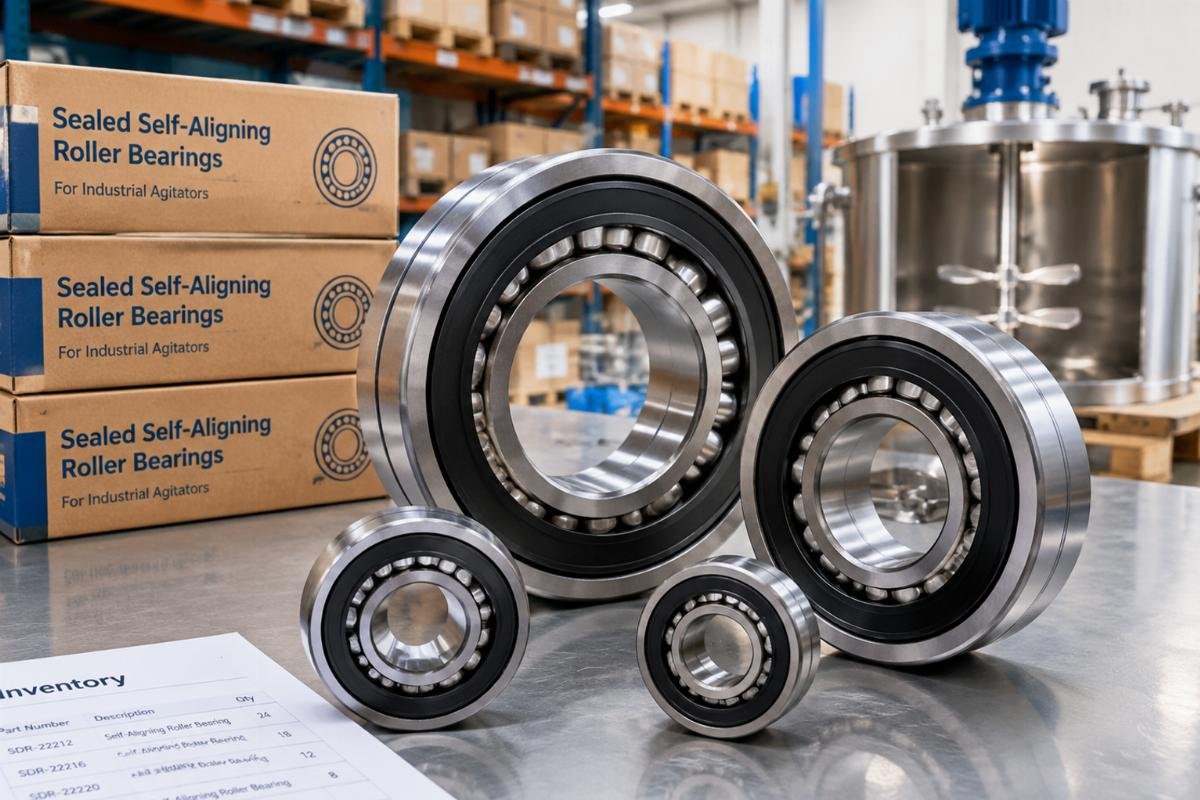
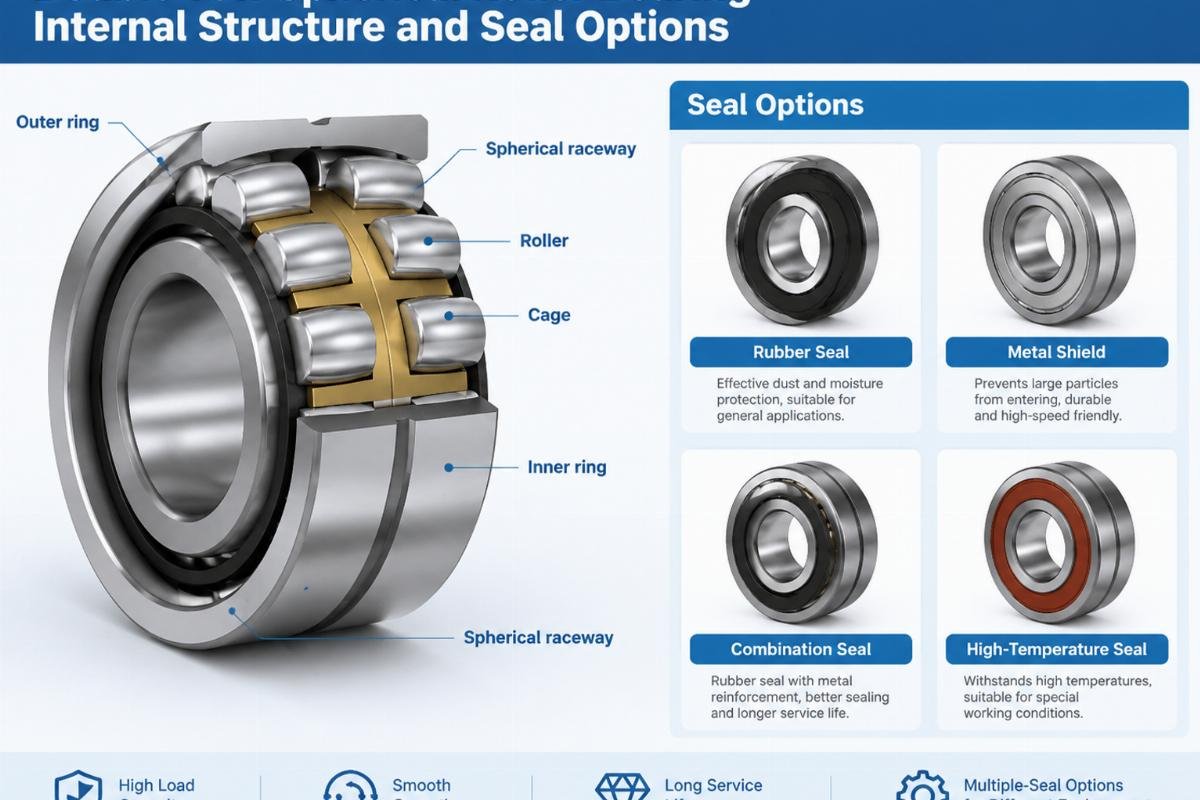
Agitator shafts subject bearings to heavy radial loads combined with moderate axial thrust and continuous misalignment. The double-row spherical design inherently compensates for shaft deflection, preventing edge loading on the rollers. As a dedicated sealed self-aligning roller bearing supplier, we ensure the internal geometry is optimized for these specific oscillating and rotating forces, extending service intervals in harsh mixing environments. The self-aligning capability is particularly crucial for long agitator shafts that experience significant bending moments during the mixing of high-viscosity fluids. By allowing the inner ring to pivot slightly within the outer ring, the bearing maintains uniform load distribution across all rolling elements, preventing localized stress concentrations that typically lead to spalling and premature fatigue.
Navigating Thermal and Contamination Extremes
Industrial mixing environments introduce severe contamination risks from abrasive dust and corrosive chemical splashes. The integrated sealing system prevents particulate ingress while retaining factory-applied lubrication, which is critical when relubrication is impractical. Furthermore, elevated operating temperatures drastically alter the effective internal clearance. Selecting the appropriate clearance class, such as C3 or C4, is mandatory to prevent the rollers from skidding or binding when the shaft expands thermally [NEED_CITE: thermal expansion effects on bearing clearance per ISO 281]. In chemical processing plants, the seals must also withstand aggressive solvents that can degrade standard elastomers. Therefore, specifying the correct seal material alongside the internal clearance ensures the bearing survives both the mechanical and chemical challenges of the application.
Decoding Material and Clearance Options for Mixers
While standard chrome steel Gcr15 provides excellent hardness and wear resistance for general heavy-duty use, stainless steel variants are available for highly corrosive chemical agitators. The sealed configuration eliminates the need for external grease nipples, reducing maintenance points but requiring careful initial lubrication selection. For high-temperature applications, the internal clearance must be upgraded from standard CN to C3 to absorb the differential thermal expansion between the inner ring and the housing. The double-row arrangement further enhances load capacity, making it ideal for the heavy, uneven loads encountered in ore agitation tanks. Understanding these material and clearance options allows maintenance teams to customize the bearing to their specific operational constraints, avoiding the pitfalls of generic, off-the-shelf selections.
The Hidden Downtime Costs of Incorrect Clearance Selection
Specifying a standard clearance bearing for a high-temperature agitator inevitably leads to premature failure and unplanned downtime. Once the internal clearance collapses, the friction generates excessive heat, degrading the lubricant and damaging the raceways. This catastrophic damage often voids equipment warranties and forces emergency shutdowns, disrupting the entire production line [NEED_CITE: unplanned downtime impact in heavy manufacturing]. The financial impact extends far beyond the cost of a replacement bearing, encompassing lost production hours, expedited shipping fees, and potential damage to the agitator shaft itself. Recognizing these hidden costs underscores the importance of precise technical specification during the initial procurement phase.
Why Procurement Engineers Trust Our Sourcing Protocol
We strictly verify the internal clearance and seal specifications for every batch, ensuring high-temperature agitator orders never receive standard CN clearance units by mistake. Our traceability documentation confirms the exact material composition, preventing the accidental installation of substandard steel in critical mixing vessels. We consolidate mixed-brand and mixed-size orders, allowing you to source both standard and specialized spherical bearings from a single shipment. Our technical team cross-references dimensional drawings to guarantee exact agitator shaft compatibility before dispatch. Furthermore, we provide comprehensive failure analysis support, helping your maintenance team identify the root cause of previous bearing failures and implement long-term reliability improvements across your fleet of industrial mixers.
Documentation & Authenticity
- Material test certificates confirming Gcr15 or stainless steel chemical composition
- Dimensional inspection reports verifying bore and outside diameter tolerances
- Internal clearance verification records confirming C3 or C4 classification
- Seal integrity test documentation ensuring zero contamination ingress
- Original manufacturer batch traceability codes for full lifecycle tracking
Storage, Handling & Mounting
- Store sealed units in original packaging to protect the contact seals from UV degradation and dust
- Use induction heaters for inner ring mounting to avoid damaging the integrated sealing lips
- Never wash sealed bearings with solvents, as this destroys the factory-applied high-temperature grease
- Verify shaft and housing tolerances to ensure the C3 clearance is not eliminated during press-fitting
- Keep stainless steel variants separated from carbon steel tools to prevent surface cross-contamination
Engineering Data Required for Exact Model Determination
To determine the precise bearing model for your application, please provide the agitator’s radial and axial load profiles, operating speed, and maximum shaft temperature. Specify the housing dimensions and any exposure to corrosive chemicals so we can recommend the optimal material and clearance class. Our engineering team will use these parameters to calculate the L10 life and finalize the exact part number. Choosing an experienced sealed self-aligning roller bearing supplier ensures these parameters are accurately translated into the correct configuration. Supplying the original equipment manufacturer details or existing shaft tolerances further accelerates the cross-referencing process, ensuring the proposed solution integrates flawlessly into your current mechanical setup without requiring costly machining modifications.
Frequently Asked Questions
Q: How to determine the exact spherical roller bearing model based on my agitator’s load and speed parameters?
A: Provide the specific radial and axial loads, operating RPM, and maximum thermal conditions. Our engineering team uses these metrics to calculate the required dynamic load rating and select the appropriate internal clearance, ensuring the final model withstands your specific agitator environment without premature failure.
Q: What are the common failure modes of self-aligning roller bearings in chemical and mining applications?
A: Premature failures typically stem from contamination ingress, lubricant degradation, or internal clearance collapse due to thermal expansion. In chemical mixers, corrosive wear on the raceways is also prevalent. Proper seal selection and upgrading to C3 clearance effectively mitigate these specific failure mechanisms.
Q: How does Gcr15 chrome steel perform compared to stainless steel in high-temperature agitator environments?
A: Gcr15 chrome steel offers superior hardness and load-carrying capacity for standard high-temperature mixing. However, in environments with aggressive chemical splashes or high humidity, stainless steel variants provide substantially higher corrosion resistance, though with a slight reduction in maximum dynamic load capacity.
Q: What is the expected service life and maintenance cycle for sealed spherical roller bearings in heavy-duty use?
A: Sealed variants significantly extend maintenance intervals by eliminating the need for regular relubrication. The actual service life depends on the operating temperature and load, but the integrated seals effectively retain the factory grease, often lasting until the next scheduled equipment overhaul.
Q: How to source reliable replacement bearings when the original equipment manufacturer part is discontinued?
A: Share the original equipment manufacturer part number or the physical dimensions of the existing bearing. We cross-reference these details against major global catalogs to identify exact dimensional and performance equivalents, ensuring seamless integration into your existing agitator assembly.


