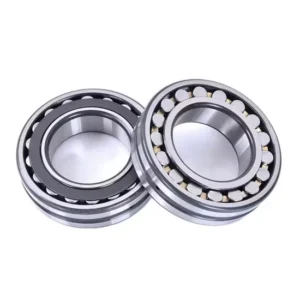
Self-Aligning Roller Bearing for Mining Crushers & Vibrating Screens
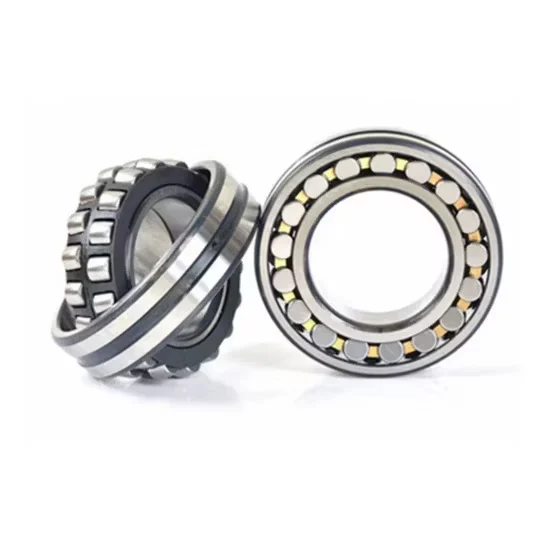
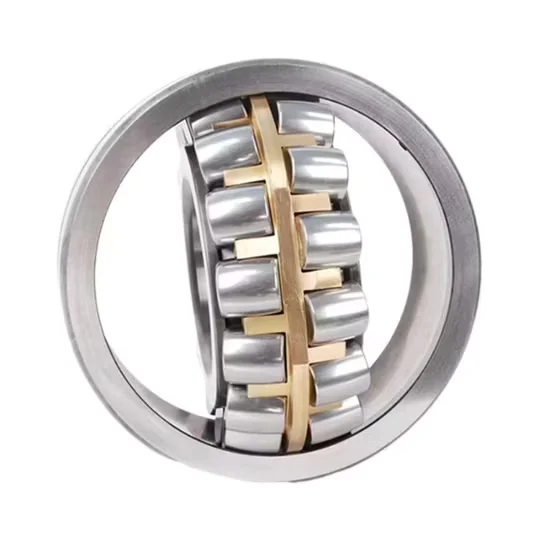
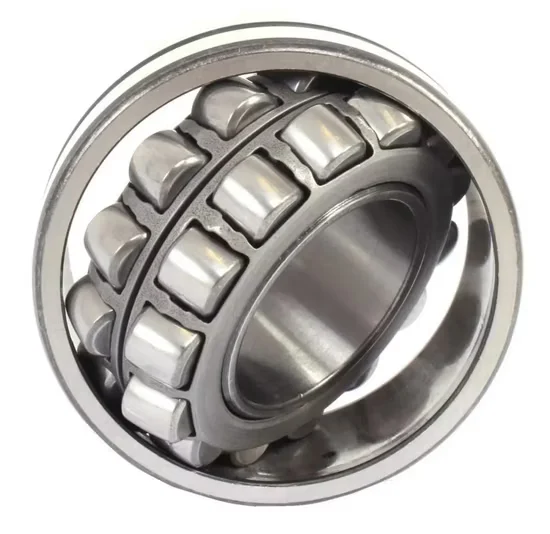
Self-Aligning Roller Bearing for Mining Crushers and Vibrating Screens — double-row structure in Gcr15 chrome steel engineered for heavy-load and high-shock conditions.
Automatically compensates for shaft misalignment to reduce edge stress in metallurgy and mining equipment applications.
Procurement verification requires strict three-item cross-reference alignment covering brand, exact model, and suffix specifications before final dispatch.
Why Standard Bearings Shatter Under Vibrating Screen Shock Loads
Standard cages fracture long before the steel rings fatigue.
Many procurement engineers focus solely on basic dynamic load ratings, ignoring the brutal reality of high-frequency vibration and shock loads in mineral processing. When a stamped steel cage snaps inside a vibrating screen exciter, the entire production line halts. [NEED_CITE: rolling bearing failure mode classification per ISO 15243] This is exactly where a specialized mining crusher self-aligning roller bearing supplier makes the difference by prioritizing cage integrity and internal clearance over nominal catalog ratings.
Matching Internal Geometry to Brutal Extraction Environments
A properly selected mining crusher self-aligning roller bearing supplier understands that misalignment is inevitable in heavy machinery. The double-row self-aligning structure automatically compensates for shaft deflection and housing bore misalignment, drastically reducing edge stress on the rollers. By offering mixed-brand packages, we ensure your maintenance team gets the exact internal geometry required for your specific extraction equipment, whether it is a primary jaw crusher or a secondary cone crusher.
Managing High-Frequency Vibration and Contamination
Mineral processing environments subject bearings to severe radial loads combined with intense, high-frequency axial vibrations. Standard clearance classes often lead to destructive skidding when the inner ring expands under friction heat. Furthermore, pervasive rock dust and slurry demand reliable sealing solutions or specialized lubrication protocols to prevent abrasive ingress. [NEED_CITE: impact of contamination on bearing fatigue life per ISO 281] Selecting the correct radial internal clearance and cage material is critical to surviving these extreme thermal and mechanical cycles.
Decoding Material Options and Cage Configurations
For heavy-load vibrating applications, the choice of cage material dictates survival. Machined brass cages provide superior resistance to high-frequency vibration and sudden shock loads compared to stamped steel alternatives, which are prone to early fracture. Regarding material options, while high-carbon chromium bearing steel offers exceptional contact fatigue strength for standard heavy loads, stainless steel or specialized coated variants are available for highly corrosive or washdown environments. The selection ultimately depends on your specific load profile, operating temperature, and maintenance intervals.
The Catastrophic Price of Ignoring Suffix Details
Overlooking internal clearance or cage type specifications leads to catastrophic downstream consequences. A bearing with standard clearance in a high-vibration screen will overheat and seize, causing unplanned downtime that costs far more than the component itself. Premature cage failure can scatter metal debris throughout the gearbox, resulting in catastrophic damage to adjacent precision gears. [NEED_CITE: secondary damage caused by bearing disintegration] Relying on a qualified mining crusher self-aligning roller bearing supplier prevents these costly oversights through rigorous cross-reference validation.
Sourcing Reliability Beyond the Catalog Number
We verify every batch through authorized channel procurement and original traceability documents, ensuring you never receive counterfeit or downgraded steel. Our technical team performs strict three-item alignment checks—verifying brand, base model, and critical suffixes like cage type and clearance—before dispatch. Having transitioned from procurement to mining sales after witnessing early cage fractures in vibrating screens, I mandate strict validation of brass cage and enlarged clearance specifications for all heavy-duty orders. We consolidate mixed-brand shipments globally, eliminating the logistical nightmare of coordinating multiple vendors for a single maintenance shutdown.
Documentation & Authenticity
Original batch traceability documents confirming the exact steel melt and heat treatment cycle.
Dimensional and running accuracy inspection reports validating self-aligning tolerances before shipment.
Official manufacturer app QR authentication for verifying genuine brass cage configurations.
Material certification confirming high-carbon chromium steel composition for heavy-load durability.
Certificate of Conformity detailing the specific internal clearance class for vibrating screen applications.
Storage, Handling & Mounting
Store the double-row self-aligning units in original packaging to prevent dust ingress before mounting in vibrating screens.
Use induction heaters for cylindrical bore installations, strictly avoiding open flames that alter the chrome steel microstructure.
Keep machined brass cage bearings sealed until the exact moment of installation to prevent moisture-induced corrosion.
Support the outer ring during heavy-duty crane lifting to prevent brinelling on the raceway from shock drops.
Apply the recommended high-viscosity grease immediately after mounting to protect against mining dust contamination.
Provide Equipment Parameters for Precision Selection
To ensure optimal performance, please share your specific equipment model, installation space constraints, and detailed operating conditions including radial and axial loads. Our engineering team will evaluate the vibration frequency and thermal environment to determine the exact internal clearance and cage configuration required. Specify any exposure to corrosive slurries or extreme temperatures so we can recommend the appropriate material variants and sealing solutions for your application.
Frequently Asked Questions
Q: How do I determine the specific bearing model for my crusher or vibrating screen?
A: Provide the equipment manufacturer name, model number, and operating parameters such as load, speed, and vibration frequency. Our engineering team will analyze these details to recommend the precise internal dimensions, clearance class, and cage material required, ensuring a perfect fit and maximum service life for your specific heavy-duty application.
Q: What are the common failure modes in vibrating screen conditions and how can they be prevented?
A: High-frequency vibration often causes stamped steel cages to fracture or standard clearance bearings to overheat and seize. Prevention involves selecting machined brass cages for superior shock resistance and specifying enlarged radial internal clearance to accommodate thermal expansion, ensuring reliable operation under the intense dynamic loads typical of mineral processing equipment.
Q: How do cross-reference replacements work across different premium brands?
A: While base dimensions are standardized, internal geometry, cage designs, and clearance tolerances vary significantly between manufacturers. We perform a strict three-item alignment check to ensure the replacement matches the original equipment’s exact load and vibration requirements, preventing premature failure caused by subtle engineering differences in seemingly equivalent part numbers.
Q: What material and cage differences matter most for mining heavy-load conditions?
A: High-carbon chromium bearing steel provides the necessary contact fatigue strength for massive radial loads, while machined brass cages are essential for surviving high-frequency vibration and shock impacts. Standard stamped steel cages often fail prematurely in these brutal environments, making the correct cage and material combination critical for minimizing unplanned downtime.
Q: How do we handle urgent replacements when original parts have long lead times?
A: We maintain massive spot inventory across multiple premium international and reliable domestic brands, allowing us to fulfill emergency spare-part orders immediately. Our technical team quickly identifies validated cross-reference alternatives that match your exact load, speed, and dimensional requirements, ensuring your mining operation resumes without waiting for extended factory production cycles.
Shipping Information
EU Warehouse
3-7 working days (bonded stock)
Direct from China
Shanghai & Ningbo hubs (bulk / FCL)
Markets Served
DE · IT · PL · ES · NL · FR · EU+
Incoterms
DDP / DAP available on request
Minimum Order
Contact us for MOQ details
Documents Included with Every Shipment
EN and ISO Quality Certificates
Batch traceability and manufacturing standard
Material & Heat-Treatment Reports
Full material composition and process records
CE Declaration of Conformity
For bearing units and motion products
RoHS Compliance Declaration
Restriction of hazardous substances
EUR.1 Movement Certificate
Preferential origin for EU customs
Certificate of Origin
Country of manufacture documentation
Correct HS Codes
Pre-classified for smooth customs clearance
Commercial Invoice & Packing List
VAT-compliant intra-EU invoicing
Transparent Landed Cost with Tax Explanation
SKFEU provides full price transparency so EU buyers know exactly what they pay. No hidden duties, no surprise charges at customs.
VAT-Compliant Invoicing
All intra-EU transactions are invoiced with correct VAT treatment. B2B buyers with valid EU VAT numbers receive zero-rated invoices where applicable.
No Unexpected Import Duties
Goods shipped from our EU bonded warehouse arrive as intra-EU movements -- no import duties, no customs delays for EU-based buyers.
EUR.1 & Origin Docs Ready
For shipments direct from China, EUR.1 movement certificates and certificates of origin are prepared in advance to minimise customs clearance time.
DDP Pricing Available
Ask for Delivered Duty Paid quotations -- we absorb all import costs so your landed cost is fixed and predictable from day one.
Need a landed cost breakdown? Contact Sofia at
sofia@skfeu.com
or via WhatsApp for a full DDP quotation including freight, duties and VAT for your country.
Send Inquiry
Request Pricing & Availability
Share your requirements and Sofia will respond within one working day with pricing, lead time and full documentation details.