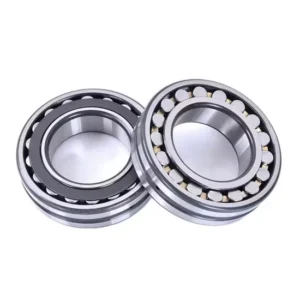
Tapered Bore Self-Aligning Roller Bearing for Vertical Shaft Systems
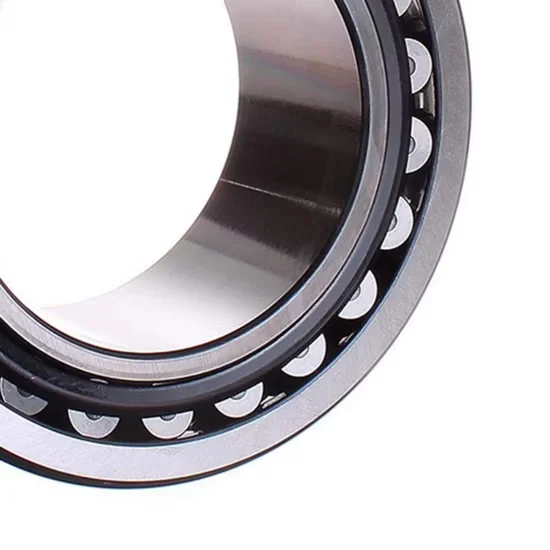
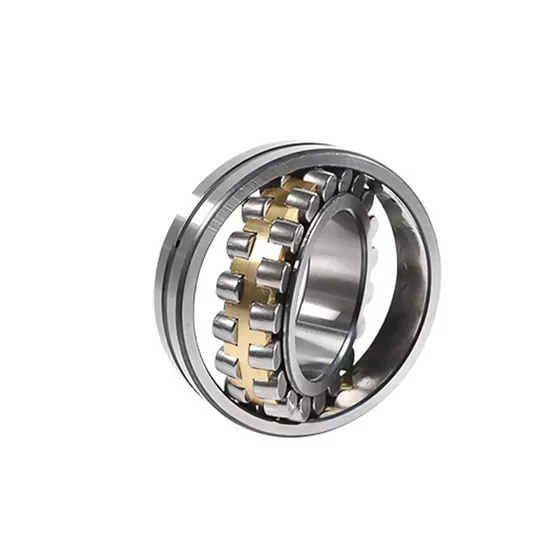
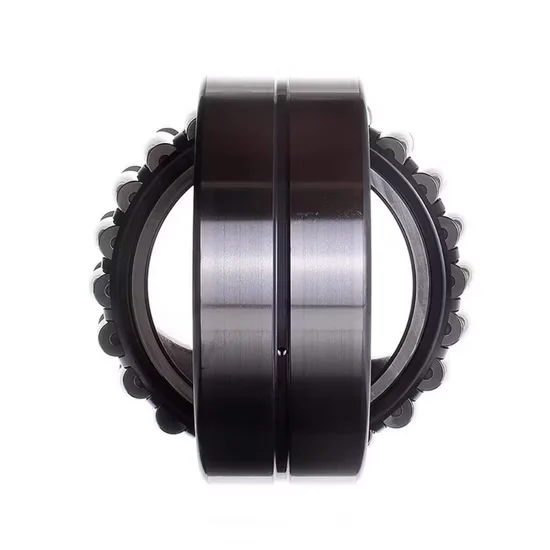
Tapered Bore Self-Aligning Roller Bearing for Vertical Shaft Systems — Double-row spherical structure in Chrome Steel Gcr15 handles heavy radial loads while accommodating shaft misalignment in mining and metallurgy operations.
Tapered bore enables simplified mounting on vertical shafts
Self-aligning design tolerates misalignment under continuous duty
Gcr15 construction delivers wear resistance for harsh industrial environments
Each unit supports official QR code verification to confirm authentic brand origin before installation.
Cross-Reference Alignment — We verify dimensional, load, and speed parameters across OEM catalogs to ensure exact fitment for your vertical shaft systems.
Technical Specifications
Parameter
Value
Product Type
Spherical Roller Bearing
Number of Rows
Double-Row
Material Options
Chrome Steel Gcr15, stainless steel variants
Bore Type
Tapered Bore
Origin
Shandong, China
Application Suitability
Industry
Typical Applications
Mining
Vertical shaft crushers and hoisting mechanisms
Metallurgy
Continuous casting vertical guide rolls
Agriculture
Heavy-duty vertical augers and conveyors
Why Vertical Shaft Systems Destroy Standard Spherical Roller Bearings
Misalignment and heavy axial thrust cause rapid raceway spalling in standard configurations.
When vertical shafts operate under extreme mining or metallurgy loads, gravity and vibration force the inner ring out of concentricity. Using a standard cylindrical bore often leads to fretting corrosion and catastrophic seizure. Sourcing from a reliable tapered bore self-aligning roller bearing supplier ensures the locking mechanism handles the axial displacement without compromising the raceway integrity [NEED_CITE: rolling bearing failure mode classification per ISO 15243].
Matching Bearing Geometry to Vertical Load Profiles
Vertical shafts demand components that tolerate severe misalignment while sustaining heavy radial and axial loads. The double-row self-aligning structure accommodates shaft deflection, preventing edge loading on the rollers. As a dedicated tapered bore self-aligning roller bearing supplier, we match the exact taper ratio to your adapter sleeve requirements, ensuring secure axial positioning in vibrating environments.
Managing Thermal and Contamination Extremes
In metallurgy and mining, vertical shafts face intense heat and abrasive dust. Elevated temperatures alter the internal clearance, making the initial clearance class selection critical for avoiding thermal seizure. Proper lubrication intervals and effective sealing arrangements are mandatory to keep contaminants out of the roller paths. The tapered bore design allows for precise residual clearance adjustment during mounting, compensating for thermal expansion [NEED_CITE: thermal expansion effects on bearing internal clearance].
Decoding Material and Bore Configurations
The internal geometry and material options dictate performance under heavy shock loads. Chrome Steel Gcr15 provides high fatigue strength for standard heavy-duty applications, while stainless steel variants are available for corrosive chemical or agricultural environments. The tapered bore configuration enables simplified mounting and dismantling on vertical shafts using adapter or withdrawal sleeves. This design ensures a tight interference fit without the need for excessive heating, preserving the material’s heat treatment and metallographic structure.
The Hidden Toll of Improper Fitment
Selecting the wrong bore type or ignoring the required interference fit leads to inner ring creep and severe shaft scoring. This results in unplanned downtime and catastrophic damage to the entire vertical drive assembly. According to ISO 281 frameworks, improper mounting practices drastically reduce the calculated fatigue life, turning a minor maintenance task into a complete system rebuild [NEED_CITE: bearing life calculation methods per ISO 281].
Securing Traceability and Technical Accuracy
We provide complete traceability documentation for every OZD, KOYO, NTN, or NSK unit, eliminating the risk of counterfeit parts in critical vertical shaft applications. Our engineering team offers cross-brand equivalent model consultation when original specifications are discontinued or face extended lead times. We maintain massive spot inventory for urgent MRO replacements, ensuring flexible MOQs from single emergency units to full container consolidations. Every shipment includes ISO-compliant quality assurance and pre-shipment dimensional verification to guarantee fitment.
Documentation & Authenticity
Certificate of Conformity verifying genuine OZD, KOYO, NTN, or NSK origin for vertical shaft components.
Batch traceability records linking the specific double-row bearing to its exact manufacturing date and facility.
Material inspection reports confirming Chrome Steel Gcr15 or stainless steel chemical composition before dispatch.
Dimensional inspection reports validating the tapered bore tolerance and running accuracy prior to shipment.
Storage, Handling & Mounting
Store in original packaging to prevent humidity-induced corrosion on the Gcr15 raceways of this tapered bore unit.
Use induction heating for adapter sleeves; open flames anneal the bearing steel and cause vertical shaft seizure.
Measure drive-in distance precisely to maintain correct residual internal clearance for vertical shaft thermal expansion.
Keep the double-row bearing sealed until mounting to prevent abrasive mining dust from contaminating roller paths.
Avoid carbon steel tools on stainless steel variants to prevent cross-contamination and localized corrosion on vertical shafts.
Defining Your Vertical Shaft Parameters
To ensure precise model selection, provide your equipment’s specific radial and axial load profiles, operating speeds, and available installation space. Detail the environmental conditions, such as exposure to chemical splashes or extreme metallurgy heat, so we can recommend the optimal material variant. Our engineering team will cross-reference these parameters to determine the exact bearing designation and adapter sleeve combination required for your application, ensuring reliable performance under heavy vertical loads.
Frequently Asked Questions
Q: How do we determine the exact bearing designation for our vertical shaft equipment?
A: Provide the equipment model, shaft diameter, and specific load conditions. Our engineering team will calculate the required dynamic load rating and cross-reference OEM catalogs to identify the precise double-row tapered bore configuration and corresponding adapter sleeve needed for your vertical shaft system.
Q: What are the common failure modes in heavy-duty mining and metallurgy applications?
A: Premature failures typically stem from inner ring creep due to insufficient interference fit, or raceway spalling caused by abrasive contamination. Improper mounting practices, such as using open flames for heating, can also alter the metallographic structure, leading to catastrophic seizure under heavy vertical loads.
Q: How do material options perform in harsh chemical or agricultural environments?
A: Standard Chrome Steel Gcr15 offers excellent fatigue strength for general heavy-duty use but requires robust sealing in corrosive settings. For direct exposure to agricultural chemicals or moisture, stainless steel variants provide substantially higher corrosion resistance, preventing surface degradation and extending the operational lifespan of the vertical shaft assembly.
Q: What maintenance and relubrication cycles are recommended for these double-row bearings?
A: Relubrication intervals depend on operating speed, ambient temperature, and contamination levels. In dusty mining environments, frequent purging of old grease is necessary to expel abrasive particles. We recommend establishing a condition-based monitoring schedule to assess grease degradation and replenish lubricants before the roller paths experience metal-to-metal contact.
Q: Can you provide cross-brand equivalents if our original parts are discontinued?
A: Yes, we offer comprehensive cross-brand equivalent model consultation. By analyzing the dimensional specifications, load ratings, and tapered bore geometry of your existing unit, we can source fully interchangeable alternatives from our extensive inventory of premium global brands, ensuring minimal downtime for urgent MRO replacements.
Shipping Information
EU Warehouse
3-7 working days (bonded stock)
Direct from China
Shanghai & Ningbo hubs (bulk / FCL)
Markets Served
DE · IT · PL · ES · NL · FR · EU+
Incoterms
DDP / DAP available on request
Minimum Order
Contact us for MOQ details
Documents Included with Every Shipment
EN and ISO Quality Certificates
Batch traceability and manufacturing standard
Material & Heat-Treatment Reports
Full material composition and process records
CE Declaration of Conformity
For bearing units and motion products
RoHS Compliance Declaration
Restriction of hazardous substances
EUR.1 Movement Certificate
Preferential origin for EU customs
Certificate of Origin
Country of manufacture documentation
Correct HS Codes
Pre-classified for smooth customs clearance
Commercial Invoice & Packing List
VAT-compliant intra-EU invoicing
Transparent Landed Cost with Tax Explanation
SKFEU provides full price transparency so EU buyers know exactly what they pay. No hidden duties, no surprise charges at customs.
VAT-Compliant Invoicing
All intra-EU transactions are invoiced with correct VAT treatment. B2B buyers with valid EU VAT numbers receive zero-rated invoices where applicable.
No Unexpected Import Duties
Goods shipped from our EU bonded warehouse arrive as intra-EU movements -- no import duties, no customs delays for EU-based buyers.
EUR.1 & Origin Docs Ready
For shipments direct from China, EUR.1 movement certificates and certificates of origin are prepared in advance to minimise customs clearance time.
DDP Pricing Available
Ask for Delivered Duty Paid quotations -- we absorb all import costs so your landed cost is fixed and predictable from day one.
Need a landed cost breakdown? Contact Sofia at
sofia@skfeu.com
or via WhatsApp for a full DDP quotation including freight, duties and VAT for your country.
Send Inquiry
Request Pricing & Availability
Share your requirements and Sofia will respond within one working day with pricing, lead time and full documentation details.