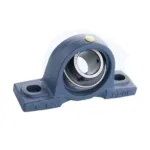
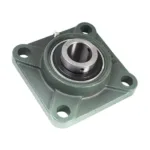
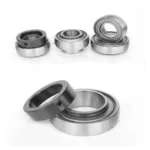
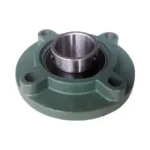
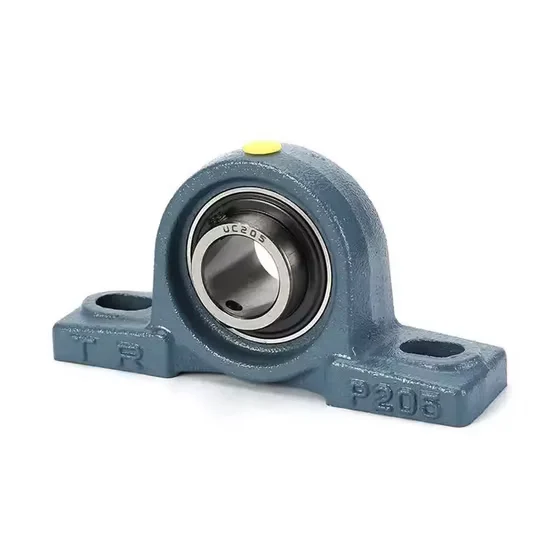
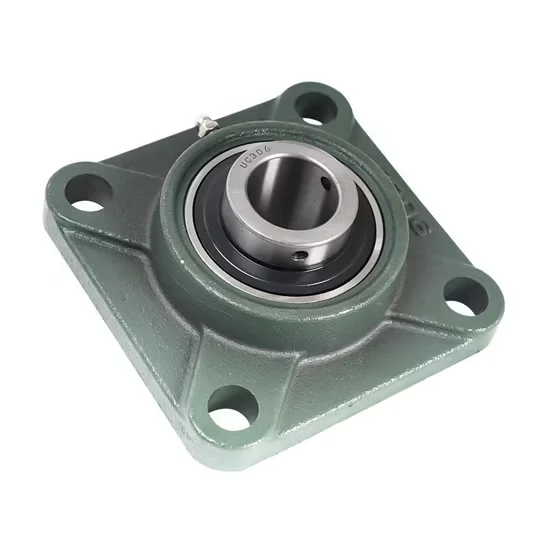
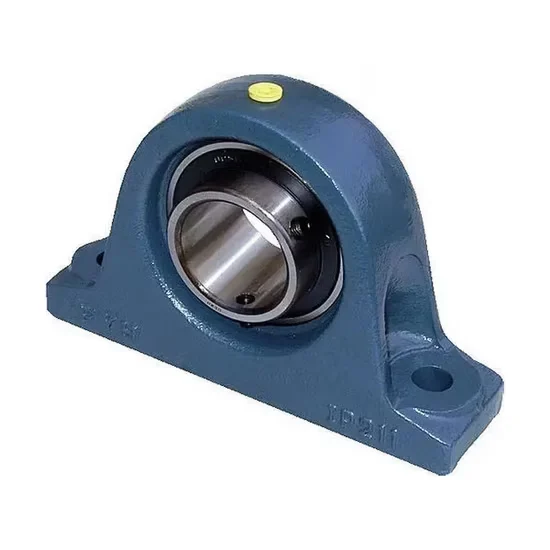
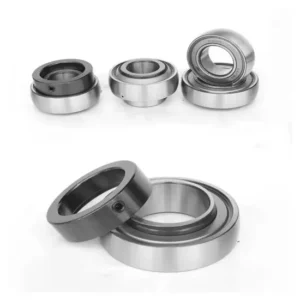
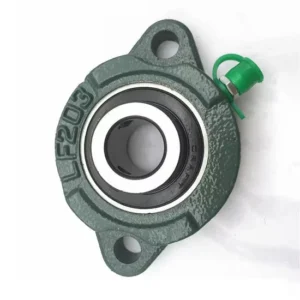
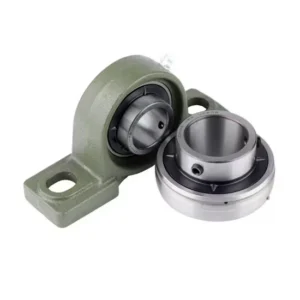
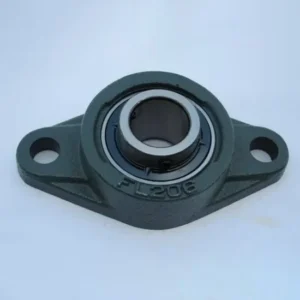
UCP204 Pillow Block Bearing — equipped with a deep groove raceway and cast steel housing for stable radial load operation in agricultural harvesters and fixed machinery.
Low vibration and noise design ensures smooth continuous running under heavy daily workloads.
Verify cross-reference alignment across clearance, cage type, and precision specifications to guarantee exact equipment compatibility before bulk purchasing.
Scan-to-Verify Authenticity — Every UCP204 unit ships with an original manufacturer QR code for instant digital traceability.
Technical Specifications
Parameter
Value
Designation
UCP204
Product Type
Pillow Block Bearing
Rows Number
Single
Raceway
Deep Groove Raceway
Housing Material
Cast steel or alternative alloy variants
Bearing Block Model
P
Vibration
Low Vibration Design
Noise Level
Low Noise Running
Size
Customized
Origin
Shandong, China
Application Suitability
Industry
Typical Applications
Agriculture
Harvester threshing drums and auger drive shafts
Material Handling
Conveyor system drive pulleys and heavy-duty idler supports
General Manufacturing
Fixed machinery and equipment rotating assemblies
Why Harvester Threshing Drums Destroy Standard Pillow Block Housings
When specifying a UCP204 pillow block bearing for agricultural drives, the housing material often dictates survival more than the internal rolling elements.
Standard cast iron housings fracture under the cyclic shock loads of crop harvesting, whereas cast steel variants absorb the impact.
Walking the Hanover agricultural machinery shows, I investigated numerous harvester drive failures where operators reported seized outer spherical bearings. Cutting open the failed units revealed a glaring mismatch: metal-shielded inserts were deployed in extreme dust environments, allowing fine silica to bypass the shields and jam the raceway. Sourcing the right UCP204 pillow block bearing requires aligning the housing metallurgy and sealing strategy with the actual field contamination. Relying on generic catalog specifications without considering the specific particulate size and moisture levels in the harvesting zone inevitably leads to premature seizing that plagues poorly specified assemblies. Addressing these environmental factors during the initial design phase prevents the catastrophic downtime that erodes seasonal profit margins [NEED_CITE: rolling bearing failure mode classification per ISO 15243].
Matching Housing Metallurgy to Field Contamination
Selecting the correct housing variant ensures the insert remains perfectly aligned under heavy radial loads. Our engineering team cross-references OEM equipment manuals to verify bolt spacing and shaft tolerances, ensuring the UCP204 pillow block bearing integrates flawlessly into your existing harvester or conveyor architecture without requiring custom machining.
Radial Shocks and Dust Ingress in Agricultural Drives
Harvester drivetrains subject components to severe radial shocks and continuous particulate exposure. The deep groove raceway handles these radial forces efficiently, but the external environment demands rigorous sealing solutions beyond standard iron shields. Elevated ambient temperatures during summer harvests also affect grease viscosity, necessitating lubricants that resist washout and particulate embedding. Proper alignment during installation is equally critical to prevent edge loading on the rolling elements. When fine agricultural dust infiltrates the housing, it acts as an abrasive lapping compound, rapidly degrading the raceway surface finish and accelerating fatigue spalling. Selecting the appropriate contact seal or external protective cover is therefore just as vital as the internal clearance specification [NEED_CITE: bearing life calculation methods per ISO 281].
Decoding the Deep Groove and P-Block Geometry
The deep groove raceway profile provides optimal contact geometry for sustaining high radial loads while maintaining low vibration at operational speeds. The P-type bearing block model offers a rigid, flat-base mounting surface that distributes clamping forces evenly across the machinery frame. Utilizing cast steel or alternative alloy variants for the housing significantly improves structural integrity compared to brittle gray iron, particularly in applications where the mounting base experiences flexing. This low-vibration design minimizes acoustic noise and reduces the transmission of high-frequency harmonics into the surrounding equipment structure. Furthermore, the single-row configuration simplifies the mounting process while providing sufficient load-carrying capacity for most standard conveyor and agricultural drive shafts, ensuring reliable power transmission without excessive weight penalties.
The Downtime Toll of Mismatched Seals and Housings
Deploying an under-specified housing in a high-shock environment leads to catastrophic structural fatigue and unplanned downtime. If the housing material lacks the necessary tensile strength, micro-cracks propagate rapidly under cyclic loading, ultimately resulting in sudden mechanical failure. Such premature failures not only halt production but also void equipment warranties and cause secondary damage to adjacent drive components. Adhering to established failure analysis frameworks helps engineers identify these hidden risks before deployment. Ignoring the dynamic load variations inherent in crop processing can cause the housing base to warp, misaligning the shaft and inducing severe vibration that destroys the entire drive assembly within a single harvesting season [NEED_CITE: rolling bearing damage analysis per ISO 15243].
Sourcing Advantages for Mixed-Fleet Maintenance
Managing a mixed fleet of harvesters and conveyors often requires sourcing multiple bearing variants simultaneously. We consolidate full-container shipments featuring the UCP204 alongside cross-reference equivalents like UCP205, UCP206, and UCP207, eliminating the need to coordinate with fragmented suppliers. Our massive spot inventory covers thousands of standard and customized part numbers, ensuring urgent maintenance requirements are met without enduring typical multi-week lead times. Furthermore, we provide comprehensive technical selection support to verify dimensional specs and housing bolt spacing against your specific OEM manuals.
Documentation & Authenticity
Original manufacturer QR codes verifying the authenticity of KOYO, NTN, NSK, or OZD inserts.
Material inspection reports confirming the structural integrity of the cast steel housing.
Dimensional inspection records validating P-block bolt spacing and bore tolerances.
Factory batch traceability logs linking the specific unit to its production run.
Storage, Handling & Mounting
Store the cast steel P-block in its original packaging to prevent surface oxidation before installation.
Use induction heating for interference fits to avoid damaging the deep groove raceway geometry.
Verify shaft diameter tolerances to ensure the locking mechanism engages securely without housing distortion.
Apply appropriate anti-seize compounds to the P-block mounting bolts to facilitate future maintenance.
Engineering Data Required for Selection Validation
To ensure optimal performance, please share your specific radial and axial load profiles, operational speeds, and ambient temperature ranges. Providing the exact OEM equipment model numbers allows our technical team to perform precise cross-reference verification and L10 life calculations for your application.
Frequently Asked Questions
Q: How to verify the authenticity of KOYO/NTN/NSK UCP204 bearings?
A: Authenticity is confirmed through official traceability documentation and scannable QR codes provided by the original manufacturer. We supply genuine products from premium global brands alongside reliable domestic lines. Every shipment includes factory batch logs and material inspection reports, ensuring complete transparency and protecting your equipment from the severe risks associated with counterfeit rolling elements.
Q: What are the cross-reference equivalents for UCP204 across different premium brands?
A: The UCP204 designation is a standardized metric pillow block dimension, but specific internal clearances and seal designs vary by manufacturer. We provide cross-reference consultation for equivalents like UCP205, UCP206, and UCP207 across SKF, FAG, NSK, and NTN. Our engineering team verifies dimensional specs and housing bolt spacing against your OEM manuals to ensure exact interchangeability.
Q: Cast steel vs. cast iron housing: which is better for harvester applications?
A: Cast steel housings offer substantially higher tensile strength and impact resistance compared to standard gray cast iron. In harvester applications characterized by severe radial shocks and heavy crop loads, cast steel prevents the micro-cracking and sudden structural fractures common in brittle iron variants. This material upgrade significantly extends the operational lifespan of the mounting assembly under cyclic stress.
Q: How to properly align and mount the UCP204 pillow block to prevent premature failure?
A: Proper alignment requires verifying shaft straightness and ensuring the P-block mounting surface is perfectly flat to prevent housing distortion. Bolts should be tightened to the manufacturer’s specified torque using a calibrated wrench to distribute clamping forces evenly. Misalignment induces edge loading on the deep groove raceway, accelerating fatigue and generating excess heat during continuous operation.
Q: What is the recommended lubrication interval for UCP series insert bearings in agricultural use?
A: Lubrication intervals depend heavily on the operating environment, particularly dust ingress and moisture exposure in agricultural fields. While standard factory grease provides initial protection, harsh harvesting conditions typically require more frequent re-lubrication to purge contaminants from the seal lips. We recommend establishing a condition-based monitoring schedule, checking for elevated temperatures or acoustic changes to determine optimal regreasing cycles.
Shipping Information
EU Warehouse
3-7 working days (bonded stock)
Direct from China
Shanghai & Ningbo hubs (bulk / FCL)
Markets Served
DE · IT · PL · ES · NL · FR · EU+
Incoterms
DDP / DAP available on request
Minimum Order
Contact us for MOQ details
Documents Included with Every Shipment
EN and ISO Quality Certificates
Batch traceability and manufacturing standard
Material & Heat-Treatment Reports
Full material composition and process records
CE Declaration of Conformity
For bearing units and motion products
RoHS Compliance Declaration
Restriction of hazardous substances
EUR.1 Movement Certificate
Preferential origin for EU customs
Certificate of Origin
Country of manufacture documentation
Correct HS Codes
Pre-classified for smooth customs clearance
Commercial Invoice & Packing List
VAT-compliant intra-EU invoicing
Transparent Landed Cost with Tax Explanation
SKFEU provides full price transparency so EU buyers know exactly what they pay. No hidden duties, no surprise charges at customs.
VAT-Compliant Invoicing
All intra-EU transactions are invoiced with correct VAT treatment. B2B buyers with valid EU VAT numbers receive zero-rated invoices where applicable.
No Unexpected Import Duties
Goods shipped from our EU bonded warehouse arrive as intra-EU movements -- no import duties, no customs delays for EU-based buyers.
EUR.1 & Origin Docs Ready
For shipments direct from China, EUR.1 movement certificates and certificates of origin are prepared in advance to minimise customs clearance time.
DDP Pricing Available
Ask for Delivered Duty Paid quotations -- we absorb all import costs so your landed cost is fixed and predictable from day one.
Need a landed cost breakdown? Contact Sofia at
sofia@skfeu.com
or via WhatsApp for a full DDP quotation including freight, duties and VAT for your country.
Send Inquiry
Request Pricing & Availability
Share your requirements and Sofia will respond within one working day with pricing, lead time and full documentation details.