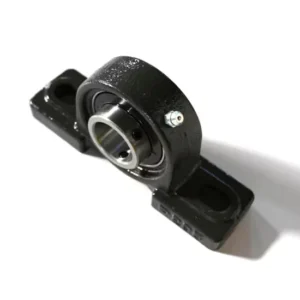
UCP210 Pillow Block Bearing Cast Iron Housing for Machinery [WARN] draft identifier mismatch
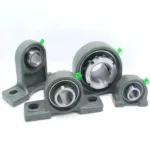
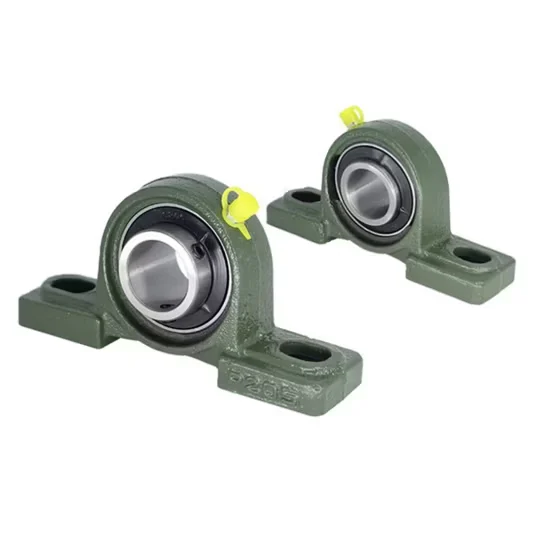
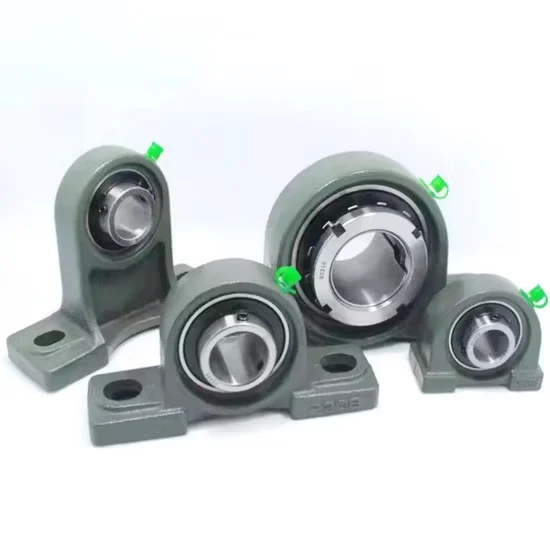
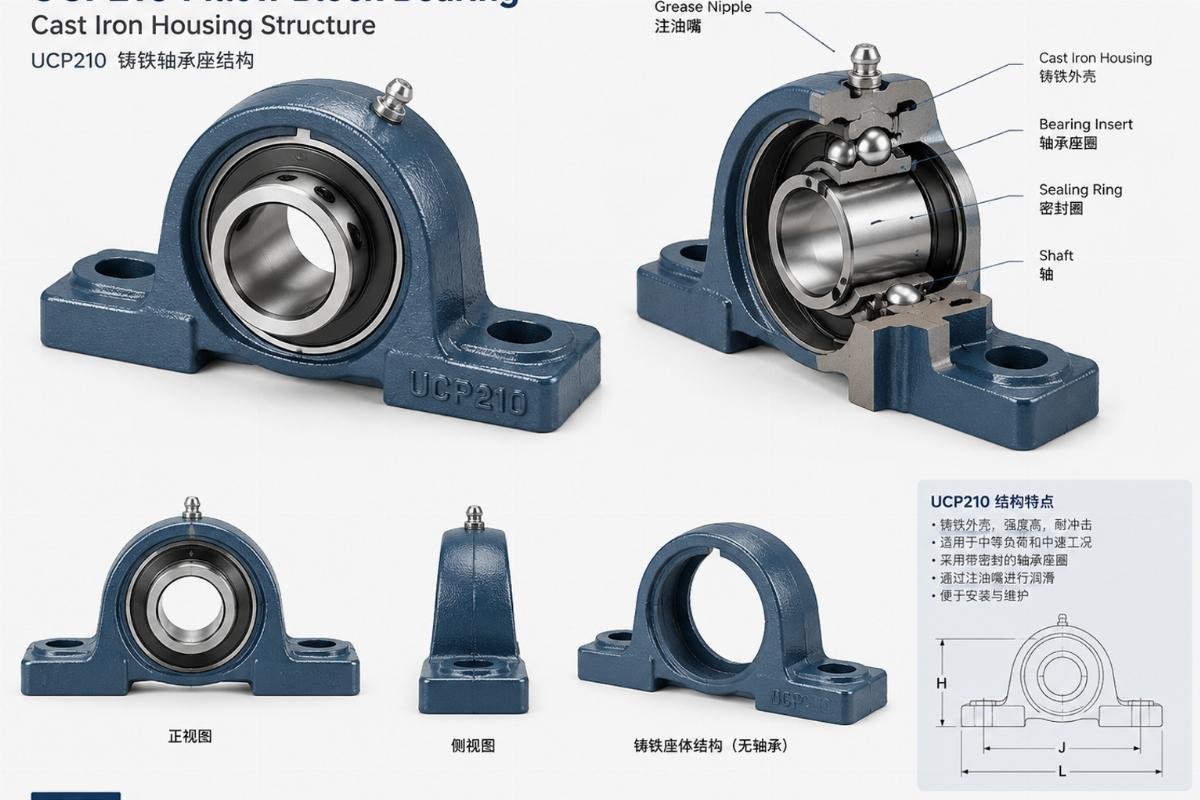
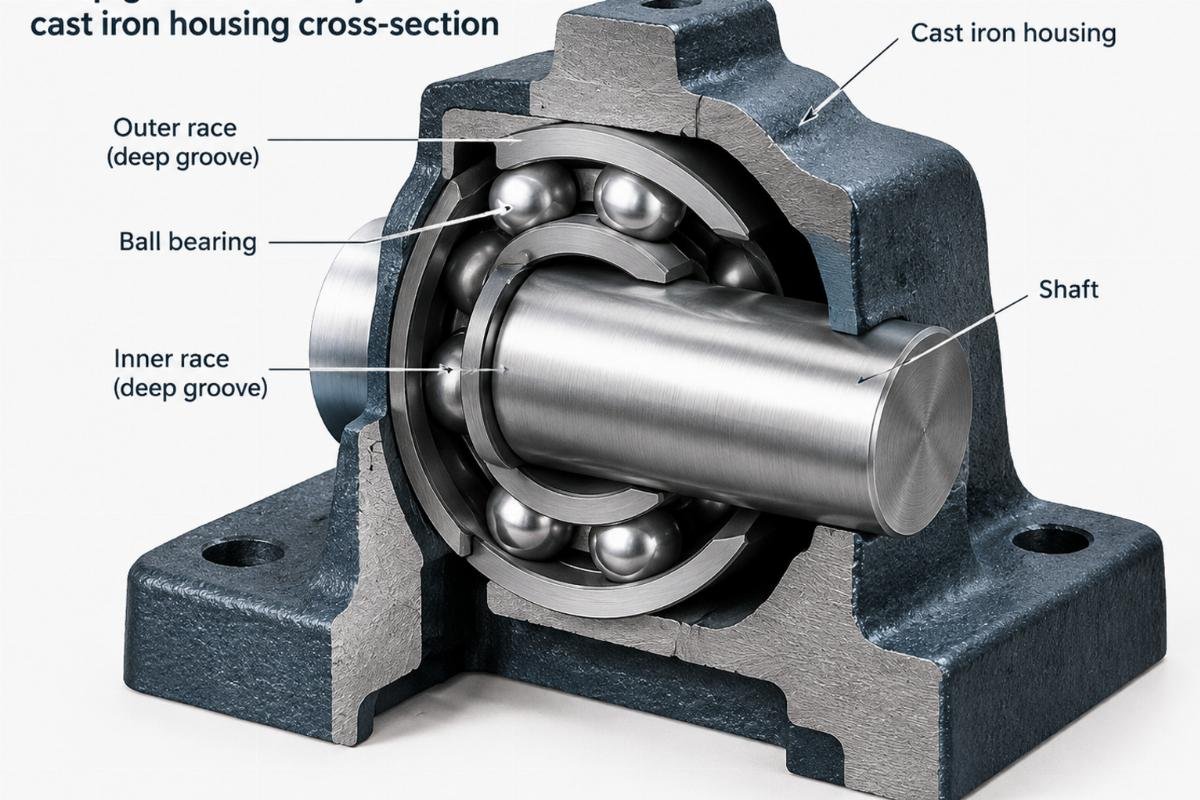
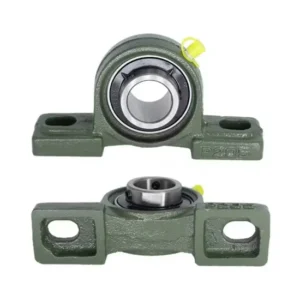
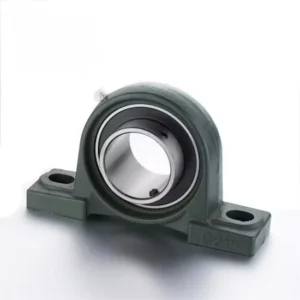
UCP210 Pillow Block Bearing features a durable cast iron housing and deep groove raceway design, delivering stable radial load support for conveyor systems and agricultural machinery. The P-type block ensures secure mounting and reliable operation under continuous industrial conditions.
Cross-reference internal clearance, cage material, and precision class to guarantee exact specification alignment with your equipment prior to dispatch.
Replies within 1 working day · Dedicated account manager
Specifications
Agricultural MachineryCast Iron HousingConveyor SystemsDeep Groove RacewayGenuine BearingPillow Block BearingUCP210
Lead Time
3-7 working days
EU bonded warehouse · Fast-moving stock
Compliance
Full EU package
EN · ISO · CE · RoHS · EUR.1
Authentic QR Verification — Every UCP210 pillow block bearing ships with a scannable manufacturer QR code for instant origin validation.
Technical Specifications
Parameter
Value
Designation
UCP210
Bearing Type
Pillow Block Unit
Rows Number
Single
Raceway Type
Deep Groove Raceway
Housing Material
Cast Iron
Bearing Block Model
P
Vibration Class
V1, V2, V3, V4 available
System of Measurement
Metric
Note: The numeric suffix, lubrication type, and precision class require manufacturer catalog confirmation prior to dispatch.
Application Suitability
Industry
Typical Applications
Material Handling
Conveyor belt drive rollers and tail pulleys
Agriculture
Combine harvester auger supports and planter row units
Textile Manufacturing
Loom warp beam supports and spinning frame drafting rollers
General Manufacturing
Packaging line transfer shafts and light-duty mixer drives
Why Standard Seals Fail in Abrasive Environments for the UCP210 Pillow Block Bearing
Dust ingress destroys raceways faster than radial overloads.
In Riyadh quarries, replacing standard sealed units with basic variants led to catastrophic dust ingress. The abrasive particles penetrated the cavity, scoring the deep groove raceway and seizing the shaft within weeks. Upgrading to multi-lip seals with high-quality grease retention stabilized the production line. This harsh reality proves that seal selection and lubrication quality dictate survival in dusty sites. Ignoring these critical factors transforms minor maintenance tasks into major operational bottlenecks, causing severe financial losses and extended equipment downtime across the entire processing facility [NEED_CITE: bearing failure modes in abrasive environments per ISO 15243].
Matching Housing Rigidity to Conveyor Shock Loads
The solid cast iron housing of this UCP210 pillow block bearing provides the necessary vibration dampening for continuous radial shocks on mining conveyors and heavy-duty transfer lines. Sourcing the correct housing weight and precise bolt hole spacing ensures stable mounting without micro-movements that degrade the shaft surface. Our cross-brand equivalent consultation helps procurement teams match exact OEM dimensional tolerances across different global manufacturers. This exact alignment prevents uneven load distribution and ensures the deep groove raceway operates within its designed stress parameters, ultimately securing long-term reliability for continuous material handling operations.
Managing Contamination and Lubrication Starvation
Agricultural and textile machinery often operate in high-dust or high-humidity conditions where standard lubrication intervals fall dangerously short. When particulate matter breaches the seal, it acts as a lapping compound on the single-row deep groove raceway, accelerating wear exponentially. Selecting the appropriate vibration class and proper seal configuration prevents premature grease degradation and maintains optimal film thickness. Proper initial lubrication fill and careful seal friction management are critical to avoid thermal runaway during continuous high-speed operation. Overlooking these environmental challenges inevitably leads to sudden seizures, destroying not only the bearing but also the adjacent drive components [NEED_CITE: lubrication starvation effects on bearing service life].
Decoding the UCP Series and Housing Geometry
The UCP prefix designates a standard pillow block unit featuring a cast iron housing and a reliable set screw locking mechanism for secure shaft attachment. The numeric portion indicates the bore diameter series and overall housing proportions. The deep groove raceway design efficiently handles combined radial and light axial loads typical in general manufacturing and agricultural machinery. Cast iron provides superior vibration dampening compared to pressed steel alternatives, making it indispensable for heavy-duty conveyor applications. Furthermore, selecting the correct vibration class from V1 to V4 ensures noise and resonance remain within acceptable limits for the specific equipment speed and operational environment.
The Downtime Penalty of Mismatched Vibration Classes
Specifying an incorrect vibration class or ignoring precise housing bolt hole spacing leads to micro-fretting and accelerated fatigue on the shaft and inner ring. These subtle misalignments trigger unplanned downtime and catastrophic damage to adjacent drive components, halting entire production lines. According to established failure analysis frameworks, improper mounting and environmental contamination account for a significant share of premature failures in the field. Correcting these specification mismatches during the initial procurement phase prevents warranty voidance and costly emergency replacements. Proactive verification of the P-type housing dimensions ensures smooth integration and protects your capital investment from avoidable mechanical disruptions [NEED_CITE: mounting and alignment impact on bearing lifespan per ISO 281].
Securing Traceable Inventory for Mixed-Brand Projects
Procuring genuine UCP210 pillow block bearing units across multiple brands often results in traceability gaps and delayed consolidations that disrupt project timelines. We maintain extensive spot inventory covering thousands of standard part numbers, enabling full container consolidation for bulk project orders and urgent MRO requirements. Every unit ships with complete traceability documentation, ensuring the cast iron housing and inner ring meet strict ISO-compliant quality assurance standards. Our technical selection support resolves cross-brand equivalent model conflicts, particularly when matching P-type housing dimensions for critical replacements. This flexible approach supports everything from single-unit emergency orders to large-scale agricultural machinery upgrades, guaranteeing authentic parts without the premium direct-channel costs.
Documentation & Authenticity
Certificate of Conformity verifying cast iron housing metallurgy and deep groove raceway hardness.
Original factory batch traceability linking the specific UCP unit to its production date.
Official manufacturer app QR validation for instant authenticity checks upon arrival.
Material test certificates validating the absence of micro-cracks in the cast iron block.
Storage, Handling & Mounting
Store the cast iron housing in original packaging to prevent surface oxidation before conveyor installation.
Use induction heating for the inner ring; avoid direct flame to protect the deep groove raceway.
Keep factory seals intact during storage; opening early introduces moisture into the lubricated cavity.
Align the P-type housing base precisely to prevent binding and excessive seal friction during shaft rotation.
Verify set screw torque specifications to avoid deforming the shaft or compromising the locking mechanism.
Engineering Review for Optimal Configuration
To ensure precise alignment with your machinery, share the exact radial and axial loads, operating speeds, and specific environmental exposure levels. Providing the OEM equipment model number allows our engineering team to perform accurate cross-reference verifications and identify potential dimensional discrepancies. This comprehensive technical review guarantees the selected vibration class, seal type, and housing configuration perfectly match your specific conveyor or agricultural application requirements. By using our deep technical expertise, you avoid costly trial-and-error installations and secure a reliable, long-lasting power transmission solution configured for your unique operational demands.
Frequently Asked Questions
Q: How do I verify the authenticity of multi-brand UCP210 pillow block bearings?
A: We provide complete traceability documentation and official manufacturer QR codes for every unit. This allows you to instantly verify the origin, batch number, and material specifications of the cast iron housing and inner ring, ensuring genuine components for your critical machinery applications.
Q: What cross-reference considerations apply to housing dimensions and insert clearances?
A: When substituting brands, you must verify the P-type housing bolt hole spacing, base-to-center height, and overall length against your OEM manuals. Our technical team provides cross-brand equivalent consultations to ensure dimensional alignment and prevent mounting interference or shaft misalignment during installation.
Q: Which vibration class is optimal for high-speed textile machinery?
A: High-speed textile drafting rollers typically require lower vibration classes to minimize noise and prevent resonance-induced fatigue. We help you select the appropriate V1 to V4 classification based on your specific rotational speeds and dynamic load profiles, ensuring smooth and stable operation.
Q: How does the deep groove raceway handle combined loads in conveyors?
A: The deep groove raceway geometry efficiently supports continuous radial loads while accommodating light axial displacements caused by belt tracking variations. This design ensures stable operation and reduces edge stress on the rolling elements, extending service life in demanding material handling environments.
Q: What is the standard mounting procedure for set screw locking?
A: Mounting requires precise shaft alignment and tightening the set screws to the manufacturer’s specified torque values. Over-tightening can deform the shaft or fracture the inner ring, while under-tightening leads to micro-movements and fretting corrosion inside the bearing bore during operation.
Shipping Information
EU Warehouse
3-7 working days (bonded stock)
Direct from China
Shanghai & Ningbo hubs (bulk / FCL)
Markets Served
DE · IT · PL · ES · NL · FR · EU+
Incoterms
DDP / DAP available on request
Minimum Order
Contact us for MOQ details
Documents Included with Every Shipment
EN and ISO Quality Certificates
Batch traceability and manufacturing standard
Material & Heat-Treatment Reports
Full material composition and process records
CE Declaration of Conformity
For bearing units and motion products
RoHS Compliance Declaration
Restriction of hazardous substances
EUR.1 Movement Certificate
Preferential origin for EU customs
Certificate of Origin
Country of manufacture documentation
Correct HS Codes
Pre-classified for smooth customs clearance
Commercial Invoice & Packing List
VAT-compliant intra-EU invoicing
Transparent Landed Cost with Tax Explanation
SKFEU provides full price transparency so EU buyers know exactly what they pay. No hidden duties, no surprise charges at customs.
VAT-Compliant Invoicing
All intra-EU transactions are invoiced with correct VAT treatment. B2B buyers with valid EU VAT numbers receive zero-rated invoices where applicable.
No Unexpected Import Duties
Goods shipped from our EU bonded warehouse arrive as intra-EU movements -- no import duties, no customs delays for EU-based buyers.
EUR.1 & Origin Docs Ready
For shipments direct from China, EUR.1 movement certificates and certificates of origin are prepared in advance to minimise customs clearance time.
DDP Pricing Available
Ask for Delivered Duty Paid quotations -- we absorb all import costs so your landed cost is fixed and predictable from day one.
Need a landed cost breakdown? Contact Sofia at
sofia@skfeu.com
or via WhatsApp for a full DDP quotation including freight, duties and VAT for your country.
Send Inquiry
Request Pricing & Availability
Share your requirements and Sofia will respond within one working day with pricing, lead time and full documentation details.