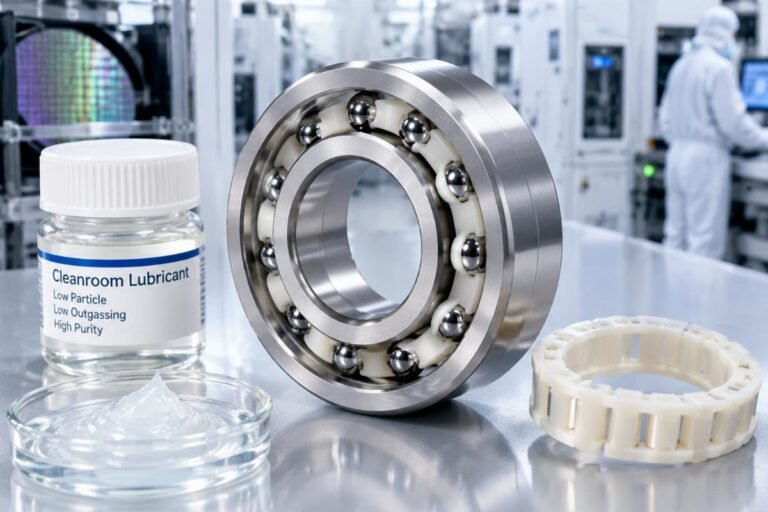
CT Gantry Bearings: Genuine SKF/FAG/NSK Wholesale Supplier
Selecting genuine CT Gantry Bearings with verified traceability prevents micro-vibration failures and image artifacts in medical scanners. Avoid refurbished parts that compromise internal clearance specifications, ensuring stable high-speed rotation and zero diagnostic errors through precise OEM-compliant sourcing.


CT Gantry Bearings: Genuine SKF/FAG/NSK Wholesale Supplier
A bearing that fits the housing can still destroy a CT scanner.
Selecting genuine high-precision bearings with original clearance specifications and verified traceability is the only way to ensure zero artifacts and stable rotation in medical imaging equipment. Substituting refurbished or non-original parts leads to immediate micro-vibration failures, regardless of dimensional accuracy.
I still remember the silence in the commissioning room when a batch of newly assembled CT gantries failed their final quality check. The machine looked perfect on the outside, but the reconstructed images were riddled with streaks. We dismantled the rotor assembly and found the culprit: bearings that matched the outer diameter and width perfectly but had been reground to alter their internal clearance. The high-speed rotation amplified these microscopic inconsistencies into visible artifacts. This was not a manufacturing defect in the scanner design; it was a sourcing error. In the world of medical imaging, the limit speed and rigidity of CT Gantry Bearings are not just mechanical specs—they are the foundation of diagnostic accuracy. [NEED_CITE: ISO standards for precision bearing vibration levels in medical applications]
The transition from mechanical fit to functional reliability is where most procurement strategies fail. Understanding why requires looking beyond the catalog dimensions and into the physics of high-speed rotation.
Why Do CT Gantry Bearings Fail Prematurely?
Internal clearance mismatch and limit speed incompatibility are the primary drivers of premature failure and image artifacts in CT scanners.
When a CT scanner operates, the gantry rotates at high speeds to capture cross-sectional images. This rotation must be perfectly smooth. Any deviation, no matter how small, translates into noise in the data stream. I have seen countless cases where maintenance teams replaced worn bearings with units that shared the same part number but lacked the specific internal clearance required for high-speed operation. The result was always the same: excessive heat generation, rapid cage wear, and eventual seizure.
The root cause often lies in the misunderstanding of “fit.” A bearing may fit the shaft and housing mechanically, but if the internal play is too loose or too tight for the operating temperature and speed, it will fail. Original equipment manufacturers design these systems with precise thermal expansion calculations in mind. Using a bearing with standard commercial clearance instead of the specified precision clearance disrupts this balance. [NEED_CITE: Technical guidelines on thermal expansion effects in high-speed rotating machinery]
In one instance, a regional distributor supplied what they claimed were premium bearings for a hospital’s service contract. The bearings were genuine in brand but had been stored improperly and showed signs of minor corrosion that had been polished away. Under low-speed testing, they seemed fine. But at full operational RPM, the slight surface irregularities caused harmonic vibrations. The scanner’s software interpreted these vibrations as patient movement, leading to blurred images and repeated scans. The cost of re-scanning patients far exceeded the savings from using discounted stock. This highlights why CT Gantry Bearings must be sourced with strict attention to their history and storage conditions, not just their brand name.

Critical Parameters for CT Rotation Bearings
High rigidity and limit speed performance depend entirely on maintaining original clearance and preload specifications, not just dimensional accuracy.
Selecting the right bearing involves more than matching the bore size. For CT gantries, angular contact ball bearings are commonly used due to their ability to handle combined radial and axial loads while maintaining high rotational precision. The key parameter here is the preload. Preload eliminates internal clearance, increasing stiffness and reducing vibration. However, incorrect preload can lead to catastrophic overheating.
When evaluating CT Gantry Bearings, engineers must look at the dynamic load rating and the limiting speed. These values are interdependent. A bearing with a high load rating but poor cage design may not sustain the required RPM without generating excessive friction. The cage material and design play a crucial role in guiding the rolling elements at high speeds. Hybrid ceramic balls are sometimes used to reduce weight and centrifugal force, but the steel races must still meet stringent purity standards to prevent fatigue spalling. [NEED_CITE: Material science studies on fatigue life of bearing steels under high-cycle loading]
I recall working with an OEM developing a new high-slice-count scanner. Their initial prototype suffered from slip ring wear after only a few hundred hours of testing. The issue was not the slip ring itself but the bearing stiffness. The selected bearings had insufficient rigidity, allowing minute deflections under load that misaligned the slip ring contacts. By switching to a paired angular contact configuration with higher preload, the rigidity increased, and the wear issue disappeared. This case underscores that CT Gantry Bearings must be selected as a system component, considering their interaction with adjacent parts like slip rings and encoders.
| Parameter | Commercial Grade Bearing | Precision Medical Grade Bearing | Impact on CT Performance |
|---|---|---|---|
| Internal Clearance | Standard (C3/C4) | Specific Precision (C2/C3 or Custom) | Determines thermal stability and vibration levels |
| Surface Finish | Standard Grind | Super Finish | Affects noise generation and lubricant film integrity |
| Cage Design | Standard Steel/Polymer | High-Speed Optimized Polymer/Phenolic | Controls rolling element stability at limit speeds |
| Traceability | Batch Level | Individual Serial Number | Ensures authenticity and prevents counterfeit usage |

How to Verify Bearing Authenticity & Traceability
Verifying the authenticity of SKF, FAG, and NSK bearings requires rigorous documentation checks and physical inspection, as refurbished units often mimic new appearance.
The market for medical bearings is plagued by counterfeits and refurbished goods sold as new. A refurbished bearing may look pristine after cleaning and polishing, but its microscopic geometry is compromised. Once installed in a high-speed CT gantry, these hidden defects manifest as premature failure. I have learned to distrust any supplier who cannot provide complete traceability documents linking the bearing back to the original manufacturer’s production batch.
Authenticity verification starts with the packaging and labeling. Genuine SKF, FAG, and NSK products have specific security features, including holograms and unique serial numbers. However, sophisticated counterfeiters can replicate these. The most reliable method is to request the certificate of conformity and the material test report from the supplier. These documents should match the batch number on the bearing box. [NEED_CITE: Industry best practices for anti-counterfeit verification in industrial supply chains]
In my experience, a simple visual inspection can reveal much. Look for signs of repackaging, such as mismatched fonts on labels or poor-quality printing. Check the bearing itself for any signs of previous use, such as slight discoloration on the raceways or wear marks on the cage. If a deal seems too good to be true, it usually is. Buying CT Gantry Bearings from unauthorized sources risks introducing substandard components into critical medical equipment. We maintain a strict policy of sourcing only from authorized channels or directly from trusted global inventories with verifiable histories. This ensures that every bearing we supply meets the original manufacturer’s specifications.

Selection Guidelines for OEMs & MRO Buyers
Precise matching of bearing type to operational工况 is essential for both new equipment design and maintenance replacement to avoid parameter mismatch.
For OEMs designing new CT scanners, the selection process begins with defining the operational profile. What is the maximum rotation speed? What are the radial and axial loads? How critical is noise reduction? Angular contact ball bearings are the standard choice for their versatility, but crossed roller bearings may be preferred for applications requiring extreme rigidity and compact design. The choice depends on the specific architectural constraints of the gantry.
MRO buyers face a different challenge: replacing failed bearings in existing machines. Here, the goal is to restore original performance. It is tempting to opt for cheaper alternatives or refurbished units to cut costs. However, as noted earlier, this often leads to higher long-term costs due to downtime and repeat failures. When sourcing CT Gantry Bearings for replacement, always refer to the original equipment manual for the exact specification, including clearance class and preload level. Do not assume that a generic equivalent will perform identically.
We support both OEMs and MRO clients by providing technical consultation on model selection. Our inventory includes a wide range of genuine SKF, FAG, and NSK bearings, allowing us to fulfill urgent orders without compromising on quality. Whether you need a single unit for emergency repair or a bulk order for production, our focus remains on delivering authentic, traceable products. This approach minimizes the risk of equipment failure and ensures consistent imaging quality for healthcare providers.

Conclusion
Precision in medical imaging demands precision in component sourcing.
The reliability of a CT scanner hinges on the integrity of its rotating components. Choosing genuine CT Gantry Bearings with verified traceability and correct specifications is not an option but a necessity. By prioritizing authenticity and technical compatibility over short-term cost savings, healthcare facilities and manufacturers can ensure uninterrupted service and diagnostic accuracy.
Tagged

Written by
author
Editor covering global sourcing, supplier verification, and industrial product knowledge. Content is compiled from manufacturer specifications, industry standards, and hands-on experience with international B2B buyers. Every article is fact-checked before publishing to help procurement professionals make informed decisions.