Genuine Polish Kraśnik Bearings & Global Brands Wholesale Supplier
Stop assuming dimensional parity equals performance when sourcing Polish Bearing Brands Kraśnik alternatives. Match internal specs like cage material and clearance class to harsh conditions to prevent costly failures. Compare dynamic load ratings and verify authenticity to choose reliable European or Chinese equivalents for heavy industry.

Genuine Polish Kraśnik Bearings & Global Brands Wholesale Supplier
Dimensional parity does not equal performance parity.
Replacing premium European brands like Kraśnik requires matching internal specifications such as clearance and cage material to harsh operating conditions, not just verifying external dimensions. A bearing that fits the housing but fails under thermal stress or heavy load is a costly mistake, not a saving.
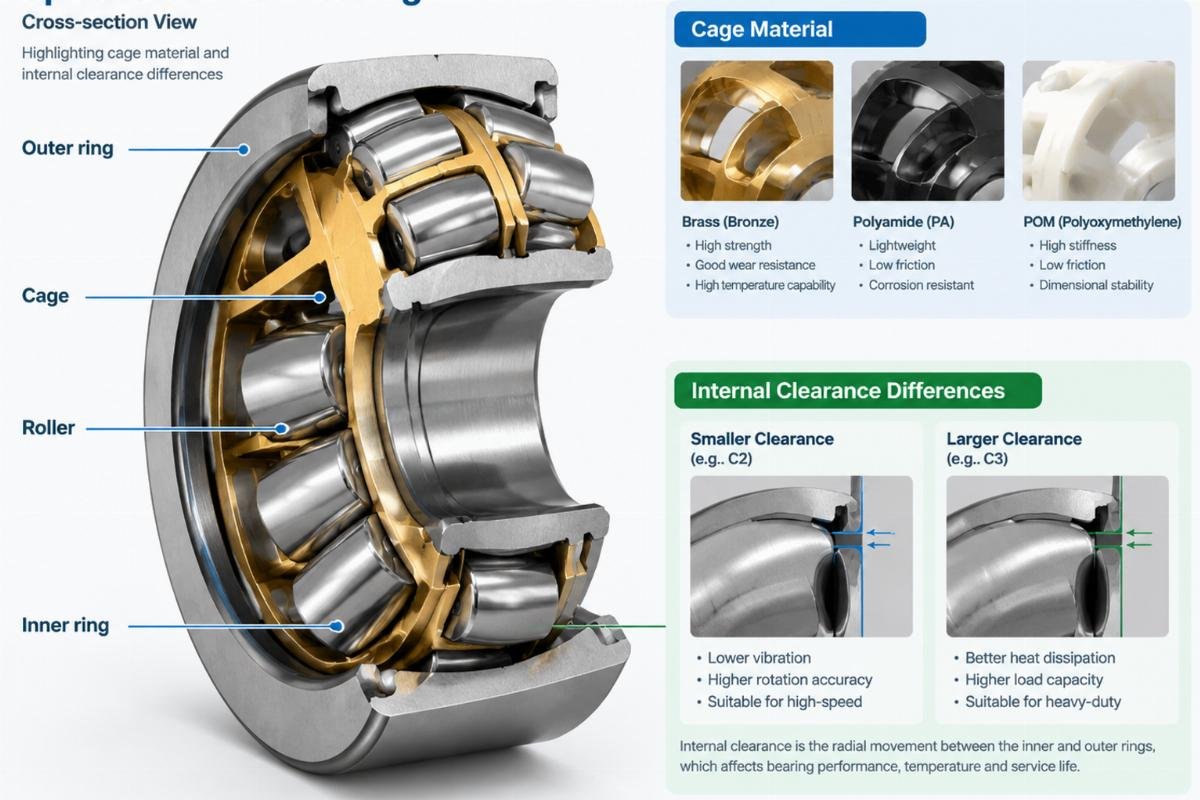
I still remember the humidity in the Riyadh cement plant workshop. The client needed an urgent replacement for a spherical roller bearing on a kiln drive. They specified a European brand, and I supplied a batch of Polish Kraśnik bearings. The outer diameter, inner diameter, and width matched perfectly. The installation went smoothly. Two months later, the line stopped. The bearing had seized. When we dismantled it, the steel cage had deformed due to high temperatures, causing catastrophic failure. The dimensions were correct, but the cage material was not rated for that specific thermal threshold. That incident shifted my entire approach to sourcing. Now, when clients ask for a Polish Bearing Brands Kraśnik alternatives, I do not just look at the part number. I look at the application environment.
This experience is common in heavy industry. Buyers often assume that if a bearing fits, it will work. However, the internal geometry dictates lifespan. To find a reliable Kraśnik bearing equivalent, one must understand why dimensional equivalence is insufficient and how to build a specification comparison that accounts for real-world stresses.
Why Do Kraśnik Alternatives Fail in Heavy Industry?
Most failures stem from ignoring internal specifications like cage material and clearance class.
When sourcing a European bearing alternative for cement plant applications or similar heavy industries, the primary risk is assuming that all bearings with the same ISO dimensions perform identically. They do not. The external dimensions are standardized, but the internal design varies significantly between manufacturers and even between product lines within the same brand.
In the cement industry, temperatures can fluctuate dramatically. A standard steel cage may suffice for general machinery, but in a high-heat environment, it can expand and lose its structural integrity. Polymer cages or specialized brass alloys are often required to maintain stability. If a substitute bearing uses a standard cage where the original used a heat-resistant variant, failure is inevitable. [NEED_CITE: thermal expansion coefficients of bearing cage materials]
Similarly, internal clearance is critical. In mining conveyor pulleys, heavy loads and shaft deflection require specific clearance classes, such as C3 or C4. Using a bearing with standard C0 clearance in such an application leads to premature wear because the rolling elements cannot accommodate the misalignment and thermal expansion. The result is brinelling and early fatigue. [NEED_CITE: ABMA guidelines on internal clearance selection for heavy loads]
A case from a steel mill illustrates this point. The operator replaced worn rollers with a cheaper alternative that matched the dimensions. However, the substitute lacked the necessary case depth and core hardness. Under the extreme pressure of steel rolling, the raceways suffered from brinelling within weeks. The cost of downtime far exceeded the savings on the bearing itself. This is why identifying a true Kraśnik bearing equivalent involves more than checking a catalog; it requires understanding the metallurgy and design intent behind the original component.

How to Build a Reliable Specification Comparison Matrix?
Compare dynamic load, limit speed, and cage type, not just outer and inner diameters.
To avoid the pitfalls of simple dimensional matching, buyers should construct a specification comparison matrix. This tool ensures that every critical parameter is evaluated before selecting a Polish spherical roller bearing supplier or any other alternative. The matrix should include dimensions, but it must also cover performance metrics that affect longevity.
| Parameter | Original Spec (Example) | Substitute Spec (Check) | Impact of Mismatch |
|---|---|---|---|
| Dimensions (ID/OD/W) | ISO Standard | Must Match Exactly | Fitment failure |
| Dynamic Load Rating | High | Must Meet or Exceed | Premature fatigue |
| Limit Speed | Specific RPM | Must Meet Application | Heat generation |
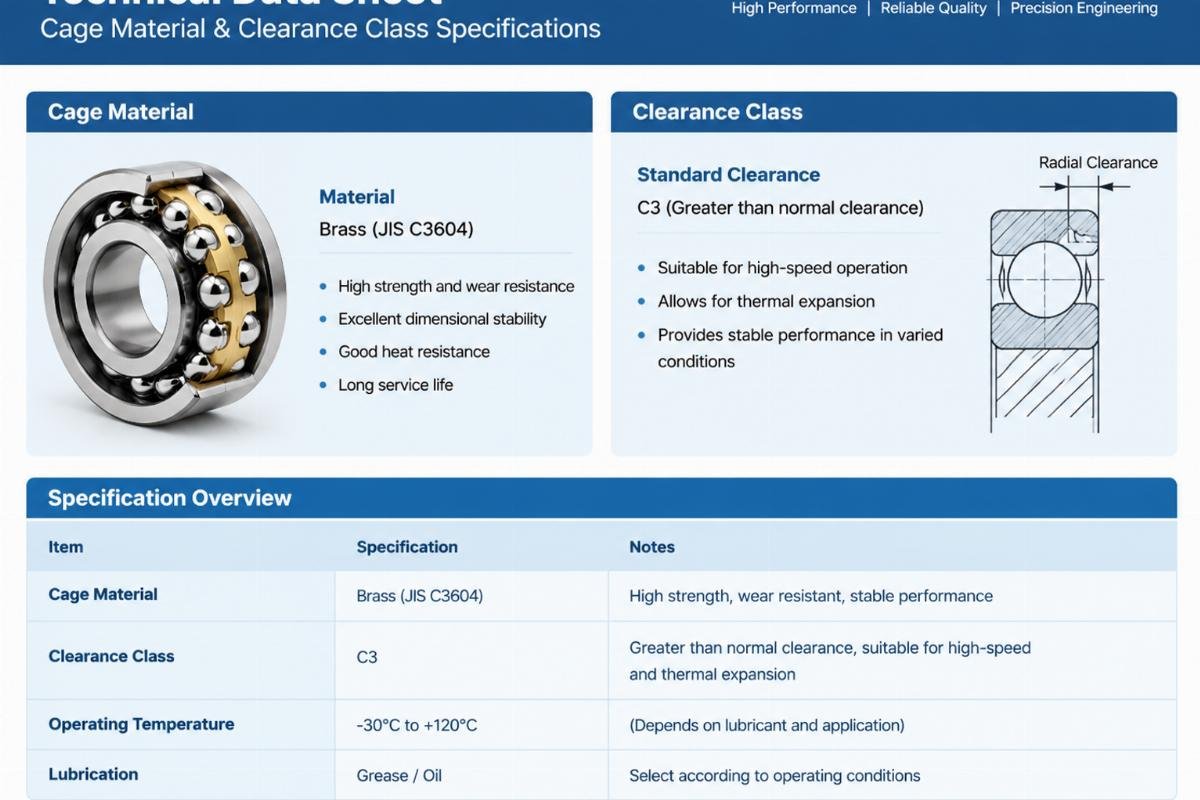
| Cage Material | Brass/Polymer | Must Match Environment | Thermal deformation |
| Clearance Class | C3/C4 | Must Match Load/Temp | Seizure or play |
| Lubrication Type | Specific Grease | Compatible | Chemical breakdown |
This table highlights the key areas where substitutes often fall short. For instance, a bearing might have a higher dynamic load rating but a lower limit speed. If the application involves high rotational speeds, the substitute could overheat despite its load capacity. [NEED_CITE: ISO standards for bearing load and speed ratings]
Another critical factor is the cage material. As seen in the cement plant example, a mismatch here can be disastrous. Some alternatives use stamped steel cages to cut costs, while the original may have used machined brass for better durability. Verifying this detail requires asking the supplier for technical datasheets, not just commercial invoices.
When evaluating a Kraśnik vs SKF bearing or any other premium brand comparison, focus on these internal specs. A reliable supplier will provide this data transparently. If they cannot specify the cage material or clearance class, the risk of failure increases significantly. This matrix serves as a checklist during the procurement process, ensuring that no critical detail is overlooked.
What Are the Best Global Alternatives to Polish Brands?
Premium Western brands offer top-tier performance, while quality Chinese lines provide optimal cost-efficiency.
The market for Polish Bearing Brands Kraśnik alternatives is divided into two main categories: premium global brands and high-quality Asian manufacturers. Each has its place depending on the application’s criticality and budget constraints.
Premium brands like SKF, FAG, and TIMKEN are known for their consistent quality and advanced engineering. They are the go-to choice for critical applications where downtime is not an option, such as in wind farms or high-speed rail. These brands invest heavily in research and development, resulting in bearings with superior fatigue resistance and precision. [NEED_CITE: industry reports on bearing brand market share and reliability]
However, the cost of these premium brands can be prohibitive for less critical applications or for businesses operating on tight margins. This is where reliable Chinese bearing lines, such as ZWZ, HRB, and LYC, come into play. Over the past decade, these manufacturers have significantly improved their quality control and production capabilities. Many now produce bearings that meet international standards and offer a compelling balance of performance and price.
For a regional distributor stocking multi-brand bearings, offering both tiers is essential. Premium brands cater to clients who prioritize absolute reliability, while Chinese brands serve those looking for cost-effective solutions for general machinery. The key is to source genuine products from authorized channels to ensure consistency. Counterfeit bearings, regardless of the brand name, pose a significant risk.
When considering a European bearing alternative for cement plant operations, it is crucial to verify the manufacturer’s certification and quality assurance processes. A reputable supplier will have access to genuine products from both premium and value-oriented brands, allowing them to recommend the best option based on the specific operational requirements. This flexibility enables buyers to optimize their maintenance budgets without compromising on safety or performance.

How to Verify Bearing Authenticity and Quality?
Demand traceability documents and conduct strict incoming QC to avoid counterfeit failures.
The prevalence of counterfeit bearings in the global market makes verification a critical step in the procurement process. Whether sourcing a Kraśnik bearing equivalent or a premium brand like NSK or NTN, ensuring authenticity is paramount. Counterfeit bearings often look identical to genuine ones but lack the material quality and precision engineering required for heavy-duty applications.
Traceability documentation is the first line of defense. Genuine bearings come with certificates of origin, material test reports, and batch numbers that can be verified with the manufacturer. A reliable supplier will provide these documents without hesitation. If a supplier cannot provide traceability, it is a red flag. [NEED_CITE: best practices for bearing supply chain security]
Incoming quality control is equally important. Visual inspection can reveal obvious signs of counterfeiting, such as poor packaging, misspelled labels, or rough finishing. However, more sophisticated tests may be required for critical applications. These can include hardness testing, dimensional verification, and even microscopic analysis of the steel structure. While these tests are not always feasible for every order, spot-checking high-value or critical components is a wise investment.
For MRO buyers and end-site operators, establishing a relationship with a trusted supplier is the most effective way to mitigate risk. A supplier with a long track record and a reputation for integrity will prioritize delivering genuine products. They will also offer technical support to help select the right bearing for the application, reducing the likelihood of failure due to incorrect specification.
When searching for a Polish spherical roller bearing supplier, look for partners who emphasize transparency and quality assurance. They should be willing to discuss their sourcing channels and quality control processes openly. This level of openness is a strong indicator of reliability and commitment to customer success.

Conclusion
Matching internal specs to工况 is the only way to ensure reliable performance.
Replacing bearings in heavy industry requires a deep understanding of more than just dimensions. By focusing on internal specifications like clearance and cage material, buyers can avoid costly failures and extend equipment life. Whether choosing premium global brands or quality Chinese alternatives, verification and technical consultation are key to making the right choice. A thoughtful approach to sourcing ensures that every bearing delivers the performance and reliability needed to keep operations running smoothly.
Tagged

Written by
author
Editor covering global sourcing, supplier verification, and industrial product knowledge. Content is compiled from manufacturer specifications, industry standards, and hands-on experience with international B2B buyers. Every article is fact-checked before publishing to help procurement professionals make informed decisions.


