INA Needle Bearings & Alternatives: Wholesale Supplier
Source reliable INA needle bearings alternatives by verifying critical dimensions and load ratings instead of relying on part numbers. Prevent customs delays with complete traceability documentation for mixed-brand shipments. Optimize procurement costs by combining genuine European brands with verified domestic equivalents for non-critical applications.

INA Needle Bearings & Alternatives: Wholesale Supplier
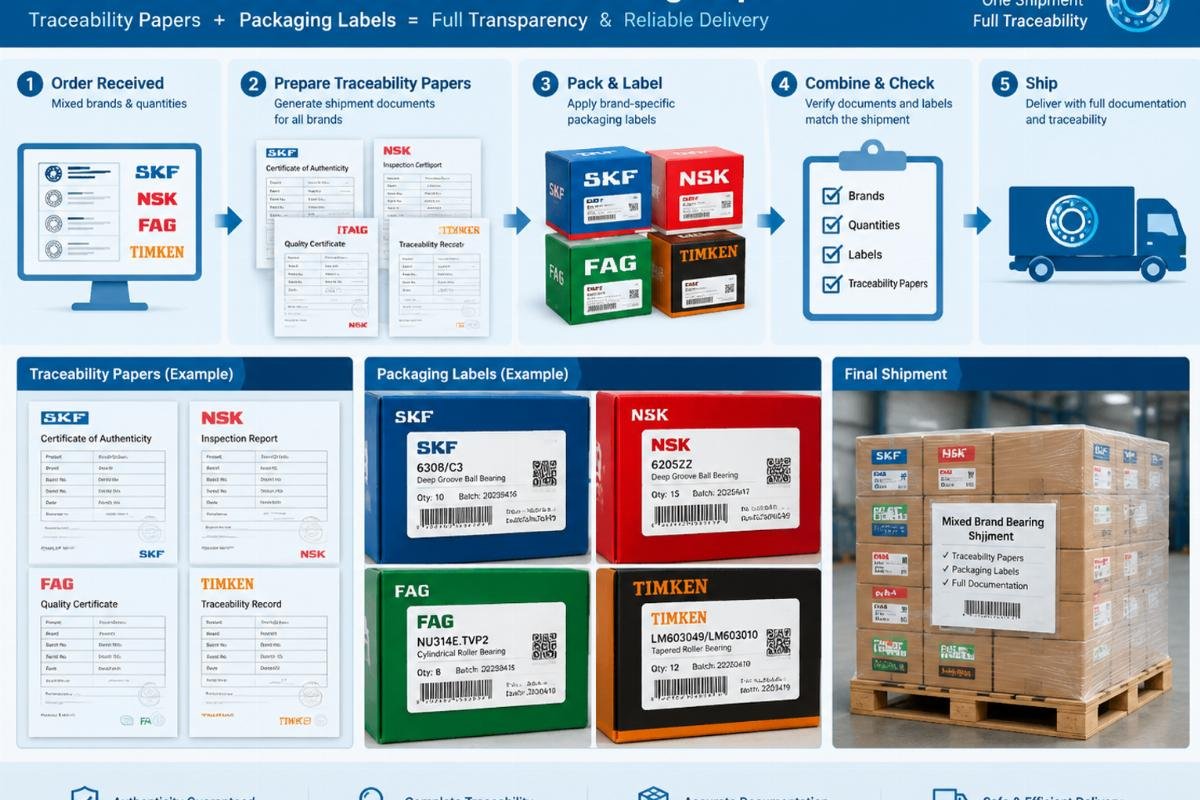
Most customs delays for needle bearings are not caused by counterfeit goods, but by mismatched packaging documentation and missing traceability papers for mixed-brand shipments.
Sourcing reliable INA needle bearings alternatives requires strict parameter verification of critical dimensions (Fw, D, C) and dynamic load ratings rather than simple part number cross-referencing. When combining genuine European brands with verified domestic equivalents, buyers must ensure ISO 492 tolerance compliance and complete original traceability documentation to prevent customs holds and maintain equipment reliability. This approach allows for cost-effective mixed-brand sourcing without compromising on quality or supply chain stability.
I still remember the panic in a client’s voice when a container of needle bearings sat idle at a Southeast Asian port for half a month. The shipment contained genuine INA units alongside domestic alternatives for a large-scale textile machinery overhaul. The issue was not the quality of the steel or the precision of the rollers. It was the paperwork. The alternative bearings, specifically those without inner rings, were packed in generic industrial boxes that did not match the detailed brand-specific labeling required by local customs for mixed-brand consolidation. The absence of clear brand authorization letters for the domestic components triggered a manual inspection that delayed the entire project. That incident shifted my focus from merely finding low-cost replacements to mastering the art of compliant, mixed-brand logistics. [NEED_CITE: common customs clearance issues for mixed-brand industrial components]
Navigating the complex landscape of INA needle bearings alternatives demands more than just a price comparison. It requires a deep understanding of how technical specifications align with regulatory requirements. For distributors and MRO buyers, the goal is to balance budget constraints with the non-negotiable need for operational continuity. By treating documentation as a critical component of the product itself, suppliers can offer a seamless sourcing experience that mitigates risk while delivering tangible cost savings.
What Defines Top European Needle Bearing Brands Like INA?
Precision and load capacity are the hallmarks of leading European brands, but strict quality control makes verified domestic alternatives viable for many non-critical applications.
European manufacturers like INA have built their reputation on consistent micron-level precision and robust dynamic load ratings. These bearings are engineered to withstand high-speed operations and heavy radial loads in demanding environments such as automotive transmissions and industrial gearboxes. The brand’s dominance stems from its adherence to rigorous internal standards that often exceed basic ISO requirements. However, this premium positioning comes with a higher price tag and longer lead times, especially during periods of global supply chain disruption. [NEED_CITE: market share and pricing trends for premium European bearing brands]
For many industrial applications, the extreme precision of top-tier European brands is not strictly necessary. Standard MRO replacements in agricultural machinery or general manufacturing often operate within tolerance ranges that well-established domestic manufacturers can reliably meet. The key distinction lies not in the fundamental material science, which has become increasingly standardized globally, but in the consistency of batch-to-batch production. European brands excel in maintaining uniformity across massive production runs, a feature that is critical for OEMs designing new machinery but less vital for single-unit replacements in existing equipment.

When evaluating INA needle bearings alternatives, it is essential to recognize that “alternative” does not mean “inferior.” It means “fit-for-purpose.” A verified domestic bearing that meets ISO 492 Class 0 tolerances can perform identically to a premium brand in a low-speed conveyor system. The challenge for buyers is identifying which suppliers have the quality control infrastructure to guarantee this consistency. This is where the role of a knowledgeable supplier becomes pivotal, acting as a filter to separate capable manufacturers from those who merely claim compliance.
How to Match INA Needle Bearings with Reliable Alternatives?
Cross-referencing requires exact matching of Fw, D, C dimensions and load ratings, not just part numbers.
A common mistake in sourcing INA needle bearings alternatives is relying solely on part number cross-reference tables provided by third-party databases. These tables often contain errors or outdated information that can lead to catastrophic equipment failure. The only reliable method is to verify the physical dimensions and performance parameters directly against the original equipment manufacturer’s specifications. The three critical dimensions for needle roller bearings are the shaft diameter (Fw), the outer diameter (D), and the width (C). Any deviation in these measurements, even within standard tolerance limits, can affect the fit and function of the bearing in its housing.
| Parameter | Genuine European Brand Specification | Verified Alternative Requirement | Risk of Mismatch |
|---|---|---|---|
| Shaft Diameter (Fw) | Strict ISO 492 Tolerance | Must match ISO 492 Class 0 or better | Loose fit causes vibration and premature wear |
| Outer Diameter (D) | Precision ground to micron level | Must match housing bore tolerance | Tight fit leads to housing distortion |
| Width (C) | Consistent across batches | Must match axial space constraints | Incorrect width affects preload and alignment |
| Dynamic Load Rating | Published based on ISO 281 | Must be verified via test reports | Lower rating results in early fatigue failure |
Beyond dimensions, the dynamic and static load ratings must be equivalent. A bearing that looks identical may have a significantly lower load capacity due to differences in steel purity or heat treatment processes. Requesting material certification and load test reports from the supplier is a non-negotiable step in the verification process. [NEED_CITE: ISO 281 standard for dynamic load ratings calculation]

In practice, this means engaging with suppliers who can provide detailed technical datasheets for their alternative products. A reputable supplier will not hesitate to share this information and will often assist in the selection process by comparing the specific application requirements against the available inventory. This technical diligence ensures that the alternative bearing is not just a cheap substitute, but a functional equivalent that meets the operational demands of the machinery.
Why Do Mixed-Bearing Shipments Get Stuck at Customs?
Missing traceability docs and inconsistent packaging for inner-ring-less bearings trigger holds; proper declaration is mandatory.
The logistical nightmare I encountered in Southeast Asia is not an isolated incident. Customs authorities worldwide are increasingly stringent about the importation of industrial components, particularly when shipments contain mixed brands. The primary concern is intellectual property rights and the prevention of counterfeit goods entering the market. When a container includes both genuine INA units and domestic alternatives, the documentation must clearly distinguish between the two. Failure to do so can result in the entire shipment being flagged for inspection, leading to significant delays and additional storage costs. [NEED_CITE: international customs regulations for branded industrial goods]
Packaging plays a crucial role in this process. Needle bearings without inner rings are often shipped in bulk or simple protective wrapping. If the packaging lacks clear branding or if the labeling does not match the commercial invoice exactly, customs officers may suspect that the goods are unbranded or counterfeit. For mixed-brand consolidations, it is essential to ensure that each brand’s products are packaged according to their respective standards and that the accompanying paperwork includes brand authorization letters for the domestic components.

To avoid these pitfalls, buyers should work with suppliers who specialize in mixed-brand consolidation and understand the nuances of international trade compliance. These suppliers can provide a complete set of traceability documents, including original purchase invoices, quality certificates, and brand authorization letters. By proactively addressing these documentation requirements, buyers can ensure smooth customs clearance and avoid the costly delays that can disrupt maintenance schedules and production timelines. This level of service is particularly valuable for distributors who need to move goods quickly across borders to meet urgent customer demands.
How to Optimize Sourcing Costs with Mixed-Brand Strategies?
Combining genuine INA for critical joints with verified alternatives for standard MRO balances budget and reliability.
The belief that single-brand sourcing is the safest option is a misconception that often leads to inflated procurement costs. A strategic mixed-brand approach allows buyers to allocate their budget more effectively by using premium European brands for critical, high-load applications and verified domestic alternatives for standard, low-risk replacements. This strategy not only reduces the total cost of ownership but also mitigates supply chain risks by diversifying the source of supply. [NEED_CITE: supply chain risk management strategies for industrial components]
For example, in a large mining operation, the main gearbox bearings might require the highest level of precision and reliability, making genuine INA bearings the preferred choice. However, for the auxiliary conveyors and support structures, where the operational stresses are lower, verified domestic alternatives can provide sufficient performance at a fraction of the cost. By consolidating these different types of bearings into a single shipment, buyers can achieve significant savings on freight and handling costs while maintaining the overall reliability of the equipment.

Implementing this strategy requires a supplier who can manage the complexity of mixed-brand orders. This includes verifying the equivalence of alternative products, ensuring consistent quality across different brands, and providing comprehensive technical support. The supplier acts as a single point of contact, simplifying the procurement process and reducing the administrative burden on the buyer. This holistic approach to sourcing transforms the supply chain from a cost center into a strategic asset that supports operational efficiency and financial performance. For wholesalers and distributors, offering this level of expertise can be a key differentiator in a competitive market.
Conclusion
Strategic mixed-brand sourcing, backed by rigorous parameter verification and compliant documentation, offers a sustainable path to cost optimization without compromising quality.
By focusing on technical equivalence rather than brand names alone, buyers can unlock significant value in their procurement processes. The key lies in partnering with suppliers who prioritize transparency, technical accuracy, and regulatory compliance. This approach ensures that every bearing, whether from a premium European brand or a verified domestic alternative, contributes to the reliability and efficiency of industrial operations.
Tagged

Written by
author
Editor covering global sourcing, supplier verification, and industrial product knowledge. Content is compiled from manufacturer specifications, industry standards, and hands-on experience with international B2B buyers. Every article is fact-checked before publishing to help procurement professionals make informed decisions.


