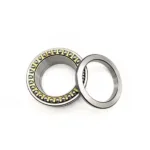
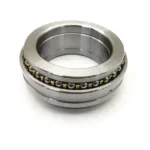
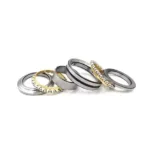
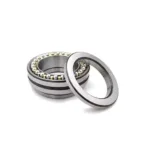
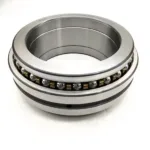
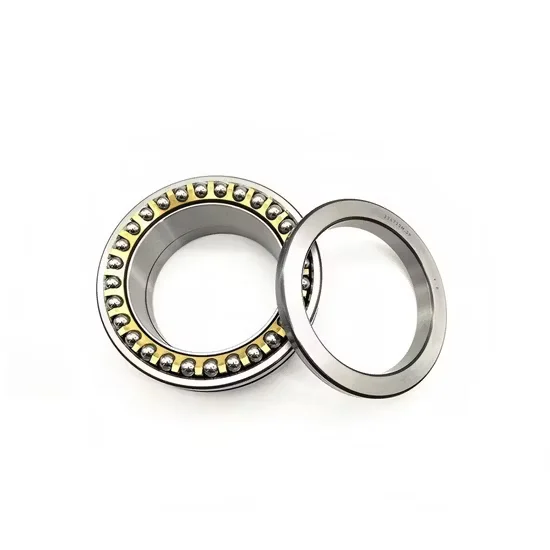
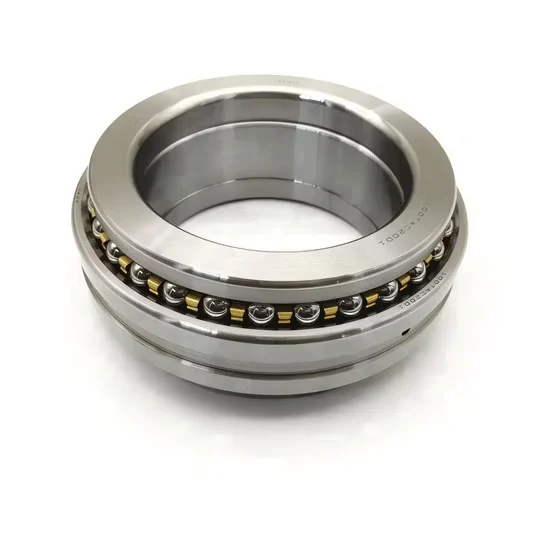
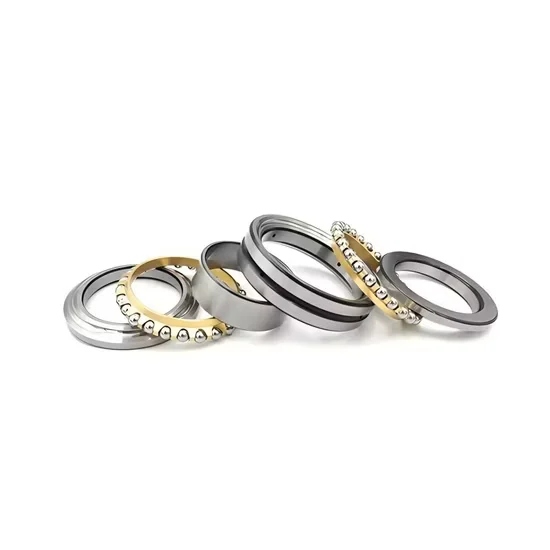
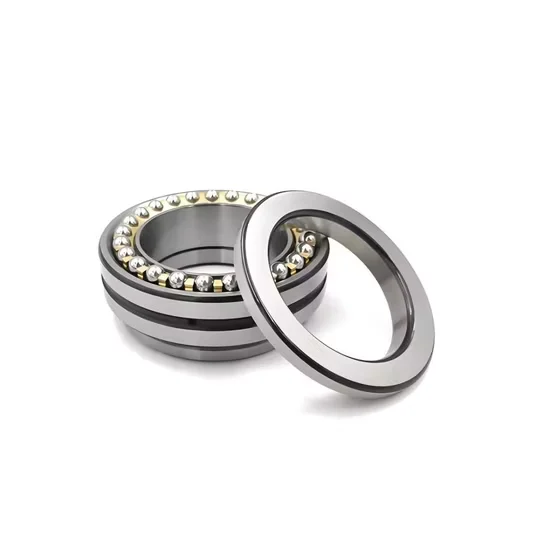
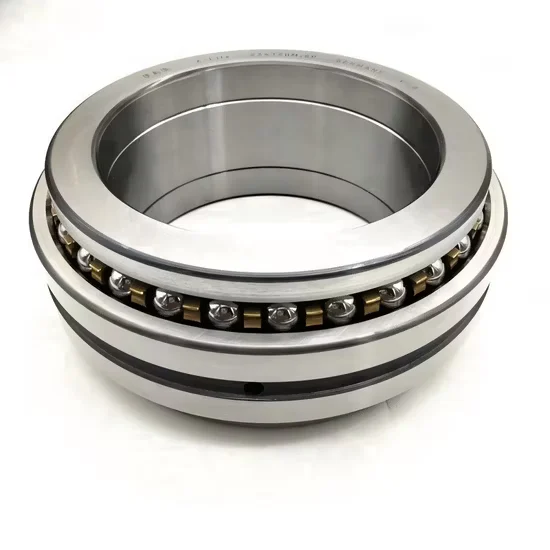
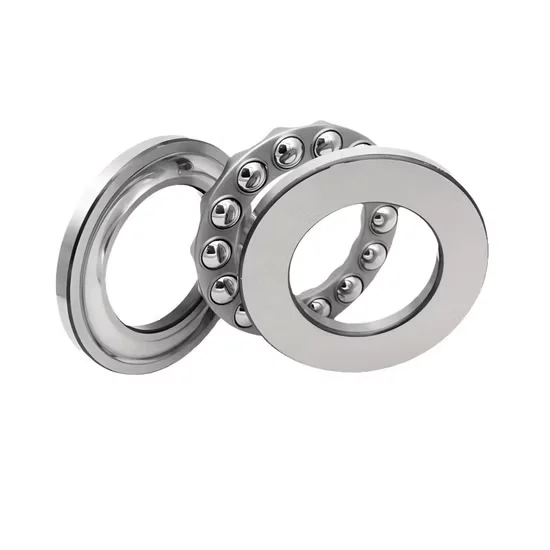
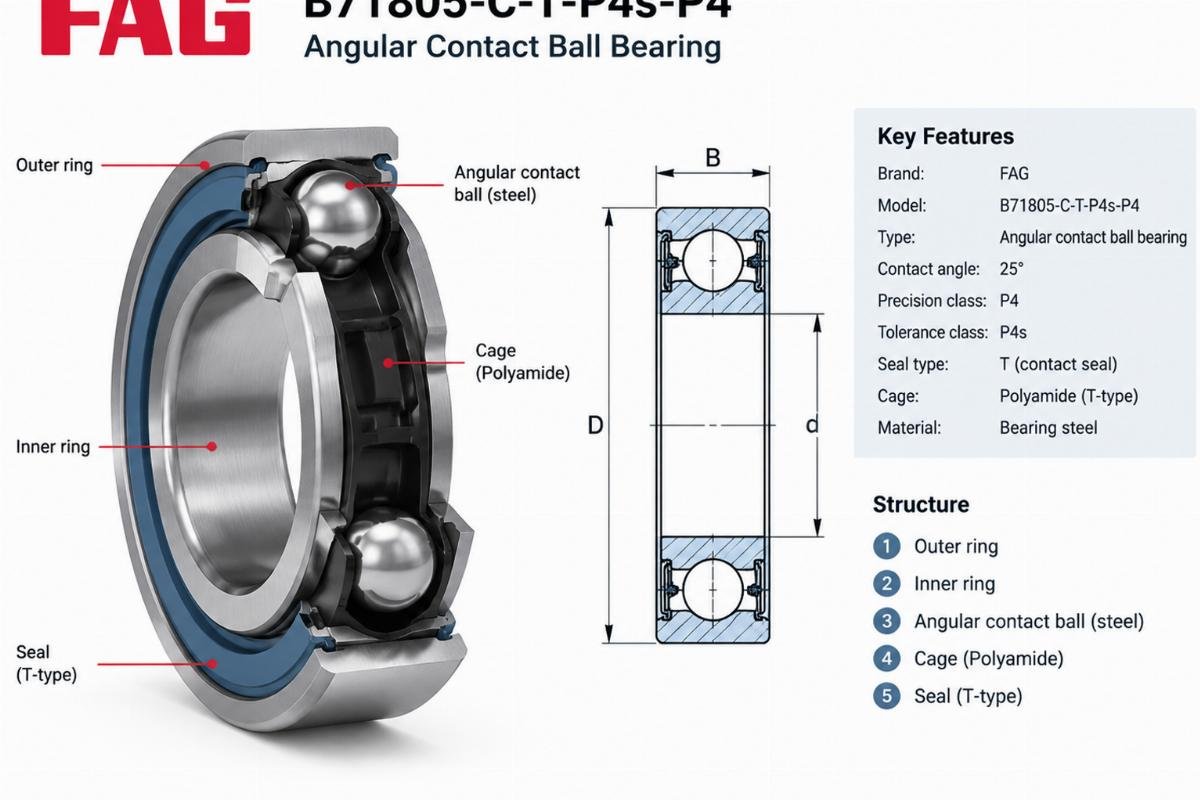
F AG B71805-C-T-P4s-P4 Angular Contact Ball Bearing P4
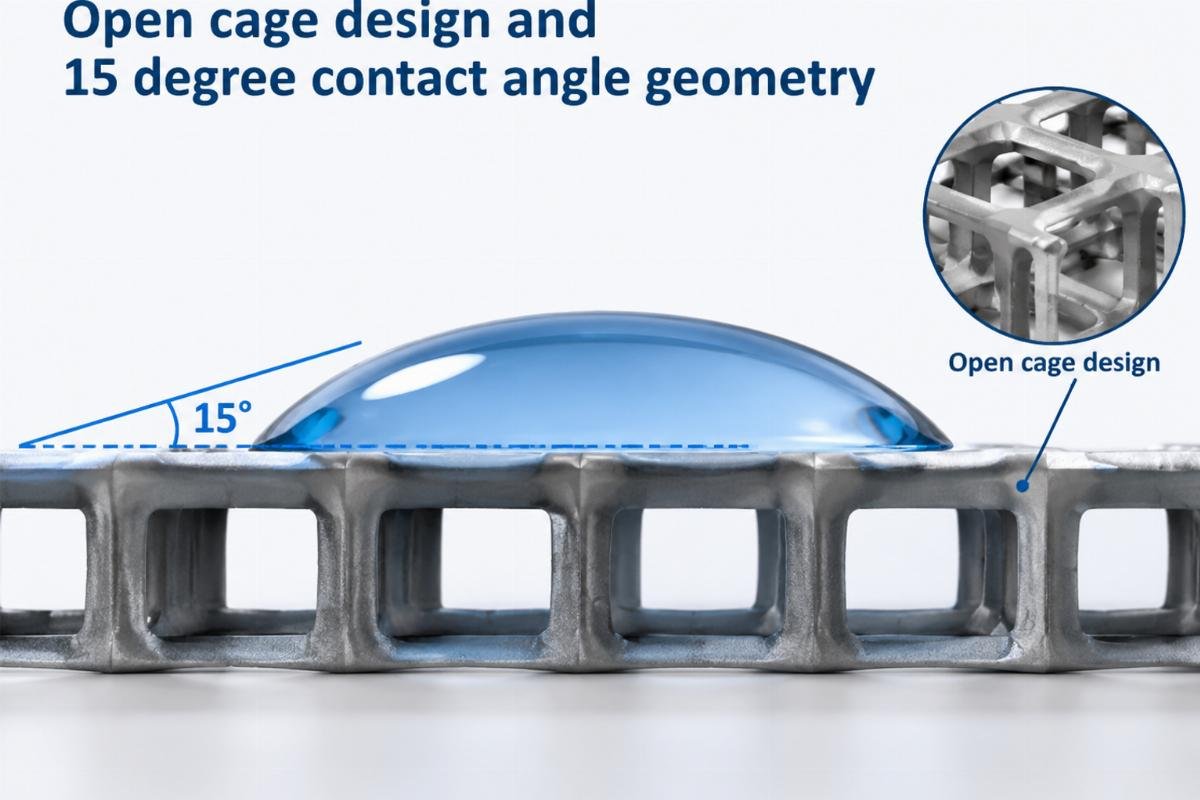
Features a 15° contact angle for optimized high-speed rotational accuracy and significantly reduced friction heat.
The P4 precision class ensures tight dimensional tolerances for demanding turbocharger and spindle environments.
Our supply ensures exact cross-reference alignment of precision class, cage design, and internal clearance to match your specific needs.
Official App QR Verification — Every F AG B71805-C-T-P4s-P4 shipment includes scannable traceability codes linking directly to the manufacturer’s origin database.
Technical Specifications
Parameter
Value
Designation
F AG B71805-C-T-P4s-P4
Bearing Type
Angular Contact Ball Bearing
Contact Angle
15° (C suffix)
Precision Class
P4 / P4s
Cage Material
Brass (M), Nylon (TN), Steel
Seal or Shield Type
Open
Material
Available in Gcr15 (SUJ2) bearing steel or ceramic hybrid variants
Rows Number
Single Row
Aligning
Non-Aligning Bearing
Note: Suffixes B, T, and P4s require manufacturer catalog confirmation for specific cage and tolerance variations.
High-precision robotic joints, Servo motor rotary encoders
Why Suffix Variations Dictate Turbocharger Survival for the FAG B71805-C-T-P4s-P4 angular contact ball bearing
Micro-tolerance deviations at high RPMs trigger catastrophic harmonic vibrations.
Early in my trading career, a batch shipped to a Dongguan turbocharger plant failed high-speed vibration tests simply because the P4 and P4s precision suffixes were treated as interchangeable. That single oversight led to a full batch rejection and taught me that in high-RPM environments, assuming standard tolerances is a critical error [NEED_CITE: rolling bearing failure mode classification per ISO 15243].
Matching Precision Tolerances to High-Speed Turbo Demands
When sourcing a FAG B71805-C-T-P4s-P4 angular contact ball bearing for turbocharger applications, the 15° contact angle provides the optimal balance between axial thrust capacity and minimal friction heat generation. Our engineering team cross-references these specific tolerance classes against OEM requirements to ensure the selected configuration handles extreme rotational speeds, whether you select standard steel or ceramic hybrid variants.
Navigating Thermal Expansion and Lubrication Starvation
Turbocharger shafts operate under intense thermal gradients, demanding open-type bearings that rely on precise external oil mist lubrication rather than sealed grease packs. At these elevated temperatures, the available Gcr15 bearing steel or ceramic options must maintain their structural integrity while the 15° contact angle mitigates axial displacement caused by thermal shaft elongation [NEED_CITE: thermal expansion effects on bearing internal clearance]. Inadequate lubrication or incorrect clearance selection rapidly accelerates cage wear and raceway spalling.
Decoding the Suffix Matrix for Spindle and Turbo Setups
The ‘C’ suffix confirms the 15° contact angle, which is essential for minimizing centrifugal forces on the rolling elements at extreme RPMs. Open sealing allows for unrestricted oil flow, which is mandatory for cooling in high-speed diesel engine turbos, while the non-aligning single-row design demands perfectly machined housing seats to prevent edge loading.
The Cascading Financial Impact of Tolerance Mismatches
Installing a standard precision bearing where a tighter tolerance is specified might seem like a minor procurement saving, but it inevitably results in unplanned downtime and catastrophic damage to the turbocharger impeller. According to ISO 281 frameworks, operating a precision bearing outside its designated tolerance envelope drastically reduces its calculated L10 life, leading to warranty voidance and expensive secondary repairs on the surrounding machinery [NEED_CITE: bearing life calculation methodologies per ISO 281].
Securing Authentic Traceability for Critical Precision Components
We maintain massive spot inventory of genuine components, specifically verifying the often-confused precision suffixes before dispatch to prevent the exact turbocharger failures I witnessed early in my career. Our sourcing model provides competitive pricing compared to direct channels while delivering complete batch traceability documentation. Furthermore, our technical team provides cross-brand equivalent model consultation if urgent maintenance requires immediate substitution without compromising the 15° contact angle or precision class.
Documentation & Authenticity
Certificate of Conformity verifying the exact running accuracy for this specific batch.
Original manufacturer batch traceability codes linking to the production facility.
Official app QR verification tags attached to each individual bearing box.
Material certification proving steel or ceramic composition for high-RPM fatigue resistance.
Storage, Handling & Mounting
Keep the open-type bearing in its original vapor-proof packaging until the exact moment of mounting to prevent micro-corrosion on the raceways.
Use lint-free cleanroom gloves when handling the exposed steel or ceramic components to avoid acidic skin oils etching the precision surfaces.
Verify the housing seat concentricity before pressing the non-aligning single-row bearing to avoid inducing internal preload distortions.
Follow the manufacturer’s specified oil mist lubrication protocols, as this open design lacks internal grease and relies entirely on external cooling.
Store the precision components in a climate-controlled environment away from heavy machinery vibrations that could cause false brinelling.
Engineering Review for Your Specific Rotational Setup
To ensure the selected configuration perfectly matches your turbocharger or spindle application, please share your exact radial and axial load profiles, operating RPMs, and thermal conditions. Providing the OEM equipment part numbers allows our team to perform a rigorous cross-reference check and confirm whether the tighter tolerance or a standard class is required for your specific L10 life targets.
Frequently Asked Questions
Q: How can I verify the authenticity of the received bearings?
A: Every unit features an official app QR verification code on the packaging. Scanning this code links directly to the manufacturer’s database, confirming the origin, batch number, and specific precision class. We also provide a physical Certificate of Conformity and original batch traceability documentation with every shipment.
Q: How should I interpret specific suffixes like P4s in the catalog?
A: While P4 denotes high precision, P4s specifies tightened running accuracy for spindle applications. Always consult the official manufacturer catalog to interpret specific suffix combinations, as assuming standard tolerances for high-speed turbochargers can lead to catastrophic harmonic vibrations and premature batch rejections.
Q: How does the 15° contact angle benefit turbocharger shafts?
A: The 15° contact angle, indicated by the C suffix, optimizes the balance between axial thrust capacity and rotational friction. At the extreme RPMs typical of diesel engine turbos, this geometry reduces centrifugal forces on the rolling elements, minimizing heat generation and ensuring stable shaft guidance under dynamic loads.
Q: Can I use sealed bearings instead of this open design?
A: No, turbocharger and high-speed spindle applications require open bearings to accommodate continuous oil mist or oil jet lubrication. Sealed bearings rely on internal grease, which would rapidly degrade and overheat at these extreme rotational speeds, leading to immediate lubrication starvation and catastrophic raceway failure.
Shipping Information
EU Warehouse
3-7 working days (bonded stock)
Direct from China
Shanghai & Ningbo hubs (bulk / FCL)
Markets Served
DE · IT · PL · ES · NL · FR · EU+
Incoterms
DDP / DAP available on request
Minimum Order
Contact us for MOQ details
Documents Included with Every Shipment
EN and ISO Quality Certificates
Batch traceability and manufacturing standard
Material & Heat-Treatment Reports
Full material composition and process records
CE Declaration of Conformity
For bearing units and motion products
RoHS Compliance Declaration
Restriction of hazardous substances
EUR.1 Movement Certificate
Preferential origin for EU customs
Certificate of Origin
Country of manufacture documentation
Correct HS Codes
Pre-classified for smooth customs clearance
Commercial Invoice & Packing List
VAT-compliant intra-EU invoicing
Transparent Landed Cost with Tax Explanation
SKFEU provides full price transparency so EU buyers know exactly what they pay. No hidden duties, no surprise charges at customs.
VAT-Compliant Invoicing
All intra-EU transactions are invoiced with correct VAT treatment. B2B buyers with valid EU VAT numbers receive zero-rated invoices where applicable.
No Unexpected Import Duties
Goods shipped from our EU bonded warehouse arrive as intra-EU movements -- no import duties, no customs delays for EU-based buyers.
EUR.1 & Origin Docs Ready
For shipments direct from China, EUR.1 movement certificates and certificates of origin are prepared in advance to minimise customs clearance time.
DDP Pricing Available
Ask for Delivered Duty Paid quotations -- we absorb all import costs so your landed cost is fixed and predictable from day one.
Need a landed cost breakdown? Contact Sofia at
sofia@skfeu.com
or via WhatsApp for a full DDP quotation including freight, duties and VAT for your country.
Send Inquiry
Request Pricing & Availability
Share your requirements and Sofia will respond within one working day with pricing, lead time and full documentation details.