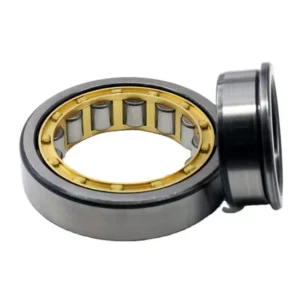
KOYO 7007 Angular Contact Ball Bearing for Machine Tools and Motors
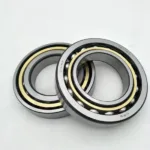
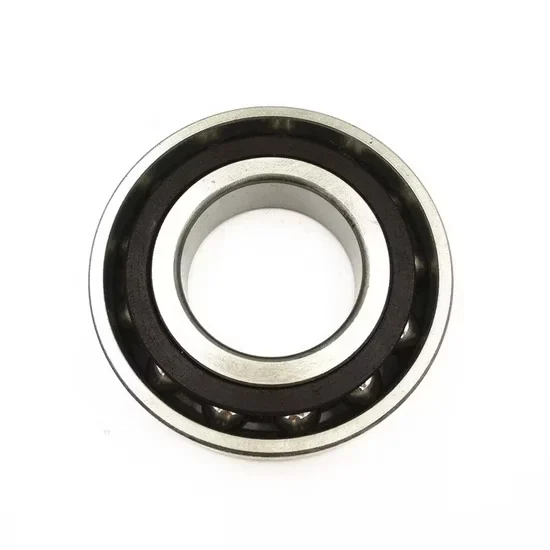
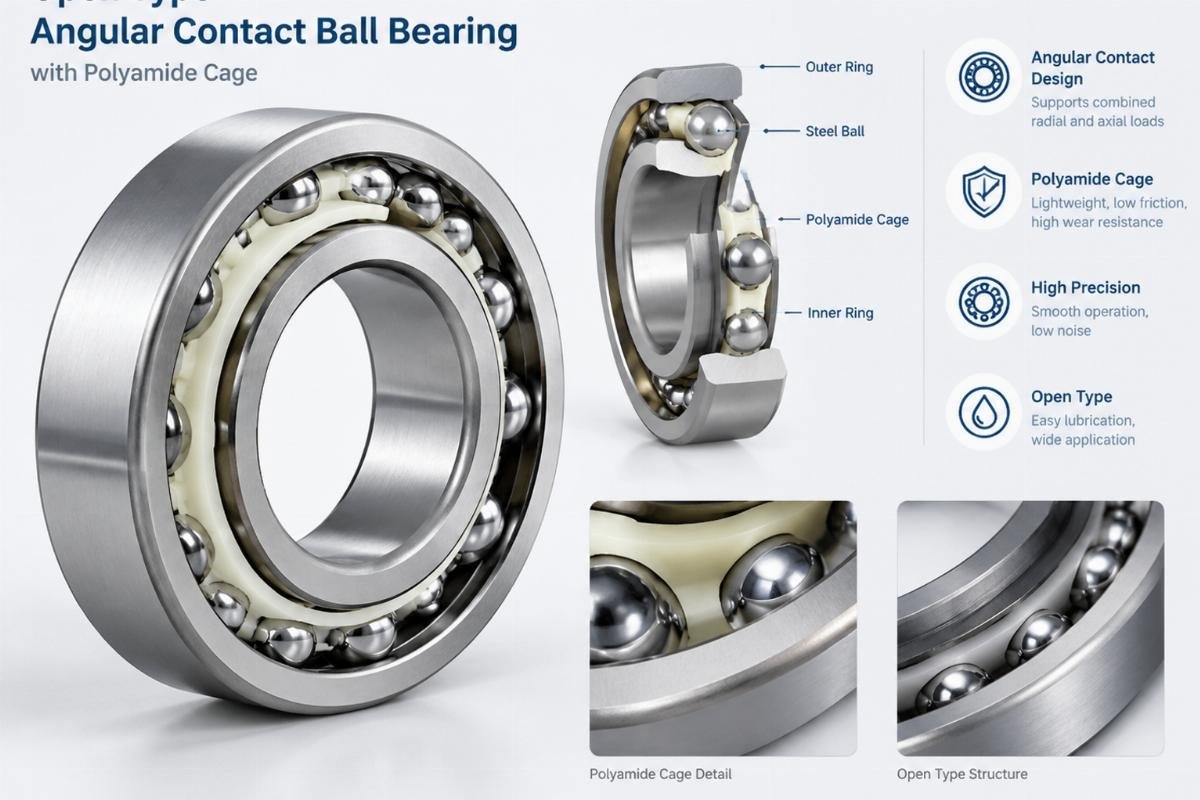
Ko Yo 7007 Angular Contact Ball Bearing — featuring an open seal design that requires external lubrication for optimal heat dissipation in high-speed machine tool spindles.
Manufactured with Gcr15 bearing steel and a polyamide cage to provide reliable structural durability under continuous operation.
Ensure cross-reference alignment of clearance, cage, and precision classes before ordering to guarantee exact specification matching.
Authenticity via QR scan — Every Ko Yo 7007 shipment includes original packaging with scannable verification codes to confirm factory origin.
Technical Specifications
Parameter
Value
Designation
Ko Yo 7007
Bearing Type
Angular Contact Ball Bearing
Material
Gcr15 Bearing Steel
Cage Material
Nylon (Polyamide)
Seal or Shield Type
Open
Contact Angle
Available in 15°, 25°, 30°, and 40° options
Clearance Class
C0, C1, C2, C3, C4, C5
Vibration Level
V1, V2, V3
Origin
Shandong, China
Application Suitability
Industry
Typical Applications
Machine Tool Manufacturing
High-speed spindle assemblies and precision rotary tables
Industrial Pumps & Compressors
Impeller shafts and high-speed rotor supports
Robotics & Automation
Precision joint actuators and servo motor bearings
Why Spindle Vibration Traces Back to the KOYO 7007 angular contact ball bearing Selection
Matching the exact clearance and precision class prevents thermal expansion from locking up the spindle.
During my early technical sales years in Brazil, a machine tool spindle overheated and generated excessive noise simply because the clearance and precision matching were overlooked during the initial assembly phase. When dealing with high-speed precision equipment, assuming any standard bearing will suffice leads to catastrophic thermal locking and ruined workpieces. Selecting the right KOYO 7007 angular contact ball bearing requires strict attention to the operational thermal profile and the specific lubrication method employed in the facility. [NEED_CITE: spindle thermal displacement caused by incorrect bearing clearance]
Aligning Polyamide Cages with High-Speed Spindle Demands
The open seal design and polyamide cage of this KOYO 7007 angular contact ball bearing make it highly suitable for oil-air or oil-mist lubrication systems common in machine tools. Our supply chain ensures that these specific high-speed variants are sourced directly from authorized channels, preventing the premature cage degradation often seen with counterfeit or misapplied components.
Managing Thermal Growth and Axial Thrust in Precision Motors
High-speed motor spindles generate significant internal heat, which directly impacts the internal clearance of the bearing during continuous operation. If the initial clearance is too tight, thermal expansion will eliminate the operating gap, leading to severe friction, elevated temperatures, and eventual seizure of the rotating assembly. Conversely, excessive clearance compromises the rotational accuracy required for precision machining, resulting in poor surface finishes on the final parts. Proper lubrication intervals and selecting the correct initial clearance class are critical to managing these complex thermal dynamics effectively. [NEED_CITE: relationship between operating temperature and internal bearing clearance]
Decoding Material and Cage Options for Rotational Accuracy
The use of Gcr15 bearing steel provides the necessary core hardness and fatigue resistance for continuous rotary motion under heavy operational loads. The nylon polyamide cage is specifically chosen for its low friction characteristics and its ability to maintain precise rolling element spacing at elevated rotational speeds without generating excessive heat. Furthermore, the availability of multiple contact angle options allows design engineers to carefully balance radial rigidity with axial thrust capacity depending on the specific spindle load profile. Open-type designs facilitate optimal heat dissipation and allow for customized external lubrication strategies adapted to the machine’s cooling system.
The Financial Impact of Overlooking Precision Tolerances
Installing a bearing with mismatched precision or incorrect clearance in a high-speed spindle results in unplanned downtime and scrapped workpieces. According to failure analysis frameworks, a significant share of premature failures in precision equipment stems from improper specification matching rather than material defects. This leads to warranty voidance and costly secondary damage to the spindle housing and adjacent seals. [NEED_CITE: rolling bearing failure mode classification per ISO 15243]
Securing Traceability for Critical Precision Components
Sourcing genuine components for high-speed applications requires more than just matching a basic part number on a purchase order. We provide complete batch traceability for every Ko Yo 7007 unit, ensuring the metallurgical properties and heat treatment strictly meet the original equipment manufacturer’s demanding standards. Our technical team cross-references your specific spindle requirements to verify the exact contact angle and clearance class, eliminating the guesswork that often leads to costly field failures. We also consolidate mixed-brand orders efficiently, allowing you to source both this precision component and other required maintenance parts in a single, consolidated shipment.
Documentation & Authenticity
Original factory batch traceability documents linking the Ko Yo 7007 to its specific production run.
Official app QR verification codes on outer packaging to confirm genuine manufacturer origin.
Material inspection reports validating the Gcr15 steel composition and heat treatment hardness.
Dimensional and running accuracy inspection reports confirming the specified precision class before dispatch.
Storage, Handling & Mounting
Keep the open-type Ko Yo 7007 in its original anti-corrosion packaging until the exact moment of mounting.
Use clean, lint-free gloves when handling the polyamide cage to avoid transferring skin oils.
Ensure the spindle housing is thoroughly cleaned before pressing the outer ring to maintain rotational accuracy.
Apply the specified spindle oil immediately after mounting, as the open design lacks factory pre-lubrication.
Preparing Your Technical Parameters for Selection Review
To ensure the selected Ko Yo 7007 perfectly matches your equipment, please provide the specific radial and axial loads, maximum operating speed, and expected thermal profile of your spindle. Sharing the original equipment manufacturer’s part number or machine model allows our engineering team to perform a precise cross-reference and verify the required contact angle and clearance class.
Frequently Asked Questions
Q: How can I verify the authenticity of the received components?
A: Every genuine KOYO 7007 angular contact ball bearing we supply features an official QR code on the packaging. Scanning this code via the manufacturer’s official application instantly verifies the production batch and origin, ensuring you receive authentic components with full metallurgical traceability for your critical spindle applications.
Q: What are the differences between the available contact angle options?
A: The available contact angles dictate the load distribution between radial and axial directions. A smaller angle provides higher radial rigidity suitable for standard spindle support, while a larger angle increases axial thrust capacity for applications with heavy directional loads, requiring careful matching to your specific machine tool dynamics.
Q: How do I select the correct clearance class for high-speed spindles?
A: High-speed operation generates internal heat, causing the inner ring to expand more than the outer ring. Selecting a slightly larger initial clearance class compensates for this thermal growth, preventing the bearing from locking up during operation while maintaining the necessary rotational precision for accurate machining.
Q: Why is a polyamide cage preferred for these high-speed applications?
A: The nylon polyamide cage offers a lower friction coefficient compared to metal alternatives, which minimizes heat generation at elevated rotational speeds. Its lightweight design also reduces centrifugal forces on the rolling elements, contributing to smoother operation and extended service life in precision machine tool spindles.
Shipping Information
EU Warehouse
3-7 working days (bonded stock)
Direct from China
Shanghai & Ningbo hubs (bulk / FCL)
Markets Served
DE · IT · PL · ES · NL · FR · EU+
Incoterms
DDP / DAP available on request
Minimum Order
Contact us for MOQ details
Documents Included with Every Shipment
EN and ISO Quality Certificates
Batch traceability and manufacturing standard
Material & Heat-Treatment Reports
Full material composition and process records
CE Declaration of Conformity
For bearing units and motion products
RoHS Compliance Declaration
Restriction of hazardous substances
EUR.1 Movement Certificate
Preferential origin for EU customs
Certificate of Origin
Country of manufacture documentation
Correct HS Codes
Pre-classified for smooth customs clearance
Commercial Invoice & Packing List
VAT-compliant intra-EU invoicing
Transparent Landed Cost with Tax Explanation
SKFEU provides full price transparency so EU buyers know exactly what they pay. No hidden duties, no surprise charges at customs.
VAT-Compliant Invoicing
All intra-EU transactions are invoiced with correct VAT treatment. B2B buyers with valid EU VAT numbers receive zero-rated invoices where applicable.
No Unexpected Import Duties
Goods shipped from our EU bonded warehouse arrive as intra-EU movements -- no import duties, no customs delays for EU-based buyers.
EUR.1 & Origin Docs Ready
For shipments direct from China, EUR.1 movement certificates and certificates of origin are prepared in advance to minimise customs clearance time.
DDP Pricing Available
Ask for Delivered Duty Paid quotations -- we absorb all import costs so your landed cost is fixed and predictable from day one.
Need a landed cost breakdown? Contact Sofia at
sofia@skfeu.com
or via WhatsApp for a full DDP quotation including freight, duties and VAT for your country.
Send Inquiry
Request Pricing & Availability
Share your requirements and Sofia will respond within one working day with pricing, lead time and full documentation details.