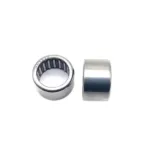
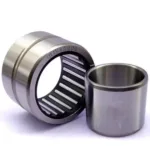
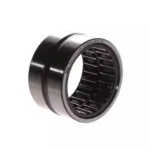
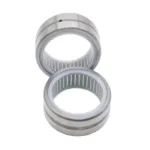
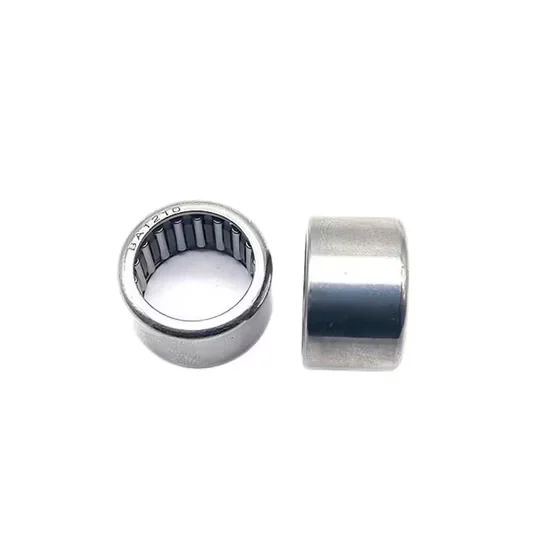
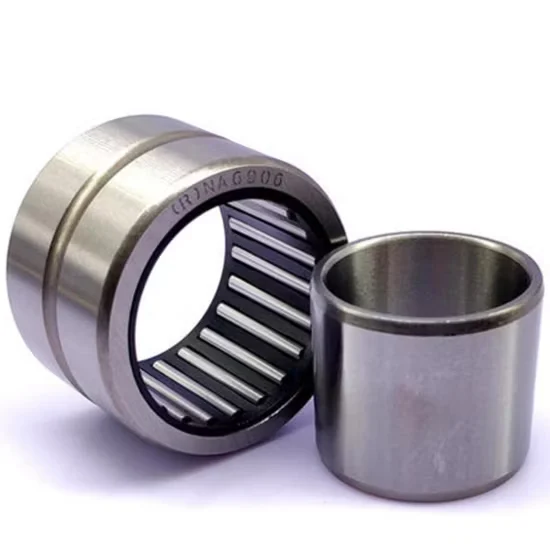
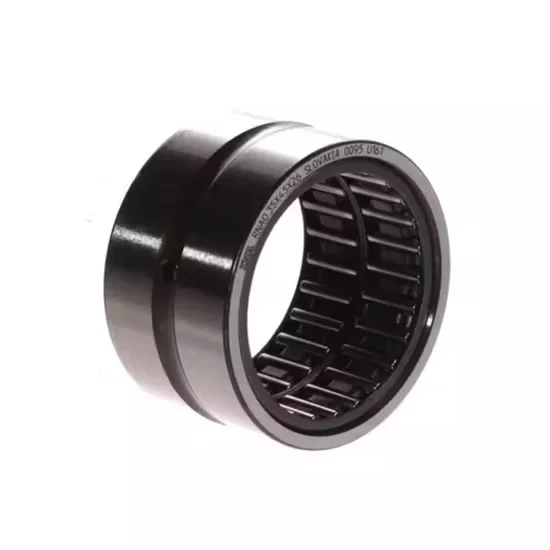
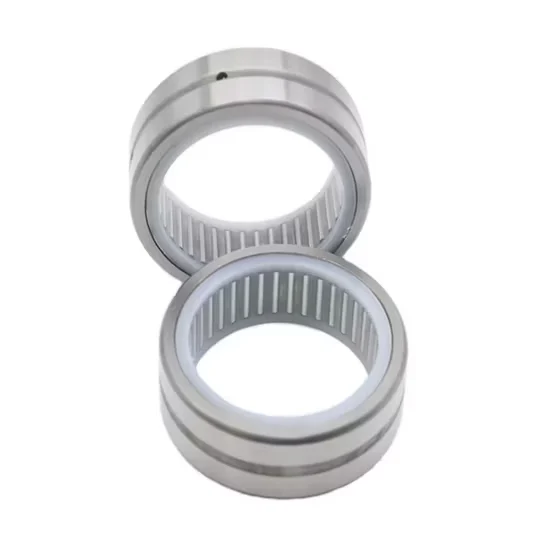
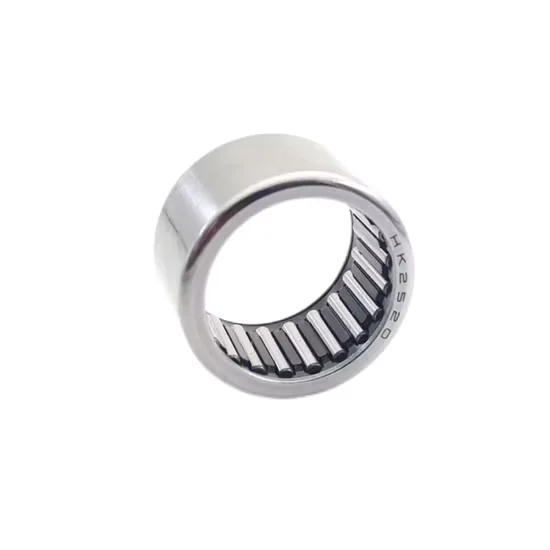
Nk43/20 Needle Roller Bearing 43x53x20mm Without Inner Ring Double Flanges
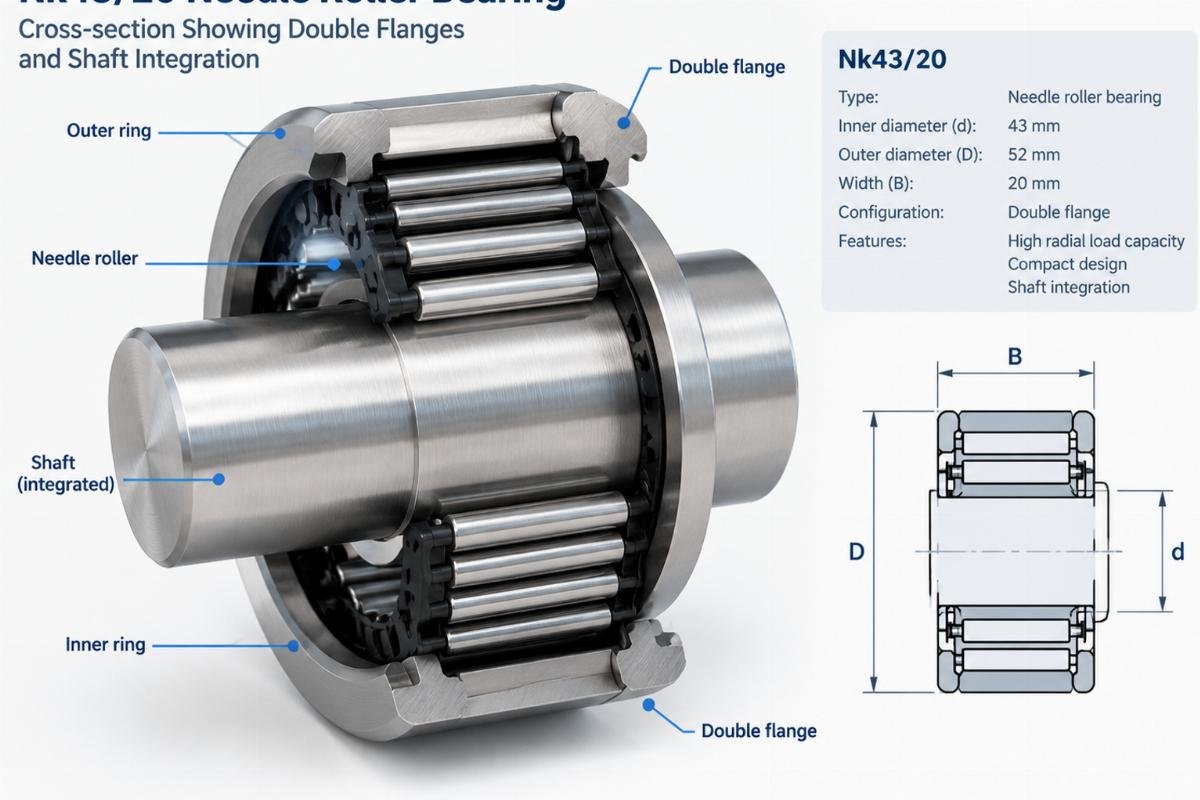
Nk43/20 Needle Roller Bearing 43×53×20 mm — NK series design without inner ring allows the shaft to serve as the inner raceway, minimizing radial space in compact assemblies. Chrome steel construction delivers reliable load capacity for gearboxes and machinery repair applications.
Ships with full documentation package including material certificates and dimensional inspection reports for complete batch traceability.
Replies within 1 working day · Dedicated account manager
Specifications
43x53x20mmAutomotive ComponentsGearboxesGenuine BearingNeedle Roller BearingNk43/20Without Inner Ring
Lead Time
3-7 working days
EU bonded warehouse · Fast-moving stock
Compliance
Full EU package
EN · ISO · CE · RoHS · EUR.1
Authenticity via QR scan — Every Nk43/20 needle roller bearing ships with a scannable traceability code linked to the original manufacturer’s database, ensuring immediate verification upon arrival.
Technical Specifications
Parameter
Value
Designation
Nk43/20
Product Type
Needle Roller Bearing
Bore Diameter (Fw)
43 mm
Outside Diameter (D)
53 mm
Width (B)
20 mm
Design
Without Inner Ring, Double Flanges
Material
Chrome Steel
Precision Class
P0 / P6 / P5
Feature
High Speed Low Noise
Application Suitability
Industry
Typical Applications
Gearboxes
Planetary gear sets and transmission shafts requiring compact radial profiles
Machinery Repair Shops
Replacement of worn spindle bearings in automated packaging lines
Automotive Components
Steering columns and rocker arm pivot points
Machine Tools
Feed mechanisms and indexing heads with tight radial space constraints
Why Shaft Hardness Dictates the Survival of Your Nk43/20 needle roller bearing
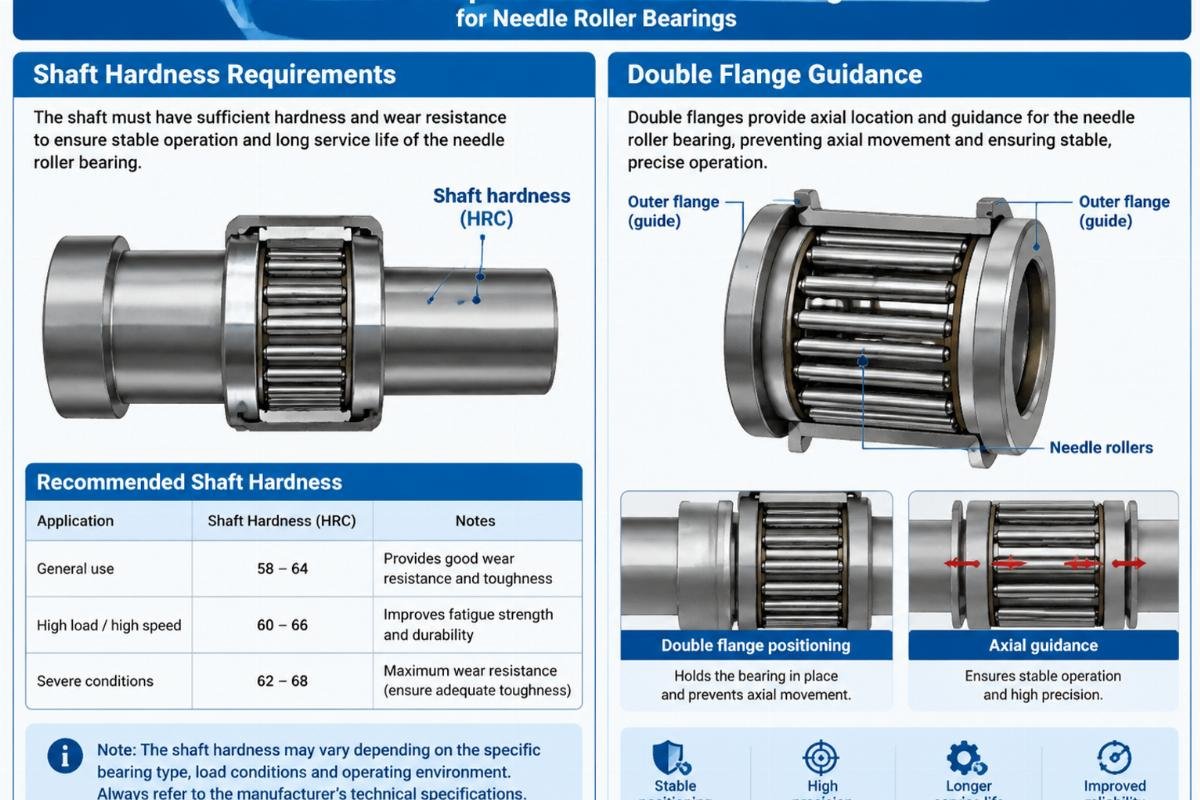
The shaft itself becomes the inner raceway, making its surface hardness the ultimate deciding factor for operational lifespan.
I learned this the hard way years ago in Dongguan while setting up an automated packaging line. The maintenance team skipped the induction hardening step on the main shaft to save time. Within weeks, the rolling elements gouged deep grooves into the soft steel, destroying the entire spindle assembly. Skipping proper heat treatment transforms a minor maintenance shortcut into catastrophic equipment failure [NEED_CITE: rolling bearing failure mode classification per ISO 15243].
Matching the Compact Profile to High-Speed Gearbox Demands
When designing compact transmission systems, engineers constantly battle radial space limitations. The Nk43/20 needle roller bearing eliminates the inner ring entirely, allowing the machined shaft to serve directly as the rolling track. This design drastically reduces the cross-sectional footprint while maintaining high radial load capacity. Our sourcing network ensures that whether you need a single emergency replacement or a mixed-brand consolidation for a plant overhaul, the exact dimensional tolerances are strictly verified before dispatch.
Navigating Friction and Thermal Expansion in Confined Spaces
Operating without an inner ring means the rolling elements interact directly with the shaft surface under intense localized stress. High rotational speeds generate significant friction heat, which can alter the internal clearance if the shaft material expands unevenly. Proper lubrication is critical; oil bath or circulating oil systems are generally preferred over grease in these high-speed setups to carry away heat and flush out microscopic wear debris. Furthermore, the double flange design provides essential axial guidance, but it also requires precise shoulder machining on the shaft to prevent edge loading [NEED_CITE: thermal expansion effects on bearing clearance].
Decoding the Suffix and Dimensional Tolerances
The designation breaks down systematically: “NK” confirms the absence of an inner ring, “43” specifies the 43 mm roller set bore diameter, and “/20” denotes the 20 mm width. Because the shaft acts as the raceway, its surface finish and hardness must strictly match the bearing’s internal specifications—typically requiring induction hardening to a minimum depth with a fine ground finish. The availability of P0, P6, and P5 precision classes allows maintenance teams to select the exact running accuracy needed. While standard chrome steel is the baseline, alternative materials like martensitic stainless grades are available for environments with moderate moisture exposure, ensuring the component survives beyond standard corrosion limits.
The Financial Drain of Ignoring Shaft Preparation
Failing to properly prepare the shaft raceway leads to rapid surface fatigue and spalling. When the shaft hardness falls well below specification, the rolling elements embed into the metal, causing severe vibration and unplanned downtime. According to failure analysis frameworks, this specific installation error accounts for a significant share of premature failures in compact bearing arrangements [NEED_CITE: shaft hardness impact on bearing fatigue life per ISO 281]. The resulting warranty voidance and secondary damage to adjacent gearbox components far exceed the initial cost of proper shaft machining.
Securing Traceability and Technical Accuracy for Critical Spares
Sourcing compact needle bearings often involves dealing with rigid official channels with lengthy lead times. We bypass these bottlenecks by maintaining massive spot inventory across premium global and reliable domestic brands, ensuring your Nk43/20 needle roller bearing ships immediately. Our technical team actively cross-references dimensional drawings to confirm the “without inner ring” configuration, preventing the common mistake of accidentally ordering the NA series with an inner ring. Every shipment includes complete traceability documentation, and we provide application guidance to help your maintenance crew avoid the exact shaft hardness pitfalls I witnessed on the factory floor.
Documentation & Authenticity
Certificate of Conformity verifying the exact P5 or P6 precision class for your specific batch.
Original manufacturer batch traceability codes linking the chrome steel material to the melting furnace.
Dimensional inspection reports confirming the 43 mm bore and 20 mm width tolerances before dispatch.
Running accuracy test results ensuring the high-speed, low-noise performance claims are met.
Official QR verification tags allowing your receiving department to instantly authenticate the origin.
Storage, Handling & Mounting
Keep the VCI packaging sealed until the exact moment of mounting to protect the polished chrome steel raceways from ambient humidity.
Verify the shaft induction hardening depth and surface roughness before pressing the 43 mm bore onto the journal.
Use clean, lint-free gloves when handling the double flanges to prevent acidic sweat from initiating microscopic corrosion.
Apply the specified high-speed lubricant immediately after installation to prevent dry-start scoring on the shaft raceway.
Store the P5 precision units in a temperature-controlled environment to prevent thermal distortion of the thin outer ring.
Preparing Your Technical Data for Accurate Quotation
To ensure we supply the exact configuration for your machinery, please share the operational parameters including radial loads, rotational speeds, and operating temperatures. Providing the original equipment manufacturer part numbers allows our engineering team to perform a precise cross-reference check against our global inventory. If you are redesigning the shaft, specify the intended hardening method and surface finish so we can validate the compatibility with the inner-ring-free design.
Frequently Asked Questions
Q: How do we verify the shaft requirements for this inner-ring-free design?
A: The shaft must act as the inner raceway, requiring induction hardening to a specific depth and a finely ground surface finish. If the hardness falls below specification, the rolling elements will rapidly gouge the metal. We recommend sharing your shaft metallurgical reports with our technical team so we can validate the compatibility before shipping the Nk43/20 needle roller bearing.
Q: What is the difference between the NK and NA series in this dimension?
A: The NK series, like this unit, operates without an inner ring, relying entirely on the hardened shaft for the rolling track. The NA series includes a separate inner ring, which is used when the shaft cannot be hardened or ground to the required precision. Choosing the wrong series will either cause rapid shaft wear or create unnecessary radial bulk in your assembly.
Q: How do we choose between P0, P6, and P5 precision classes?
A: P0 is standard for general machinery where slight runout is acceptable. P6 offers tighter tolerances for gearboxes requiring smoother operation, while P5 is reserved for high-speed machine tools where minimal vibration is critical. Select the class based on your equipment’s rotational speed and acoustic requirements, and we will provide the corresponding inspection certificates.
Q: Can we cross-reference this part to other major international brands?
A: Yes, our engineering team regularly cross-references this specific dimension and design to equivalent models from major global manufacturers. By providing your current OEM part number or the exact operational constraints, we can identify direct interchangeable options from our consolidated inventory, ensuring you receive a fully traceable replacement without waiting for rigid official channel lead times.
Q: What lubrication strategy works best for high-speed applications?
A: For high-speed, low-noise operations, circulating oil or oil mist lubrication is generally preferred over grease, as it effectively carries away friction heat and flushes out wear particles. If grease must be used, select a high-speed synthetic variant with a low base oil viscosity. We can recommend specific relubrication intervals based on your exact RPM and operating temperature data.
Shipping Information
EU Warehouse
3-7 working days (bonded stock)
Direct from China
Shanghai & Ningbo hubs (bulk / FCL)
Markets Served
DE · IT · PL · ES · NL · FR · EU+
Incoterms
DDP / DAP available on request
Minimum Order
Contact us for MOQ details
Documents Included with Every Shipment
EN and ISO Quality Certificates
Batch traceability and manufacturing standard
Material & Heat-Treatment Reports
Full material composition and process records
CE Declaration of Conformity
For bearing units and motion products
RoHS Compliance Declaration
Restriction of hazardous substances
EUR.1 Movement Certificate
Preferential origin for EU customs
Certificate of Origin
Country of manufacture documentation
Correct HS Codes
Pre-classified for smooth customs clearance
Commercial Invoice & Packing List
VAT-compliant intra-EU invoicing
Transparent Landed Cost with Tax Explanation
SKFEU provides full price transparency so EU buyers know exactly what they pay. No hidden duties, no surprise charges at customs.
VAT-Compliant Invoicing
All intra-EU transactions are invoiced with correct VAT treatment. B2B buyers with valid EU VAT numbers receive zero-rated invoices where applicable.
No Unexpected Import Duties
Goods shipped from our EU bonded warehouse arrive as intra-EU movements -- no import duties, no customs delays for EU-based buyers.
EUR.1 & Origin Docs Ready
For shipments direct from China, EUR.1 movement certificates and certificates of origin are prepared in advance to minimise customs clearance time.
DDP Pricing Available
Ask for Delivered Duty Paid quotations -- we absorb all import costs so your landed cost is fixed and predictable from day one.
Need a landed cost breakdown? Contact Sofia at
sofia@skfeu.com
or via WhatsApp for a full DDP quotation including freight, duties and VAT for your country.
Send Inquiry
Request Pricing & Availability
Share your requirements and Sofia will respond within one working day with pricing, lead time and full documentation details.