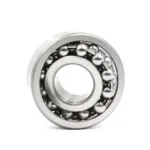
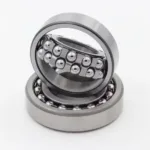
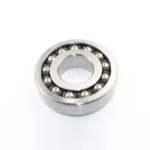
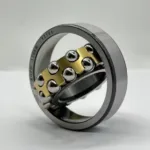
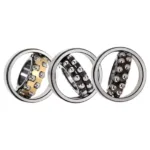
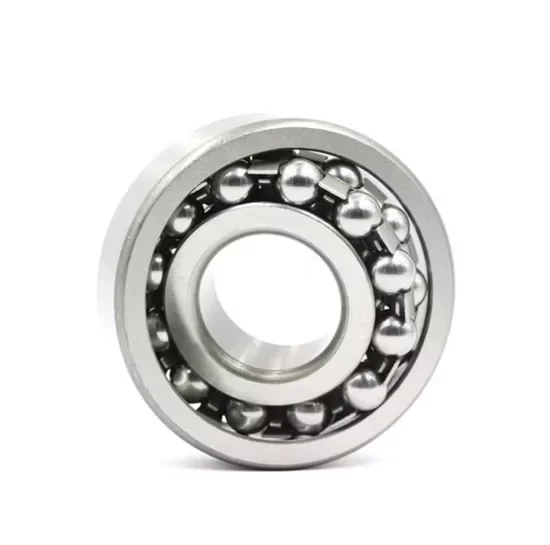
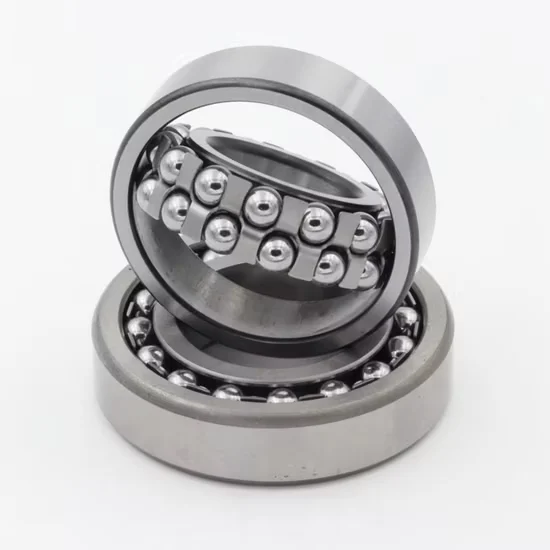
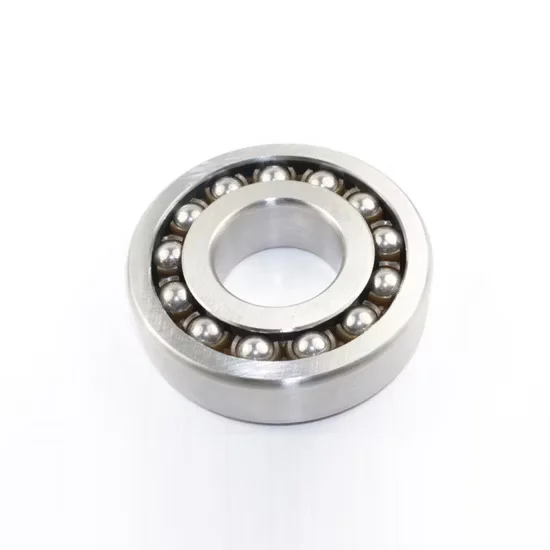
Self-Aligning Ball Bearings China Factory Quality Supplier
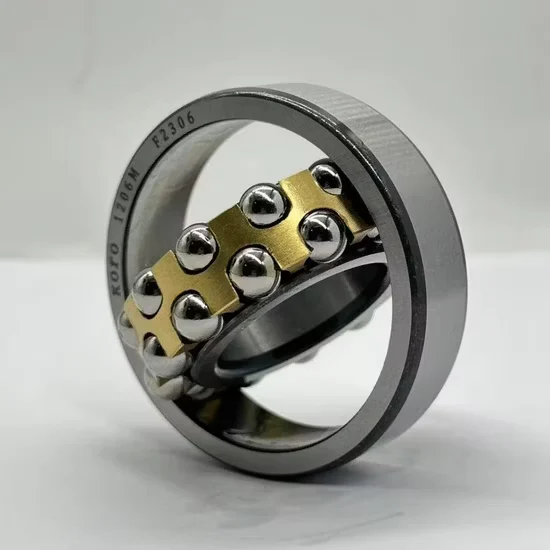
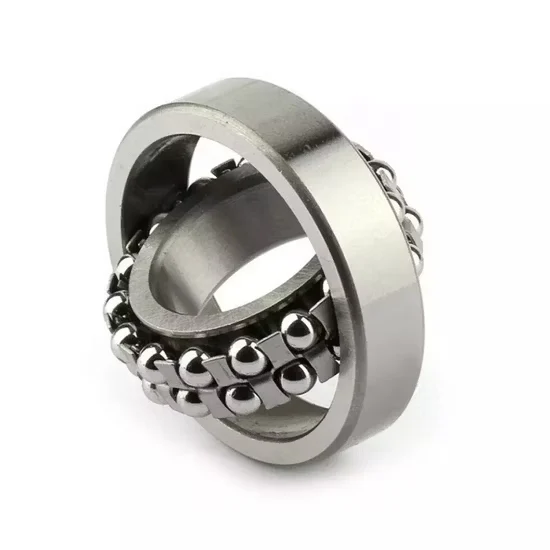
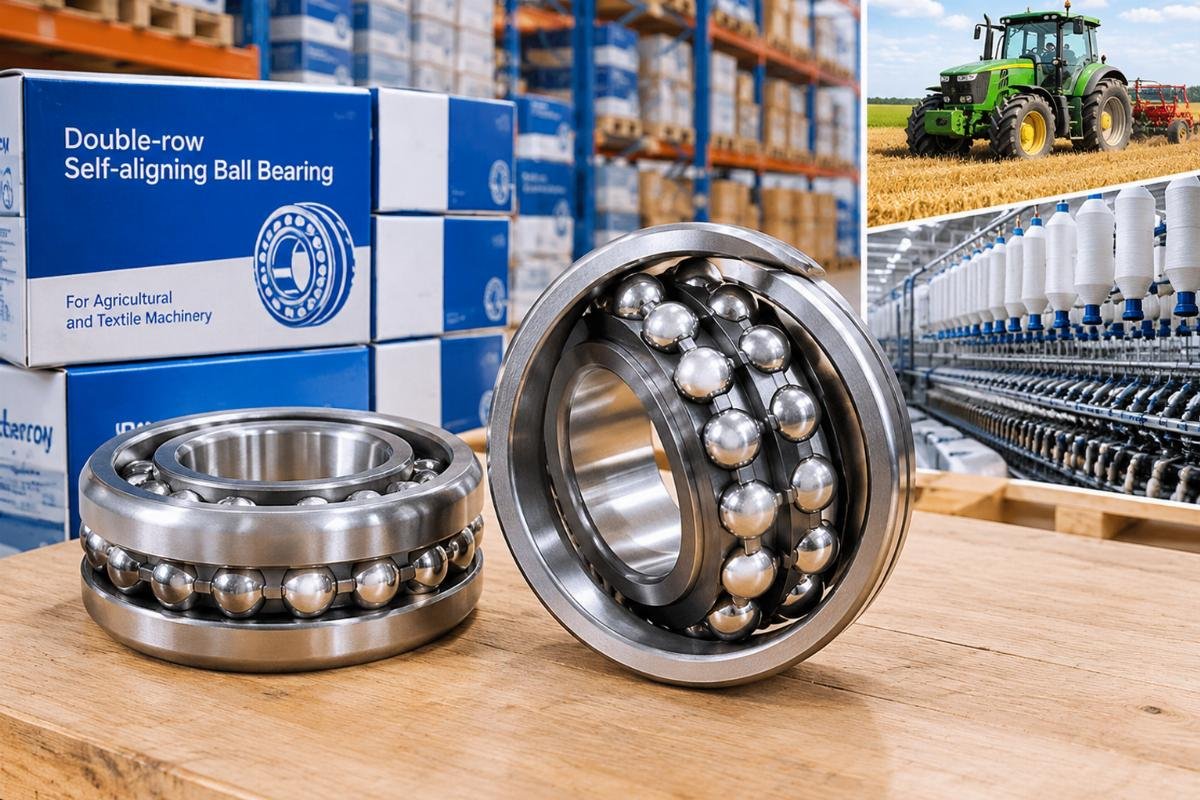
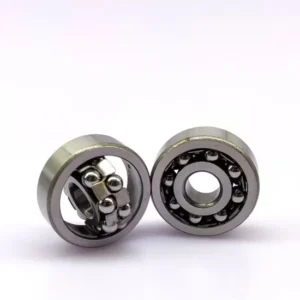
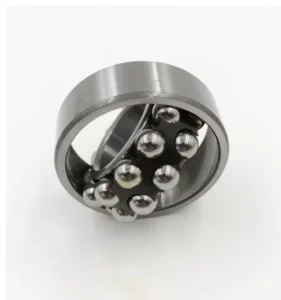
Self-Aligning Ball Bearing for Shaft Misalignment Applications — double-row construction in GCr15 chrome steel ensures high wear resistance and fatigue strength for textile, conveyor, and agricultural machinery.
Accommodates housing inaccuracies while reliably supporting 12.7 kN dynamic and 3.7 kN static load ratings.
Verify cross-reference alignment for clearance, cage material, and precision grades to guarantee exact equipment compatibility before ordering.
Unified Multi-Brand Sourcing — Consolidate KOYO, NTN, and NSK double-row units into a single shipment without juggling multiple vendors.
Technical Specifications
Parameter
Value
Product Type
Self-Aligning Ball Bearing
Row Configuration
Double-Row
Material Options
Chrome Steel GCr15 / 100Cr6
Origin
Shandong, China
Application Focus
Textile, Conveyor, Agricultural Machinery
Application Suitability
Industry
Typical Applications
Textile Manufacturing
Yarn tensioning rollers and loom shedding mechanisms
Material Handling
Belt conveyor idler pulleys and transfer chute guides
Agricultural Operations
Harrow disc gangs and seed drill metering shafts
General Manufacturing
Automated assembly line pivot joints and packaging actuators
Why Shaft Deflection Destroys Standard Bearings Before the Steel Fails
Misalignment induces edge loading that shatters cages long before raceway fatigue occurs.
In my years analyzing field failures across Southeast Asian timber and textile mills, I have seen standard deep-groove units disintegrate within weeks when housed in slightly bent shafts. A reliable self-aligning ball bearing supplier understands that accommodating angular errors is not just about the outer ring spherical raceway; it requires matching the internal clearance and cage design to the specific vibration profile of the equipment [NEED_CITE: rolling bearing failure mode classification per ISO 15243].
Matching Internal Geometry to Oscillating Loads
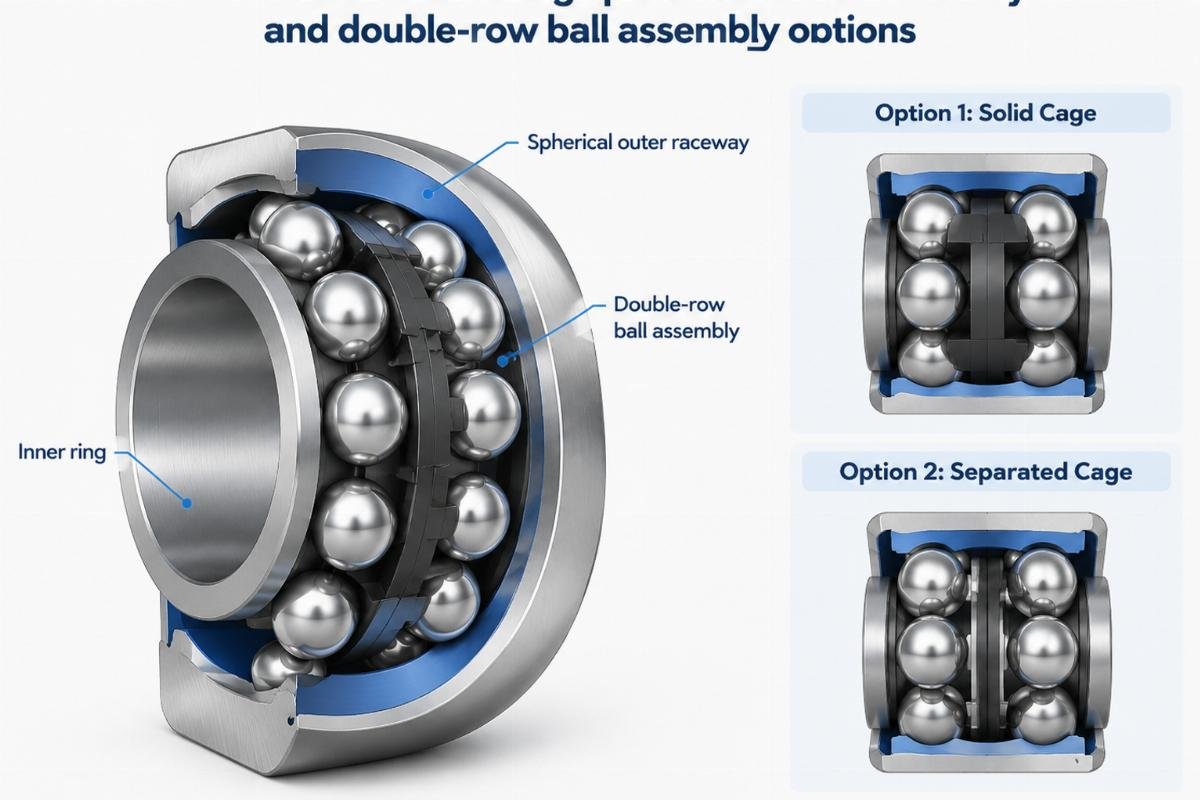
When sourcing replacements for oscillating conveyor shafts, the double-row configuration provides the necessary radial stability while the spherical outer ring absorbs housing inaccuracies. As a dedicated self-aligning ball bearing supplier, we cross-reference your equipment’s oscillation angle and radial load to ensure the selected unit maintains proper ball-to-raceway contact. This prevents the sliding friction that typically plagues mismatched components in heavy-duty agricultural environments.
Managing Vibration and Contamination in Field Operations
Agricultural and textile environments subject rotating shafts to severe radial shocks and pervasive dust ingress. The spherical raceway design compensates for shaft deflection, but high-vibration zones demand careful attention to cage integrity and lubrication retention. Without adequate sealing or proper grease selection, particulate contamination accelerates wear significantly [NEED_CITE: impact of solid contaminants on bearing fatigue life per ISO 281]. Selecting the appropriate clearance class ensures the bearing accommodates thermal expansion without binding during continuous operation.
Decoding Material and Cage Options for Misaligned Shafts
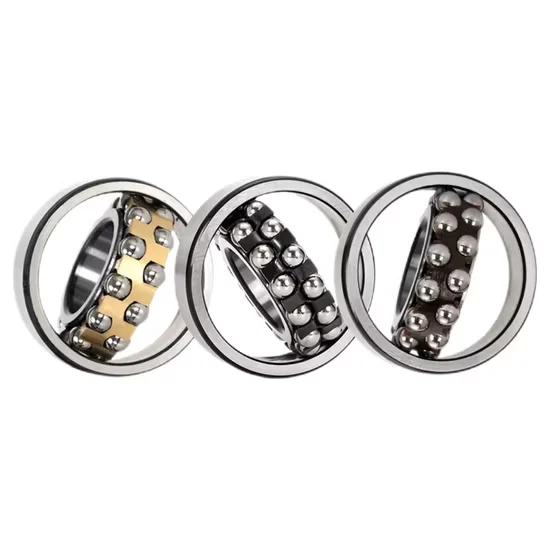
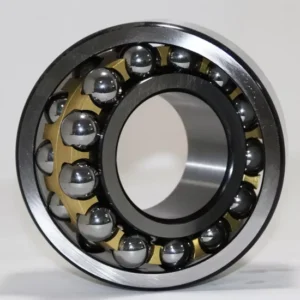
The choice of cage material fundamentally dictates performance under high-vibration misalignment. Pressed steel cages offer cost-effective operation for standard speeds, but they are prone to fracture under severe shock loads, as I witnessed in a Vietnamese timber mill where standard cages snapped prematurely. For aggressive oscillating applications, machined brass or polyamide cages provide superior damping and resistance to sudden acceleration. Furthermore, while standard chrome steel (GCr15/100Cr6) delivers excellent fatigue strength, units are also available in stainless steel variants for washdown areas in food processing or highly corrosive agricultural spraying environments. Evaluating these material options against your specific maintenance intervals prevents catastrophic seizure.
The Financial Drain of Premature Cage Fractures
Specifying a rigid bearing for a misaligned housing inevitably leads to uneven load distribution and localized stress concentrations. This edge loading causes premature cage fracture and catastrophic seizure, resulting in unplanned downtime that far exceeds the component cost. According to failure analysis frameworks, misalignment remains a primary root cause of early mechanical breakdown [NEED_CITE: root cause analysis of premature bearing failures per ISO 15243]. Proper selection mitigates these hidden expenses and preserves warranty validity.
Engineering Support Beyond the Part Number
Sourcing the correct spherical geometry requires more than just matching a catalog dimension; it demands verifying the exact cage type and internal clearance for your specific deflection angle. We provide comprehensive cross-brand equivalent model consultation, ensuring you receive the precise metallurgical and geometric specifications regardless of the original manufacturer. Our massive spot inventory covers thousands of standard configurations, allowing flexible consolidation from single-unit emergency spares to full container shipments. Every dispatch includes complete traceability documentation, and our technical team offers long-term failure analysis support to optimize your relubrication cycles.
Documentation & Authenticity
Certificate of Conformity verifying GCr15/100Cr6 material grade for double-row units.
Original batch traceability linking the spherical outer ring to the specific heat treatment lot.
Dimensional inspection reports confirming the spherical raceway radius tolerance before dispatch.
Material test certificates validating the fatigue strength of the chrome steel rolling elements.
Storage, Handling & Mounting
Store double-row units in original packaging to prevent moisture ingress on the exposed spherical outer raceway.
Use clean cotton gloves when handling open-type variants to avoid sweat-induced corrosion on the GCr15 steel surfaces.
Align the housing bore carefully during mounting to avoid brinelling the double-row ball assembly.
Apply recommended grease volumes to open agricultural variants, avoiding overfilling which causes excessive churning heat.
Required Parameters for Technical Verification
To determine the exact model for your application, please provide the equipment type, available installation space, and specific radial and axial load profiles. Detailing the operating environment, including expected shaft deflection angles and exposure to agricultural dust or textile lint, allows our engineering team to recommend the optimal cage material and clearance class.
Frequently Asked Questions
Q: How do I determine the exact bearing model based on equipment shaft and housing parameters?
A: Determining the precise model requires evaluating the maximum shaft deflection angle, radial loads, and operating speeds. By sharing your equipment specifications and housing tolerances, our engineering team cross-references these parameters against manufacturer catalogs to select the optimal internal clearance and cage design, ensuring reliable performance under misaligned conditions.
Q: What are the common failure modes in agricultural machinery applications?
A: In agricultural environments, pervasive dust ingress and severe radial shocks frequently cause premature wear and cage fracture. Misalignment exacerbates edge loading on the raceways, leading to localized spalling. Selecting units with appropriate sealing solutions and durable cage materials significantly mitigates these failure modes and extends operational service life.
Q: How does GCr15 chrome steel compare to other materials for this bearing type?
A: GCr15 chrome steel provides exceptional hardness and fatigue strength, making it the standard choice for most industrial and agricultural loads. For environments with high moisture or chemical exposure, such as fertilizer application equipment, stainless steel variants offer substantially higher corrosion resistance, though they typically exhibit slightly lower dynamic load capacities.
Q: What is the recommended maintenance cycle for misaligned applications?
A: Maintenance intervals depend heavily on the operating temperature, contamination level, and the severity of the shaft misalignment. In dusty agricultural or textile environments, more frequent relubrication is necessary to purge contaminants from the raceway. We recommend establishing a condition-based monitoring schedule to optimize grease replenishment without causing excessive churning heat.
Shipping Information
EU Warehouse
3-7 working days (bonded stock)
Direct from China
Shanghai & Ningbo hubs (bulk / FCL)
Markets Served
DE · IT · PL · ES · NL · FR · EU+
Incoterms
DDP / DAP available on request
Minimum Order
Contact us for MOQ details
Documents Included with Every Shipment
EN and ISO Quality Certificates
Batch traceability and manufacturing standard
Material & Heat-Treatment Reports
Full material composition and process records
CE Declaration of Conformity
For bearing units and motion products
RoHS Compliance Declaration
Restriction of hazardous substances
EUR.1 Movement Certificate
Preferential origin for EU customs
Certificate of Origin
Country of manufacture documentation
Correct HS Codes
Pre-classified for smooth customs clearance
Commercial Invoice & Packing List
VAT-compliant intra-EU invoicing
Transparent Landed Cost with Tax Explanation
SKFEU provides full price transparency so EU buyers know exactly what they pay. No hidden duties, no surprise charges at customs.
VAT-Compliant Invoicing
All intra-EU transactions are invoiced with correct VAT treatment. B2B buyers with valid EU VAT numbers receive zero-rated invoices where applicable.
No Unexpected Import Duties
Goods shipped from our EU bonded warehouse arrive as intra-EU movements -- no import duties, no customs delays for EU-based buyers.
EUR.1 & Origin Docs Ready
For shipments direct from China, EUR.1 movement certificates and certificates of origin are prepared in advance to minimise customs clearance time.
DDP Pricing Available
Ask for Delivered Duty Paid quotations -- we absorb all import costs so your landed cost is fixed and predictable from day one.
Need a landed cost breakdown? Contact Sofia at
sofia@skfeu.com
or via WhatsApp for a full DDP quotation including freight, duties and VAT for your country.
Send Inquiry
Request Pricing & Availability
Share your requirements and Sofia will respond within one working day with pricing, lead time and full documentation details.