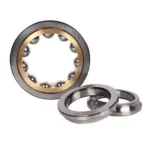
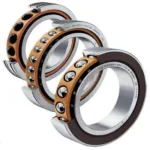
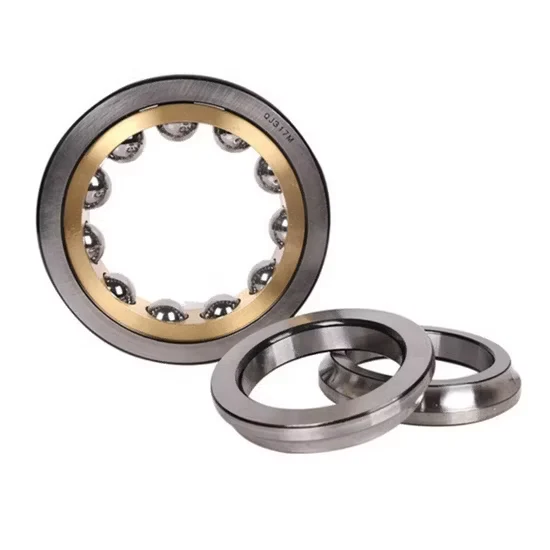
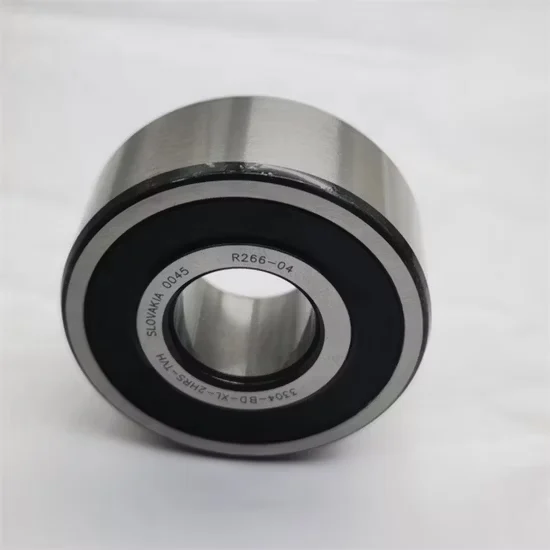
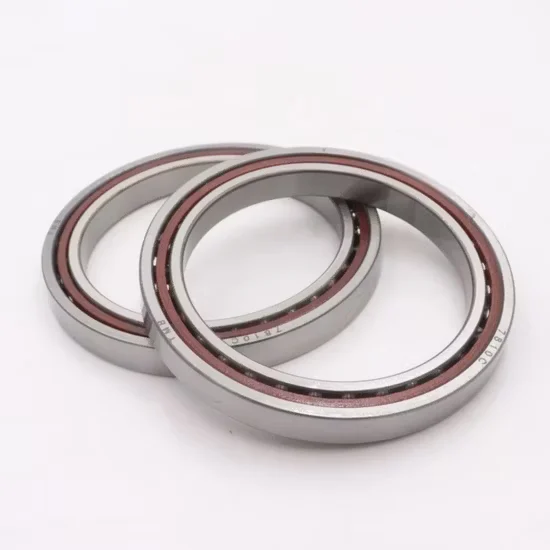
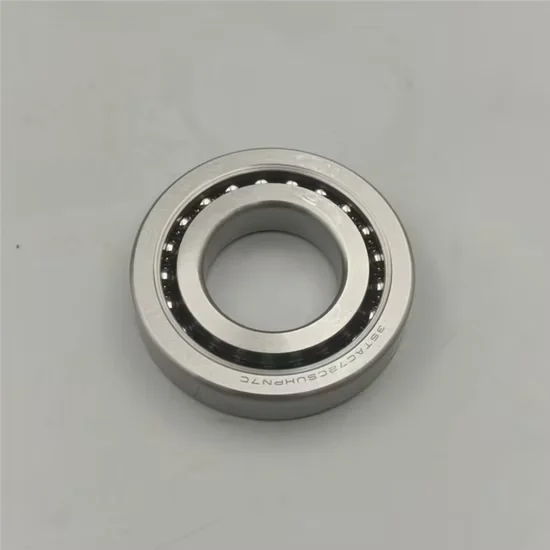
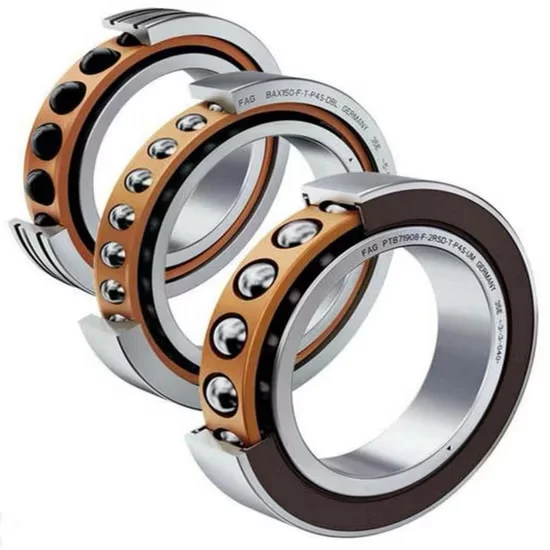
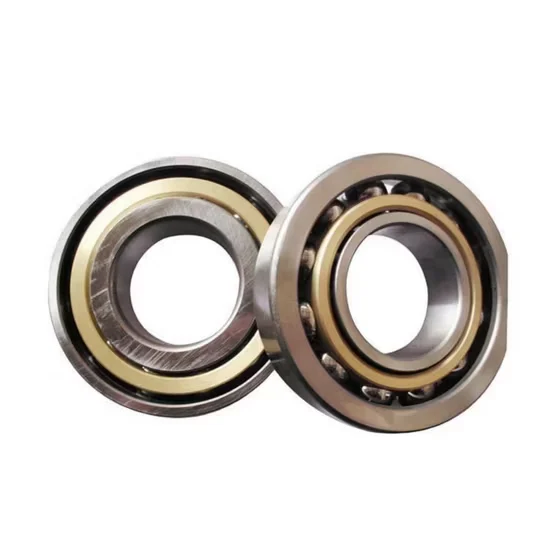
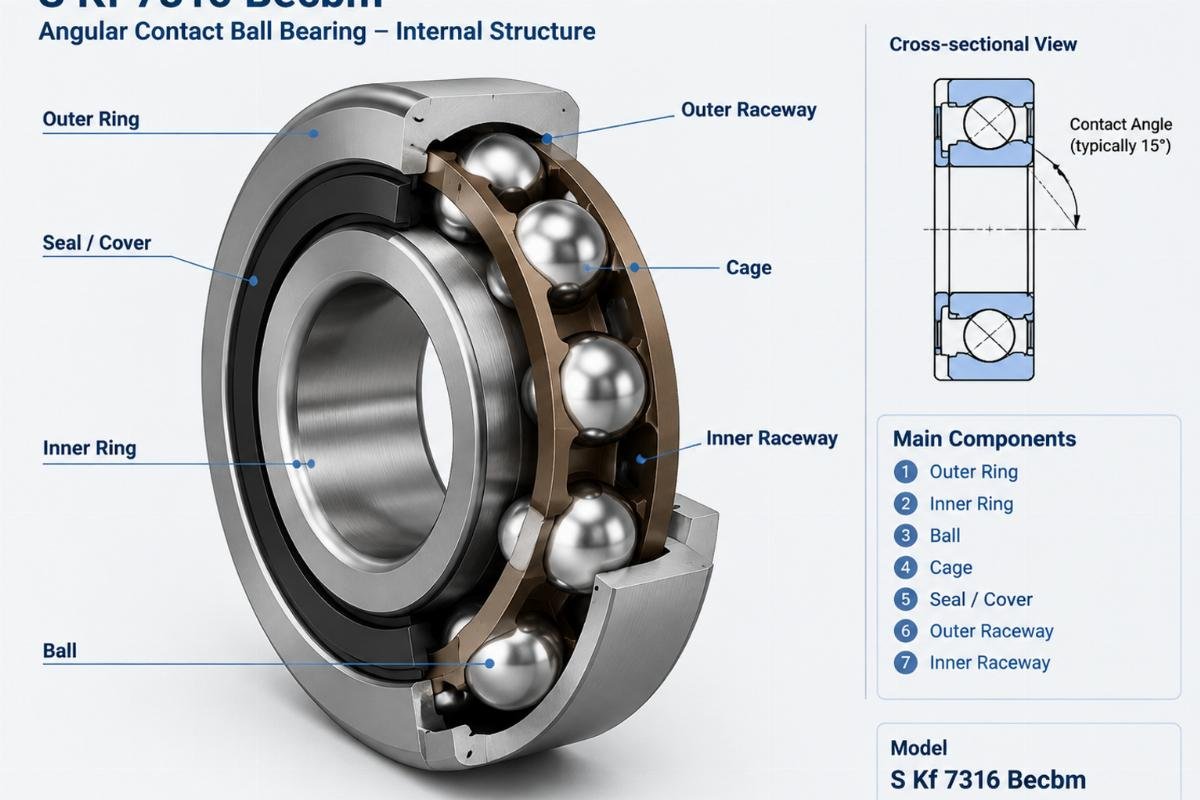
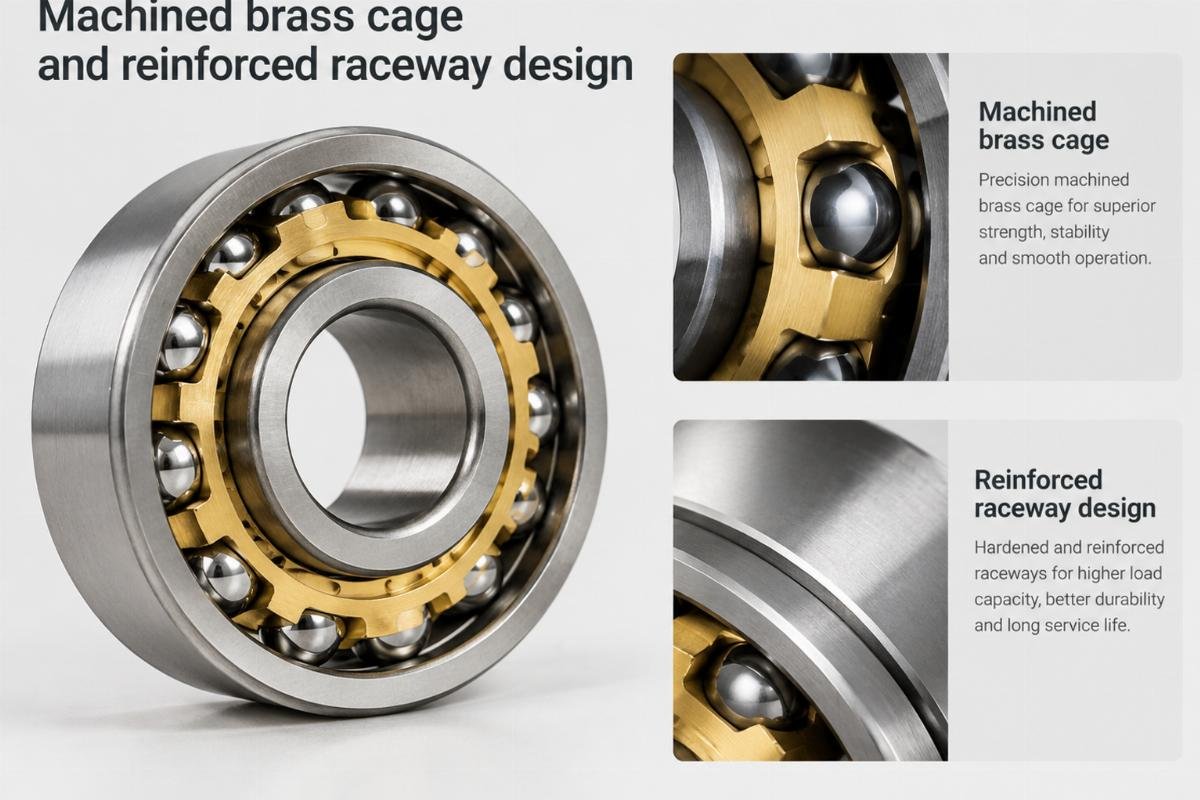
S Kf 7316 Becbm Angular Contact Ball Bearing 170mm OD — featuring a 40° contact angle and machined brass cage for high vibration applications. The universal pairing with medium axial clearance allows flexible mounting, while the reinforced internal design optimizes load distribution.
Supplied with a complete document package including original material certificates and precise dimensional inspection reports.
Cross-Reference Alignment — verifying dimensional, load, and speed equivalence across global catalogs for the S Kf 7316 Becbm angular contact ball bearing to ensure direct integration into existing assemblies.
Technical Specifications
Parameter
Value
Designation
S Kf 7316 Becbm
Bearing Type
Angular Contact Ball Bearing
Outside Diameter (D)
170mm
Contact Angle
40°
Cage Material
Machined brass cage
Seal or Shield Type
Open
Clearance Class
Universal pairing with medium axial clearance (CB)
Material
Available in high-carbon chromium bearing steel variants
Application Suitability
Industry
Typical Applications
Machine Tools
High-speed spindle assemblies requiring rigid axial support
Fluid Machinery
High-speed pumps and multi-stage compressors
Industrial Automation
Precision robotics and automated positioning equipment
Why Cage Material Dictates Survival in High-Speed Spindles
The S Kf 7316 Becbm angular contact ball bearing relies on its machined brass cage to prevent catastrophic seizure under thermal stress.
Procurement teams often fixate on basic boundary dimensions while overlooking internal design suffixes, a mistake that proves costly in demanding environments. In high-temperature compressor applications, standard stamped steel or polyamide cages can deform, fracture, or melt under extreme centrifugal forces and friction heat. This inevitably leads to sudden machine lockups and severe secondary damage to the shaft and housing. Upgrading to a purpose-built brass cage design ensures structural integrity and reliable rolling element guidance when rotational speeds generate significant internal heat. Recognizing these failure modes early prevents the costly cycle of repeated replacements and unplanned maintenance shutdowns [NEED_CITE: rolling bearing failure mode classification per ISO 15243].
Matching Internal Geometry to Spindle Dynamics
Precision equipment demands exact axial positioning and rigid support under combined loading. The S Kf 7316 Becbm angular contact ball bearing delivers this through its optimized internal geometry, handling complex load vectors without compromising rotational accuracy or generating excessive vibration. Sourcing fully traceable components ensures the exact metallurgical properties and raceway finishes required for continuous high-speed operation. When the internal load distribution is perfectly matched to the application, the system achieves a noticeably extended L10 life, reducing the total cost of ownership for critical manufacturing assets.
Managing Thermal Expansion and Lubrication Starvation
High-speed machine tool spindles and multi-stage compressors generate substantial friction heat, directly impacting internal clearance and lubricant viscosity. An open-type design allows for targeted oil-air or oil-jet lubrication, flushing away microscopic wear contaminants while maintaining a stable thermal profile across the raceways. If the operating environment pushes the temperature beyond the thermal limit of standard bearing steel, specialized material variants must be considered to prevent dimensional instability and loss of preload. Properly managing the lubrication interval and selecting the correct base oil viscosity are just as critical as the bearing selection itself, ensuring the elastohydrodynamic film remains intact under peak axial thrust [NEED_CITE: thermal effects on bearing clearance per ISO 281].
Decoding the Suffix Architecture
The nomenclature reveals critical engineering choices that define operational limits. The “B” denotes a 40° contact angle, maximizing axial load capacity for vertical shafts or heavily thrust-loaded configurations. The “E” indicates a reinforced internal design with optimized load distribution across the rolling elements, noticeably increasing the dynamic load rating. “CB” specifies universal pairing with medium axial clearance, allowing flexible back-to-back or face-to-face mounting arrangements without custom shimming. Finally, the “M” confirms a machined brass cage, which provides superior guidance, structural rigidity, and heat dissipation compared to polymer alternatives at elevated speeds, making it the definitive choice for severe duty cycles.
The True Cost of Ignoring Suffix Details
Selecting a bearing based solely on outer diameter and bore size invites premature failure and operational instability. Installing a polymer-caged variant in a high-temperature compressor can result in cage fragmentation, causing severe raceway scoring, shaft damage, and extensive unplanned downtime. Such catastrophic damage often voids equipment warranties and necessitates complete spindle rebuilds rather than simple component replacement. Furthermore, substituting a standard clearance bearing for a universally paired one disrupts the precise preload required for machine tool spindles, leading to chatter, poor surface finishes, and accelerated tool wear [NEED_CITE: economic impact of unplanned machinery downtime].
Securing Exact Suffix Configurations
Mixed-brand procurement often results in substituted suffixes when specific variants are out of stock, compromising system reliability. We maintain massive spot inventory to ensure the exact M and CB suffixes are shipped, never substituting a polyamide cage for a brass one or altering the pairing clearance. Our technical team provides cross-brand equivalent model consultation, verifying that alternative part numbers match the precise 40° contact angle and medium preload requirements of your original specification. This rigorous validation process guarantees that every component integrated into your machinery meets the exact engineering intent, regardless of the brand name stamped on the ring.
Documentation & Authenticity
Certificate of Conformity validating the 40° contact angle and CB pairing tolerance.
Original manufacturer inspection reports confirming machined brass cage material.
Traceability documentation linking the specific batch to the production facility.
Dimensional accuracy reports verifying the 170mm outside diameter limits.
Storage, Handling & Mounting
Keep the universal pairing marks intact; altering the CB alignment compromises the medium axial clearance.
Store the open-type bearing in its original VCI packaging to prevent raceway corrosion before installation.
Use induction heating for the 170mm outer ring mounting, avoiding localized thermal shock to the brass cage.
Apply clean gloves during handling to prevent skin acids from etching the high-carbon chromium steel surfaces.
Engineering Review for Spindle Integration
Share your specific radial and axial load profiles, operating speeds, and thermal conditions to allow our team to verify the L10 life calculation and confirm the adequacy of the 40° contact angle. Providing the exact OEM equipment model number enables precise cross-reference validation, ensuring the selected configuration perfectly matches your spindle’s dynamic requirements. Detailed information regarding your housing tolerances and shaft deflection limits also helps us recommend the optimal mounting arrangement, whether back-to-back for rigidity or face-to-face for misalignment tolerance, securing long-term operational stability.
Frequently Asked Questions
Q: How does the CB suffix affect mounting arrangements?
A: The CB suffix indicates universal pairing with medium axial clearance. This allows the S Kf 7316 Becbm angular contact ball bearing to be mounted in back-to-back, face-to-face, or tandem arrangements without needing custom ground spacers, providing flexibility during spindle assembly while maintaining precise preload.
Q: Why is a machined brass cage preferred over polyamide here?
A: In high-speed compressors and machine tools, internal temperatures can exceed the thermal limits of polymer cages. The machined brass cage (M suffix) offers superior structural rigidity, better heat dissipation, and reliable guidance under heavy axial loads, preventing the cage deformation that typically causes sudden spindle seizures.
Q: Can I cross-reference this bearing with other premium brands?
A: Yes, our engineering team provides cross-reference consultation to match the exact 40° contact angle, reinforced internal design, and brass cage specifications with equivalent models from other global manufacturers, ensuring dimensional and performance parity for your maintenance or upgrade projects.
Q: How should open-type bearings be lubricated in high-speed applications?
A: Open designs require external lubrication systems, typically oil-air or oil-jet methods for high-speed spindles. This approach flushes away wear debris and manages heat generation effectively, which is critical since the absence of integrated seals means the housing must provide adequate contamination protection.
Shipping Information
EU Warehouse
3-7 working days (bonded stock)
Direct from China
Shanghai & Ningbo hubs (bulk / FCL)
Markets Served
DE · IT · PL · ES · NL · FR · EU+
Incoterms
DDP / DAP available on request
Minimum Order
Contact us for MOQ details
Documents Included with Every Shipment
EN and ISO Quality Certificates
Batch traceability and manufacturing standard
Material & Heat-Treatment Reports
Full material composition and process records
CE Declaration of Conformity
For bearing units and motion products
RoHS Compliance Declaration
Restriction of hazardous substances
EUR.1 Movement Certificate
Preferential origin for EU customs
Certificate of Origin
Country of manufacture documentation
Correct HS Codes
Pre-classified for smooth customs clearance
Commercial Invoice & Packing List
VAT-compliant intra-EU invoicing
Transparent Landed Cost with Tax Explanation
SKFEU provides full price transparency so EU buyers know exactly what they pay. No hidden duties, no surprise charges at customs.
VAT-Compliant Invoicing
All intra-EU transactions are invoiced with correct VAT treatment. B2B buyers with valid EU VAT numbers receive zero-rated invoices where applicable.
No Unexpected Import Duties
Goods shipped from our EU bonded warehouse arrive as intra-EU movements -- no import duties, no customs delays for EU-based buyers.
EUR.1 & Origin Docs Ready
For shipments direct from China, EUR.1 movement certificates and certificates of origin are prepared in advance to minimise customs clearance time.
DDP Pricing Available
Ask for Delivered Duty Paid quotations -- we absorb all import costs so your landed cost is fixed and predictable from day one.
Need a landed cost breakdown? Contact Sofia at
sofia@skfeu.com
or via WhatsApp for a full DDP quotation including freight, duties and VAT for your country.
Send Inquiry
Request Pricing & Availability
Share your requirements and Sofia will respond within one working day with pricing, lead time and full documentation details.