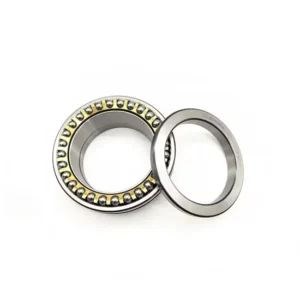
SS304 Stainless Steel Deep Groove Ball Bearing — corrosion-resistant construction featuring ZZ or 2RS seals for demanding wet and washdown environments.
Provides high radial load capacity and low friction coefficients to ensure smooth, low-noise operation in continuous mechanical and pump applications.
Ensure strict cross-reference alignment of internal clearance, cage design, and precision grades against your specific OEM requirements before procurement.
Replies within 1 working day · Dedicated account manager
Specifications
Deep Groove Ball BearingElectric MotorMechanical EquipmentPumpStainless SteelWaterproofWholesale Bearing
Lead Time
3-7 working days
EU bonded warehouse · Fast-moving stock
Compliance
Full EU package
EN · ISO · CE · RoHS · EUR.1
Verify Via QR Codes — Each shipment from our SS304 stainless steel deep groove ball bearing supplier network includes scannable tags linking to original batch records.
Technical Specifications
Parameter
Value
Product Type
Deep Groove Ball Bearing
Material
Available in SS304 stainless steel variants
Seal or Shield Type
ZZ (shielded) or 2RS (contact sealed)
Noise Level
Low noise design
Load Capacity
High radial load capability
Friction
Low friction coefficient
Origin
Shandong, China
Application Suitability
Industry
Typical Applications
Food & Beverage
Washdown conveyors, filling machine rotary tables
Marine & Shipbuilding
Deck machinery, saltwater exposed pump shafts
Chemical Processing
Agitator drives, corrosive fluid transfer pumps
General Manufacturing
Wet environment gearboxes, packaging line rollers
Why Washdown Environments Destroy Standard Shielded Bearings
Water intrusion through non-contact shields causes rapid internal corrosion and catastrophic line stoppages.
Early in my career, I specified ZZ shielded bearings for a food processing conveyor to save time, ignoring the high-pressure washdown reality. Moisture bypassed the metal shields, rusting the raceways and seizing the entire line. When sourcing from a reliable SS304 stainless steel deep groove ball bearing supplier, engineers must prioritize 2RS contact seals for wet zones to prevent such costly oversights [NEED_CITE: rolling bearing failure mode classification per ISO 15243].
Matching Target Operating Conditions
Selecting the right sealing configuration ensures these components survive aggressive cleaning chemicals and constant moisture exposure. Our engineering team provides cross-brand equivalent model consultation to help you transition from standard chrome steel to corrosion-resistant alternatives. As an experienced SS304 stainless steel deep groove ball bearing supplier, we consolidate mixed-brand packages to keep your maintenance inventory organized without sacrificing performance in wet zones.
Operational Challenges and Performance Demands
Washdown environments subject components to severe thermal shock from hot water and aggressive chemical detergents that degrade standard lubricants. High radial loads combined with low-speed oscillating movements in conveyor joints accelerate wear if the internal geometry lacks proper clearance. Contact seals introduce slightly higher friction than metal shields, but this trade-off is mandatory to block liquid ingress and particulate contamination [NEED_CITE: friction and sealing performance trade-offs in wet environments]. Proper material selection prevents premature structural degradation when components face continuous fluid exposure.
Decoding Core Specifications
Material options dictate survival in harsh environments; while standard bearing steel fails quickly under chemical attack, SS304 variants offer substantially higher resistance to aqueous corrosion. The choice between ZZ shields and 2RS seals defines the contamination barrier, where rubber contact seals are essential for liquid ingress prevention despite a marginal increase in rotational drag. High radial load capacity ensures structural integrity when supporting heavy mechanical assemblies in damp processing plants. Low friction coefficients maintain energy efficiency across electric motors and gearboxes operating continuously. Selecting the correct configuration requires balancing speed limits against the necessary sealing friction.
Hidden Costs of Incorrect Selection
Specifying open or shielded variants for wet applications inevitably leads to unplanned downtime and catastrophic damage to surrounding machinery. According to failure analysis frameworks, moisture-induced surface distress accounts for a significant share of premature failures in processing equipment [NEED_CITE: moisture-induced surface distress mechanisms per ISO 15243]. Replacing seized units frequently voids equipment warranties and disrupts production schedules far beyond the initial component cost. Ignoring environmental factors during procurement guarantees recurring maintenance interventions and accelerated replacement cycles.
Why Source Through Our Network
We maintain massive spot inventory covering thousands of standard part numbers, ensuring urgent maintenance requirements for wet-zone conveyors are met without typical multi-week lead times. Our technical selection support helps buyers avoid the common mistake of specifying ZZ shields instead of 2RS seals for washdown applications. We provide flexible MOQ ranging from single-unit emergency spares to full container consolidation shipments for large-scale plant upgrades. Every order includes complete traceability documentation to verify material grades and confirm genuine manufacturing origins. Our global shipping consolidation ensures mixed-size bearing packages arrive securely at your facility.
Documentation & Authenticity
Material certification reports confirming SS304 grade for corrosion-critical applications.
Original batch traceability linking every unit to the manufacturer’s production facilities.
Running accuracy inspection records verifying low noise design before dispatch.
Dimensional inspection reports validating seal groove tolerances for 2RS configurations.
Certificate of Conformity ensuring compliance with international quality standards.
Storage, Handling & Mounting
Store 2RS sealed units in original packaging to prevent dust accumulation on rubber contact lips.
Use clean gloves when handling SS304 variants to avoid carbon steel cross-contamination from bare hands.
Avoid prying 2RS seals during installation, as damaging the rubber lip compromises waterproof integrity.
Keep ZZ shielded stock in humidity-controlled areas to prevent superficial rust before deployment.
Apply induction heating for tight fits, avoiding open flames that degrade 2RS rubber seals.
Inquiry Guidance
To ensure precise technical alignment, please provide your equipment model, installation space constraints, and specific load parameters. Detail the operating environment, including chemical exposure levels and washdown frequencies, so our engineering team can determine the exact model and sealing configuration required. Supplying OEM part numbers allows us to perform accurate cross-reference verification and recommend optimal equivalent replacements.
Frequently Asked Questions
Q: How do I determine the specific bearing model based on equipment parameters?
A: Share your radial and axial load requirements, operating speeds, and dimensional constraints with our engineering team. We evaluate these parameters alongside environmental factors like moisture exposure to recommend the precise model. Providing OEM equipment numbers allows us to cross-reference existing setups and ensure the selected SS304 variant meets all mechanical demands without requiring housing modifications.
Q: What are common failure modes in wet applications?
A: In washdown environments, moisture ingress through inadequate seals causes internal rust, leading to raceway spalling and eventual seizure. Chemical detergents can also degrade standard greases, resulting in dry running and excessive heat generation. Specifying 2RS contact seals and corrosion-resistant materials mitigates these issues, aligning with failure classifications outlined in ISO 15243 to prevent unplanned downtime and protect surrounding machinery from catastrophic damage.
Q: How do material options compare for corrosion resistance?
A: Standard chrome steel rapidly degrades when exposed to water and cleaning chemicals, making it unsuitable for washdown zones. SS304 stainless steel variants offer substantially higher resistance to aqueous corrosion and mild chemical attack, making them ideal for food processing and marine applications. For highly aggressive chemical environments or extreme temperature thresholds, engineers might consider specialized alloys or ceramic rolling elements to ensure long-term structural integrity and operational reliability.
Q: What are the maintenance cycles for sealed stainless steel variants?
A: Units equipped with 2RS contact seals are typically pre-lubricated for life and designed as non-relubricatable components. The rubber seals effectively retain the factory grease while blocking external contaminants, eliminating the need for routine greasing intervals. Attempting to force additional lubricant into these sealed configurations often damages the seal lips, compromising their waterproof integrity and drastically reducing the operational lifespan of the assembly in wet environments.
Shipping Information
EU Warehouse
3-7 working days (bonded stock)
Direct from China
Shanghai & Ningbo hubs (bulk / FCL)
Markets Served
DE · IT · PL · ES · NL · FR · EU+
Incoterms
DDP / DAP available on request
Minimum Order
Contact us for MOQ details
Documents Included with Every Shipment
EN and ISO Quality Certificates
Batch traceability and manufacturing standard
Material & Heat-Treatment Reports
Full material composition and process records
CE Declaration of Conformity
For bearing units and motion products
RoHS Compliance Declaration
Restriction of hazardous substances
EUR.1 Movement Certificate
Preferential origin for EU customs
Certificate of Origin
Country of manufacture documentation
Correct HS Codes
Pre-classified for smooth customs clearance
Commercial Invoice & Packing List
VAT-compliant intra-EU invoicing
Transparent Landed Cost with Tax Explanation
SKFEU provides full price transparency so EU buyers know exactly what they pay. No hidden duties, no surprise charges at customs.
VAT-Compliant Invoicing
All intra-EU transactions are invoiced with correct VAT treatment. B2B buyers with valid EU VAT numbers receive zero-rated invoices where applicable.
No Unexpected Import Duties
Goods shipped from our EU bonded warehouse arrive as intra-EU movements -- no import duties, no customs delays for EU-based buyers.
EUR.1 & Origin Docs Ready
For shipments direct from China, EUR.1 movement certificates and certificates of origin are prepared in advance to minimise customs clearance time.
DDP Pricing Available
Ask for Delivered Duty Paid quotations -- we absorb all import costs so your landed cost is fixed and predictable from day one.
Need a landed cost breakdown? Contact Sofia at
sofia@skfeu.com
or via WhatsApp for a full DDP quotation including freight, duties and VAT for your country.
Send Inquiry
Request Pricing & Availability
Share your requirements and Sofia will respond within one working day with pricing, lead time and full documentation details.