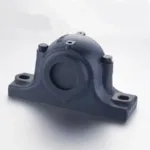
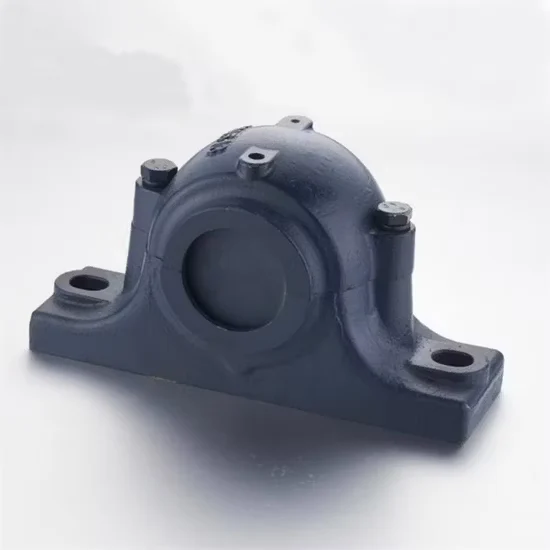
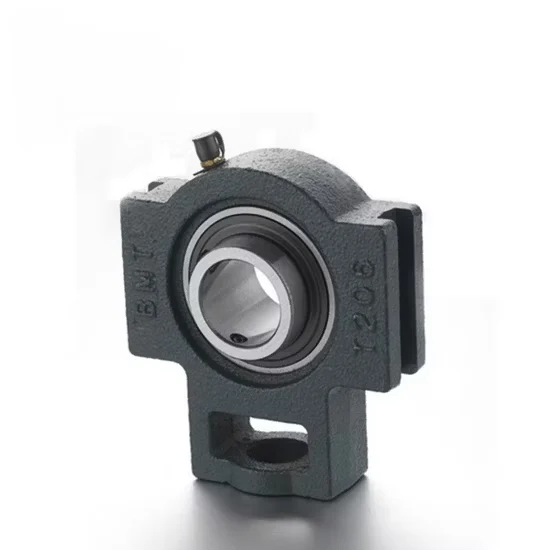
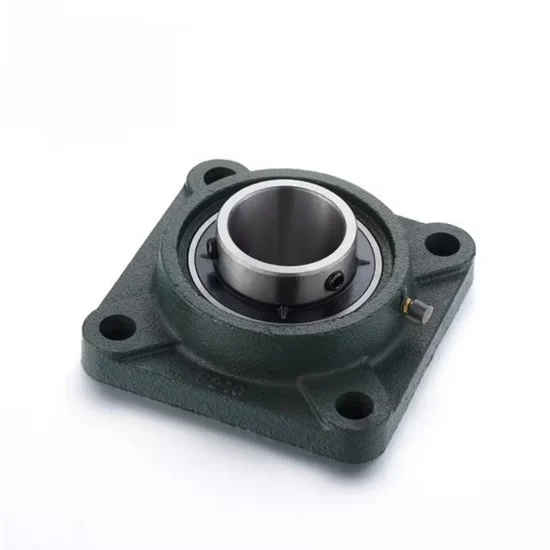
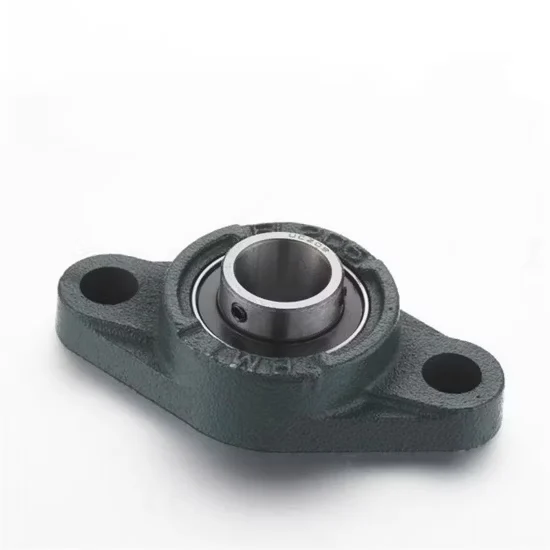
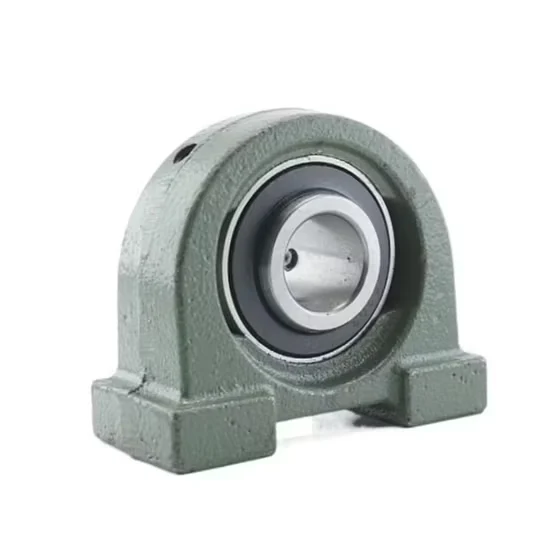
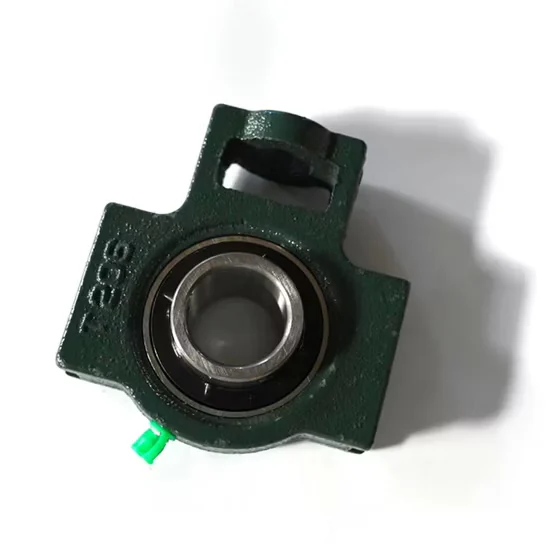
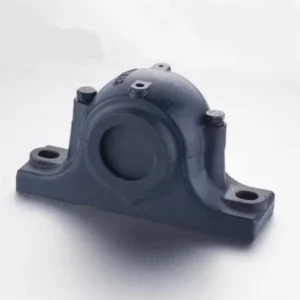
Sucp208 Pillow Block Bearing P0
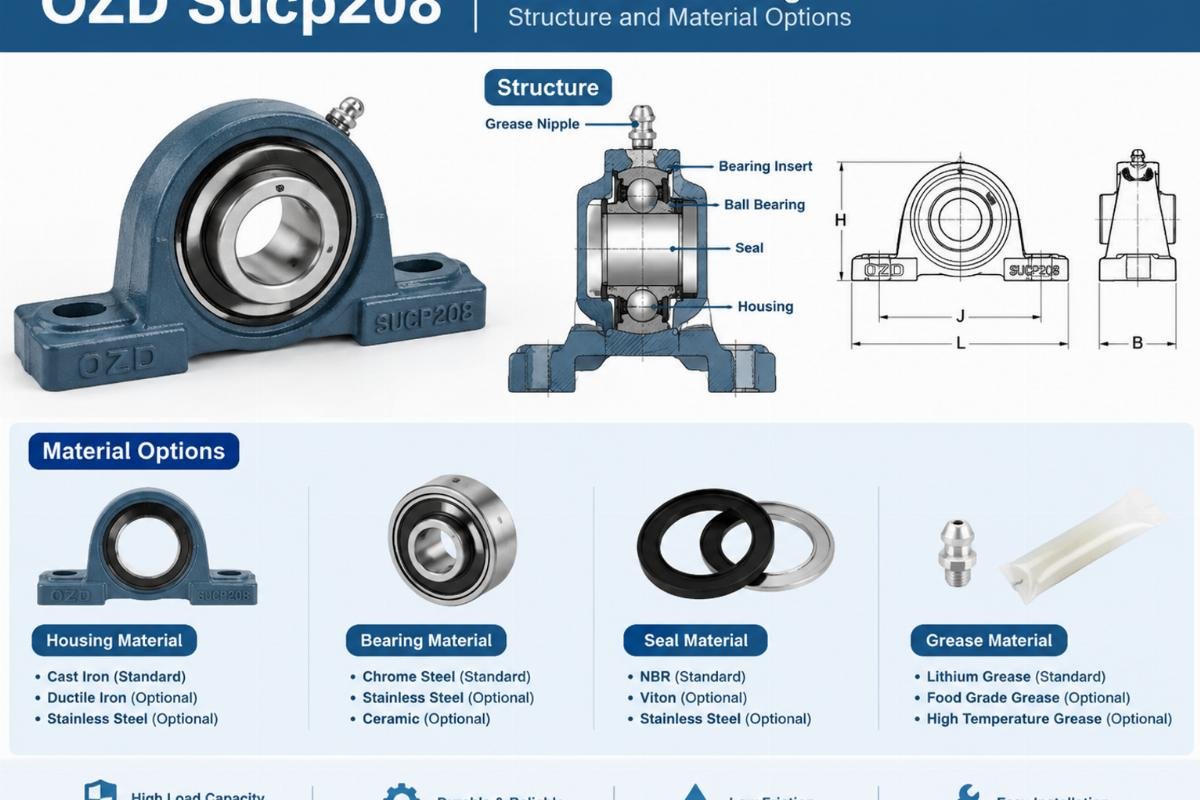
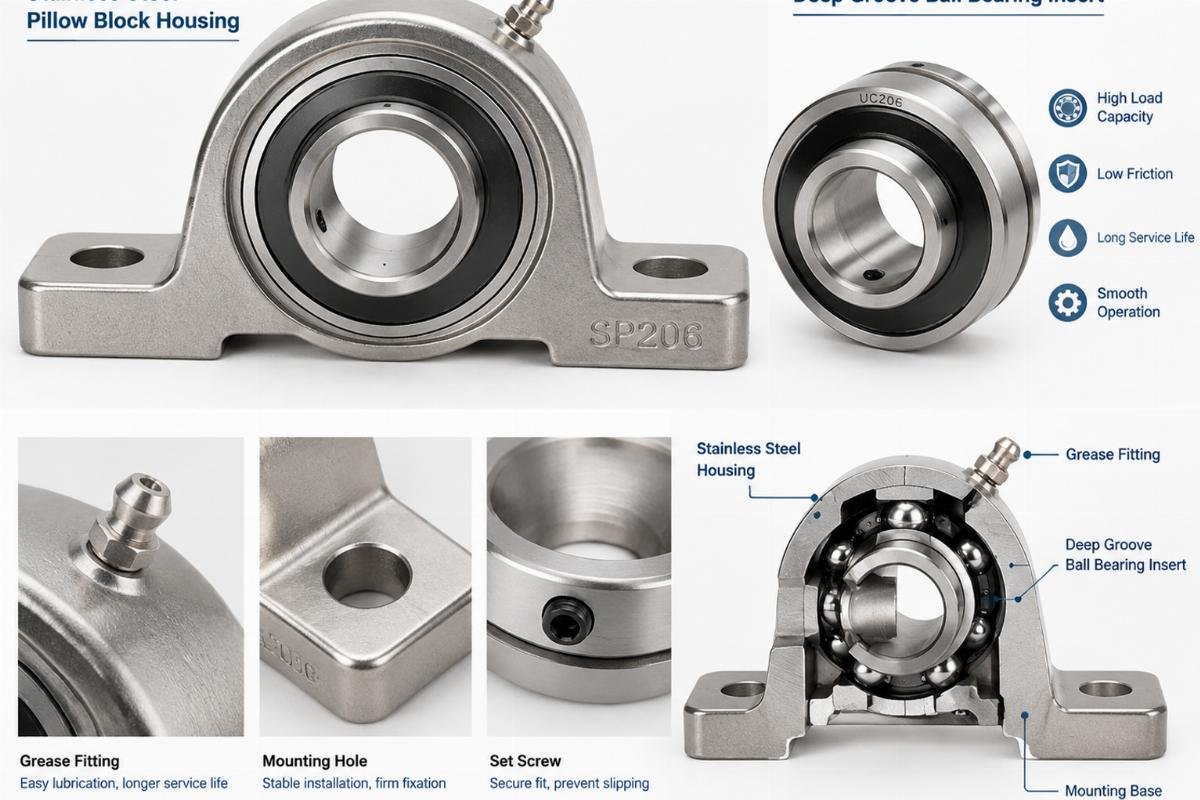
Features a deep groove raceway and single row configuration to provide stable radial load support in highly corrosive environments.
Full stainless steel construction ensures extended service life during frequent washdown or harsh food processing applications.
Every shipment includes a complete documentation package with original material certificates and detailed dimensional inspection reports.
Cross-reference alignment verified — We validate dimensional, load, and speed equivalence when substituting Sucp208 across different manufacturer catalogs to ensure seamless integration.
Technical Specifications
Parameter
Value
Designation
Sucp208
Product Type
Pillow Block Bearing
Rows Number
Single
Raceway Type
Deep Groove Raceway
Bearing Block Model
P (Pillow Block)
Vibration Level
V1, V2, V3, V4
Lubrication Method
Oil
System of Measurement
Metric
Application Suitability
Industry
Typical Applications
Material Handling
Conveyor system drive and tail pulley shafts
Food & Beverage
Washdown zones in processing and packaging lines
Agriculture
Crop handling equipment exposed to moisture and fertilizers
General Manufacturing
Machinery operating in highly corrosive or humid environments
Why Standard Housings Fail Where the OZD Sucp208 pillow block bearing Thrives
Material mismatch, not just load capacity, dictates the survival of mounted units in washdown zones.
Years ago, analyzing seized mounted units on a desert conveyor revealed that standard carbon steel housings lock up rapidly when exposed to harsh, dusty, and corrosive elements. This premature failure halts entire production lines and voids warranty coverage [NEED_CITE: rolling bearing failure mode classification per ISO 15243]. Selecting the correct housing material for the OZD Sucp208 pillow block bearing prevents these catastrophic operational disruptions and protects downstream equipment from secondary damage caused by sudden shaft lock-ups.
Matching the Sucp208 to Demanding Operational Environments
When sourcing an OZD Sucp208 pillow block bearing for aggressive environments, ensuring the housing and insert material align with the specific exposure is critical. Our engineering team provides cross-brand equivalent model consultation to verify that the selected unit meets your exact washdown or corrosion resistance requirements. This technical selection support ensures optimal performance without compromising on traceability, allowing maintenance teams to focus on productivity rather than constant component replacements.
Managing Corrosion and Contamination in Mounted Units
Mounted units in food processing or agricultural settings face constant exposure to moisture, cleaning chemicals, and particulate contamination. Effective sealing is essential to prevent lubricant washout and protect the deep groove raceway from abrasive ingress. Furthermore, maintaining proper oil lubrication intervals mitigates the friction heat generated during continuous operation [NEED_CITE: bearing lubrication and maintenance guidelines per ISO 281]. Ignoring these environmental factors accelerates housing degradation, promotes inner ring wear, and ultimately compromises the structural integrity of the entire conveyor system.
Decoding the SUCP Series Designation and Precision Tolerances
The “SU” prefix in the designation indicates a stainless steel construction, which is vital for resisting chemical corrosion compared to standard cast iron alternatives. The “P” denotes the pillow block housing configuration, designed to support radial loads while accommodating minor shaft misalignments. Precision ratings, such as P0, dictate the dimensional accuracy of the bore and outer diameters, directly influencing the vibration levels during high-speed rotation. Understanding these designations ensures the OZD Sucp208 pillow block bearing inner ring fits the shaft securely without inducing excessive stress, while appropriate internal clearance accommodates thermal expansion during continuous operation.
The Operational Impact of Incorrect Housing Material Selection
Deploying standard housings in corrosive applications inevitably leads to unplanned downtime and catastrophic damage to adjacent machinery components. The resulting maintenance interventions frequently exceed the initial procurement savings, especially when factoring in lost production revenue and emergency freight costs. According to failure analysis frameworks, surface corrosion and subsequent lubricant degradation are primary drivers of premature spalling [NEED_CITE: rolling bearing damage analysis per ISO 15243]. Proper material specification from the outset eliminates these hidden operational costs and ensures predictable maintenance scheduling.
Securing Genuine Traceability for Critical Mounted Units
Procuring genuine stainless steel mounted units requires strict verification to avoid counterfeit materials that fail under washdown conditions. We supply original products with complete traceability documentation, ensuring the metallurgical composition matches the manufacturer’s specifications. Our massive spot inventory covers thousands of standard part numbers, allowing for flexible MOQ ranging from single-unit emergency replacements to full container consolidation. Additionally, our competitive sourcing cost provides significant value compared to direct official channels, backed by global shipping consolidation and long-term after-sales technical support for failure analysis.
Documentation & Authenticity
Certificate of Conformity verifying the stainless steel material composition for washdown compliance.
Original factory batch traceability linking the specific pillow block to its production run.
Dimensional inspection report confirming P0 precision tolerances for the inner ring bore.
Metallurgical test certificate validating corrosion resistance properties of the housing and insert.
Storage, Handling & Mounting
Store the stainless steel units in original packaging to prevent surface contamination from carbon steel tools.
Verify the P0 precision bore dimensions before pressing the shaft to avoid raceway deformation.
Apply clean gloves when handling the deep groove insert to prevent moisture-induced surface spotting.
Ensure the pillow block base is perfectly aligned to prevent binding the single-row raceway.
Engineering Review for Your Specific Application
To ensure the selected unit meets your operational demands, please share your radial load calculations, operating speeds, and specific environmental exposure details. Providing the OEM equipment model number allows our technical team to perform accurate cross-reference verification. This data enables us to confirm the optimal clearance class and sealing configuration for your machinery.
Frequently Asked Questions
Q: How can I verify the material authenticity of the stainless steel housing?
A: We provide comprehensive metallurgical test certificates and original factory batch traceability for every shipment. You can cross-check the material composition against the manufacturer’s official specifications to confirm the stainless steel construction. This documentation ensures the unit will withstand corrosive washdown environments without premature degradation.
Q: What are the cross-reference precautions for this pillow block unit?
A: When cross-referencing to equivalent models from other premium global brands, it is crucial to verify the housing material, inner ring precision class, and sealing configuration. Dimensions might align, but substituting a standard cast iron housing for a stainless steel one in corrosive applications will lead to rapid failure. Always confirm these critical parameters with our engineering team.
Q: How does the P0 precision rating affect machinery performance?
A: The P0 precision rating ensures standard dimensional accuracy for the bore and outer diameters, which is sufficient for general conveyor and agricultural applications. It guarantees proper shaft fit and minimizes vibration during operation. For high-speed or ultra-precision spindles, a tighter tolerance class would be required, but P0 remains the industry standard for typical mounted units.
Q: What is the recommended lubrication approach for these mounted bearings?
A: Proper oil lubrication is essential to reduce friction and dissipate heat within the deep groove raceway. The relubrication interval depends heavily on the operating speed, ambient temperature, and contamination level of the environment. We recommend consulting the manufacturer’s maintenance guidelines and adjusting the schedule based on your specific washdown or dusty operating conditions.
Shipping Information
EU Warehouse
3-7 working days (bonded stock)
Direct from China
Shanghai & Ningbo hubs (bulk / FCL)
Markets Served
DE · IT · PL · ES · NL · FR · EU+
Incoterms
DDP / DAP available on request
Minimum Order
Contact us for MOQ details
Documents Included with Every Shipment
EN and ISO Quality Certificates
Batch traceability and manufacturing standard
Material & Heat-Treatment Reports
Full material composition and process records
CE Declaration of Conformity
For bearing units and motion products
RoHS Compliance Declaration
Restriction of hazardous substances
EUR.1 Movement Certificate
Preferential origin for EU customs
Certificate of Origin
Country of manufacture documentation
Correct HS Codes
Pre-classified for smooth customs clearance
Commercial Invoice & Packing List
VAT-compliant intra-EU invoicing
Transparent Landed Cost with Tax Explanation
SKFEU provides full price transparency so EU buyers know exactly what they pay. No hidden duties, no surprise charges at customs.
VAT-Compliant Invoicing
All intra-EU transactions are invoiced with correct VAT treatment. B2B buyers with valid EU VAT numbers receive zero-rated invoices where applicable.
No Unexpected Import Duties
Goods shipped from our EU bonded warehouse arrive as intra-EU movements -- no import duties, no customs delays for EU-based buyers.
EUR.1 & Origin Docs Ready
For shipments direct from China, EUR.1 movement certificates and certificates of origin are prepared in advance to minimise customs clearance time.
DDP Pricing Available
Ask for Delivered Duty Paid quotations -- we absorb all import costs so your landed cost is fixed and predictable from day one.
Need a landed cost breakdown? Contact Sofia at
sofia@skfeu.com
or via WhatsApp for a full DDP quotation including freight, duties and VAT for your country.
Send Inquiry
Request Pricing & Availability
Share your requirements and Sofia will respond within one working day with pricing, lead time and full documentation details.