REACH-Compliant Bearings Supplier: Genuine SKF, FAG, NSK Bulk Wholesale
Secure your imports by partnering with a REACH-compliant bearings supplier who verifies SVHC declarations for grease and seals. Avoid costly customs seizures by demanding batch-specific documentation instead of generic certificates. Ensure full traceability for mixed-brand shipments to guarantee legal compliance and smooth clearance.


A part number is not a compliance certificate.
To secure REACH-compliant bearings, you must obtain and verify the specific SVHC declaration for the grease and sealing materials before the goods leave the factory floor, rather than relying on generic brand brochures.
I learned this lesson the hard way in a humid warehouse in Dubai. The shipment looked perfect. The boxes bore the familiar blue and yellow branding of SKF and the black and white of FAG. The commercial invoice was clean. But when customs officials at Jebel Ali port requested the chemical compliance documentation for the lubricants inside the sealed units, my folder was empty. I had assumed that because the bearings were genuine, the chemical compliance was automatic. It was not. The delay cost us significant demurrage fees and nearly severed a relationship with a major rig contractor. That incident shifted my entire approach to sourcing. Now, acting as a REACH-compliant bearings supplier, I treat chemical documentation with the same rigor as dimensional tolerances. [NEED_CITE: EU REACH regulation requirements for articles containing SVHC]
The gap between a genuine mechanical component and a legally importable one often lies in the invisible chemistry of its assembly. For global distributors and OEMs, especially those moving goods into strict regulatory zones like the European Union or markets with aligned standards such as the Middle East, understanding this distinction is critical. This guide breaks down the exact verification steps required to ensure your bulk orders clear customs without seizure.
What Documents Actually Prove Chemical Compliance?
Most suppliers provide a general Certificate of Conformity, but this document rarely satisfies customs authorities for chemical safety.
A standard CoC typically confirms that the product meets mechanical specifications and originates from the stated manufacturer. It does not detail the chemical composition of the greases, seals, or anti-corrosion coatings used in the assembly. For REACH compliance, the critical document is the SVHC (Substances of Very High Concern) declaration. This document must explicitly state whether any substance from the Candidate List is present in the article above the 0.1% weight-by-weight threshold. [NEED_CITE: ECHA guidance on SVHC threshold in articles]
When I audit a new batch from a REACH-compliant bearings supplier, I look for three specific layers of documentation:
- The SVHC Declaration: A signed statement from the bearing manufacturer confirming the status of SVHCs in the final assembled unit, including the grease and seal.
- The Safety Data Sheet (SDS): Specifically for the lubricant used. While the bearing itself is an “article” under REACH, the grease can be considered a substance or mixture if it leaks or is handled separately during maintenance.
- Mill Traceability Records: These link the specific batch of steel and components to the production run, ensuring that the compliance documents match the physical goods in the container.
| Document Type | Mechanical Verification | Chemical Compliance (REACH) | Traceability Level |
|---|---|---|---|
| Standard CoC | Verified | Often Missing | Batch Level |
| SVHC Declaration | Not Applicable | Verified | Component Level |
| Mill Certificate | Verified | Partial (Steel Only) | Heat Number Level |
| Full Compliance Pack | Verified | Verified | Full Chain |
Without the SVHC declaration, your REACH-compliant bearings supplier is essentially asking you to guess the chemical content of every sealed unit. In a mixed-brand container consolidation, this risk multiplies. A single non-compliant SKU can flag the entire shipment. [NEED_CITE: Customs seizure statistics related to missing chemical docs]

Why Genuine Brands Still Fail Customs Checks
Authenticity does not equal automatic compliance if the supply chain lacks transparency.
It is a common misconception that buying genuine SKF, FAG, or NSK bearings guarantees full regulatory compliance. While the manufacturers themselves are compliant, the issue often arises in the distribution channel. If a distributor mixes batches from different regions or repackages units, the original chemical declarations may become detached from the physical product.
I once audited a large order destined for a wind farm project in Northern Europe. The bearings were genuine, sourced from authorized channels. However, the supplier had consolidated stock from various regional warehouses to meet the urgent deadline. The SVHC declarations provided were generic templates from the brand’s global website, not specific to the production batches in the container. Customs authorities rejected these generic documents because they could not verify if the specific grease batch used in those units contained newly added SVHCs. [NEED_CITE: Importance of batch-specific compliance documentation]
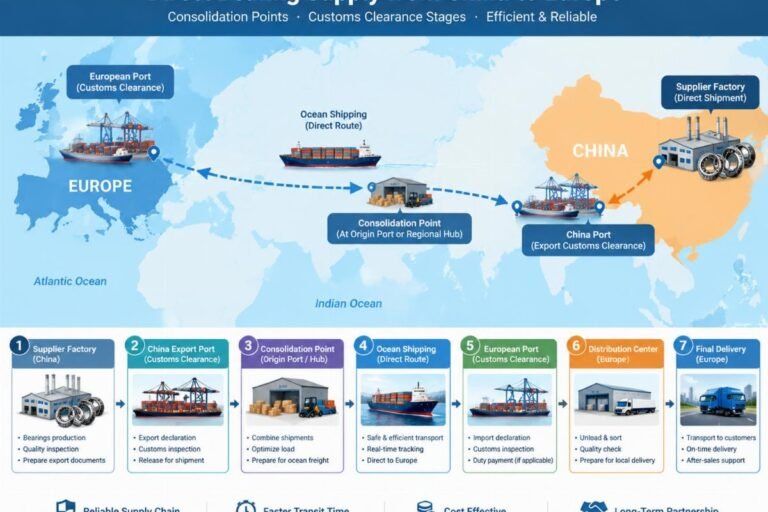
This is where the role of a specialized REACH-compliant bearings supplier becomes vital. We do not just move boxes; we maintain the digital thread of compliance. For every mixed-container consolidation, we ensure that the SVHC declaration matches the specific lot numbers of the bearings inside. This level of detail is often overlooked by generalist traders who focus solely on part number accuracy.
For buyers in the Middle East and Africa, where customs regulations are increasingly aligning with EU standards, this distinction is crucial. A REACH certificate for SKF FAG bearings is not a one-size-fits-all paper. It must be traceable. If your supplier cannot provide batch-specific declarations, they are not truly managing compliance; they are merely forwarding paperwork.

How to Verify SVHC Declarations for Bearings
Do not accept a PDF attachment without cross-referencing the batch numbers.
Verifying chemical compliance requires a systematic approach. Many buyers simply file the received documents without checking their validity against the physical goods. This passive approach leads to failures at the port of entry. To ensure your REACH-compliant bearings supplier is delivering on their promise, follow this verification protocol.
First, request the SVHC declaration before payment or shipment. Do not wait for the Bill of Lading. The declaration should list the specific substances checked and confirm their absence or presence below the threshold. Look for the date of issuance. REACH candidate lists are updated regularly. A declaration from two years ago may not account for recently added substances. [NEED_CITE: Frequency of ECHA Candidate List updates]
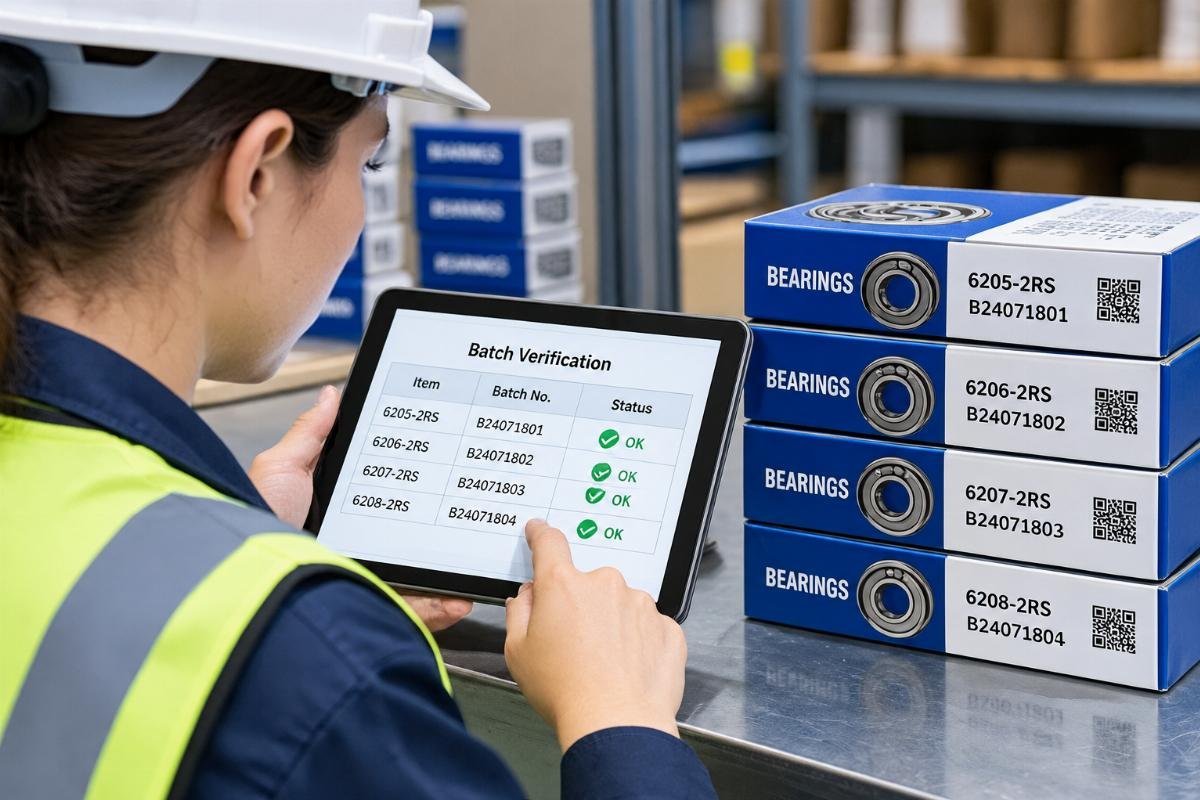
Second, match the batch numbers. The declaration must reference the specific production lots of the bearings in your order. If the supplier provides a single declaration for ten different part numbers with different manufacturing dates, ask for clarification. Each unique production run may have different material inputs.
Third, check the scope. Does the declaration cover the entire assembled bearing, including the grease, seal, and cage? Some declarations only cover the steel rings. This is insufficient for full compliance. The grease is a primary vector for SVHCs. Ensure the document explicitly states compliance for the lubricant.
| Verification Step | Action Required | Red Flag |
|---|---|---|
| Document Age | Check issuance date | Older than 12 months |
| Batch Matching | Compare lot numbers on box vs. doc | Generic “all products” statement |
| Scope Coverage | Confirm inclusion of grease/seal | Steel-only declaration |
| Signature | Verify authorized signatory | Unsigned or automated stamp |
By enforcing these checks, you transform your procurement process from a transactional exchange to a compliance-controlled operation. This diligence protects your business from unexpected delays and financial penalties.
Risks of Mixed-Batch Consolidation
Consolidating different brands and sizes in one container amplifies compliance complexity.
For many global distributors, mixing SKUs from SKF, FAG, NSK, and other brands in a single container is a logistical necessity. It optimizes shipping costs and meets diverse customer needs. However, from a compliance perspective, it creates a high-risk environment. If one brand’s documentation is incomplete, it can jeopardize the clearance of the entire container.
I recall a case involving a mixed order for an automotive aftermarket client. The container held deep-groove ball bearings from three different premium brands. Two brands provided complete SVHC declarations. The third, a smaller line within the mix, provided only a basic CoC. When customs inspected the shipment, they flagged the entire container for review. The delay lasted weeks, and the cost of storage and inspection far exceeded the savings from consolidation. [NEED_CITE: Case studies on mixed-batch customs delays]
To mitigate this, a reliable REACH-compliant bearings supplier implements a pre-shipment audit for mixed batches. We verify the compliance status of every SKU before it enters the consolidation warehouse. If a specific batch lacks proper documentation, it is excluded from the shipment until the correct papers are obtained. This proactive filtering ensures that only fully compliant goods are loaded.
For OEMs and large distributors, this means choosing a partner who understands the nuances of multi-brand sourcing. It is not enough to have the parts in stock. The digital documentation must be as robust as the physical inventory. Bearing chemical compliance Middle East and other emerging markets require this heightened level of scrutiny as local regulations evolve.

Conclusion
Compliance is a verifiable data trail, not a brand assumption.
Securing genuine, compliant bearings requires moving beyond part numbers to rigorously verify SVHC declarations and mill traceability documents before shipment. By demanding batch-specific documentation and understanding the scope of chemical compliance, buyers can avoid costly customs seizures. Partnering with a dedicated REACH-compliant bearings supplier ensures that both the mechanical integrity and regulatory status of your imports are secured, protecting your supply chain from unseen chemical risks.
Tagged

Written by
author
Editor covering global sourcing, supplier verification, and industrial product knowledge. Content is compiled from manufacturer specifications, industry standards, and hands-on experience with international B2B buyers. Every article is fact-checked before publishing to help procurement professionals make informed decisions.