Schaeffler vs SKF Bearing Ranges: Wholesale Supplier for Bulk Buyers
Master the Schaeffler vs SKF bearing comparison to avoid costly assembly failures from mismatched tolerances. Discover how aligning internal clearance and verifying traceability ensures safe mixed-brand sourcing for industrial buyers seeking reliable bulk procurement strategies.

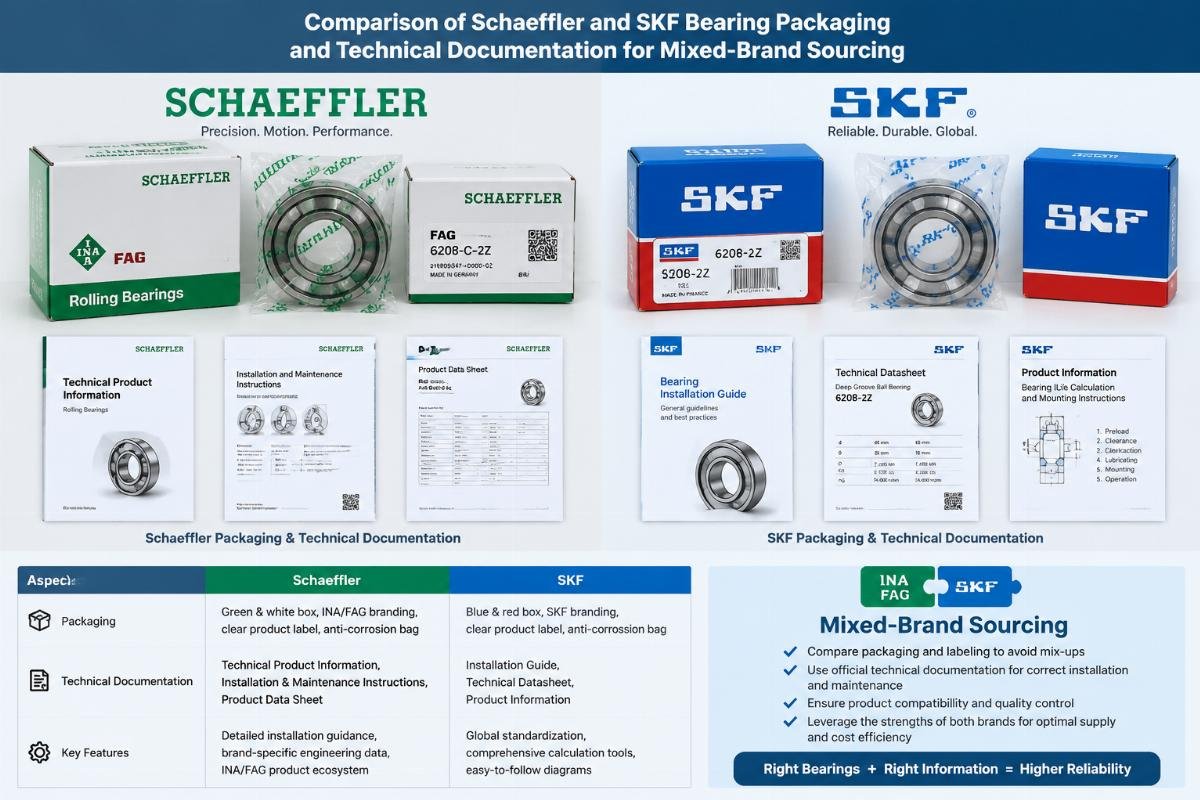
Schaeffler vs SKF Bearing Ranges: Wholesale Supplier for Bulk Buyers
Matching dimensions does not guarantee interchangeability.
Schaeffler and SKF offer distinct product strengths; successful mixed-brand sourcing requires aligning technical tolerances and ensuring original traceability, not just comparing prices. While both brands meet ISO standards, their internal clearance definitions, cage designs, and heat treatment processes differ significantly. Buyers attempting to mix FAG, INA, and SKF bearings in a single assembly without verifying these microscopic variances risk severe interference fits or premature fatigue failure. The core challenge for bulk buyers is not availability, but technical alignment across brands.
Having stood on the exhibition floors in Hanover watching heavy industry procurement teams scramble, I learned that the most expensive mistake is assuming dimensional equivalence equals functional equivalence. A batch of spherical roller bearings might share the same outer diameter and bore size, yet differ in radial internal clearance classes. When these are installed in a rigid housing without adjustment, the resulting preload can generate excessive heat within hours. This is not a theoretical risk; it is a common operational failure in mixed-batch procurement. Understanding the nuanced differences between Schaeffler vs SKF bearing comparison data is essential for avoiding such downtime.
How Do Schaeffler and SKF Product Ranges Differ?
SKF leads in precision sealing technologies and standard deep groove ball bearing consistency, while Schaeffler (encompassing FAG and INA) excels in heavy-duty industrial applications and automotive precision. These distinctions are not merely marketing claims but reflect decades of specialized engineering focus.
| Feature | SKF Approach | Schaeffler (FAG/INA) Approach |
|---|---|---|
| Sealing Technology | Proprietary rubber compounds with high contamination resistance [NEED_CITE: SKF seal material standards] | Standardized sealing solutions with strong integration in industrial gearboxes |
| Heavy-Duty Focus | Strong in general industrial and marine sectors | Dominant in automotive transmissions and heavy mining equipment |
| Precision Grades | Consistent P0 to P2 availability globally | Extensive range of super-precision bearings for machine tools |
| Cage Design | Optimized for high-speed stability in ball bearings | Robust designs for high-load spherical and cylindrical rollers |
A European wind farm operator once faced a critical lead time issue when replacing main shaft bearings. The original specification called for a specific SKF model, but the delivery window was months away. By consulting a detailed Schaeffler vs SKF bearing comparison matrix, the engineering team identified an FAG equivalent with matching load ratings and dimensional tolerances. The switch reduced the lead time significantly, keeping the turbine operational. However, this success relied on precise cross-referencing, not guesswork.
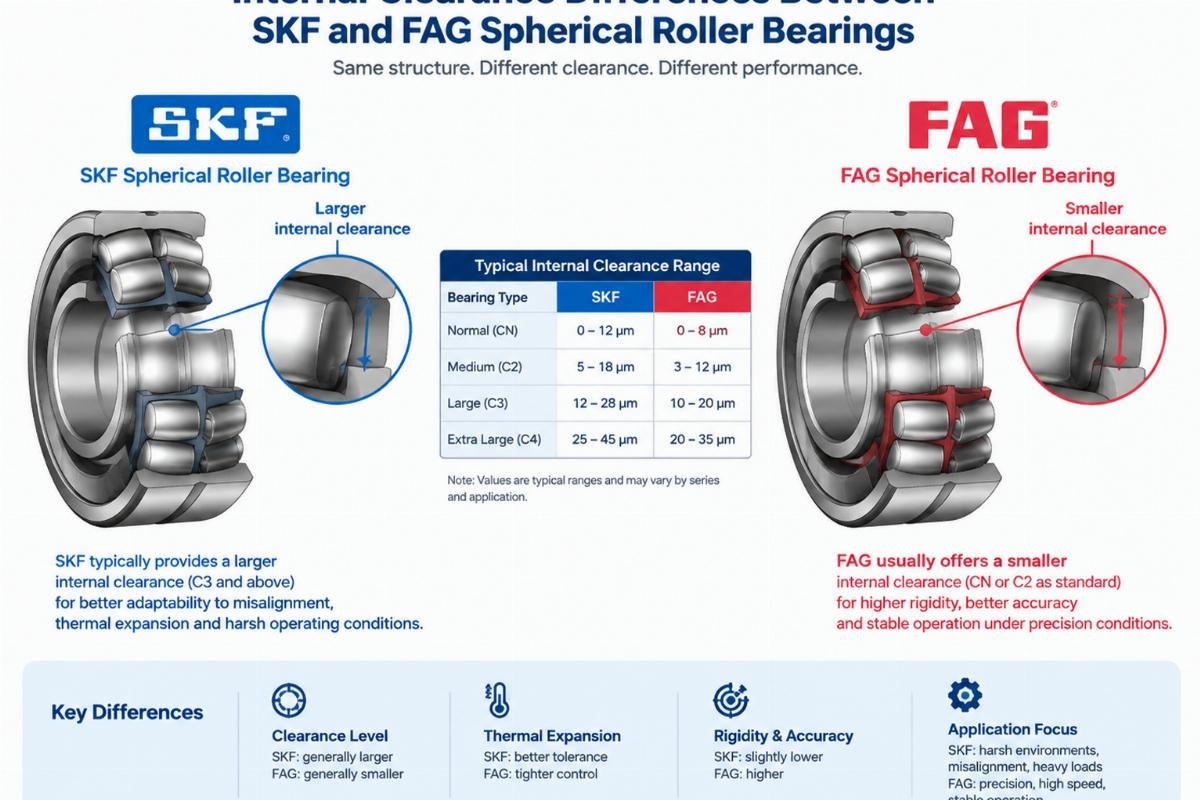
The key takeaway is that while SKF often sets the benchmark for standard industrial bearings, Schaeffler provides robust alternatives for high-load scenarios. Buyers must recognize that “equivalent” means matching performance parameters, not just part numbers. Ignoring these range differences can lead to suboptimal performance in specialized applications.
Which Brand Suits Your Specific Application Best?
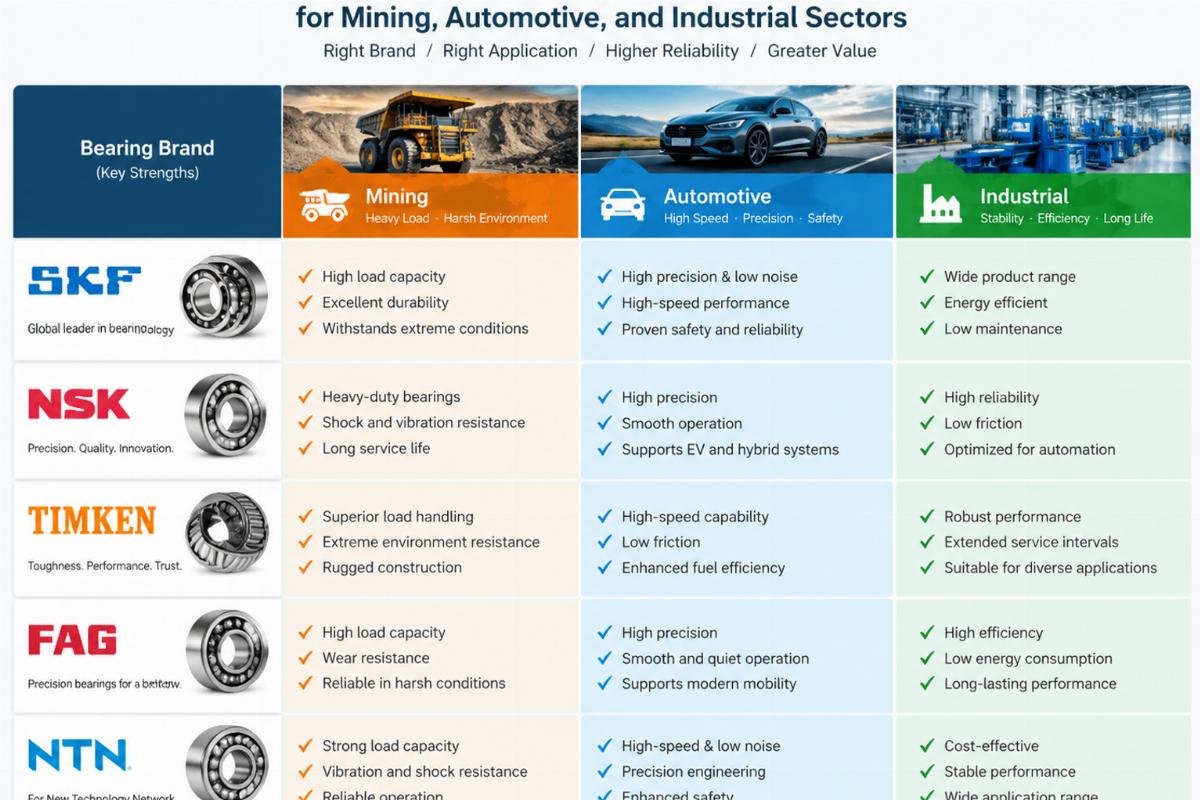
Selecting the right brand depends on the specific operational stresses of your machinery. A simple price comparison fails to account for the lifecycle cost associated with bearing failure in critical systems.
- Mining and Construction: Schaeffler’s FAG brand is often preferred for spherical roller bearings due to their robust cage designs and ability to handle misalignment. [NEED_CITE: Industry case studies on mining bearing failures]
- Automotive and Precision Manufacturing: INA (part of Schaeffler) offers specialized needle and cylindrical roller bearings that are standard in many transmission systems. SKF remains a top choice for general automotive wheel bearings due to their integrated hub units.
- MRO and General Industrial: For maintenance, repair, and operations, SKF’s widespread availability and standardized packaging make it a convenient choice. However, mixing brands requires careful verification of clearance classes.
A Middle East steel mill experienced repeated failures in their conveyor system rollers. The initial procurement team sourced the cheapest available deep groove ball bearings, mixing brands to save costs. The lack of consistency in radial internal clearance led to uneven load distribution. After switching to a consolidated supply strategy that aligned technical specifications across brands, the mean time between failures increased noticeably. This scenario highlights why a nuanced Schaeffler vs SKF bearing comparison is vital for MRO buyers.
For OEMs, the decision often hinges on existing design certifications. Changing a specified brand requires re-validation, which can be costly. For distributors, offering both brands allows them to cater to diverse customer preferences, provided they can guarantee the authenticity and technical suitability of each unit.
What Are the Hidden Risks of Mixing Brands?
Most buyers assume that if two bearings have the same ISO designation, they are interchangeable. This is a dangerous misconception. Internal clearance, cage material, and lubrication compatibility vary significantly between manufacturers.
| Risk Factor | Consequence of Mismatch | Mitigation Strategy |
|---|---|---|
| Radial Internal Clearance | Interference fit, overheating, premature seizure | Verify C3/C4 clearance classes match exactly [NEED_CITE: ISO 5753 clearance standards] |
| Cage Material | Chemical incompatibility with lubricants, cage fracture | Confirm cage material (steel, brass, polymer) compatibility |
| Lubrication Type | Grease separation, reduced service life | Ensure factory fill grease is compatible or purge before installation |
| Tolerance Stack-up | Vibration, noise, reduced precision | Use consistent precision grades (P0, P6, P5) across the assembly |
A US-based industrial distributor once consolidated an urgent order for a textile manufacturer, blending FAG and SKF deep groove ball bearings. The order was shipped quickly, but the client reported excessive noise and vibration upon installation. Investigation revealed that while the dimensions were identical, the internal clearance classes differed slightly due to different manufacturing tolerances. The mismatch caused subtle binding in the high-speed spindles. This incident underscores the importance of technical oversight in mixed-brand sourcing.
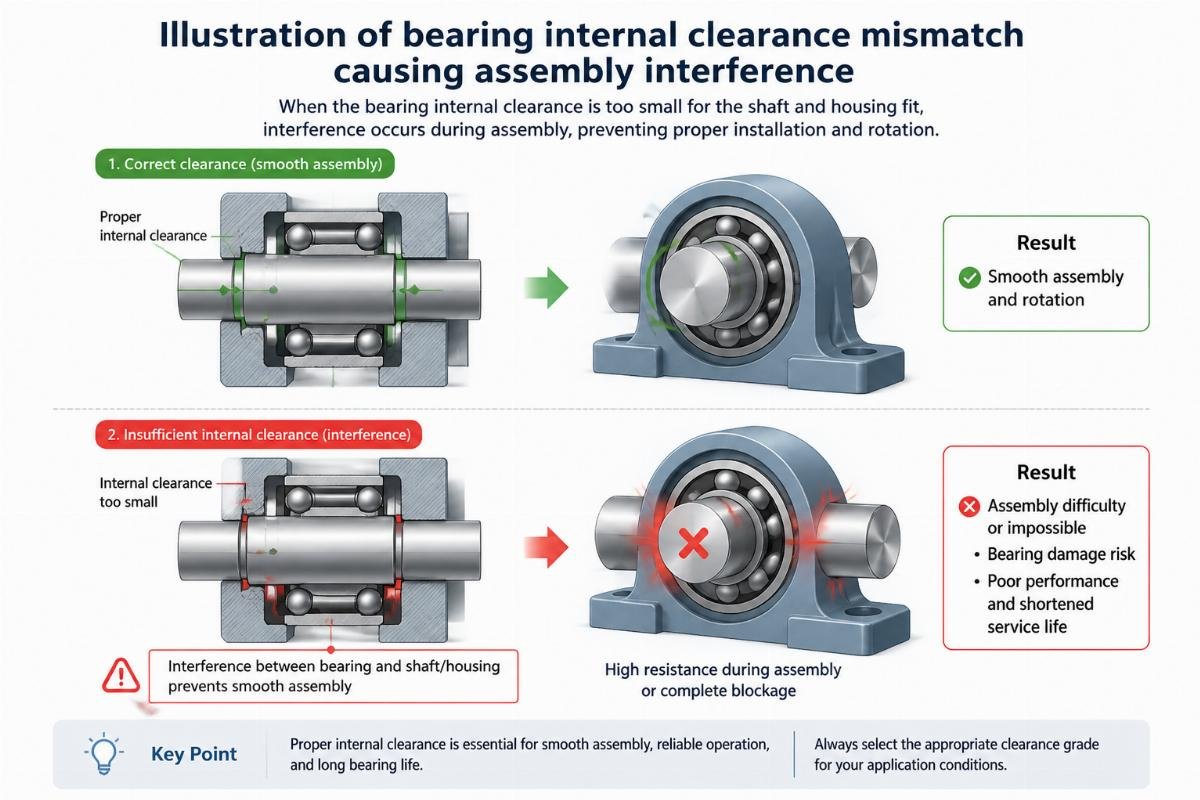
When conducting a Schaeffler vs SKF bearing comparison for mixed batches, buyers must prioritize technical alignment over cost savings. Unaligned tolerances do not just reduce efficiency; they multiply replacement costs through unplanned downtime. Professional suppliers mitigate this risk by verifying technical datasheets for every part number in a mixed consignment.
How to Ensure Authenticity in Mixed-Batch Sourcing?
The global bearing market is plagued by counterfeits, particularly for popular brands like SKF and FAG. Mixing brands in a single shipment increases the complexity of verification, as each brand has unique anti-counterfeit features.
- Traceability Documentation: Require original mill certificates or authorization letters for each brand. Genuine products come with batch-specific tracking codes. [NEED_CITE: Anti-counterfeit guidelines from bearing manufacturers]
- Supplier Verification: Work with suppliers who have direct relationships with multiple manufacturers. Avoid intermediaries who cannot provide provenance for each brand in the mix.
- Physical Inspection: Check packaging quality, holographic labels, and surface finish. Counterfeit bearings often have poor labeling or rough machining marks.
- Technical Consultation: Engage suppliers who offer cross-brand equivalent consultation. They can help identify valid substitutions that maintain technical integrity.
A Latin American mining operator sourced a large batch of tapered roller bearings from a new trader. The price was attractive, but the bearings failed within weeks. Subsequent analysis showed they were counterfeit, with inferior steel quality. The operator lost significant production time and had to replace the entire set at a much higher cost. This experience highlights the critical need for verified traceability in mixed-brand procurement.
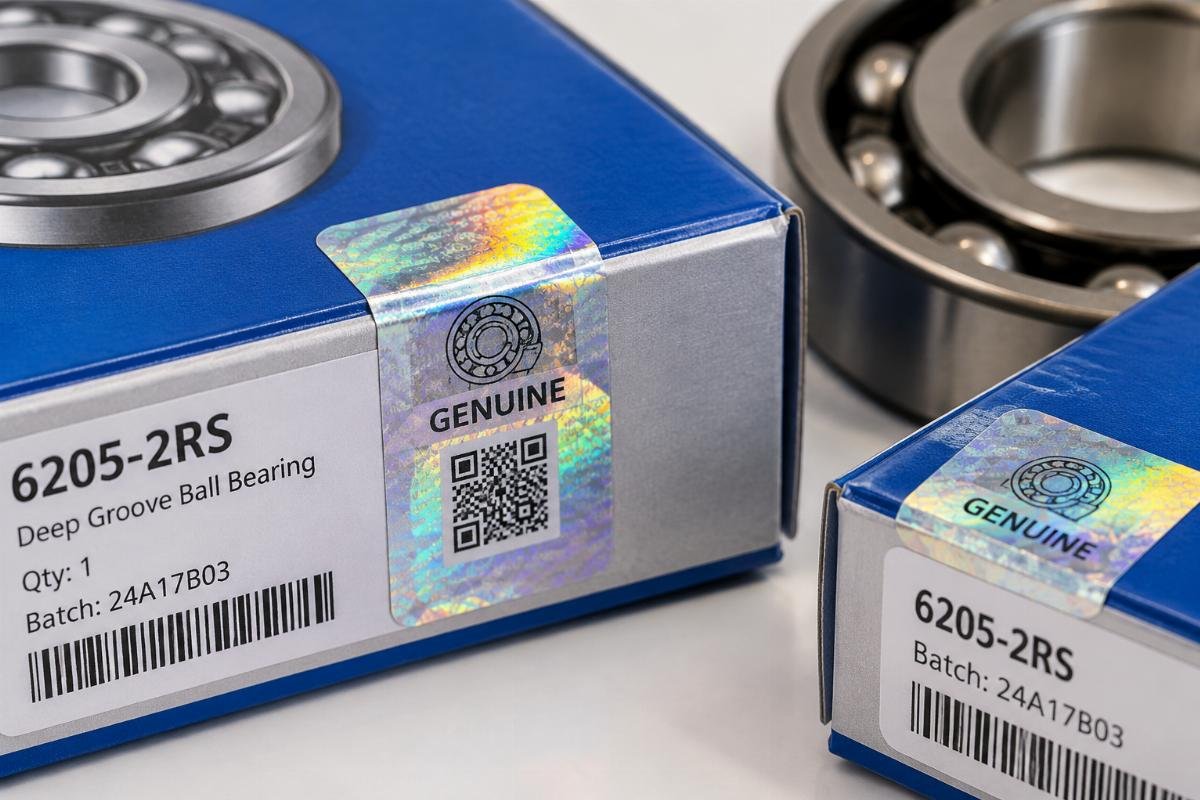
Ensuring authenticity is not just about avoiding fakes; it is about guaranteeing performance. When you engage in a Schaeffler vs SKF bearing comparison for procurement, the reliability of the supply chain is as important as the product specifications. Trusted suppliers provide the documentation and technical support necessary to validate every unit in a mixed batch.
Conclusion
Technical alignment outweighs price savings in mixed-brand procurement.
Successfully navigating the differences between Schaeffler and SKF requires a deep understanding of their respective product strengths and technical nuances. Buyers must prioritize tolerance alignment, clearance verification, and authentic traceability to avoid costly assembly failures. By treating mixed-brand sourcing as a technical challenge rather than a simple purchasing task, industrial operators can optimize their supply chains without compromising reliability.
Tagged

Written by
author
Editor covering global sourcing, supplier verification, and industrial product knowledge. Content is compiled from manufacturer specifications, industry standards, and hands-on experience with international B2B buyers. Every article is fact-checked before publishing to help procurement professionals make informed decisions.


