Hygienic Corrosion-Resistant Bearings for Meat Processing Wholesale Supplier
Standard carbon steel bearings fail under high-pressure washdowns, making hygienic Meat Processing Bearings essential for preventing rust and contamination. Solid stainless steel housings paired with NSF H1 food-grade grease and multi-lip seals ensure operational reliability. This approach eliminates coating delamination risks and protects food safety compliance.


Hygienic Corrosion-Resistant Bearings for Meat Processing Wholesale Supplier
Surface plating does not prevent rust in high-pressure washdowns; it accelerates contamination.
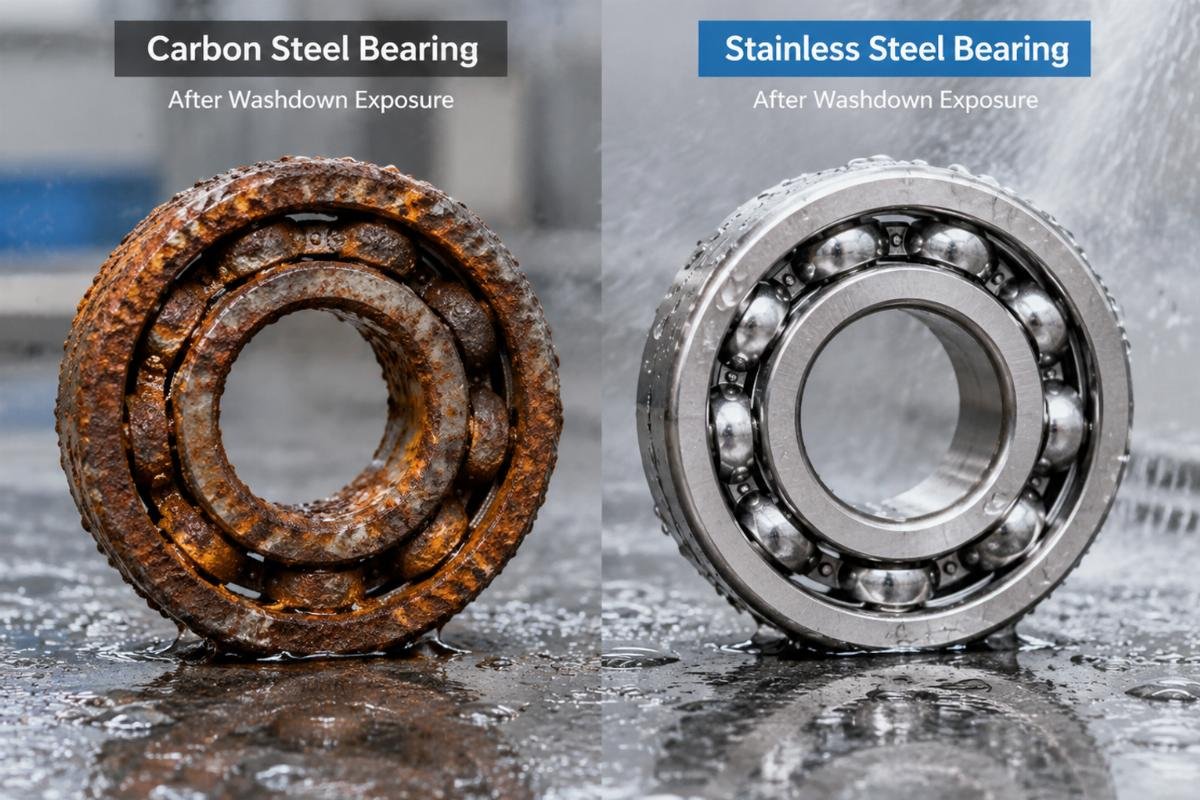
Standard carbon steel bearings fail under daily high-pressure cleaning because protective coatings chip off, exposing the base metal to rapid oxidation. The only reliable solution for meat processing environments is solid stainless steel housings paired with NSF H1 registered food-grade grease, which prevents both mechanical seizure and chemical contamination of food products.
I still recall the silence in a Lagos meat processing plant after a batch rejection. The issue was not the meat quality but the iron oxide flakes shedding from rusted insert bearings into the product stream. The facility had installed standard carbon steel units, assuming the zinc plating would withstand the nightly high-pressure hose-downs. It did not. The water penetrated the seals, the plating fractured under thermal shock and pressure, and the resulting corrosion contaminated an entire production run. That incident shifted my focus entirely toward hygienic bearings for food industry applications where material integrity is non-negotiable.
Understanding why standard components fail requires looking beyond surface appearance. In meat processing, equipment faces aggressive cleaning agents, high humidity, and frequent temperature changes. These conditions create a perfect storm for corrosion if the bearing housing and internal components are not specifically engineered for such exposure.
Why Do Standard Bearings Fail in Meat Processing?
High-pressure washdowns destroy carbon steel structures and compromise standard seal integrity.
The primary failure mode in meat processing facilities is not mechanical wear but environmental degradation. Standard bearings use carbon steel for housings and inserts, often coated with zinc or nickel for basic protection. While these coatings resist ambient humidity, they cannot withstand the mechanical force of high-pressure water jets used to remove organic residue. [NEED_CITE: failure modes in washdown environments per ISO 14162]
When * creating an emulsion that loses its viscosity and protective properties. Simultaneously, the trapped moisture causes the carbon steel to rust from the inside out. This internal corrosion expands the metal, increasing friction and eventually leading to seizure. More critically, rust particles can escape through compromised seals, directly contaminating the food product.
In a poultry processing line in South Africa, standard grease washed out within weeks of operation. The lack of proper sealing allowed water ingress, leading to frequent bearing seizures and unplanned downtime. The maintenance team initially blamed the bearing quality, but the root cause was the incompatibility of standard lubricants and seals with the washdown protocol. Upgrading to sealed stainless steel units with specialized grease resolved the issue, extending service life significantly.
The cost of such failures extends beyond replacement parts. Batch scrapping due to contamination, regulatory fines, and production halts create financial losses that dwarf the initial savings from using cheaper standard bearings. For MRO buyers and OEMs, selecting the right component is a risk management decision, not just a procurement task.
How to Select the Right Material for Corrosion Resistance?
Solid stainless steel is superior to plated carbon steel because it eliminates the risk of coating delamination.
Many buyers assume that a shiny, plated surface offers sufficient protection. This is a dangerous misconception. Plating is a thin layer that can crack, chip, or wear away under mechanical stress or thermal cycling. Once the coating is breached, the underlying carbon steel corrodes rapidly, often worse than if it had been left uncoated due to galvanic effects.
Solid stainless steel housings, particularly those made from 304 or 316 grades, provide uniform corrosion resistance throughout the material. There is no coating to fail. The choice between 304 and 316 depends on the specific chemical environment. While 304 offers good resistance to most food acids and cleaning agents, 316 provides superior protection against chlorides, which are common in many industrial sanitizers. [NEED_CITE: corrosion resistance comparison of 304 vs 316 stainless steel]
| Material Type | Corrosion Resistance | Coating Risk | Suitability for Washdown |
|---|---|---|---|
| Carbon Steel with Plating | Low | High (Chipping/Delamination) | Vulnerable |
| Stainless Steel 304 | Good | None | Resistant |
| Stainless Steel 316 | Robust | None | Robust |
For a mixed-brand replacement project in a large facility, consolidating SKUs to solid stainless steel variants simplified inventory and reduced lead times. The facility previously struggled with a variety of plated and unpainted units, leading to confusion and incorrect installations. Standardizing on stainless steel insert bearings NSF H1 compatible units ensured that every replacement part met the hygiene standard, regardless of the original equipment manufacturer.

Selecting the right material also involves verifying the source. Genuine products from brands like SKF, FAG, or NSK ensure that the steel grade meets international standards. Counterfeit or substandard units may claim to be stainless but often use lower-grade alloys that pit and corrode quickly. Traceability documentation is essential to verify material authenticity.
What Lubrication and Sealing Ensure Hygiene?
NSF H1 registered grease and IP67 rated multi-lip seals are critical for preventing contamination.
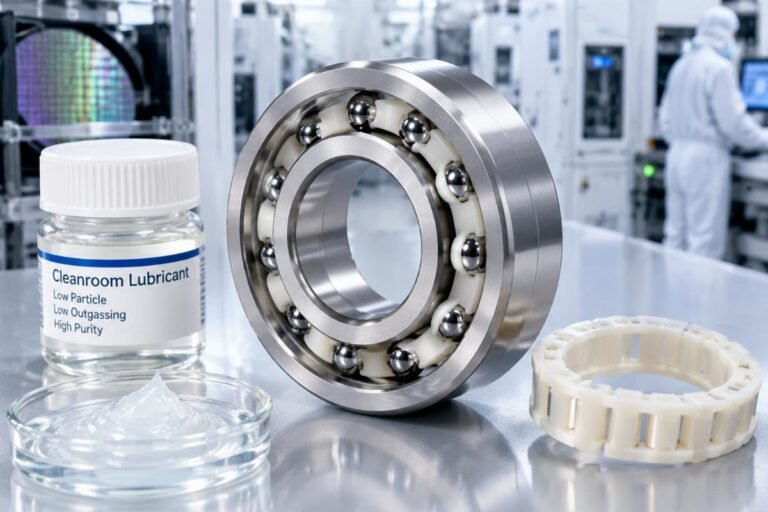
Even with a stainless steel housing, a bearing will fail if the lubricant is inappropriate or the seals are inadequate. Standard industrial greases are not safe for incidental food contact. If a seal leaks, non-food-grade grease can contaminate the product, leading to serious health and regulatory issues. NSF H1 registered lubricants are formulated to be safe in case of incidental contact, providing a crucial safety net. [NEED_CITE: NSF International standards for H1 lubricants]
Seal design is equally important. Single-lip seals often fail under high-pressure washdowns. Multi-lip contact seals create multiple barriers against water and contaminants. Some advanced designs incorporate labyrinth features that further impede ingress. The goal is to achieve an IP67 rating or higher, ensuring protection against temporary immersion and high-pressure jets.
In the West Africa case mentioned earlier, the initial failure was partly due to inadequate sealing. The water penetrated the single-lip seal, washing out the grease and allowing rust to form. Upgrading to units with multi-lip seals and food-grade grease prevented recurrence. The grease retention rate improved noticeably, and the bearings maintained their performance despite daily harsh cleaning.

When sourcing these components, it is vital to confirm the NSF registration of the grease and the specific seal type. Suppliers should provide documentation proving compliance. For OEMs designing new equipment, specifying these requirements upfront avoids costly retrofits later. For MRO operators, ensuring that replacement units match these specifications is key to maintaining hygiene standards.
How to Source and Consolidate Hygienic Bearings?
One-stop sourcing for genuine brands simplifies procurement and ensures traceability for compliance.
Sourcing hygienic bearings can be complex due to the variety of brands, sizes, and specifications required in a typical processing plant. Managing multiple suppliers increases administrative burden and risks inconsistency in quality. A consolidated sourcing approach allows buyers to procure stainless steel insert bearings NSF H1 compatible units from various premium brands like SKF, FAG, NSK, and NTN through a single channel.
This approach is particularly beneficial for facilities undergoing overhauls or expansions. Instead of dealing with separate orders for different brands, buyers can consolidate their requirements into a single shipment. This reduces logistics costs and simplifies customs clearance. Additionally, having a single point of contact for technical support and warranty claims streamlines after-sales service.
For distributors and wholesalers, offering a mixed-brand portfolio allows them to meet diverse customer needs without holding excessive inventory. They can source genuine products with full traceability documentation, ensuring that their clients receive authentic components. This is crucial in markets where counterfeit goods are prevalent. Providing technical datasheets and selection support adds value and helps customers make informed decisions.

Traceability is not just a bureaucratic requirement; it is a safeguard against liability. In the event of a contamination incident, being able to prove the origin and specification of every bearing used in the line is essential. Reputable suppliers provide batch-level documentation that tracks the product from manufacturing to delivery. This level of transparency builds trust and protects both the supplier and the end-user.
Conclusion
Hygiene in meat processing depends on material integrity and proper sealing, not just surface appearance.
Standard carbon steel bearings are unsuitable for high-pressure washdown environments due to the risk of coating failure and internal corrosion. Solid stainless steel housings combined with NSF H1 food-grade grease and multi-lip seals provide the necessary protection against both mechanical failure and product contamination. Sourcing these components from reputable suppliers who offer genuine brands and traceability documentation ensures compliance and operational reliability.
Tagged

Written by
author
Editor covering global sourcing, supplier verification, and industrial product knowledge. Content is compiled from manufacturer specifications, industry standards, and hands-on experience with international B2B buyers. Every article is fact-checked before publishing to help procurement professionals make informed decisions.