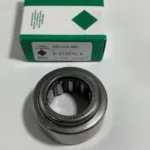
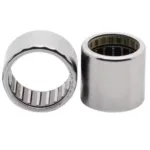
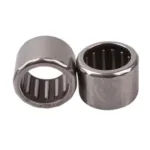
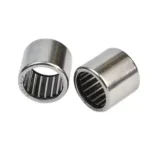
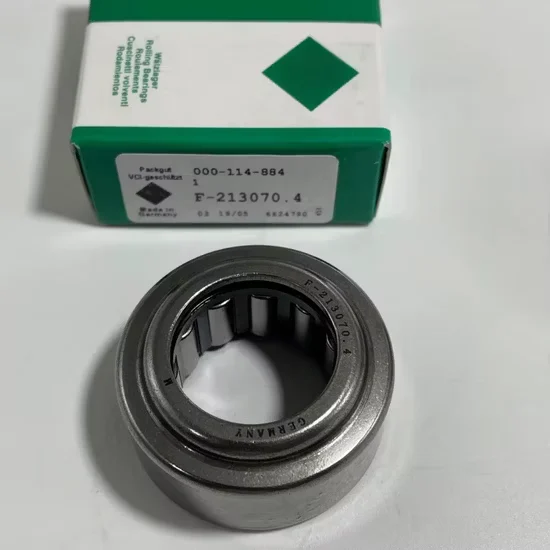
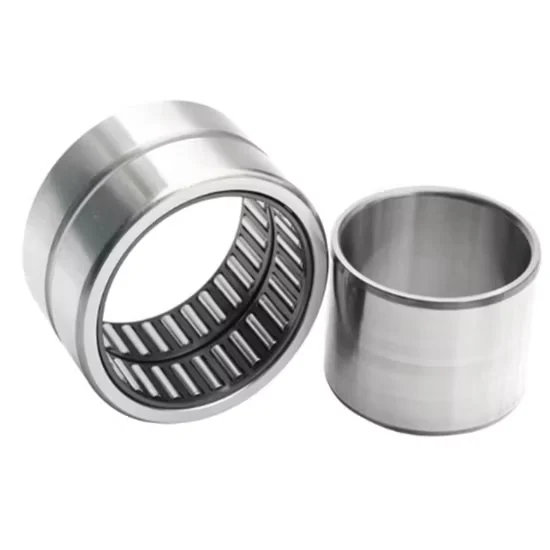
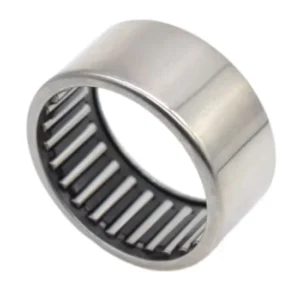
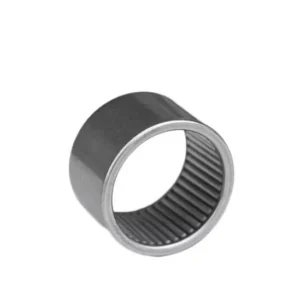
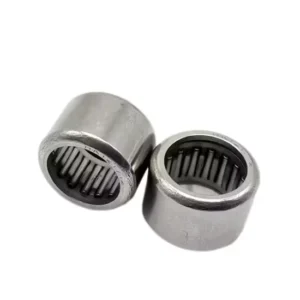
HK2220 Needle Roller Bearing 22x28x20mm Low Friction High Strength
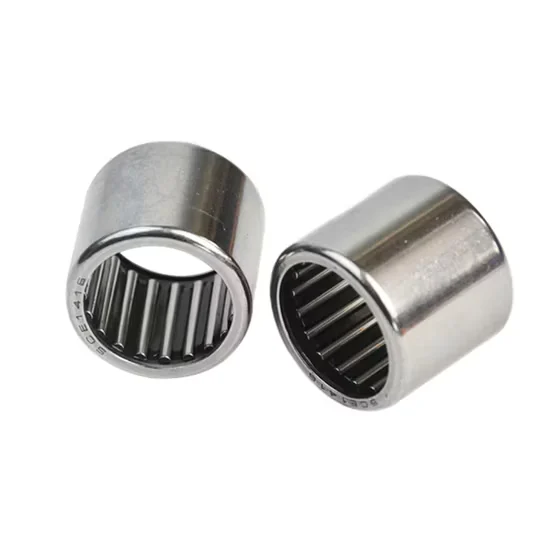
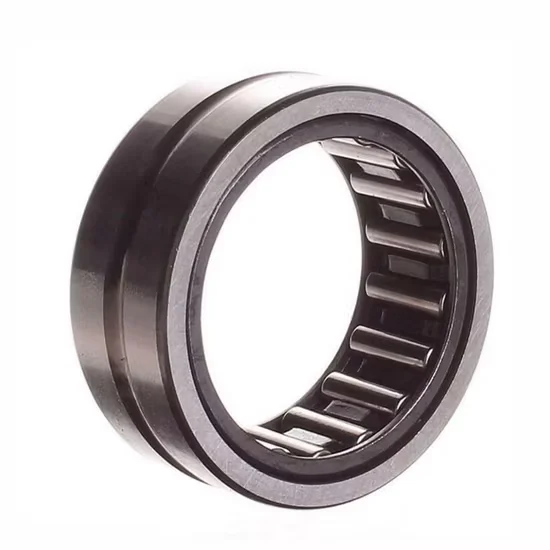
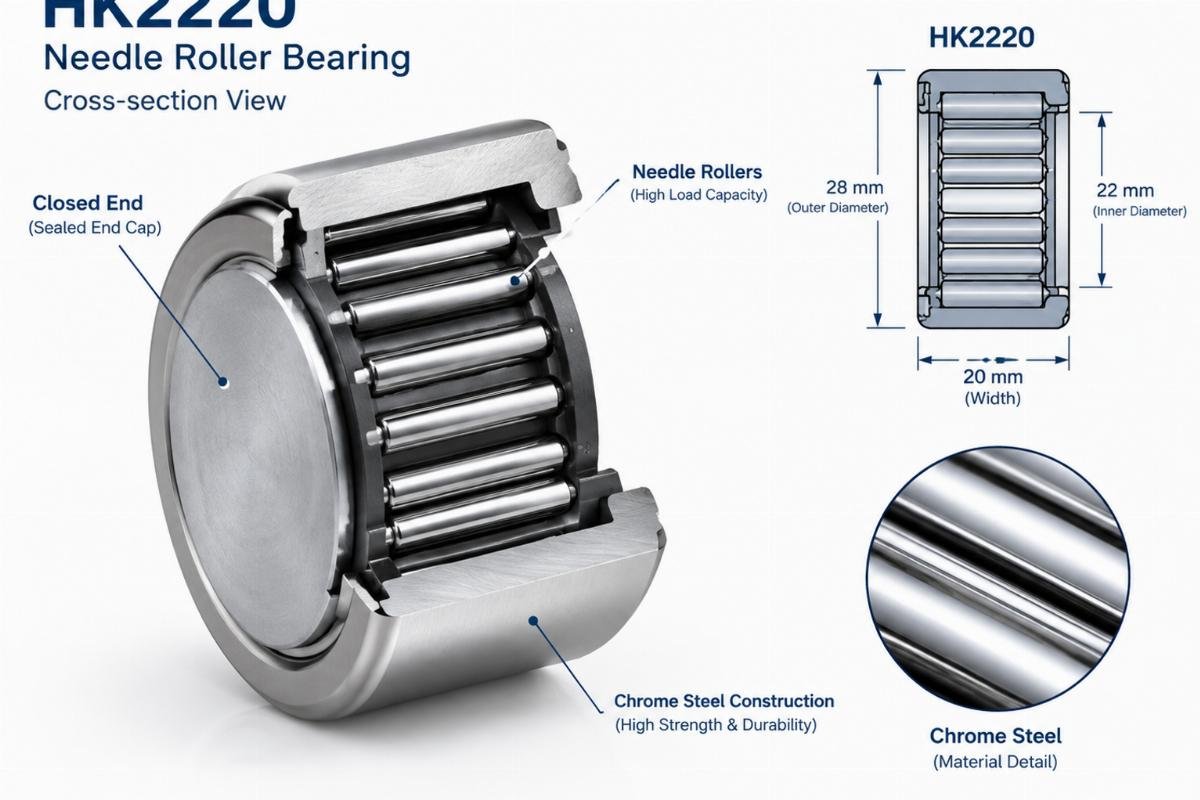
HK2220 Needle Roller Bearing 22×28×20 mm — Closed-end drawn cup design without outer ring, crafted from chrome steel for high load capacity in compact radial spaces, suited to machinery repair and general MRO replacement applications. Confirm cross-reference alignment on bore diameter, material specification, and precision class before placing your order.
Authentic QR Verification — Scan the manufacturer’s official app QR code on the HK2220 packaging to instantly confirm batch origin and prevent counterfeit drawn cup bearings.
Technical Specifications
Parameter
Value
Designation
HK2220
Bearing Type
Needle Roller Bearing
Bore Diameter (d)
22 mm
Outside Diameter (D)
28 mm
Width (B)
20 mm
Material
Chrome Steel
Style
Without Outer Ring
Type
Closed
Precision Class
P0 / P6 / P5
Application Suitability
Industry
Typical Applications
Automotive
Transmission shafts and rocker arm pivots
Machine Tools
Spindle support and gear box secondary shafts
Pumps
Hydraulic pump drive shafts and piston guides
Machinery Repair
General MRO replacement for compact radial spaces
Why Shaft Hardness Destroys Your HK2220 Needle Roller Bearing Before the Steel Does
The drawn cup shell is tough, but a soft mating shaft will grind the needle rollers into metallic dust within days.
Many maintenance engineers assume the compact design handles all radial loads, ignoring the mating shaft surface requirements entirely. Early in my career, I supplied these exact bearings for a high-speed textile application, only to see the shaft surface groove and the rollers fail completely because the mating hardness was well below specification [NEED_CITE: rolling bearing failure mode classification per ISO 15243]. The localized stress concentration on an unhardened shaft creates microscopic debris that circulates through the lubricant, accelerating abrasive wear across the entire needle set long before the bearing itself reaches its calculated fatigue limit.
Matching the HK2220 Needle Roller Bearing to Compact Radial Spaces
When radial space is severely restricted by adjacent structural components, this specific configuration provides maximum load capacity within a minimal cross-section. Our engineering team frequently cross-references this designation against equivalent models from premium global brands to ensure dimensional interchangeability for urgent MRO projects across different manufacturing facilities. This sourcing flexibility allows buyers to consolidate mixed-brand packages without compromising the original equipment footprint or waiting for extended lead times. By mapping the exact dimensional envelope, we help procurement teams secure the right replacement parts even when the original supplier faces stock shortages.
Navigating Contamination and Lubrication Starvation in Drawn Cup Housings
Operating in dusty environments like building material processing introduces severe contamination risks to unprotected rolling elements. The closed-end construction effectively retains factory-applied grease while blocking particulate ingress from the housing bottom, acting as a primary defense mechanism. However, relying solely on initial lubrication without considering external sealing in highly abrasive conditions often leads to premature wear [NEED_CITE: bearing contamination impact on fatigue life per ISO 281]. Fine particulate matter can easily bypass inadequate housing seals, embedding itself into the softer shaft surface and acting as a lapping compound that destroys the precise geometric profile of the needle rollers.
Decoding the Closed Type and Without Outer Ring Architecture
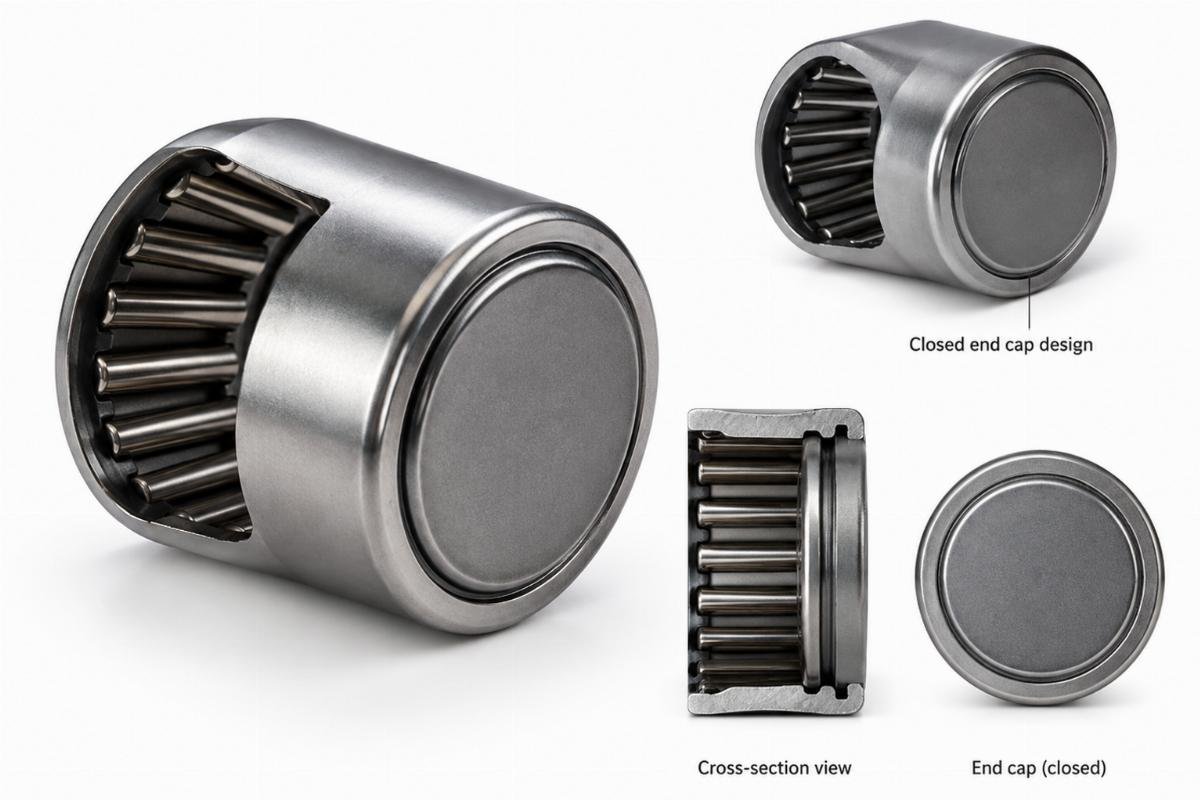
The absence of an outer ring means the needle rollers run directly on the mating shaft, demanding a hardened and ground raceway surface to prevent rapid degradation. The closed type features a solid end cap that acts as a physical barrier against axial dirt penetration and helps maintain internal lubrication pressure during high-speed rotation. Available in high-carbon chrome steel, the thin drawn cup shell achieves remarkable structural rigidity despite its minimal thickness, allowing it to withstand significant press-fit forces. Available in P0, P6, and P5 precision ratings, the selection depends entirely on the rotational speed and runout tolerance required by the specific machinery. Choosing the correct precision class ensures that the bearing operates smoothly without generating excessive heat or vibration in sensitive assemblies.
The Hidden Downtime Costs of Ignoring Mating Surface Requirements
Failing to verify the shaft hardness before installation inevitably results in catastrophic raceway spalling and unplanned production halts. When the underlying shaft yields under high radial stress, the geometric alignment of the rollers collapses, triggering secondary damage to adjacent gears, seals, and drive components. Such premature failures routinely void equipment warranties and inflate maintenance budgets far beyond the initial component cost [NEED_CITE: typical failure modes of drawn cup bearings per ISO 15243]. The true expense lies in the labor hours required to disassemble the machinery, machine a new shaft, and recalibrate the entire drive train, turning a minor replacement task into a major operational disruption.
Securing Genuine HK Series Components for Critical MRO Replacements
The thin outer shell of drawn cup bearings is highly susceptible to deformation during transit, which is why we enforce strict original packaging protocols until the exact moment of installation. We provide complete batch traceability documentation, ensuring every unit matches the specific metallurgical standards of the original manufacturer to guarantee consistent performance. Our flexible consolidation services allow you to mix this specific size with other heavy-duty spherical or tapered roller bearings in a single container shipment, optimizing freight costs. Furthermore, our technical team proactively verifies shaft hardness specifications with your engineers prior to dispatch to prevent the exact mismatch failures I witnessed years ago, ensuring long-term reliability.
Documentation & Authenticity
Original batch traceability certificates linking the HK2220 to specific production heat numbers.
Dimensional inspection reports confirming the 22x28x20 mm tolerances before dispatch.
Material certification verifying the high-carbon chrome steel metallurgical composition.
Official QR verification labels for instant authenticity checks via manufacturer apps.
Storage, Handling & Mounting
Keep the HK2220 in original packaging to prevent the thin drawn cup shell from ovalizing.
Use a dedicated mounting sleeve to press the bearing in, avoiding direct hammer blows on the closed end.
Verify the mating shaft surface hardness reaches standard bearing steel levels before assembly.
Apply clean gloves during handling to prevent moisture corrosion on the unsealed inner bore.
Preparing Your Technical Data for HK2220 Needle Roller Bearing Selection
To ensure optimal performance and avoid premature failure, please share your specific radial load profiles, operating speeds, and the exact hardness rating of your mating shaft. If you are replacing an existing component, providing the original equipment manufacturer part number allows our technical team to perform a precise cross-reference check against our extensive database. Supplying these detailed operational parameters enables our engineers to recommend the most suitable precision class, verify the L10 life calculation, and confirm long-term reliability for your specific application environment.
Frequently Asked Questions
Q: What does the “HK” prefix mean in needle roller bearing designations?
A: The HK prefix designates a drawn cup needle roller bearing with a closed end, manufactured without an inner ring. This specific architecture relies on the shaft itself acting as the inner raceway, which significantly reduces the overall radial cross-section while maintaining high load capacity in compact assemblies.
Q: How to choose between P0, P6, and P5 precision ratings for needle bearings?
A: Standard P0 precision is suitable for general industrial machinery with moderate speed and load requirements. P6 and P5 ratings offer tighter dimensional and running accuracy tolerances, which are essential for high-speed machine tool spindles or automotive transmissions where minimal vibration and precise shaft positioning are absolutely critical.
Q: How to install drawn cup needle bearings without damaging the thin outer shell?
A: Installation requires a specialized mounting mandrel that contacts the outer ring evenly across its entire width. Applying force directly to the closed end cap or using uneven pressure will easily deform the thin drawn cup shell, causing the needle rollers to bind and fail immediately upon machine startup.
Q: What is the difference between open and closed type needle roller bearings?
A: Open type bearings have both ends exposed, allowing for through-lubrication but requiring external seals to block contaminants. Closed type variants feature a solid stamped end cap that retains internal grease and prevents dirt ingress from one side, making them ideal for blind-end housing applications where external sealing is difficult.
Shipping Information
EU Warehouse
3-7 working days (bonded stock)
Direct from China
Shanghai & Ningbo hubs (bulk / FCL)
Markets Served
DE · IT · PL · ES · NL · FR · EU+
Incoterms
DDP / DAP available on request
Minimum Order
Contact us for MOQ details
Documents Included with Every Shipment
EN and ISO Quality Certificates
Batch traceability and manufacturing standard
Material & Heat-Treatment Reports
Full material composition and process records
CE Declaration of Conformity
For bearing units and motion products
RoHS Compliance Declaration
Restriction of hazardous substances
EUR.1 Movement Certificate
Preferential origin for EU customs
Certificate of Origin
Country of manufacture documentation
Correct HS Codes
Pre-classified for smooth customs clearance
Commercial Invoice & Packing List
VAT-compliant intra-EU invoicing
Transparent Landed Cost with Tax Explanation
SKFEU provides full price transparency so EU buyers know exactly what they pay. No hidden duties, no surprise charges at customs.
VAT-Compliant Invoicing
All intra-EU transactions are invoiced with correct VAT treatment. B2B buyers with valid EU VAT numbers receive zero-rated invoices where applicable.
No Unexpected Import Duties
Goods shipped from our EU bonded warehouse arrive as intra-EU movements -- no import duties, no customs delays for EU-based buyers.
EUR.1 & Origin Docs Ready
For shipments direct from China, EUR.1 movement certificates and certificates of origin are prepared in advance to minimise customs clearance time.
DDP Pricing Available
Ask for Delivered Duty Paid quotations -- we absorb all import costs so your landed cost is fixed and predictable from day one.
Need a landed cost breakdown? Contact Sofia at
sofia@skfeu.com
or via WhatsApp for a full DDP quotation including freight, duties and VAT for your country.
Send Inquiry
Request Pricing & Availability
Share your requirements and Sofia will respond within one working day with pricing, lead time and full documentation details.