Electric Bus Motor & Wheel End Bearings Wholesale Supplier
Selecting Electric Bus Bearings requires matching internal clearance and lubrication to extreme conditions rather than chasing the lowest price. This guide prevents wheel end seizure in cold climates and motor wear by prioritizing genuine cross-brand sourcing, verified traceability, and application-specific technical selection for fleet reliability.

Electric Bus Motor & Wheel End Bearings Wholesale Supplier
The cheapest bid often carries the highest hidden cost.
Selecting electric bus motor and wheel end bearings requires matching internal clearance and lubrication to extreme conditions, prioritizing genuine cross-brand sourcing over lowest price. This approach prevents seizure in cold climates and premature wear in high-speed motors, ensuring fleet reliability through verified traceability and application-specific technical selection.
I still remember the chill in the air at a Chicago commercial vehicle exhibition, not from the weather, but from the frustration of a European buyer. He described how his electric bus fleet suffered repeated wheel end failures when temperatures dropped below freezing. The bearings seized under heavy loads, causing significant downtime. Upon inspection, the root cause was not a manufacturing defect in the metal, but a mismatch in internal clearance and the use of standard grease that hardened in the cold. This incident reinforced a critical lesson: for an Electric Bus Bearings Wholesale Supplier, success is not defined by the lowest unit price, but by the precision of technical selection and the integrity of the supply chain. [NEED_CITE: common failure modes in EV drivetrains per ISO 15243]
Understanding these nuances transforms how we approach procurement. It shifts the focus from simple part replacement to holistic system reliability.
Why Do Electric Bus Wheel Ends Fail in Extreme Cold?
Incorrect internal clearance and standard grease cause seizure under heavy loads.
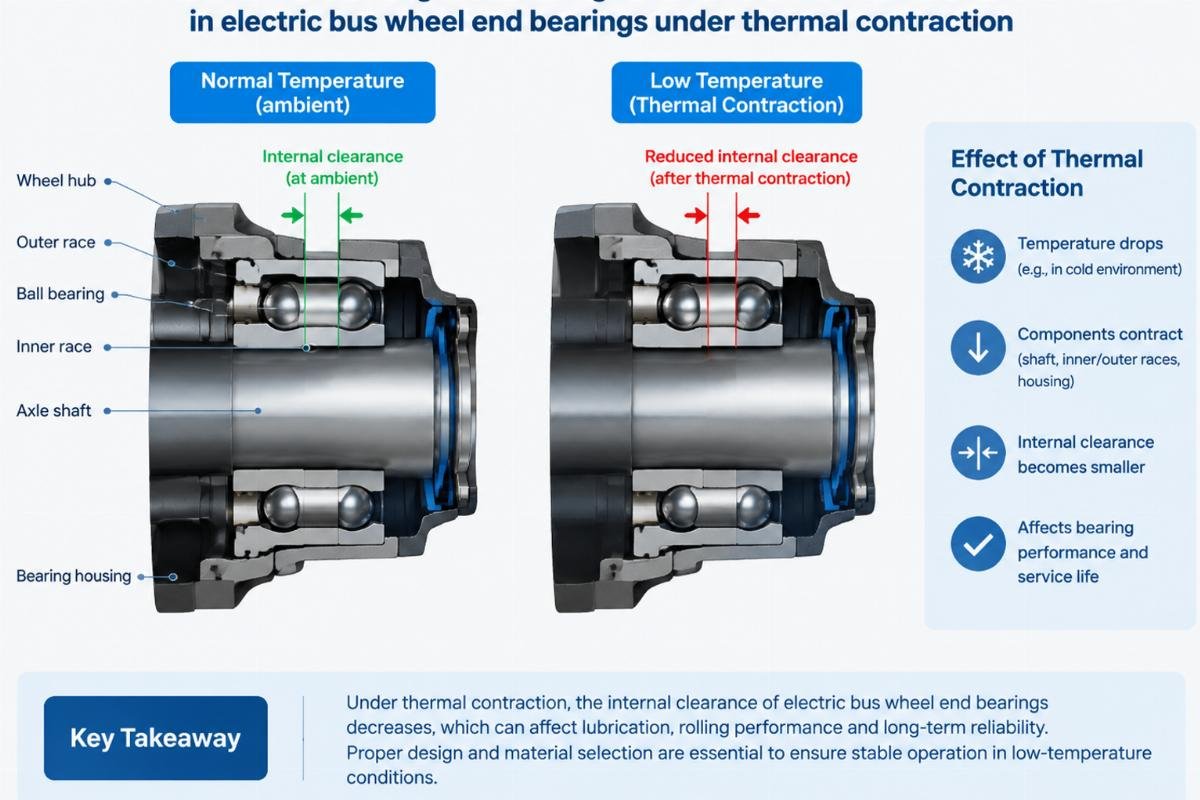
In traditional diesel buses, heat generation is consistent and predictable. Electric buses, however, present a different thermal profile. The regenerative braking systems and instant torque delivery place unique stress on wheel ends. When operating in extreme cold, the metal components contract. If the bearing internal clearance is not selected to account for this thermal expansion and contraction, the rolling elements can become overly preloaded.
I recall consulting with a distributor in Northern Europe who faced recurring issues with hub units. They had sourced bearings based solely on dimensional compatibility, ignoring the clearance class. Standard C3 clearance might suffice for moderate climates, but in sub-zero conditions, the effective clearance can drop to near zero, leading to skidding and eventual seizure. [NEED_CITE: impact of temperature on bearing internal clearance calculations]
The lubrication factor is equally critical. Standard lithium-based greases can stiffen significantly at low temperatures, increasing drag and preventing proper oil film formation. For electric bus applications, specialized synthetic greases with low-temperature fluidity are essential. These lubricants maintain their viscosity index, ensuring that the bearing races remain protected even during cold starts.
| Factor | Standard Selection | Optimized EV Selection | Risk Level |
|---|---|---|---|
| Internal Clearance | Generic C3 | Calculated for thermal range | High if mismatched |
| Lubricant Type | General purpose | Low-temp synthetic | High if hardened |
| Seal Material | Standard NBR | Low-temp resistant elastomer | Moderate if brittle |
| Load Rating | Static rating focus | Dynamic shock load focus | High if underestimated |
This table highlights the qualitative differences in selection criteria. A reputable Electric Bus Bearings Wholesale Supplier will not just provide a part number but will verify these parameters against the specific operating environment. The goal is to prevent the mechanical interference that leads to catastrophic failure.

What Are the Specific Bearing Requirements for EV Bus Motors?
High-speed operation demands specialized lubrication and tighter tolerances.
Electric motors in buses operate at significantly higher RPMs than traditional diesel engines. This high-speed environment generates unique challenges for motor bearings. The primary concern is not just load capacity, but the stability of the lubricant film under centrifugal forces and elevated temperatures.
During a technical review with an OEM engineer, we discussed the issue of electrical erosion, also known as fluting. Stray currents can pass through the bearings, causing microscopic pitting on the raceways. While insulated bearings are one solution, proper grounding and shielding are equally important. However, from a bearing perspective, the choice of grease is paramount. High-speed applications require greases with excellent shear stability and oxidation resistance. [NEED_CITE: lubrication life expectancy L10 at high RPM standards]
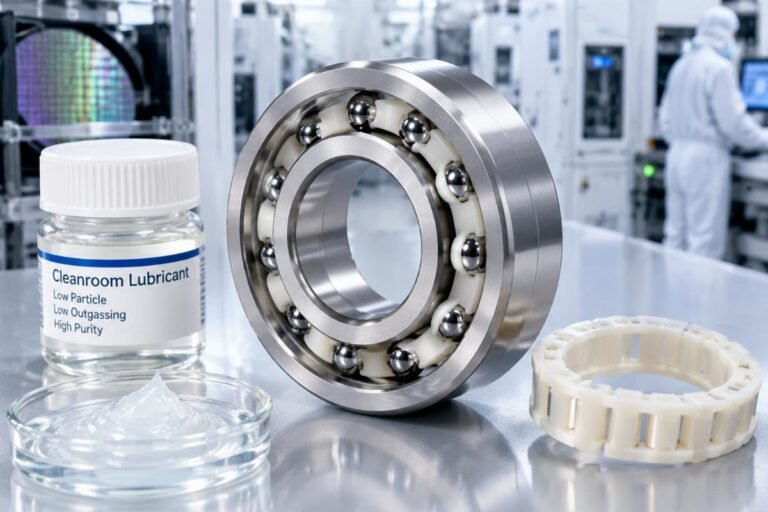
Standard greases may degrade quickly under these conditions, leading to increased friction and heat buildup. This heat can further degrade the lubricant, creating a vicious cycle of wear. Specialized high-temperature greases are designed to withstand these conditions, maintaining their protective properties over extended periods.
Furthermore, the precision of the bearing itself plays a role. Higher precision classes reduce vibration and noise, which is crucial for passenger comfort in electric buses. The smooth operation of the motor contributes to the overall efficiency of the vehicle. An experienced Electric Bus Bearings Wholesale Supplier understands these nuances and can guide buyers toward bearings that meet these stringent requirements.

How to Source Genuine Cross-Brand Bearings for Mixed Fleets?
Rely on verified suppliers for equivalent model mapping and traceability.
Many fleet operators manage mixed brands of electric buses, each with different original equipment manufacturer (OEM) specifications. Sourcing replacements for such fleets can be complex. Simply matching the part number is not always sufficient, as OEMs may use different brands for the same application.
A common challenge is finding equivalents that meet the original performance standards. For instance, a bus originally equipped with SKF bearings might need a replacement from FAG or NSK. While these brands are comparable in quality, the specific internal design and clearance options may vary. A knowledgeable supplier can provide cross-reference data that ensures the replacement bearing matches the original in terms of load capacity, speed rating, and dimensions.
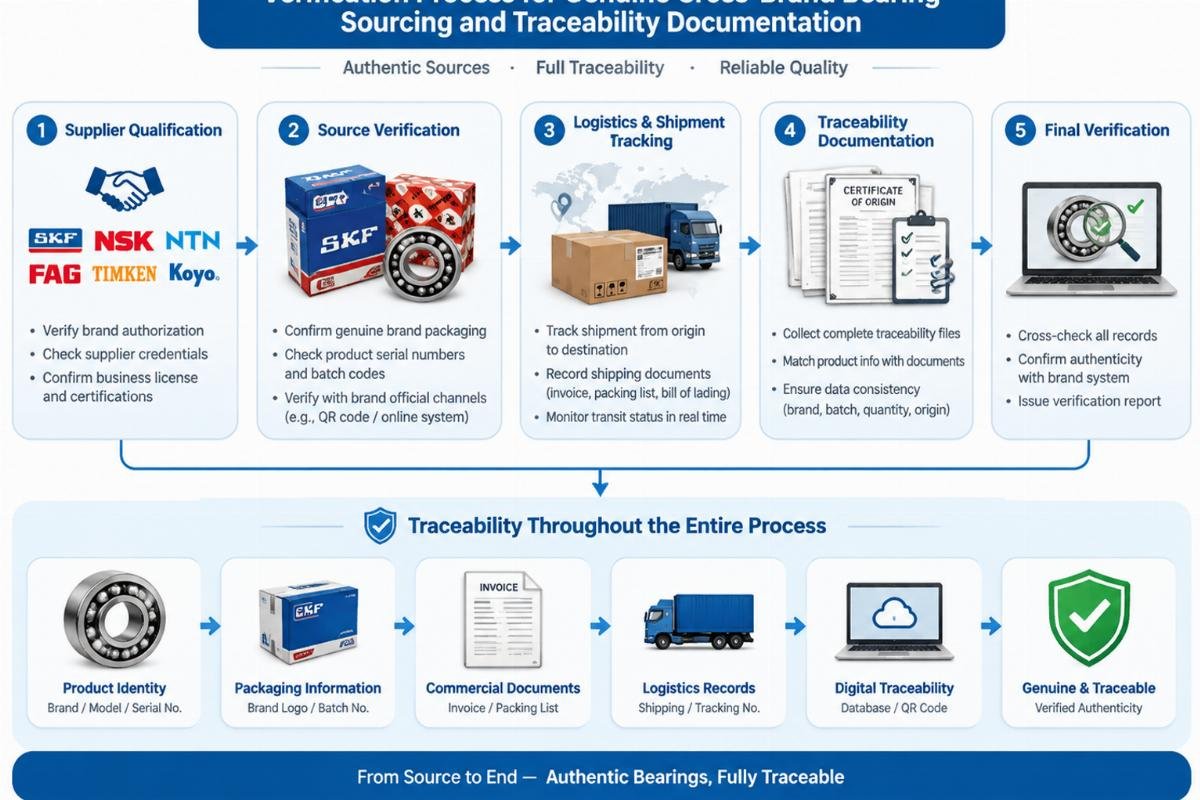
Traceability is another critical aspect. Counterfeit bearings are a significant risk in the global market. These inferior products may look identical to genuine ones but lack the material quality and precision engineering required for heavy-duty applications. Using counterfeit bearings can lead to premature failure and safety hazards. [NEED_CITE: risks of counterfeit bearings in automotive applications]
To mitigate this risk, it is essential to work with suppliers who provide full traceability documentation. This includes certificates of origin and material test reports. Such documentation verifies that the bearings are genuine and meet the specified standards. A reliable Electric Bus Bearings Wholesale Supplier will have established relationships with major brands and robust quality control processes to ensure authenticity.
How to Optimize Bearing Procurement for MRO and OEMs?
Balance MOQ flexibility with container consolidation for urgent and bulk needs.
Procurement strategies for maintenance, repair, and operations (MRO) differ from those for original equipment manufacturers (OEMs). MRO managers often need small quantities of specific bearings for urgent repairs, while OEMs require large volumes for production lines. Balancing these needs requires a flexible supply chain.
For MRO scenarios, having access to a wide spot inventory is crucial. Downtime is expensive, and waiting for shipments can disrupt operations. Suppliers with extensive stock levels can fulfill urgent orders quickly, minimizing downtime. However, purchasing small quantities individually can be costly due to shipping and handling fees.
On the other hand, OEMs benefit from bulk purchasing and container consolidation. By combining multiple orders into a single shipment, they can reduce logistics costs and streamline inventory management. This approach requires careful planning and coordination with the supplier.
A strategic Electric Bus Bearings Wholesale Supplier offers solutions for both scenarios. They can provide flexible minimum order quantities (MOQs) for urgent spare parts while also facilitating container consolidation for larger orders. This flexibility allows buyers to optimize their procurement costs and ensure timely availability of critical components. Additionally, technical support for failure analysis can help MRO teams identify root causes and prevent recurrence, further enhancing operational efficiency.

Conclusion
Precision selection outweighs initial price savings.
Success in electric bus maintenance hinges on understanding the specific demands of motor and wheel end applications. By prioritizing correct internal clearance, specialized lubrication, and genuine sourcing, operators can avoid costly failures. Partnering with a knowledgeable supplier ensures access to the right products and technical expertise, supporting long-term fleet reliability.
Tagged

Written by
author
Editor covering global sourcing, supplier verification, and industrial product knowledge. Content is compiled from manufacturer specifications, industry standards, and hands-on experience with international B2B buyers. Every article is fact-checked before publishing to help procurement professionals make informed decisions.